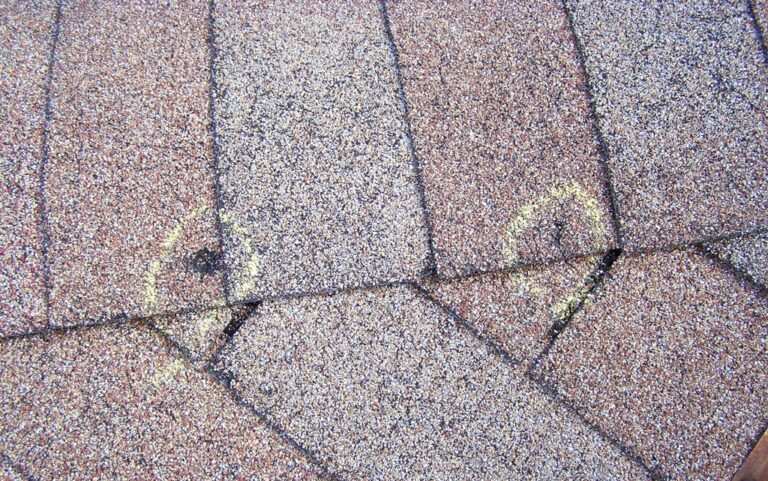
From the ground, look for cracks running up from the bottom (butt) edge of vinyl panels, chips that expose lighter unpigmented vinyl underneath, dents or dimples on aluminum, chalky or dull streaks where the finish was blasted off, and holes hidden behind downspouts and shutters. Dented gutters, fascia wrap, window capping and AC condenser fins on the same side of the house are strong corroborating evidence.
Get My Free Estimate →- Start here: the 60-second ground check
- What hail does to each type of siding
- When it is NOT hail (and why that matters)
- Why the damage shows up on one side only
- "Just cosmetic"? Find the exclusion on your declarations page before you file
- Siding and roof belong on the same claim, one deductible
- Why a discontinued color often means a whole elevation
- What is behind the siding, and who pays for it
- What siding costs in Dane County if insurance says no
- What to gather before the adjuster shows up
- Realistic timeline, start to finish
- Comparing estimates without getting burned
- Warranties: what actually protects you
- Condos, duplexes and rentals
- Resale and disclosure: why an unrepaired wall costs you twice
- If your claim gets denied or short-scoped, you still have moves
- Who is telling you this
- Get it documented while the evidence is fresh
- FAQs
After a hailstorm, almost every Madison homeowner walks out and squints at the roof. Almost nobody walks the walls. That is a mistake, because siding damage is often the more visible half of a hail claim and it sits right at eye level where you can actually see it.
Fast answer: hail damage on siding shows up as cracks running up from the bottom edge of vinyl panels, chips exposing a lighter color underneath, dents and dimples in aluminum, chip-outs and hairline spiders in fiber cement, and gouged, splintered wood. It normally shows on one or two elevations only, most often the west and south walls in south-central Wisconsin, because hail arrives at an angle with the wind.
Here is how to check it yourself, what your adjuster will be looking for, what your policy might exclude, whether it is even worth filing, and what it costs if the claim does not go your way.
Start here: the 60-second ground check
No ladder needed. Walk the perimeter with your phone in early or late light and look for these.
- Cracked butt edges on vinyl. Crouch down and look up along the wall, not straight at it.
- Chips or "bites" out of a panel edge, often showing lighter, unpigmented vinyl.
- Chalky or dull streaks on painted aluminum or steel where the finish was blasted off.
- Dents and dimples in aluminum, visible only in raking sunlight.
- Holes behind downspouts and shutters. Downspouts shield the wall. If the strip behind one is clean while everything around it is cracked, that is your before-and-after photo.
- Dented gutters, downspouts, fascia wrap and window capping. Aluminum trim is the softest metal on a house and it dents first.
- Flattened AC condenser fins on the storm-facing side of the unit.
- Dented mailbox, grill lid, garage door panels, deck rail caps, dryer and bath vent hoods.
That last group is corroborating evidence, and adjusters absolutely use it. If your AC fins are mashed on the west face and your gutters are peppered, you have a credible hail claim before anyone even discusses the siding.
One more test: press a panel. If it rattles, clicks or moves freely, the nail hem (the nailed strip along the top of the panel) may be broken behind the surface, and that panel is no longer locked to the wall. That is functional damage, and it will blow off in the next 50 mph gust.
What hail does to each type of siding
Vinyl: cracks, chips and punch-throughs
Vinyl does not dent. It fractures. Look for vertical or half-moon cracks starting at the butt edge, clean round holes where a stone punched through, chips out of the bottom lip, and star patterns radiating from one impact point.
Age and temperature are the whole story with vinyl. UV exposure makes it brittle, which is why the sun-baked south and west walls crack where the shaded north wall shrugs off the same storm. In our own field experience on Dane County walls, twenty-year-old vinyl on a west elevation has cracked at roughly one-inch hail, and occasionally at 3/4 inch when the panels were cold. Newer, thicker panels often survive stones in that same range with nothing but scuffs.
That is not a lab claim, it is what we see. If you want the technical side, rigid PVC siding is impact-tested under ASTM D4226, which includes low-temperature conditioning precisely because cold PVC fails at lower impact energy than warm PVC. An April or October hail event on cold, aged vinyl produces far more cracking than the same storm in July.
Aluminum: dents, dimples and lost finish
Aluminum records hail like a ledger. Sight down the wall from an angle in low sun and dimples jump out. Dead-on in noon light you will miss them entirely.
Watch the upper courses and the flat lock strips, chipped or chalky paint at impact points, and bright metal showing where the coating shattered (that spot will corrode). Aluminum bruises at smaller hail sizes than an asphalt shingle does, which is exactly why we see aluminum siding claims on houses where the roof passes inspection.
Fiber cement (HardiePlank, LP): chips and hairline spiders
Fiber cement is tough but cementitious, so hail chips it instead of denting it. Look for missing chunks at butt edges and corners, hairline cracks radiating from small craters, and exposed gray fiber where the factory finish popped. On painted board, the impact often reads as a white or gray dot before the crack becomes obvious.
Wood and engineered wood: gouges and blown-out edges
Cedar and engineered wood take hail as gouges, splintered edges and paint knocked clean off in dime-sized spots. Older hardboard swells at every impact once water gets in, and by the following spring you see mushrooming along the bottom edges.
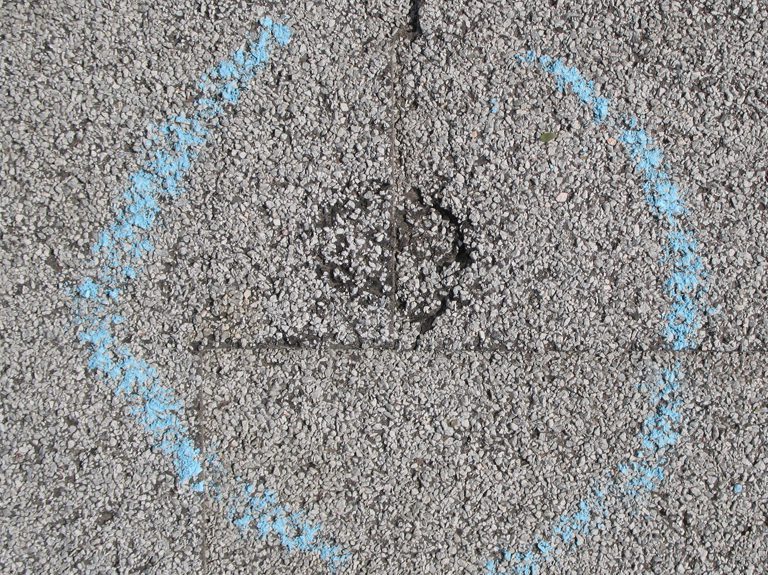
When it is NOT hail (and why that matters)
Half the "hail damage" calls we take after a storm turn out to be something else. Knowing the difference saves you a wasted claim on your loss history.
- Heat distortion. Wavy, melted-looking, glossy panels next to a grill, a fire pit, a dark driveway or a low-E window that reflects concentrated sunlight. It shows as warping and gloss change, never as a fracture with a crater.
- Thermal expansion buckling. Long wavy runs across a whole wall, usually because panels were nailed too tight and cannot slide. That is an installation issue, not a storm.
- Chalking and fade. Uniform dullness or a white powder that rubs off on your hand, evenly across the entire wall. Hail damage is never uniform on all four sides.
- Mower and weed-trimmer rash. Scuffs and nicks confined to the bottom one or two courses.
- Wind-driven debris. Random scrapes, streaks and dirt smears with no consistent impact pattern or directional bias.
- Manufacturing defects. Splits at nail slots, oil canning, color variation between panels. Those may be a manufacturer warranty issue instead.
Adjusters are trained on this same list. Damage that looks like wear or workmanship gets denied, which is why documenting the true hail signature matters so much.
Why the damage shows up on one side only
Hail rides the wind. In a Wisconsin thunderstorm it does not fall straight down, it comes in at an angle and hammers whatever faces the storm.
Our storms generally track west to east or southwest to northeast across Dane County, so the classic Madison pattern is a beat-up west elevation, moderate damage on the south, and nothing on the east and north. Adjusters look for exactly that. Directional, one-elevation damage is credible. Uniform damage on all four walls makes an adjuster suspect defects or wear rather than hail.
One real job, start to finish
A 2002-built two-story in Sun Prairie took 1.25-inch hail. The west elevation had cracked butt edges on more than 30 panels plus dented gutter, downspout and window capping. East and north walls were untouched.
The first adjuster scope approved 18 panels and a partial gutter run. We requested a reinspection, met the adjuster on the wall with chalk and a 10-foot test square, and pulled written confirmation from the supplier that the original color and profile were discontinued. On the reinspection the carrier approved the full west elevation corner to corner, plus the wraps and gutters. The homeowner paid their deductible and nothing else. You can see similar siding and storm work in our recent projects.
"Just cosmetic"? Find the exclusion on your declarations page before you file
This is the number one reason Wisconsin hail siding claims get denied or short-paid, and most homeowners never see it coming.
Some carriers now attach a cosmetic damage exclusion or matching-damage endorsement, most often to metal roofing and to siding. Pull your declarations page, read the list of endorsement form numbers, then request the actual endorsement wording from your agent. Search that language for "cosmetic," "marring," "dents" and "does not affect function."
- Generally excluded: dents, dings, marring and appearance-only damage that does not affect the siding's ability to shed water.
- Not cosmetic, even under that endorsement: cracked or punctured panels, chips that expose substrate to corrosion, broken nail hems, and anything that admits water behind the wall.
So the argument is rarely "is there hail damage." It is "is this damage functional." That is won with close-up photos, chalk-marked hit counts per test square, and notes on cracked butt edges and loose panels.
Not sure what you are looking at? We will come out, walk it and tell you straight, at no cost. Our hail and storm damage restoration team does this all season across Dane County, and after a big storm we push to get out in a day or two.
Siding and roof belong on the same claim, one deductible
Hail damage is one loss. Roof, siding, gutters, wraps, window screens and the detached garage all belong on the same claim under the same deductible.
Plenty of homeowners file the roof, get paid, then discover the siding six months later. Reopening for a supplement is possible but much harder. Have the whole exterior inspected at once. We look at the roof and the siding together on every storm call for that reason.
Know your policy structure too:
- ACV (actual cash value) pays the depreciated amount up front and releases the rest after the work is completed and invoiced.
- RCV (replacement cost value) gets you to full replacement cost through that two-check process.
- Most Wisconsin homeowner policies still use a flat dollar deductible, but some carriers now offer or require a percentage wind and hail deductible. If yours does, a 1 or 2 percent deductible on a $400,000 dwelling limit is $4,000-$8,000, not $1,000. Read your declarations page before you decide anything.
Should you even file? A break-even rule of thumb
Get a written scope first, then compare it to your deductible.
- Scope below your deductible: do not file. Pay out of pocket and keep the claim off your loss history.
- Scope within about 20 percent of your deductible: usually not worth it either, unless the damage is functional and will keep getting worse.
- Scope clearly above your deductible, especially once roof, gutters, wraps and screens are added: filing normally makes sense.
Remember that a filed claim shows on your loss history report even if it pays nothing. Hail is a weather loss, not an at-fault claim, so one storm claim is treated differently than an at-fault liability claim. After a major Dane County hail event carriers tend to move rates across the whole territory whether you filed or not. Repeated claims in a short window can affect renewal, and so can unrepaired storm damage at your next inspection.
Why a discontinued color often means a whole elevation
Insurance is meant to restore your home to pre-loss condition, and with siding that means a reasonable match. Two things get in the way.
Color fade. Vinyl fades measurably over 10 to 15 years of Wisconsin sun. A new panel in the identical color code will not match a weathered wall.
Discontinued profiles. Manufacturers retire colors and profiles constantly. A double-4 panel in a 2003 color often simply does not exist anymore.
When no reasonable match exists, carriers frequently pay to replace the whole elevation corner to corner, and sometimes the full house where walls wrap without a break line. That determination rides entirely on documentation: manufacturer, profile, color, and written confirmation from the supplier that the product is discontinued. We pull that before the adjuster arrives, not after.
If you are in a covenanted subdivision, get written HOA approval before anything is ordered, since a new color changes the look. An HOA uniformity requirement in writing can also help support a full-house scope with your carrier.
What is behind the siding, and who pays for it
This is the question the cost conversation always ends up at, so here is the straight answer.
Covered as part of the loss: removing and replacing the water-resistive barrier (housewrap), fanfold or foam board insulation, trim, wraps, corners, J-channel and starter that have to come off to re-side. Adjusters routinely include those as accessory line items. If they are missing from your scope, that is a supplement, not a fight.
Usually not covered: sheathing or framing that was already rotted from years of a leaking window, missing kickout flashing or long-term neglect. That is wear and maintenance, and it comes out of pocket. If hail actually punctured the wall and storm water got in, that is a different argument and it needs photos.
What sheathing adds: replacing OSB or plank sheathing typically adds roughly $2.50-$5 per square foot of the area we open, so a few bad sheets is often $300-$900. A fully rotted elevation can add $2,000 or more. We call you from the wall with photos before we spend a dollar of that.
Code upgrades. Current code requires a water-resistive barrier and proper flashing at openings. Older Madison-area homes, especially 1950s to 1970s aluminum jobs, often have nothing behind the siding. Adding it is a code-required upgrade, and if your policy includes Ordinance and Law coverage (often around 10 percent of dwelling coverage) that upgrade can be claimed. It is not automatic. It has to be requested with the code citation attached.
Permits. Permit requirements for re-siding vary by municipality across Dane County. Some building departments want a permit, others do not. We check with your city or town and pull whatever is required, and permit fees belong on the claim scope too.
What siding costs in Dane County if insurance says no
These figures reflect actual Dane County quotes we are writing at the time of writing. Material pricing moves, so ask us to confirm current numbers on a dated written estimate.
- Standard vinyl: roughly $5-$9 per square foot installed
- Insulated vinyl or steel: roughly $8-$14 per square foot
- Fiber cement: roughly $11-$17 per square foot
- One typical elevation: often $3,500-$8,000
- Full house, vinyl: commonly $13,000-$25,000
Two-story walls, steep grade access, heavy trim, lots of windows and cut-up gable ends all push you toward the top of those ranges. A simple ranch sits near the bottom.
Is repairing just the damaged panels ever the right call?
Sometimes, yes. If a handful of panels cracked, your color is still in production and the wall is under about ten years old, replacing those panels is the sensible move. Panel repairs typically run a few hundred dollars to $1,500 depending on access and height.
The break-even generally lands around 15 to 20 percent of an elevation. Past that, or once the color is discontinued, patching costs nearly as much as re-siding the wall and leaves you with a quilted, obviously-repaired result you will look at for twenty years.
What to gather before the adjuster shows up
Your storm date, verified. Check the NWS Milwaukee/Sullivan storm reports for Dane County or the NOAA Storm Prediction Center report archive by date. Both list reported hail size and location.
- Dated photos of all four elevations, plus close-ups with a coin or tape measure for scale.
- Photos of gutters, downspouts, AC fins, screens, vents and anything else dented.
- Siding manufacturer, profile and color from leftover panels or original build documents.
- Any prior siding repair or replacement records.
Then have your contractor there when the adjuster walks the property. We meet the adjuster on-site on every claim we handle, not to argue but so the same damage gets seen and marked by both parties in one visit.

Want a straight answer on your roof?
We'll inspect it, document everything, and tell you honestly what you're looking at, even if the answer is patch it for now. No pressure.
Realistic timeline, start to finish
This is the question that drives most follow-up calls, so here is what a normal Dane County hail claim looks like.
- Free inspection and written scope: 1 to 3 days after you call, faster after a major storm.
- File the claim, adjuster inspection: typically 3 to 14 days, longer after a catastrophe event when carriers fly in out-of-state adjusters.
- Scope agreed and first ACV check issued: usually 1 to 3 weeks after the adjuster visit.
- Mortgage endorsement, if you have a loan: add 1 to 3 weeks for the servicer's loss draft department.
- Material lead time: common vinyl colors are often in stock; special-order colors, steel and fiber cement can run 2 to 6 weeks.
- Installation: one elevation is typically 1 to 3 days. A full house of vinyl with trim and wraps generally runs 4 to 8 working days, longer for fiber cement or if we replace sheathing.
- Final invoice, supplement and depreciation release: 2 to 6 weeks after completion.
Call it four to ten weeks end to end in a normal season. Wisconsin weather and carrier backlogs move those dates, and we tell you when they do.
Comparing estimates without getting burned
Get two or three estimates, but compare them correctly.
- Ask for a line-item scope, not a lump sum. Insurance carriers price in Xactimate line items. If your contractor's estimate is one number on a page, you cannot tell whether housewrap, wraps, corner posts, starter, disposal and permits are in there, and you cannot match it against the carrier's scope to build a supplement.
- Do not sign an "insurance proceeds," assignment-of-benefits or open-ended contingency agreement before your claim is approved. Those documents can lock you into a contractor at whatever the insurer eventually pays, or hand your claim rights to someone else. Sign a real contract with a real dollar amount and a real scope.
- Know your cancellation rights. Wisconsin home solicitation rules generally give you three business days to cancel a contract signed at your home. If a salesperson pressures you to sign today, that is the whole reason to wait.
- Verify the company. Ask for the Wisconsin dwelling contractor certification and liability and workers' compensation certificates, confirm a local address, and read their reviews. Storm-chasing crews roll into Dane County after every hail event with out-of-state plates and a deductible pitch.
About that "we'll cover your deductible" offer
Walk away and sign nothing. Wisconsin does not have a standalone statute banning contractor deductible rebating the way some states do, but absorbing, rebating or padding around your deductible misrepresents the amount of the loss to your insurer. That can constitute insurance fraud and can void your claim. Legitimate contractors bill the deductible to you and the balance to the carrier.
Warranties: what actually protects you
Two separate warranties, and homeowners mix them up constantly.
Manufacturer warranty covers the product, and most vinyl warranties specifically exclude hail and acts of God. Some steel and insulated products offer limited hail coverage, sometimes with a hail deductible of its own, and impact-rated products exist if you want a tougher wall. Read the hail clause before you pick a product, not after.
Workmanship warranty covers our installation: panels locked properly, correct fastening for thermal movement, flashing and housewrap detailed right. Ask us to put the workmanship warranty term in writing on your proposal, in years, and ask any competing bidder to do the same. A warranty from a crew that leaves the state in November is not a warranty.
Condos, duplexes and rentals
Ownership determines who files.
- Condominium: the association's master policy normally covers the building exterior, including siding, so the association files. Your HO-6 unit policy covers your interior and loss assessment. Notify your association board or property manager in writing, with photos.
- Duplex you occupy: your homeowner policy typically covers both halves of the structure if you own the whole building.
- Rental property: the owner files under the landlord policy, which often includes loss of rents if the unit becomes uninhabitable. Tenants cover their own contents.
We are happy to provide one documented inspection report that a board or property manager can circulate.
Resale and disclosure: why an unrepaired wall costs you twice
Wisconsin sellers complete a Real Estate Condition Report, and known unrepaired storm damage is the kind of thing that belongs on it. Leave it off and you invite a dispute after closing.
Two more practical problems. An appraiser can call out mismatched or damaged siding as a condition issue, and a buyer's insurance carrier may refuse to bind a policy on a home with visible unrepaired hail damage, which can stall a closing. Repairing one elevation now is almost always cheaper than negotiating it off your sale price later.
If your claim gets denied or short-scoped, you still have moves
- Request the file in writing. The adjuster's photo report, the line-item scope and the specific policy language relied on.
- Ask for a reinspection with your contractor present. Carriers do this routinely, and a second set of eyes with chalk and a test square often changes the outcome.
- File a supplement. Missed elevations, wraps, trim, screens, permits, code items and under-measured wall area get corrected with documentation, not a phone argument.
- Use the appraisal clause. Most Wisconsin homeowner policies contain an appraisal provision for disputes over the amount of loss.
- Complain to the state. The Wisconsin Office of the Commissioner of Insurance (OCI) takes homeowner complaints online and requires carriers to respond in writing.
One timing note, and please verify this against your own policy. Most policies require prompt notice of loss and contain a suit-limitation clause setting a deadline for legal action, often one to three years from the date of loss. Wisconsin regulates those limits under Wis. Stat. ch. 631, and fire losses in particular carry a short statutory window. Read your policy's "Suit Against Us" section and ask your agent to confirm your deadline in writing rather than relying on a general figure.
Who is telling you this
This guide comes from the storm-restoration and estimating team at Buckshot Exteriors (Buckshot General Contracting), family-owned and operated out of Madison, WI and Centerville, IA since 1979. Our estimators write hail scopes and meet insurance adjusters on Dane County walls every storm season, and we hold GAF Master Elite certification on the roofing side. Ask us for our Wisconsin dwelling contractor certification and our insurance certificates and we will send them before you sign anything. Ask the other bidders for theirs too.
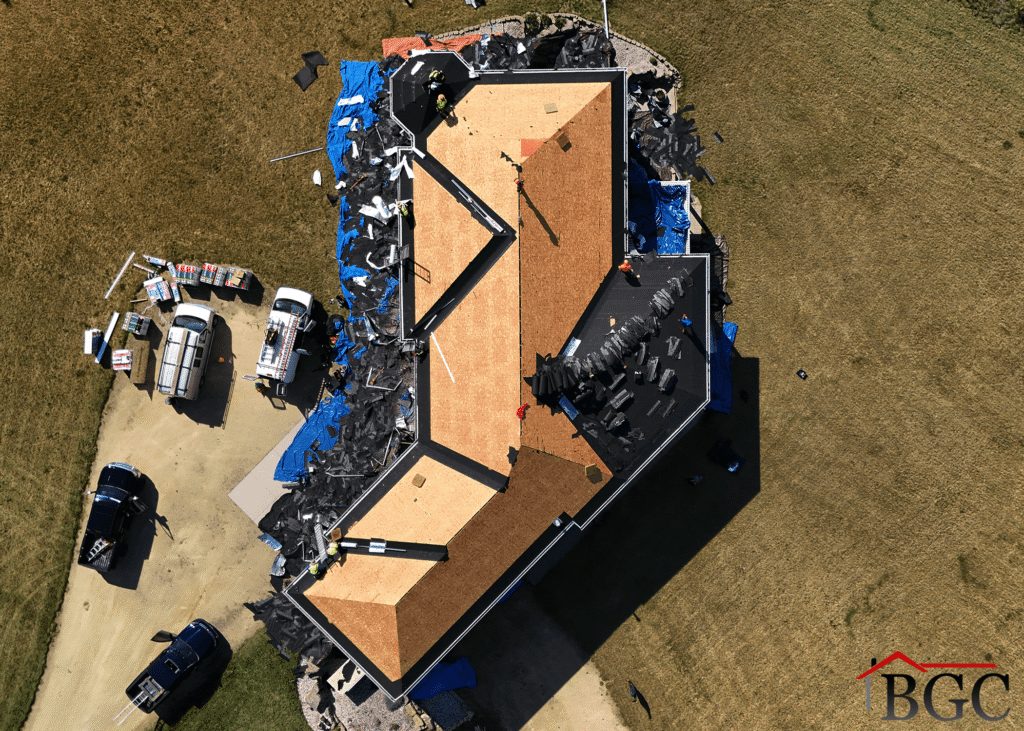
Get it documented while the evidence is fresh
Do not let the roof get all the attention. Walk your walls, and if you see cracked butt edges, chips, dimples or dented trim on one side of the house, get it documented before your claim window closes and before the next freeze-thaw pushes water into your sheathing.
Call Buckshot Exteriors for a free, no-pressure hail inspection. We photograph and chalk-circle every hit, count hits per test square, pull your siding profile and color for match verification, check the roof and gutters while we are up there, and hand you a written itemized scope you can give your carrier. If you do not have hail damage, we will tell you so and you owe us nothing. There is no cost to find out, and nobody will ask you to sign anything on the spot.
Serving Madison, Middleton, Sun Prairie, Verona, Fitchburg, Waunakee, Stoughton and the rest of Dane County, with 24-hour emergency storm response. Get in touch and let's get eyes on your walls.
Get a straight answer on your Madison roof
Wisconsin storm season and insurance non-renewal letters do not wait. Get a free, no-obligation inspection and an honest assessment of exactly what your roof needs, even if the answer is to wait.