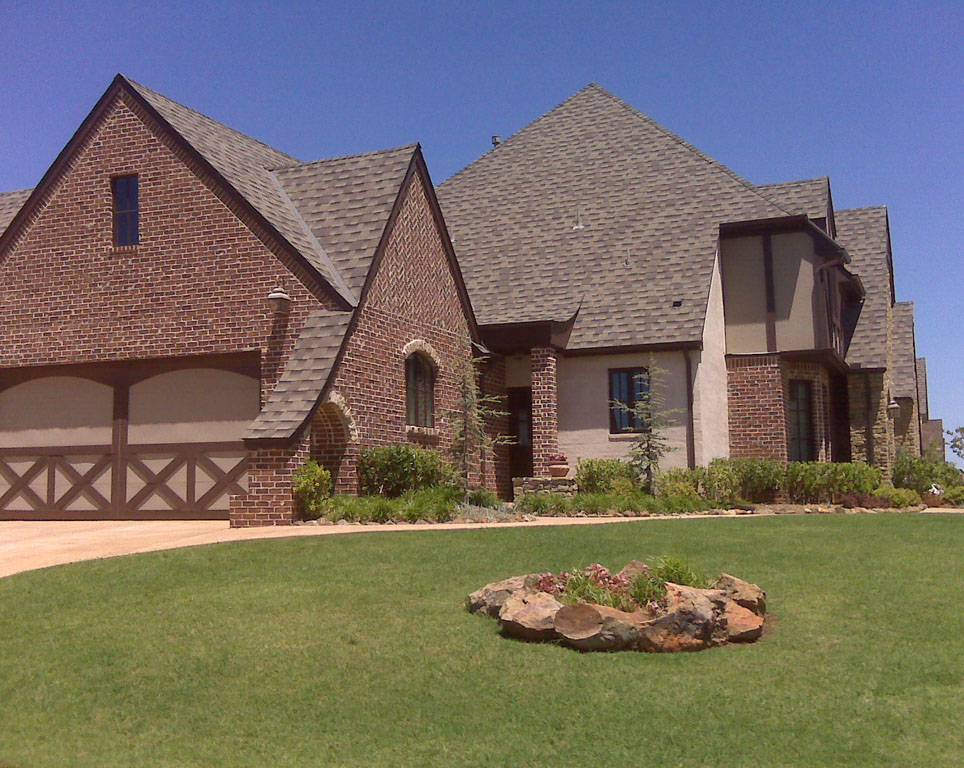
There's no single number in every policy. Adjusters commonly count hail hits inside a 10 by 10 foot test square on each slope, and each insurer sets how many qualifying hits mean replacement rather than repair. Eight per square is often cited, but it varies by company. Repairability also matters: brittle or discontinued shingles that can't be repaired cleanly make a replacement more likely. Have your own contractor count alongside the adjuster.
Get My Free Estimate →- What Homeowners Insurance Typically Covers After Hail
- How Much Hail Damage Does It Take for Insurance to Replace a Roof?
- Why You Should Get a Contractor Inspection BEFORE You Call Insurance
- The Claim Timeline: What to Expect
- What Gets Hail Claims Denied (or Reduced)
- A Note on Contractor Red Flags
- Does the Age of Your Roof Matter?
- Bottom Line for Wisconsin Homeowners
- FAQs
A hailstorm rolls through Dane, Rock, or Green County. The next morning you're standing in the driveway squinting up at your roof, wondering whether that pinging sound last night did any real damage, and whether your insurance is actually going to help you.
Short answer: yes, most standard homeowners policies cover hail damage to your roof. But whether hail damage leads to a full roof replacement or a patch depends on your policy, the age of your roof and how much damage the inspection actually documents. A few wrong moves early in the process can cost you thousands.
Here's what you actually need to know.
What Homeowners Insurance Typically Covers After Hail
Most homeowners policies treat hail as a covered peril under the "dwelling" portion of the policy. That means if hail damages your roof, siding, gutters, or windows, you have a legitimate claim.
But "covered" doesn't mean "we'll write you a check for a new roof, no questions asked." There are two very different ways insurance companies pay out, and which one you have changes everything.
ACV vs. RCV: The Most Important Thing on Your Policy
Actual Cash Value (ACV) pays you what your roof is worth today, after depreciation. If your 15-year-old roof would cost $18,000 to replace but is considered halfway through its life, you might get $9,000 or less, minus your deductible. You're covering the rest out of pocket.
Replacement Cost Value (RCV) pays what it actually costs to replace the roof with like materials at today's prices. You typically get an initial check (minus depreciation and your deductible), and then a second "recoverable depreciation" check once the work is done and you submit the final invoice. Our guide to how ACV and RCV policies release payment walks through both in detail.
Pull out your policy right now and look for those three letters. If you're not sure what you have, call your agent and ask directly. This one detail changes how much money ends up in your pocket.
Hail-Specific Deductibles in Wisconsin
A lot of homeowners don't realize their policy has a separate wind and hail deductible, sometimes listed as a percentage of the home's insured value rather than a flat dollar amount. A 1% deductible on a $300,000 home is $3,000. That's different from the $1,000 flat deductible you might be used to seeing. We explain how percentage wind and hail deductibles work in a separate guide.
Know your deductible before you file. It affects whether a claim makes financial sense.
How Much Hail Damage Does It Take for Insurance to Replace a Roof?
There is no single number written into every policy. Whether hail damage leads to a full roof replacement comes down to what the inspection documents and how your insurer applies your policy. That said, the process most adjusters follow is predictable, and knowing it helps you make sure nothing gets missed.
Test squares. Adjusters commonly mark a 10 by 10 foot test square (100 square feet) on each slope of the roof and count the hail hits inside it. Only hits that count as real damage go into the tally: bruised or fractured shingles, spots where the granules are knocked off down to the mat, or cracks. Marks that are purely cosmetic may not count.
The threshold varies by insurer. The number of hits a company treats as needing replacement rather than repair is set by each insurer, not by a universal rule. Eight hits per test square is often cited, but some carriers use fewer and some use more. Ask your adjuster what standard they are applying to your roof.
It's decided slope by slope. A slope that faced the storm can meet the threshold while the sheltered side does not, which is how homeowners end up with half a new roof. If that happens to you, read why insurance sometimes approves only one slope before you accept the scope.
Repairability matters. If damaged shingles cannot be replaced individually without breaking the brittle shingles around them, or the original shingle is discontinued and a repair would not match, a larger replacement becomes more likely. How matching is handled depends on your policy wording and your insurer, so ask before assuming either way.
Hail size is a clue, not the answer. The National Weather Service treats hail 1 inch (quarter size) or larger as severe, but smaller hail can still damage older, brittle shingles. Our guide to what size hail damages a roof covers this, and how to spot hail damage on your roof shows what the hits look like.
Soft metals back up the story. Dents in gutters, vents, flashing and AC fins don't decide the roof on their own, but they help show the hail was large enough at your address to cause damage.
What this means for you: be present for the inspection, have your own contractor count hits alongside the adjuster, and photograph each test square. A thorough hail damage inspection before the adjuster arrives tells you whether you are likely looking at repairs or a replacement.

Why You Should Get a Contractor Inspection BEFORE You Call Insurance
This is the step most homeowners skip, and it's a mistake.
Here's the problem: if you call your insurance company first, they'll send an adjuster out on their own timeline. That adjuster works for the insurance company. Their job is to document what they find and settle the claim fairly, which sometimes means quickly.
Adjusters are not always roofing experts. They may miss functional damage on flat-profile shingles, overlook soft-metal hits on flashing and vents, or undercount impact marks because hail damage on certain shingles can be subtle.
If you have a contractor inspect first, you'll know exactly what's there before anyone else sets foot on that roof. You'll have documentation, photos, measurements and notes on damage patterns, that you can bring to the claim conversation.
A contractor who regularly does storm damage inspections across south-central Wisconsin knows what adjusters look for, where damage hides, and how to document it properly.
The Adjuster Should Not Be on Your Roof Alone
This is a big one. You can have your contractor present when the adjuster comes out, and you should.
A good contractor can walk the adjuster through the damage in real time: the bruising on shingles, the granule loss patterns, the dented ridge cap, the soft-metal damage on pipe boots and gutters. An adjuster working alone may write up a partial scope and close the claim before you even realize what was missed.
We meet insurance adjusters on site to document hail and wind damage. It's not adversarial; it's just making sure nothing gets missed.
The Claim Timeline: What to Expect
Here's a rough idea of how the process typically goes:
- Storm hits. You notice damage or suspect it.
- Contractor inspection. Get eyes on the roof before anything else. Free inspection, no obligation.
- File the claim. Call your insurance company and open a claim. Note the date, because policies set a window for reporting damage after a storm.
- Adjuster visit. Schedule this with your contractor present.
- Insurance estimate. The adjuster produces a scope of loss and damage estimate. Review it carefully.
- Contractor review. Your contractor compares their findings to the insurance estimate. If things are missing, a supplement can be filed.
- Work begins. Once the scope is agreed upon, you sign a contract, and the job gets scheduled.
- Final invoice submitted. If you have RCV coverage, this triggers the depreciation holdback payment.
The whole process from inspection to check can take a few weeks to a couple of months, depending on how busy adjusters are after a regional storm. After a big hail event in the Madison area, everyone gets backed up.
Not sure if your roof took damage in the last storm? Contact us for a free inspection. We'll tell you honestly what we find, and there's no pressure to file a claim if the damage doesn't warrant it.

What Gets Hail Claims Denied (or Reduced)
Claims don't always go smoothly. These are common reasons claims are denied or underpaid:
- Pre-existing damage. If your roof had issues before the storm (missing shingles, old repairs, visible wear), the insurance company may attribute some or all of the damage to maintenance rather than hail.
- Filing too late. Policies require you to report damage within a set or "reasonable" time. Waiting years after a storm is a problem.
- Wear and tear exclusions. Damage that's clearly from age and deterioration, not impact, isn't covered. An experienced contractor can help distinguish the two.
- Wrong documentation. Vague photos, no storm date correlation, no weather data tying the damage to a specific event: all of these weaken a claim.
- Contractor supplements rejected. If your contractor finds additional damage after the initial estimate, the supplement process can stall or get denied if it's not properly documented.
- Policy exclusions. Some policies exclude cosmetic hail damage. Read the fine print.
A contractor who understands the claims process, not just roofing, is worth their weight in gold here.
Want a straight answer on your roof?
We'll inspect it, document everything, and tell you honestly what you're looking at, even if the answer is patch it for now. No pressure.
A Note on Contractor Red Flags
After every major hail event, out-of-state "storm chasers" flood the market. They knock on doors, promise to handle everything, and disappear after the job, or before it.
Watch out for anyone who:
- Asks you to sign over your insurance benefits (Assignment of Benefits)
- Offers to "waive" or "cover" your deductible, which can amount to insurance fraud
- Can't provide a local address, license, or references
- Pressures you to sign before the adjuster has even visited
We've been locally owned and operated since 1979, with offices in Madison, WI and Centerville, IA. We're not going anywhere. You can read what our customers say in our real local reviews and see examples of our work in recent projects.
Does the Age of Your Roof Matter?
Yes, and more than most homeowners expect.
If your roof is 20+ years old, some insurance companies will only offer ACV coverage, or they'll apply heavy depreciation even on an RCV policy. Some carriers now limit full replacement cost coverage to roofs under a certain age.
This is worth a conversation with your agent before storm season, not after.
If your roof is older and you're on ACV coverage, a hail claim might only cover a fraction of replacement cost. That's not a reason to skip the claim; it's a reason to understand your numbers going in.
Bottom Line for Wisconsin Homeowners
Hail damage claims are winnable, but they reward homeowners who move deliberately and document everything. The biggest mistakes are waiting too long, letting the adjuster work alone, and not having a contractor in your corner who understands both roofing and the claims process.
If a storm has come through your area, or if you're not sure when your roof last took a hit, the smartest first step is a free inspection from someone who knows what they're looking at.
Buckshot Exteriors has been helping south-central Wisconsin homeowners protect their homes for over 47 years. We cover the full exterior: roofing, siding, gutters, windows, and doors. We run a 24-hour emergency storm line, and we'll stand next to your adjuster on that roof so nothing gets missed.
Call (608) 909-9109 or fill out our contact form to schedule your free inspection. No pressure, no obligation, just an honest assessment.
Get a straight answer on your Madison roof
Wisconsin storm season and insurance non-renewal letters do not wait. Get a free, no-obligation inspection and an honest assessment of exactly what your roof needs, even if the answer is to wait.