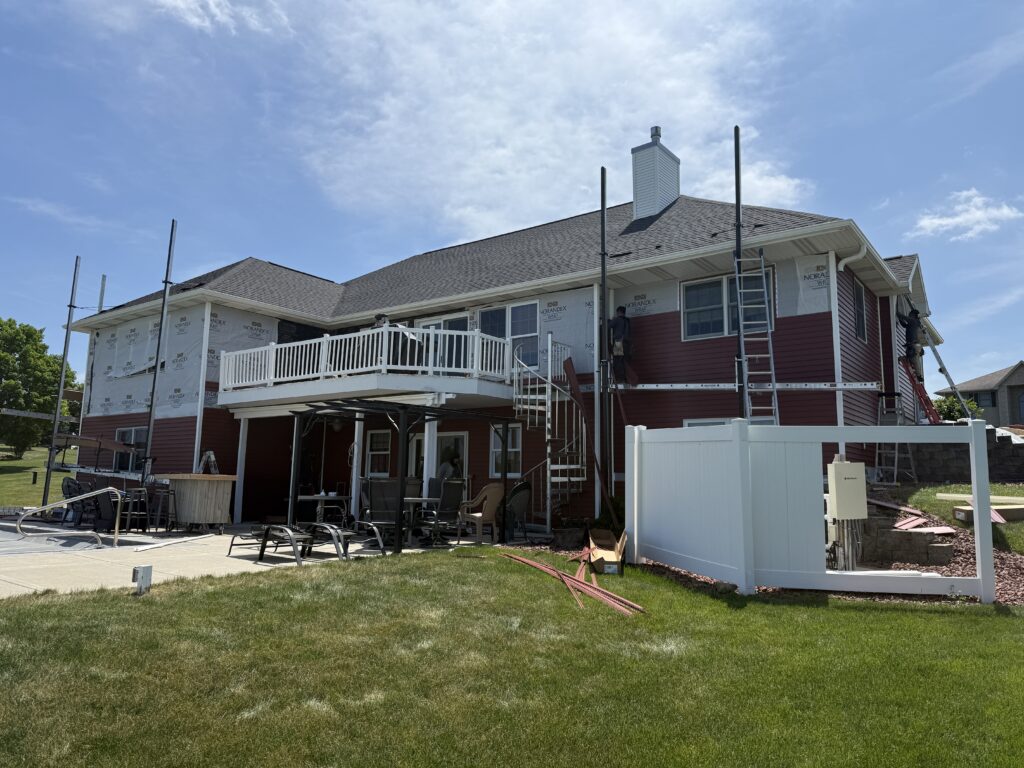
Standard vinyl siding doesn't truly melt in the sun; it softens. The Vinyl Siding Institute notes normal grades can begin to soften around 160 to 165 degrees Fahrenheit. A concentrated reflection off window glass can push one small patch of wall past that on an otherwise cool day, which is why the result looks melted.
Get My Free Estimate →- Why reflected sunlight distorts vinyl siding
- How to confirm reflection is really the cause
- Is the wall still weather-tight?
- Other causes of warped vinyl siding worth ruling out
- Warranty, insurance and the neighbor question
- How to stop the reflection
- Repairing melted or warped vinyl siding
- Get a straight answer on your wall, free
- FAQs
If you have wavy, rippled or sagging vinyl siding in one patch near a window, reflected sunlight is a likely cause. Energy-efficient double-pane glass, often on a neighbor's house across a narrow side yard, can concentrate sunlight onto your wall like a magnifying glass and soften the vinyl.
It looks alarming, as if something caught fire and cooled off wrong. It is heat distortion, not a fire, and the glass doing it is usually a perfectly normal window that is not defective.
Here is how it happens, how to confirm it before you spend anything, whether your wall is still protected, what to ask about warranty and insurance, and what the repair involves.
Why reflected sunlight distorts vinyl siding
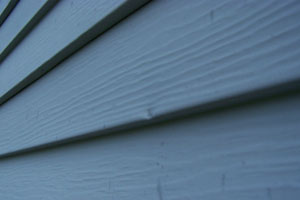
Vinyl siding doesn't melt like a candle. It softens. The Vinyl Siding Institute says normal grades of vinyl siding can begin to soften at roughly 160 to 165 degrees Fahrenheit. Once a panel gets that hot it loses stiffness, sags under its own weight, and cools back down in a wavy shape that never returns to flat.
Direct sun alone rarely gets siding that hot. A concentrated reflection can.
Insulated double-pane glass has a sealed space between the panes. As outdoor pressure and temperature change, the glass can bow slightly. That is normal window behavior, not a failure. But a pane bowed slightly inward acts like a shallow mirror, narrowing the reflection into a brighter, hotter band instead of scattering it.
Add low-E coatings, which are designed to reflect heat energy, and the reflected light can carry more energy with it. Good for the window owner's heating bill; hard on the vinyl across the yard.
Why distance and color decide who gets hit
Distance is the biggest factor. The vinyl siding industry cites a builders' survey finding that most of this damage occurs where the window and the siding are 30 feet apart or less. Across a wide yard the reflection has room to spread out and weaken.
That short distance describes many neighborhoods with narrow side yards. The general pattern is the same wherever it happens: a narrow gap between houses, a window on one house, and a wall on the other that takes the reflection for a few hours a day.
Color matters too. Darker vinyl absorbs more of the energy that lands on it, so deep browns, grays and blues soften sooner than lighter colors.
Why it often happens in cold weather
This one surprises people. Reflection damage is more likely in late fall, winter and early spring than in July.
In summer the sun rides high, so reflections off vertical glass tend to bounce down toward the ground. In the colder months the sun stays low, and that low angle throws the reflection sideways onto a neighboring wall at siding height.
So yes, you can find newly warped siding in the middle of winter. The focused beam is doing the work on one small patch, and cold air does little to stop it. The Vinyl Siding Institute calls this scenario rare, and it is, but rare is no comfort when it is your wall.
How to confirm reflection is really the cause
Prove the diagnosis before you replace anything. It takes a few minutes on a sunny day.
- Find the bright patch. Watch the damaged wall through the sunny part of the day for a distinct, unusually bright band or patch of light on the siding. It will feel noticeably warm.
- Trace it back to a window. Stand in the bright patch and look toward the light for glass catching the sun, yours or a neighbor's. Upper-floor and gable windows are frequent sources because of the angle.
- Note the date and time. The reflection only lands in one spot for part of the day and part of the year. If the damaged area is in shade when you check, come back at another hour or another season.
- Match the pattern. Reflection damage is localized and oddly shaped, a band, a blob, sometimes a vertical streak. It does not spread evenly across a whole wall.
Take dated photos while you are out there. If the source is a neighbor's window, or if you end up calling your insurance agent, a photo of the reflection sitting on your wall is the most useful thing you can have.

Is the wall still weather-tight?
Usually yes. Vinyl siding is a rain screen, not the waterproof layer. The real water barrier is the house wrap or felt behind it, so a warped panel still locked into the course below is ugly rather than dangerous.
The exception matters. If heat distortion pulled a panel's bottom lock out of the course below, or tore it off its nail hem, you have an open gap. Wind-driven rain, insects and nesting birds can get in behind the siding, and water held against the sheathing through a freeze-thaw winter is how rot starts. Run your hand along the bottom lock of each damaged panel. If it is loose or flapping, close it up with a temporary fix until a permanent repair, before the next thaw or driving rain.
Other causes of warped vinyl siding worth ruling out
Not every wavy panel is a reflection problem. Fix the glare on the wrong diagnosis and the siding keeps buckling.
Panels nailed too tight. A common cause of wavy vinyl that has nothing to do with sunlight. Vinyl expands and contracts a lot between winter and summer, and it is designed to hang loose on its nails and slide. Nails driven tight, nails through the face of a panel, or panel ends butted hard into corner posts leave the siding nowhere to go, and it buckles into long waves across whole runs instead of one patch. Our guide to signs of bad siding installation covers what to check.
Heat sources too close to the wall. Grills, fire pits and dryer vents. That damage sits low and centers on wherever the heat was.
Dark paint or dark covers on light siding. Painting light vinyl a dark color, or leaving a dark tarp or cover flat against it, turns that section into a heat sink.
Reflection off something other than a window. Metal roofing on a shed, a sliding door, a shiny awning. Anything reflective aimed at your wall can do it.
Not sure which one you are looking at? Call (608) 909-9109 for a free on-site inspection. Fixing the wrong problem costs more than a look.
Warranty, insurance and the neighbor question
Check your siding warranty
Many homeowners assume a limited lifetime warranty covers warped panels. Many vinyl siding warranties exclude distortion caused by an external heat source, which can include reflected sunlight. Language varies, so read your own warranty document. The product name is sometimes printed on the back of a panel if you need to track down coverage.
Homeowners insurance: what to ask your agent
Policies differ, so ask your own agent rather than guessing. Two questions are worth asking directly. First, would this be treated as sudden and accidental damage, or as gradual wear? Heat distortion that develops over several sunny seasons can look gradual to an adjuster. Second, would a claim, or even an inquiry, be recorded in your claim history? Knowing that before you file is worth the phone call.
Whether a neighbor is responsible is a question that depends on your situation and your policies, and it is not something a contractor or a blog post should answer for you. Document everything either way.
Want a straight answer on your roof?
We'll inspect it, document everything, and tell you honestly what you're looking at, even if the answer is patch it for now. No pressure.
How to stop the reflection
Replacing panels without addressing the glare just resets the clock.
If it is your own window
These are the kinds of fixes the Vinyl Siding Institute lists:
- Add an exterior insect screen. Often the cheapest fix. A screen breaks up the reflection so it doesn't focus. If you take your screens down every fall, that may be why damage appears in the colder months.
- Apply exterior window film. Film designed for the outside surface can cut reflectivity. Talk to a film installer about products suited to your glass, since the wrong film on an insulated unit can cause its own problems.
- Shade the glass. An awning or sunshade above the window keeps low winter sun off the pane.
- Plant something. A tree or large shrub can break the line of sight, though it takes years to grow tall enough, which makes it a poor answer for an upper window.
If it is a neighbor's window
Lead with a conversation, not a confrontation. Many people have no idea their window is doing this and are surprised by a photo of the bright patch on your siding. Bring the photos and one easy ask: a screen on that window, or permission to have film applied. Offering to split or cover the cost often turns a touchy subject into a quick fix. If the window belongs to a rental, an HOA or a business, put the request in writing with dated photos to the owner or manager and keep a copy.
Repairing melted or warped vinyl siding
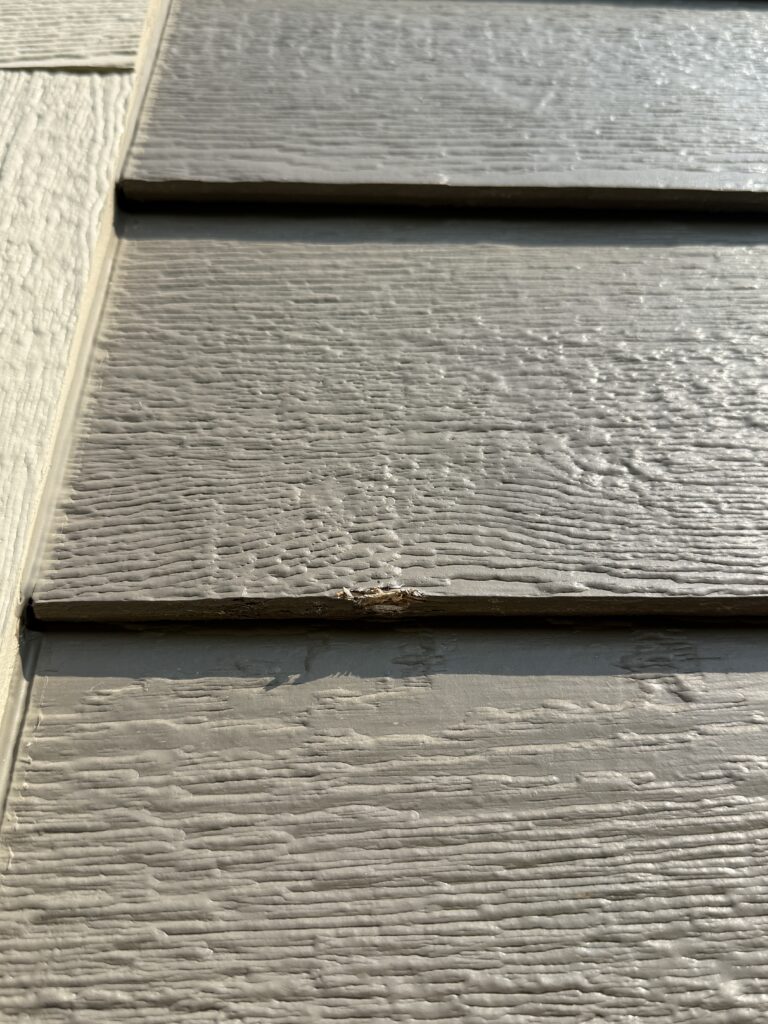
Warped panels get replaced, not straightened. Once vinyl has softened and cooled in a wavy shape, it won't go back to flat.
The work is routine. Panels unlock from the course below, the damaged ones come out, and new ones go in and lock back up. That is the advantage of vinyl siding repair: it works panel by panel, as long as the wall behind it is sound.
Can you do it yourself?
On a first-floor wall, a handy homeowner can do this with a zip tool to unlock the course above, a flat bar, matching panels and patience. Two things decide whether it holds. Nail in the center of the nailing slot and leave the nail head slightly loose so the panel can slide; driving those nails tight is how people create the long buckling waves described earlier. And don't attempt it in the cold, when vinyl gets brittle and can crack as you flex it. Anything above the first story is ladder work worth handing off.
Matching is the real challenge
Vinyl fades. After years of sun, the color on your wall is no longer the color that comes out of the box, even if that exact profile and shade are still made. On a side or rear wall, a new panel usually isn't noticeable; on a sun-faded, street-facing wall it can read a shade brighter. What helps:
- Check the garage, basement and attic for leftover panels from the original job.
- Move panels from a hidden spot, such as behind a deck, to the visible wall, and put the new stock where nobody looks.
- If the damage is widespread or the match is hopeless, re-siding that one wall can look better than a patchwork.
An inspection can tell you whether your vinyl siding profile is still available and which of those options fits your house.
What to put back on a wall that keeps getting hit
If the reflection can't be blocked, rethink the material before installing the same thing again.
- Go lighter. A lighter color absorbs less energy and softens later. It isn't immunity, but it helps.
- Ask about heat performance, not just thickness. Some products are made with formulations meant to resist heat distortion. Ask the manufacturer directly rather than assuming.
- Switch materials. Fiber cement and steel won't soften or sag from reflected heat, though each has its own upkeep. Our comparisons of vinyl versus fiber cement siding in Wisconsin and steel siding versus vinyl cover the trade-offs.
One wall in a different material can look intentional when the transition is handled well, especially on a side or rear elevation.
Get a straight answer on your wall, free
Wavy siding near a window is easy to misread and easy to fix wrong. It might be a neighbor's low-E glass, nails driven too tight, or a grill parked in the same spot for years. Each one calls for a different fix, and only one of them involves buying siding.
Buckshot Exteriors has been family-owned and working on homes since 1979, with offices in Madison, WI and Centerville, IA. A free on-site inspection can tell you which problem you actually have and whether any panels have come unlocked. Call (608) 909-9109, and see our full range of siding services if the repair turns into a bigger project.
Get a straight answer on your Madison roof
Wisconsin storm season and insurance non-renewal letters do not wait. Get a free, no-obligation inspection and an honest assessment of exactly what your roof needs, even if the answer is to wait.