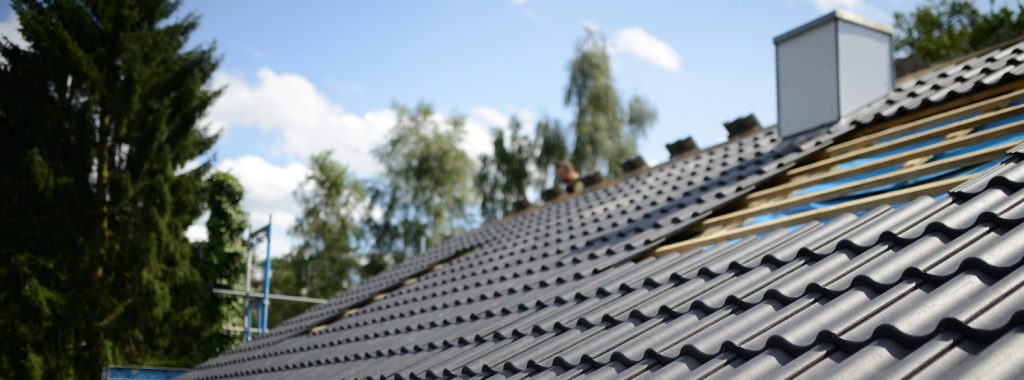
Most metal roof leaks come from aged screw washers, loose screws, failed sealant at panel overlaps or worn flashings at vents, chimneys and walls. In winter, an ice dam at the eave can also push meltwater into the laps.
Get My Free Estimate →Most metal roof leaks start at a screw, a panel overlap or a flashing, not in the middle of a panel. On screw-down panels, the rubber washers under the screws are the usual weak point, while on standing seam the leak usually comes from the trim and flashings.
Buckshot repairs metal roofs in Madison from our office on North Sherman Avenue. This guide shows how to tell a leak from condensation, find where the water gets in, and fix it.
Leak or condensation?
Timing is the best clue. A leak follows rain or snowmelt, while condensation follows clear, cold nights and drips on dry mornings.
Condensation forms when warm, moist air meets steel chilled below its dew point, and it can soak the underside of a roof that has no leak at all. Our guide to metal roof condensation explains how to tell the two apart and how condensation is stopped.
Where metal roofs leak
Where the drip shows up inside points to where the water gets in.
| What you see | Likely cause | What it takes |
|---|---|---|
| Drips in a line that follows the screw rows | Aged washers or loose screws | New gasketed screws |
| Water where two panels overlap | Failed sealant at a side lap or end lap | Laps cleaned and resealed |
| Water under the ridge in wind-driven rain or snow | Missing or crushed closures under the ridge cap | New closures and fasteners |
| A drip around a vent pipe | A cracked or loose pipe boot | A new pipe flashing |
| Leaks at a chimney, wall or skylight | Trim sealant or flashing that has failed | Re-flashing |
| Leaks near the eave during a thaw | An ice dam backing water up the panels | Ice dam work and attic ventilation |
Leaks around screws
Exposed-fastener panels, often called screw-down or corrugated panels, are held on by screws driven through the face of the panel. Each screw seals with a rubber washer, and sun and age dry those washers out until they crack.
Screws also work loose as the panels expand on hot days and shrink on cold nights. A screw driven too tight crushes its washer, one left loose never seals, and one that missed the framing leaves an open hole.
The fix is a new gasketed screw, often a slightly larger one so it bites solid metal in the old hole. Sealant smeared over a screw head only lasts until it weathers off, and our comparison of standing seam and corrugated metal roofs explains why exposed screws need this upkeep.
Standing seam panels lock together over hidden clips, with no exposed screws in the panels to back out. On a standing seam roof, the leak is almost always at a flashing, a penetration or damaged trim.
Leaks at seams and overlaps
Screw-down panels overlap at the side, on a rib, and at the ends on long runs. A strip of sealant tape inside each lap keeps water out, and when that sealant fails, water creeps between the tight metal surfaces and runs inside.
Low slopes make lap leaks worse because water moves across the roof slowly. Wind-driven rain pushes it into the laps too, and our guide to roof leaks in heavy rain explains why some leaks appear only in storms.
A lap repair means cleaning out the old sealant, resealing with a sealant made for metal and refastening the lap. Asphalt roof cement is the wrong material on metal and makes the proper repair harder later.
Ridge caps, vent pipes and other flashings
Foam closures under the ridge cap fill the gaps between the panel ribs. When they are missing or crushed, wind drives rain and powder snow under the cap, and the drip shows up under the peak.
A vent pipe through a metal roof is sealed with a flexible boot shaped to the panel and screwed down. The rubber cracks with age, and a boot set badly across a rib leaks from the start, as our guide to a roof vent leaking explains.
Chimneys, walls and skylights are sealed with metal trim and sealant, and that sealant needs renewing over the life of the roof. Our chimney and flashing repair crews rebuild these joints, and our guide to roof valley types covers valleys, where two slopes send their water through one channel.
Want a straight answer on your roof?
We'll inspect it, document everything, and tell you honestly what you're looking at, even if the answer is patch it for now. No pressure.
Metal roofs in winter: ice dams and snow
Metal sheds snow better than shingles, but ice dams still form on a metal roof. Heat escaping into the attic melts snow higher up, the water refreezes at the cold overhang, and the meltwater backs up behind the ice into the laps and around the screws.
Snow guards keep snow from sliding off onto walks and gutters, and they do not cause ice dams, which come from attic heat loss. Our guides to ice dams in Wisconsin and snow guards on metal roofs explain both.
For ice already backing water in, our ice dam removal crews respond within 2 hours and use low-pressure steam that protects the panels. The lasting fix is in the attic, and our attic ventilation crews balance the intake and exhaust that keep the roof cold.
What to do when a metal roof leaks
- Catch the water. Move what is under the drip and put down a bucket or tarp.
- Note when it drips. A drip during rain, during a thaw or only on cold, clear mornings each points to a different cause.
- Stay off the roof. Metal panels are slippery when wet or frosty, and a misplaced step can dent a panel or break a seal.
- Skip the roof cement. Asphalt patching products do not bond well to metal and have to be scraped off before the real repair.
- Photograph the damage. After hail or wind, date-stamped photos help with an insurance claim, and our guide to the cosmetic damage exclusion explains how insurers treat dents that do not leak.
Metal roof dripping? Our roof leak inspection is free, and we find where the water enters before quoting any repair. Call (608) 909-9109 to schedule it.
Free on-site inspection · Family-owned since 1979How a metal roof leak is repaired
- Find the source. Screws, laps, closures and flashings are checked together on the roof, and the leak inside is matched to what sits above it.
- Replace failed screws. Cracked or loose screws come out and new gasketed screws go in, sized to bite solid metal.
- Reseal laps and closures. Failed laps are cleaned and resealed, and new closures go in under the ridge cap.
- Re-flash penetrations and walls. Worn pipe boots are replaced, and trim at chimneys, walls and skylights is resealed or rebuilt.
- Replace damaged panels. A panel punctured by hail or a falling limb, or rusted through, is replaced instead of patched.
Our Madison crews handle fastener, flashing and panel repairs on homes and garages, and our guide to a garage roof leaking covers garage roofs of every type. For barns and pole buildings, our agricultural roofing crews repair loose panels, failed fasteners and flashing.
When most of the screws on an older roof have failed, a full re-screw or a new roof can cost less than repeated repairs. Our residential metal roofing page covers replacement, and our guide to metal roof cost explains the price of each system.
Get your metal roof checked
Buckshot Exteriors is family-owned, has served homeowners since 1979, and is headquartered on North Sherman Avenue in Madison. Our own crews install and repair standing seam, metal shingle and stone-coated steel roofs across the city.
Call (608) 909-9109 to schedule a free roof leak inspection, or send us a message and we will set a time. If water is coming in now, the same number is answered 24/7.
Get a straight answer on your Madison roof
Wisconsin storm season and insurance non-renewal letters do not wait. Get a free, no-obligation inspection and an honest assessment of exactly what your roof needs, even if the answer is to wait.