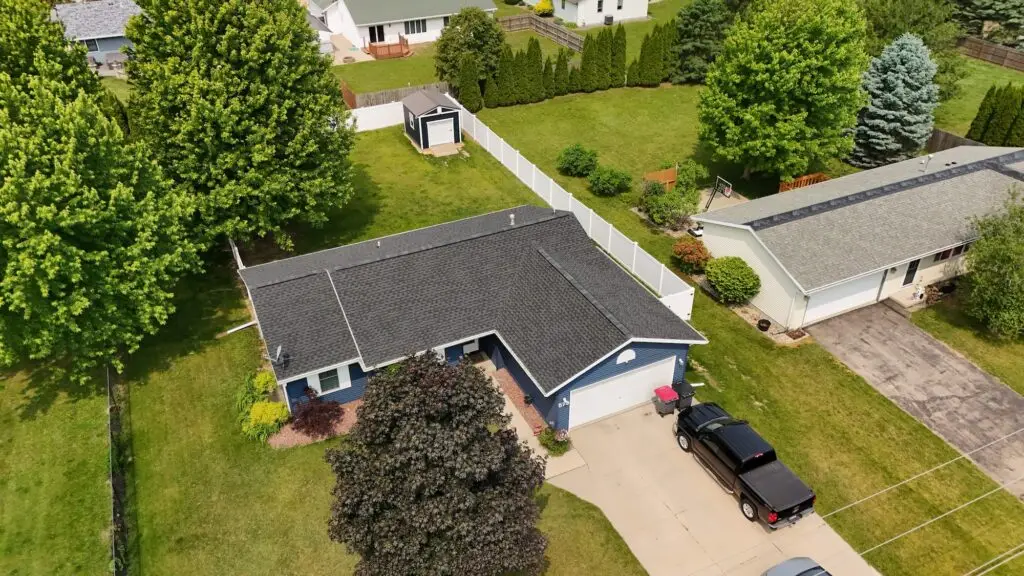
Heat escaping from the house warms the upper roof deck and melts the snow on it. The meltwater runs down to the cold eaves and refreezes, building a ridge of ice that traps more water behind it. Air leaks, thin insulation and blocked soffit vents are the usual causes.
Get My Free Estimate →An ice dam is a ridge of ice along the edge of your roof that traps meltwater behind it. The trapped water can back up under the shingles and leak into your ceilings and walls.
Cold weather sets the stage, but heat escaping from your house is what builds the dam. That is why the lasting fix happens in the attic, not on the roof.
What causes ice dams on Wisconsin roofs?
Ice dams form when the upper part of your roof is warm enough to melt snow while the eaves stay below freezing. Heat leaking up through the attic floor warms the roof deck, and the melted snow runs down to the cold overhang and refreezes.
Each thaw and freeze adds to the ridge of ice. Water from higher up then pools behind it with nowhere to drain except under the shingles.
Two houses on the same street can behave differently in the same storm. The house with the ice dam usually has a warm attic from air leaks, thin insulation, blocked soffit vents or bath fans venting into the attic.
Signs you have an ice dam
A thick band of ice along the eaves, often with heavy icicles, is the most visible sign. Icicles alone are common, but ice built up on the roof edge itself means water is being trapped.
Inside, watch for stains or peeling paint along the tops of outside walls and on ceilings near them. Water at window tops during a thaw is another common sign.
What damage ice dams cause
Trapped water works its way under shingles and soaks the underlayment and roof deck. Repeated winters of wetting can rot the decking along the eaves.
Inside, the water soaks insulation, stains ceilings and runs down wall cavities, sometimes days after the dam formed. Wet insulation and drywall that stay damp can grow mold.
The weight of ice can also bend gutters and pull them away from the fascia. A gutter that looks fine from the ground can still be loose or cracked at the seams.
What to do about an ice dam right now
Work from the ground and leave the ice in place rather than chipping at it. Cold shingles are brittle, and hammers, hatchets and ice picks crack shingles and damage flashing.
Use a roof rake from the ground to pull snow off the lower three to four feet of the roof. Less snow above the eaves means less meltwater feeding the dam.
To open a drainage channel, fill a nylon stocking with calcium chloride ice melt and lay it across the dam, running down toward the gutter. Avoid rock salt, and keep any chloride melt off metal gutters where you can, because it corrodes metal.
For a thick dam that is already leaking, hire a professional who removes ice with low-pressure steam. Photograph the ice and any interior stains first, and report water damage to your insurer promptly.
Ice dam leaking into the house? Call (608) 909-9109. Our 24-hour storm line can help stop the water.
How to prevent ice dams for good
Prevention keeps the roof deck evenly cold so snow does not melt and refreeze at the edge. These four steps, done in order, solve most ice dam problems.
- Air seal the attic floor. Seal around recessed lights, top plates, the attic hatch, plumbing and wiring holes, and chimney chases, because insulation does not stop moving air.
- Add insulation. ENERGY STAR recommends about R-60 for an uninsulated attic in Wisconsin's climate, or R-49 if you already have three to four inches.
- Balance the ventilation. Keep soffit vents open with baffles and pair them with exhaust at the ridge, so cold outside air flushes the underside of the roof.
- Vent fans outside. Run bath and kitchen exhaust ducts all the way to a roof or wall cap.
When the roof is replaced, an ice-and-water membrane along the eaves adds a second line of defense against water that backs up. It works with good attic conditions rather than replacing them.
Heat cables can keep a channel open in a known problem spot, but they only melt a few inches around the cable. Our guide to heated gutters and heat cables explains where they help.
Warm, moist air leaking into the attic also causes frost on the roof deck, which can drip like a leak during a thaw. Our guide to frost in the attic covers that related problem, and our winter roof preparation guide covers the rest of the pre-winter checklist.
Want a straight answer on your roof?
We'll inspect it, document everything, and tell you honestly what you're looking at, even if the answer is patch it for now. No pressure.
Ice dams and insurance
Most homeowners policies cover sudden water damage an ice dam causes inside the home, but usually not removing the ice dam itself or fixing an attic that caused it. Our guide to whether homeowners insurance covers ice dams explains removal, damage, denials and what to do first.
Watch out for storm chasers after a bad winter
Hard winters bring out-of-town contractors who knock on doors and promise fast insurance settlements. Some ask you to sign an assignment of benefits, which hands control of your insurance claim to them.
Take time to read anything before you sign it, and check that the contractor has a local address you can verify. Reading reviews from local homeowners is a quick first check.
Getting ice dam problems fixed
Ice dams are an attic problem that shows up on the roof, so the inspection has to cover both. Buckshot Exteriors is family-owned and has worked on roofs since 1979, with offices in Madison, WI and Centerville, IA.
Our free on-site inspection looks at the roof edge, the attic insulation, the air leaks and the ventilation, and we meet your adjuster on site when there is damage to document. Our ice dam damage page covers repairs, our attic ventilation page covers the fixes, and our residential roofing page covers roof replacement.
Call (608) 909-9109 to schedule a free inspection, or request one online.
Get a straight answer on your Madison roof
Wisconsin storm season and insurance non-renewal letters do not wait. Get a free, no-obligation inspection and an honest assessment of exactly what your roof needs, even if the answer is to wait.