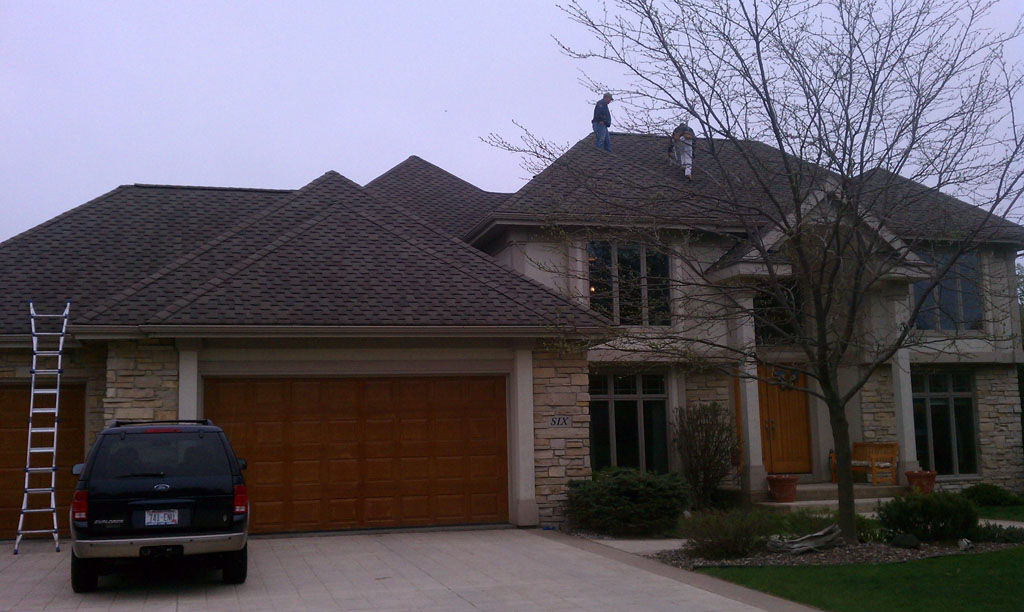
They almost never chew through sound, intact roofing. They find an existing weak point, most often rotted or gapped fascia and soffit, a gap at the roof-to-wall intersection, damaged vent screening, or an old chimney opening, and widen or exploit it. Squirrels have continuously growing teeth and will gnaw at wood around an opening, while raccoons are strong enough to tear back roofing material and pull apart soffit gaps.
Get My Free Estimate →- They don't create entry points, they exploit them
- Signs an animal has already gotten in
- What the damage actually costs to fix
- Wildlife removal vs. the roof repair
- Why Wisconsin homes see this seasonally
- What to check yourself, safely, from the ground
- Preventing it from happening again
- Get the roof closed up properly
- FAQs
A scratching sound in the ceiling at dusk is usually the first sign, and by the time most homeowners hear it, an animal has already been getting in and out of the roof for a while. Squirrels and raccoons don't chew through solid, sound roofing to get in. They find an existing weak point and make it bigger.
Here's how they actually get in, what the damage really looks like once they're inside, and what it costs to fix it properly, meaning closing the entry point, not just evicting the animal.
They don't create entry points, they exploit them
This is the part that surprises homeowners: a squirrel or raccoon almost never chews a fresh hole through intact, healthy wood and shingles. They find soft, already-compromised wood and widen it, or they push through a gap that was already there and just never noticed.
The common entry points on a Wisconsin house:
- Rotted or gapped fascia and soffit, especially where a gutter has been overflowing for a while and softening the wood behind it
- The roof-to-wall intersection, where flashing has pulled away or a gap was never sealed correctly
- Gable end vents and ridge vents with damaged or missing screening
- Chimney chases and old, unused chimney openings, particularly on older homes
- Attic fan and bath fan vent covers that have cracked, warped plastic louvers
Squirrels are strong enough to enlarge a small existing gap significantly, and their teeth grow continuously, so gnawing at wood around an opening is a normal behavior for them, not a sign of anything unusual about your house. Raccoons are larger and stronger still, and an adult raccoon can tear back roofing material and pull apart a soffit gap that a squirrel could only squeeze through.
Signs an animal has already gotten in
Scratching, scurrying, or thumping sounds, most noticeable at dawn and dusk when squirrels are most active, or at night for raccoons
- A visible gap, torn soffit, or chewed opening at the roofline, sometimes with debris or staining around it
- Droppings in the attic, along the attic floor or insulation near an entry point
- Flattened or displaced insulation, from nesting material being packed into one area
- A persistent, unpleasant odor, which can mean nesting, droppings, or in worse cases, an animal that died inside a wall or attic cavity
- Grease marks or dark smudging around an entry hole, from the animal's fur repeatedly brushing the same edges going in and out
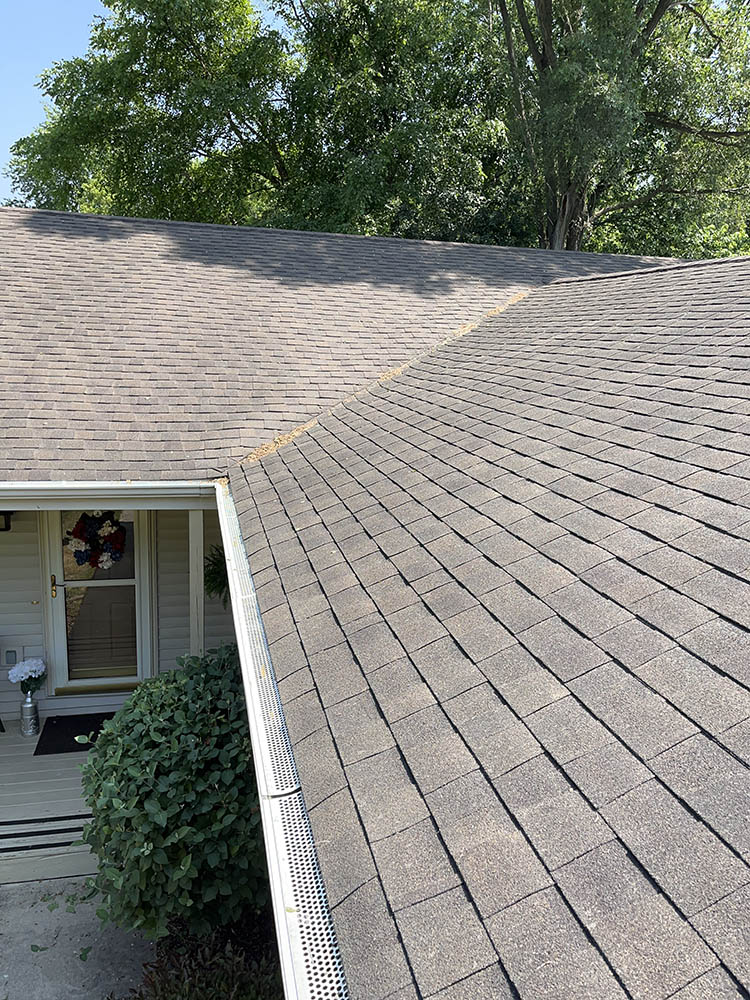
What the damage actually costs to fix
Wildlife entry rarely stays limited to the hole they came in through. The real cost usually has three parts.
The entry point itself. Rotted fascia or soffit that let the animal in has to be replaced, not just patched, since patching over wood that's already soft doesn't hold and doesn't stop a determined animal from reopening it. Depending on how much fascia and soffit needs replacing, this commonly runs from a few hundred dollars for a small section to well over a thousand for a longer run.
What's damaged inside. Once inside, squirrels and raccoons chew and displace insulation for nesting, and can damage wiring, which is a real fire-safety concern, not just a cosmetic one. Raccoons in particular are heavy enough to stress or crack drywall and ceiling material if they're denning directly above a room. Insulation replacement in an affected section, wiring inspection and repair if chewing is found, and any interior ceiling repair all add to the total, and the range varies widely depending on how long the animal was present and how much area is affected.
Exclusion and prevention. This is the step that actually stops it from happening again: sealing every current and potential entry point with material the animal can't chew or pry through, not just closing the one hole that was found. Skipping this step is the single most common reason wildlife problems come back within a year or two, sometimes at a different spot on the same roofline.
Wildlife removal vs. the roof repair
It's worth being clear about the difference between two separate jobs, because they're often handled by different people.
Wildlife removal (safely getting the animal out, and in the case of a mother raccoon or squirrel, handling any young that may be denning with her) is wildlife control work, not roofing work. In Wisconsin, this is regulated, and it should be done by someone experienced with humane, legal removal methods rather than attempted as a DIY project, especially with raccoons, which can be aggressive when cornered and can carry rabies.
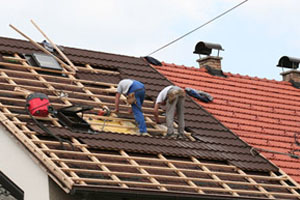
Roof and structural repair (fixing the entry point, replacing damaged fascia, soffit, decking or insulation, and sealing the roofline so the animal or the next one can't get back in) is roofing and exterior repair work. This is the part we handle: once an animal has been safely removed, we repair the damage and close the roof back up properly so it doesn't happen again at the same spot.
A repair done before an animal is confirmed gone can trap it inside, which creates a worse problem than the one you started with. Getting the sequence right matters.
Hearing something in the attic, or already found a chewed opening at the roofline? We'll inspect the roof, identify every current and potential entry point, and give you a straight repair plan once the animal situation is resolved. Call (608) 909-9109.
Why Wisconsin homes see this seasonally
Fall is the peak season for squirrels and raccoons looking for a warm, dry place to den for winter, which is exactly when a Wisconsin attic starts looking attractive compared to a tree cavity or a ground den. Spring is a second smaller peak, tied to raising young. A gap that's been sitting unnoticed all summer often gets discovered and used for the first time once the weather turns in October and November.
Older homes with original wood fascia and soffit, or homes with a gutter that's been overflowing onto the same section of fascia for a season or two, tend to see this more than newer construction with vinyl or aluminum soffit and intact, well-maintained trim. If you've had recurring gutter overflow at one spot on the house, that's worth checking as a possible weak point before it becomes an entry hole.
Want a straight answer on your roof?
We'll inspect it, document everything, and tell you honestly what you're looking at, even if the answer is patch it for now. No pressure.
What to check yourself, safely, from the ground
Walk the roofline and look up at the fascia and soffit for gaps, staining, or sections that look different from the rest
- Check gable vents and any roof vents for torn or missing screening
- Note any spot where a gutter has been visibly overflowing, since that's exactly the kind of chronic moisture that softens wood into an easy entry point
- Listen for activity at dawn and dusk over a few days if you suspect something but aren't sure
What not to do: don't attempt to seal a hole you suspect an animal is actively using without confirming it's empty first, and don't try to handle a raccoon removal yourself. Both of those are the fast way to make the problem worse or get hurt.
Preventing it from happening again
Once an entry point is properly repaired, the best ongoing prevention is straightforward maintenance: keep gutters clear and functioning so fascia stays dry, replace any soffit or fascia showing early rot before it becomes an opening, and keep tree branches trimmed back from the roofline, since overhanging branches are how a lot of squirrels reach the roof in the first place. An annual look at the roofline from the ground catches most of this before it becomes an active problem.
Get the roof closed up properly
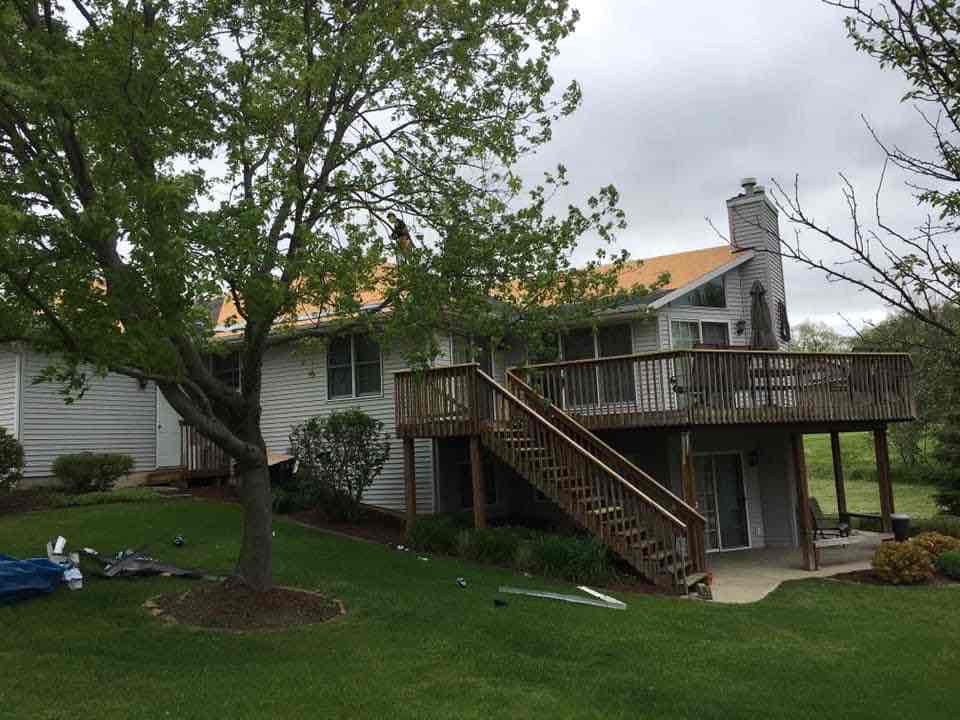
If you've got confirmed or suspected animal activity in the roof or attic, the priority is getting the entry point identified, the animal safely out, and the opening repaired with material and detailing that actually holds, not just patched over. We'll walk the roofline, find every current and potential weak point, and give you an honest repair plan.
Buckshot Exteriors has worked on residential roofing across south-central Wisconsin since 1979. The inspection is free, on-site, and there's no pressure either way.
Call (608) 909-9109 for a free roof inspection.
Get a straight answer on your Madison roof
Wisconsin storm season and insurance non-renewal letters do not wait. Get a free, no-obligation inspection and an honest assessment of exactly what your roof needs, even if the answer is to wait.