
The gutter is the usual source. Water can spill over the back of the gutter, leak from a seam or corner, or wick behind a gutter that has no drip edge above it. A sagging gutter leaves a gap that water falls through.
Get My Free Estimate →- When the soffit drips, and what that points to
- Water getting behind the gutter
- Ice dams and icicles behind the gutter
- Drips on a cold, dry day: moisture from the attic
- What to check before you call a roofer
- How each cause is fixed
- Why a dripping soffit should not wait
- Get the drip traced before the next freeze
- FAQs
Water dripping from a soffit comes from above it. The usual sources are a gutter spilling behind itself, a missing drip edge, an ice dam in winter, or a roof leak at the eave.
When it drips tells you which one to suspect. Drips during rain point to the gutter or the roof edge, drips during a thaw point to an ice dam, and drips on a cold, dry day point to moisture from the attic.
Buckshot repairs the whole roof edge, from gutters and drip edge to soffit and fascia. This guide helps you narrow down the cause before the wood behind the soffit rots.
When the soffit drips, and what that points to
Match the timing of the drips to the likely cause. Each row below has its own section further down.
| When it drips | Most likely cause | Where to look |
|---|---|---|
| During or just after rain | Gutter spilling behind itself, a leaking gutter seam or a missing drip edge | The back edge of the gutter and the top of the fascia |
| During a thaw, with ice along the roof edge | An ice dam pushing meltwater under the shingles | A band of ice at the eave and icicles behind the gutter |
| On a cold, dry day with no melting snow | Condensation or melting frost from the attic | The underside of the roof deck in the attic |
| Only in heavy or wind-driven rain | A leak at the eave, or flashing higher up the roof | Shingles and flashing above the wet spot |
Water getting behind the gutter
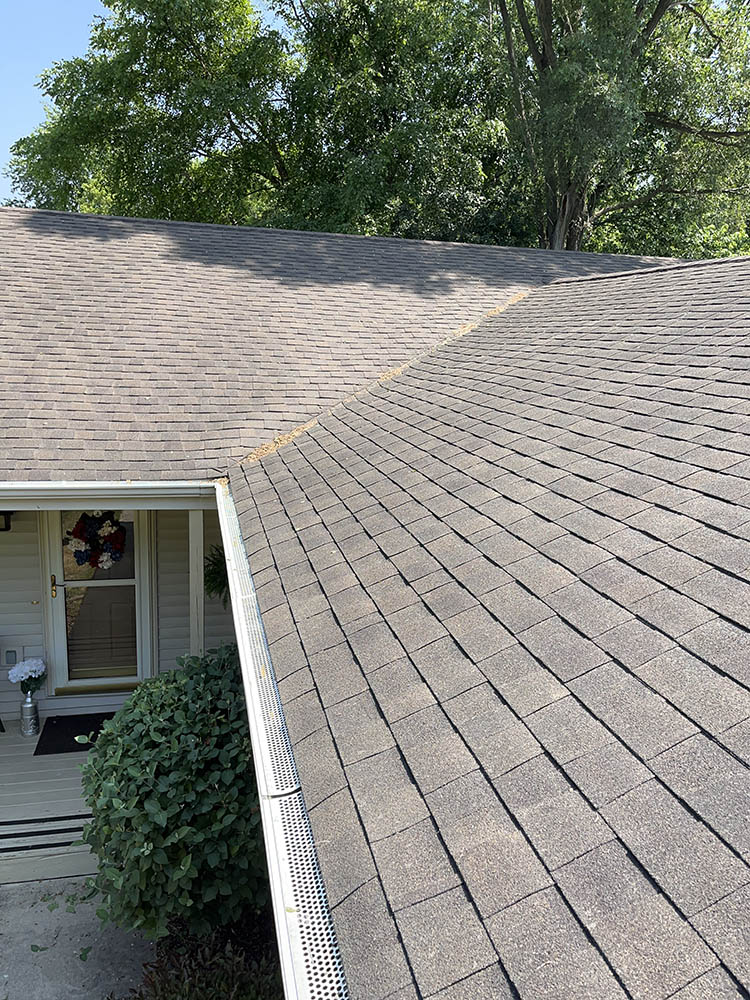
During rain, check the gutter first. Water reaches the soffit from a gutter in three ways. It spills over the back edge, it leaks from a seam or corner above the soffit, or it wicks behind a gutter that has no drip edge over it.
Drip edge is the metal strip at the roof edge that sends water into the gutter. Without it, water wicks behind the gutter and soaks the top edge of the fascia. Our guide to drip edge flashing explains how wet fascia loosens the hangers and lets moisture into the soffit.
A gutter that sags or has pulled away from the fascia leaves a gap that water falls straight through. Our guides to gutters pulling away from the house and gutters leaking at the seams cover those two problems.
Ice dams and icicles behind the gutter
An ice dam forms when heat escaping into the attic melts the snow on the roof and the meltwater refreezes at the cold eave. Water then pools behind the ice and backs up under the shingles. It can come out through the soffit or inside the wall.
Icicles hanging from the front of the gutter are usually harmless. Icicles forming behind the gutter or on the siding mean water is getting behind the gutter, often backed up by ice. Our guide to icicles on gutters shows which patterns to worry about.
The lasting fix for an ice dam happens in the attic, as our ice dam guide explains. Our ice dam removal crews move the same day on an active ice dam leak, then correct the ventilation and insulation behind it.
Drips on a cold, dry day: moisture from the attic
A soffit that drips with no rain and no snow melting on the roof is often showing condensation. Warm, moist air from the house leaks into the attic and the eaves, where it condenses or freezes on cold wood. When it warms up, that moisture drips.
The usual sources are gaps in the ceiling below the attic and bath or kitchen fans that vent into the attic instead of outside. Our guide to frost in the attic lists where that moist air gets in.
Blocked soffit vents make it worse, because the attic cannot pull in dry outside air. Our guide to vented and solid soffit explains how soffit vents feed the attic, and our attic ventilation service balances the intake and exhaust.
What to check before you call a roofer
You can narrow down the cause from the ground and the attic. Never climb onto a wet or icy roof to look.
- Note when it drips, whether during rain, during a thaw or on a dry cold day, and take dated photos.
- Watch the gutter during a rain for water pouring off the back edge or dripping at a corner.
- Look for peeling paint, dark stains or sagging along the soffit and fascia.
- Press gently on the soffit with a broom handle. Soft or spongy wood means rot has started.
- In the attic, shine a flashlight on the roof deck above that wall and look for frost, damp wood or wet insulation.
Water dripping from your soffit? Our roof inspection is free, and we trace the water to its source before we price any repair.
Free on-site inspection · Family-owned since 1979Want a straight answer on your roof?
We'll inspect it, document everything, and tell you honestly what you're looking at, even if the answer is patch it for now. No pressure.
How each cause is fixed
The fix depends on where the water starts. Our crews deal with the source first, then replace any wood the water has damaged.
- Gutter problems. Most sagging or leaking gutters are re-hung, re-pitched and re-sealed rather than replaced. Rotted fascia is replaced first, so the gutter is anchored in sound wood.
- Missing drip edge. New drip edge is added at the roof edge so water drops into the gutter. On an existing roof, the gutters come off and the metal goes in under the first course of shingles, which is simpler during a roof replacement.
- Ice dams. The ice is removed, then the attic ventilation and insulation that caused it are corrected.
- Attic moisture. Each bath and kitchen fan is run to its own roof or wall cap, and blocked soffit vents are opened or replaced.
- A leak at the eave. Damaged shingles and flashing are repaired. During a replacement, ice and water shield goes along the eaves to stop water backing up under the shingles.
Damaged soffit and fascia are replaced in wood, aluminum wrap or vinyl. Our guide to soffit and fascia replacement cost explains what drives the price.
Why a dripping soffit should not wait
The fascia behind the soffit holds your gutters. Once that board softens, the gutters sag and pull loose, and even more water misses them.
Wet soffit also lets pests into the eave and moisture into the attic. The rafter tails behind the soffit are structural wood, so a long-running drip can turn a gutter repair into carpentry.
Get the drip traced before the next freeze
Buckshot Exteriors is family-owned, has served homeowners since 1979, and has offices in Madison, Wisconsin and Centerville, Iowa. We repair gutters, drip edge, soffit and fascia, roofs and attic ventilation, so one free roof inspection covers every possible source.
Call (608) 909-9109 to schedule your free inspection, or send us a message and we will set a time. If an ice dam is leaking right now, the same number reaches our 24/7 storm line.
Get a straight answer on your Madison roof
Wisconsin storm season and insurance non-renewal letters do not wait. Get a free, no-obligation inspection and an honest assessment of exactly what your roof needs, even if the answer is to wait.