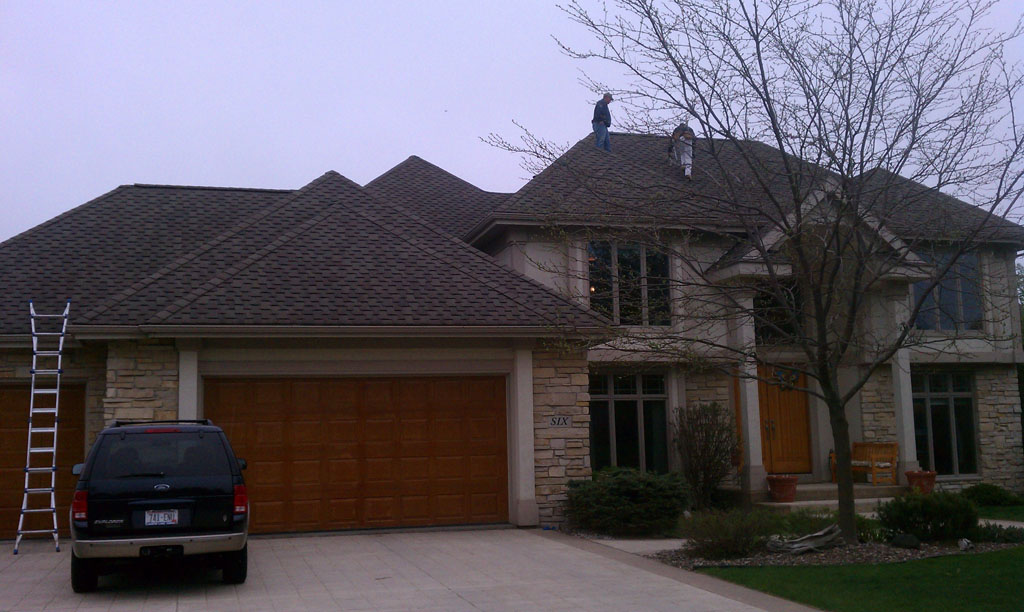
Most residential inspections take 45 minutes to an hour and a half, depending on roof size, pitch, and how many layers are present. A contractor who's up and down in 10 minutes hasn't done a thorough job.
Get My Free Estimate →Your roof does its job quietly. Most homeowners never think about it until water shows up on the ceiling or an adjuster is standing in the driveway after a hailstorm. By that point, a small problem has usually become a bigger one.
Getting a roof inspection before something goes wrong - or right after a storm - is one of the smartest, cheapest things you can do as a homeowner. But most people have no idea what actually happens during one. What does the contractor look at? How long does it take? What will they tell you at the end?
Here's a straightforward walkthrough of exactly what a professional roof inspection covers, what red flags look like in south-central Wisconsin, and what you should expect from any contractor you let on your roof.
Before the Contractor Even Gets on the Roof
A good inspection starts from the ground. Before climbing a single ladder, an experienced roofer will walk the perimeter of your home and look at the big picture.
From down here, we're checking the roofline itself. Is the ridge straight? Are there any visible sags or dips in the decking? Are gutters pulling away from the fascia? Are there obvious missing shingles or patches that don't match?
We're also looking at the grade of your landscaping near the foundation - water that doesn't drain away from the house can eventually show up as interior moisture problems that get blamed on the roof.
This ground-level pass takes maybe 10 minutes and tells a lot before we ever set foot on the ladder.
What We Actually Check on the Roof
Once we're up top, here's what a thorough inspection covers:
Shingles - Condition, Age, and Wear Patterns
This is the obvious one, but it goes deeper than "are there any missing shingles?"
We're looking at granule loss - the tiny mineral granules embedded in asphalt shingles protect them from UV and impact. When they start washing off, shingles age fast. You'll often see this as dark, bare patches or a buildup of granules in your gutters.
We check for curling (either upward at the edges or cupping in the middle), cracking, blistering, and brittleness. In Wisconsin, the freeze-thaw cycle is brutal on aging shingles. A shingle that looks okay in August can be cracked and lifting by April.
We also note how many layers are present. Wisconsin building code allows up to two layers of asphalt shingles. If there are already two layers, your next replacement means a full tear-off - which affects cost and is something you should know now, not when you're getting quotes.
Flashing - The Most Common Source of Leaks
Flashing is the metal (usually aluminum or galvanized steel) that seals the joints where the roof meets something else - chimneys, skylights, vents, dormers, and valleys.
This is where most leaks actually start. Flashing can lift, rust, separate, or get sealed over with caulk by a previous contractor who was cutting corners. We check every transition point carefully.
Around chimneys especially, we look for step flashing and counter flashing that's properly overlapped and secured. A chimney that's been "caulked and called good" is a ticking clock.
Ventilation - The Problem Nobody Talks About
Poor attic ventilation is one of the most overlooked causes of premature roof failure in Wisconsin.
In winter, warm air from your living space rises into the attic. If it can't escape, it creates heat buildup that melts snow unevenly - leading to ice dams. Those dams force water back under shingles and into your home. In summer, trapped heat degrades shingles from the underside faster than any storm would.
During the inspection, we check that your ridge vents, soffit vents, and any box or power vents are clear, functional, and balanced. A properly ventilated attic extends shingle life and keeps your energy bills lower.
Gutters and Drainage
Gutters are part of the roof system, full stop. Clogged or sagging gutters cause water to back up under the drip edge and rot the fascia board beneath. We check for proper slope, secure attachment, and signs of overflow damage.
We also look at the downspout extensions - water needs to move away from your foundation, not pool against it.
The Attic (When Accessible)
If we can get into your attic, we will. This is where you see the truth about what's happening above your ceiling.
We're looking for daylight coming through (bad), water stains on the decking or rafters (tells us where and how long water has been getting in), mold or mildew (a ventilation problem), and the condition of the insulation.
A homeowner can sometimes spot these signs themselves before calling us - a flashlight and a careful look from the attic hatch takes five minutes and can tell you a lot.
Storm Damage: What It Actually Looks Like
After a hail or wind event in Dane, Rock, or Green County, we get a lot of calls from homeowners who aren't sure if they have damage or not. Here's what we look for.
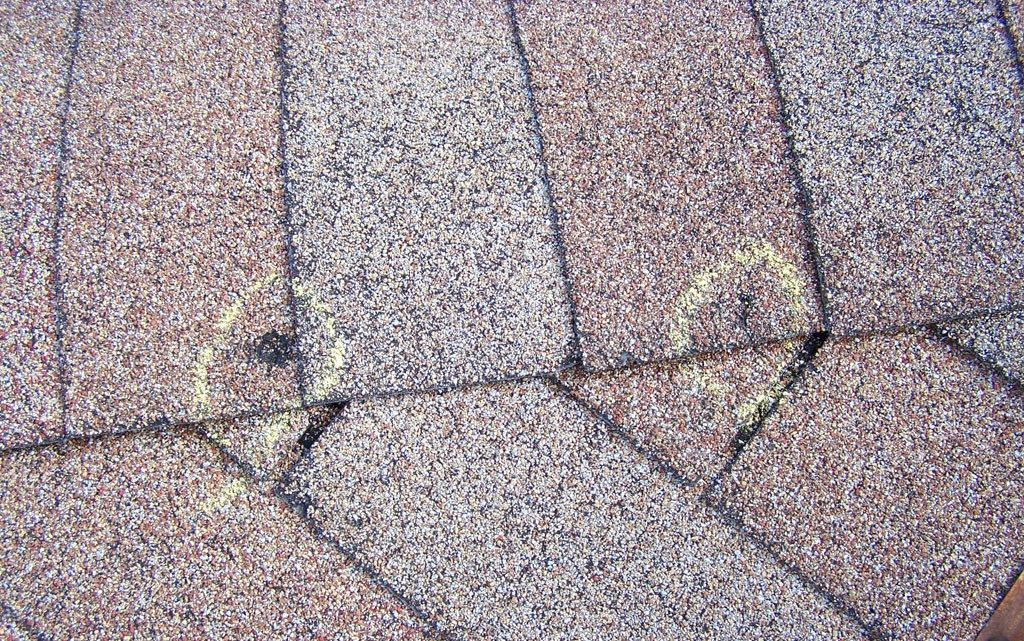
Hail damage shows up as soft, bruised-looking impact marks on shingles - you can feel them with your hand, like a dent in a peach. It also knocks granules loose in a circular pattern around the impact point. Hail damage on metal flashing, vents, and gutters shows as small round dents and is often the clearest proof for an insurance adjuster.
Wind damage lifts shingles along the edges and ridges, breaks the seal strips, and can cause whole tabs to blow off. Wind can also drive rain under lifted shingles without removing them entirely - so the damage isn't always visible until the next rainstorm.
If you've had a significant storm, don't wait months to get it looked at. Insurance adjusters want to see fresh, documented damage. The longer you wait, the harder it is to prove the storm caused it.
We meet homeowners' insurance adjusters on-site to make sure nothing gets missed. That's not standard practice with every contractor - but it should be. Learn more about our storm damage inspection and claims process.
What You Should Receive at the End of an Inspection
A professional inspection isn't just a guy telling you "looks okay" or "you need a new roof." You should walk away with:
- Photos of every area of concern, taken on your roof that day
- A clear explanation of what's a maintenance item, what's a repair, and what's approaching end of life
- An honest assessment of how many years your roof likely has left
- Written documentation if storm damage is present (for insurance purposes)
- A repair or replacement estimate if work is needed - with no pressure to sign anything that day
If a contractor won't give you photos or a written summary, that's a red flag. A legitimate roofer wants you to understand what you're paying for.
If you've been putting off getting your roof looked at - spring after a Wisconsin winter is the right time to do it. Reach out for a free inspection and we'll tell you exactly where things stand.
Want a straight answer on your roof?
We'll inspect it, document everything, and tell you honestly what you're looking at, even if the answer is patch it for now. No pressure.
How Often Should You Get an Inspection?
For most Wisconsin homes, twice a year makes sense: once in spring (after the ice dam and freeze-thaw season ends) and once in fall (before the first snow). Add an inspection any time you have a significant storm.
If your roof is under 10 years old and you haven't had storm damage, once a year is probably fine. If it's 15-plus years old, don't skip spring. Asphalt shingles in south-central Wisconsin typically last 20-25 years under normal conditions, but that range shrinks fast if ventilation is poor, gutters are neglected, or storm damage goes unaddressed.
Our residential roofing page covers the full picture of what goes into a long-lasting roof system - worth a read if you're trying to understand your options.
What a Roof Inspection Costs (and Why Free Isn't Always Cheap)
Many reputable roofing contractors - including us - offer free inspections for homeowners. That's not a gimmick. It's how the industry works: we invest the time, you get honest information, and if work is needed, you have the option to hire us.
What you want to avoid is an "inspection" that takes eight minutes and ends with a high-pressure pitch to sign a contract before the contractor leaves your driveway. That's not an inspection - that's a sales call.
A real inspection takes time. If you're in Fitchburg, Janesville, Monroe, or anywhere in between and you want to know what's actually happening with your roof, we'll come out, take our time, and give you a straight answer.

The Bottom Line
Most roof problems don't announce themselves until they've been brewing for a while. A good inspection catches the slow leaks, the failing flashing, the ventilation issues, and the storm damage before they become emergency repairs or full replacements.
You don't need to be an expert. You just need someone honest to take a look.
Buckshot Exteriors has been doing this work in south-central Wisconsin since 1979. We're not going anywhere, and we don't make money by telling people they need more work than they do. Our reputation here is built on straight talk and solid work - you can read what our customers say on our reviews page.
Ready to know where your roof actually stands? Call us or fill out our contact form for a free, no-pressure roof inspection. We'll get up there, take photos, and give you a written summary of everything we find. If you need a roof replacement in Madison or just a few repairs, we'll tell you honestly which one it is.
No guessing. No surprises. Just a clear picture of what you're working with.
Get a straight answer on your Madison roof
Wisconsin storm season and insurance non-renewal letters do not wait. Get a free, no-obligation inspection and an honest assessment of exactly what your roof needs, even if the answer is to wait.