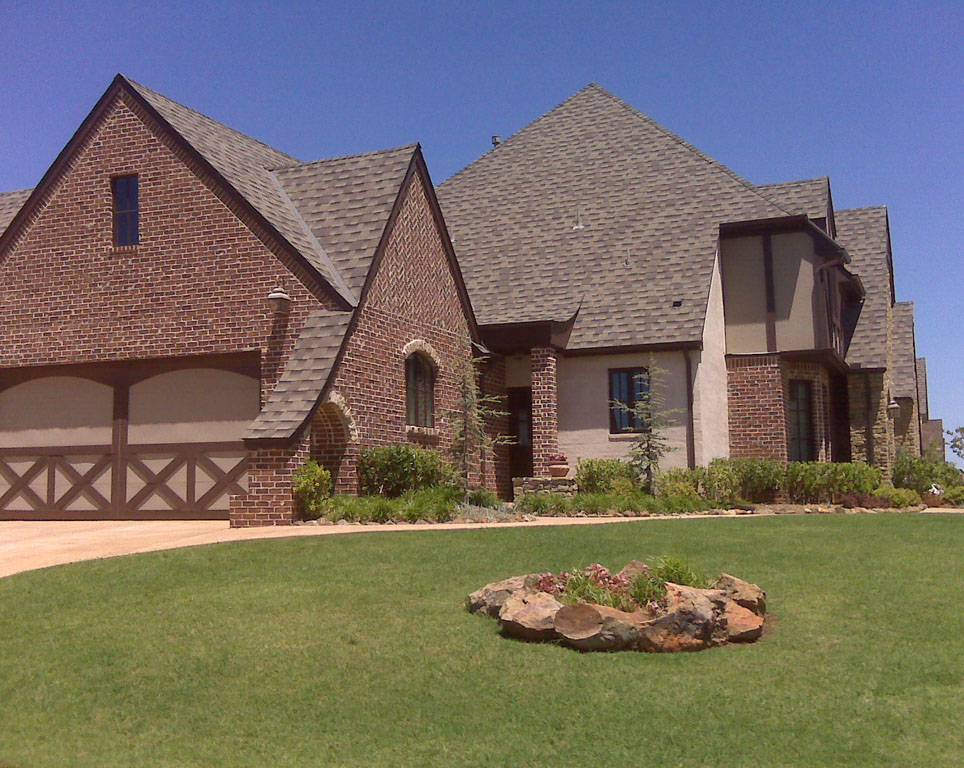
The wood roof deck swells and shrinks with heat and humidity, and each cycle loosens the nail and pushes it up. Poor attic ventilation and OSB decking tend to make it worse.
Get My Free Estimate →- What a nail pop is
- Why nails back out of a roof deck
- How to spot nail pops without climbing on the roof
- Why nail pops matter
- How a proper nail pop repair works
- When many nail pops point to a bigger problem
- Repair or replace an older roof
- Preventing nail pops at your next replacement
- Get those bumps checked
- FAQs
Nail pops are roofing or deck nails that have worked their way back up and lifted the shingle above them. You see them as small round bumps in a shingle row, sometimes with a shiny nail head showing through.
They happen because the wood roof deck swells and shrinks with heat and humidity, and each cycle pushes the nail up a little further. Weak attic ventilation speeds that up.
The fix is not hammering the nail back down. A proper repair sets a new nail beside the old one in fresh wood, seals the old hole, and replaces any shingle the nail has damaged. Buckshot handles this as part of our roof repair service.
What a nail pop is
A nail pop is a fastener that has backed out of the roof deck far enough to lift the shingle over it. The nail is still in the wood, just not deep enough to hold anything down.
Most pops are shingle nails from the current roof. Some are leftover nails from an older layer, and some are deck nails backing out from below.
Which kind it is matters, because a backing-out deck nail says something about the deck itself. Either way, the shingle above it is what gets ruined.
Why nails back out of a roof deck
Wood roof decking, whether plywood, OSB or older plank boards, swells as it takes on heat and humidity and shrinks as it cools and dries. The nail does not move with it.
Each cycle loosens the nail's grip and pushes it up a little more. All else being equal, OSB decking tends to show more nail pops than plywood.
Weak attic ventilation lets heat and moisture build up under the deck, which makes the cycle harder. Wisconsin's hot summers and freeze-thaw swings give the deck plenty of cycles.
How to spot nail pops without climbing on the roof
You can find most nail pops from the ground and from the attic, and that is where you should stay. Walking on a shingle roof is dangerous and can crack older shingles.
From the ground, use binoculars early or late in the day, when low sunlight throws shadows across the roof.
- Small round bumps in an otherwise flat row of shingles
- Shingle tabs that sit up instead of lying flat
- A bright metal dot where a nail head has worn through
- A dark streak below a bump where granules have washed off
In the attic, use a flashlight on a dry day. Nail points coming through the deck are normal, but a rust ring around a nail, a dark stain around one fastener, or a loose nail means water has been following it.
Nails that are meant to show
Not every visible nail head is a pop. Nails at the end of the ridge cap and around some flashing are often left exposed on purpose and covered with sealant.
Those should sit flush with intact sealant over them. A pop is raised, sits out in the main field of the roof, and lifts the shingle above it.
Nail pops or storm damage?
Nail pops are firm, round bumps with something underneath. Hail bruises are soft with granules knocked off, and wind damage shows as creased, folded or missing tabs.
The two can show up together, because a shingle already lifted by a pop is easier for wind to catch. After a storm, our guide on how to check for wind damage on a roof helps you tell them apart from the ground.
Why nail pops matter
A popped nail damages the shingle it lifts and opens a path for water. Three things go wrong at once.
The nail head rubs against the shingle above it each time wind moves it, and over time it can wear a hole through. The lift also breaks the seal strip, the adhesive line that holds each shingle down, which leaves that shingle open to wind.
Water that gets in follows the nail into the deck. It can soak the wood around the hole for a long time before a stain shows on a ceiling.
A few pops on a dry roof is maintenance rather than an emergency. Call right away if you have an active drip, fresh staining in the attic, or pops alongside lifted or missing shingles.
Not sure whether those bumps are nail pops, hail bruises or something worse? Our on-site roof inspection is free, so you can find out before the next round of wind and freeze-thaw.
Free on-site inspection · Family-owned since 1979How a proper nail pop repair works
A correct repair puts a new nail into solid wood, seals the old hole, and replaces any damaged shingle. That is standard roof repair work for our crews.
- Gently break the seal on the shingles above and lift them without cracking them.
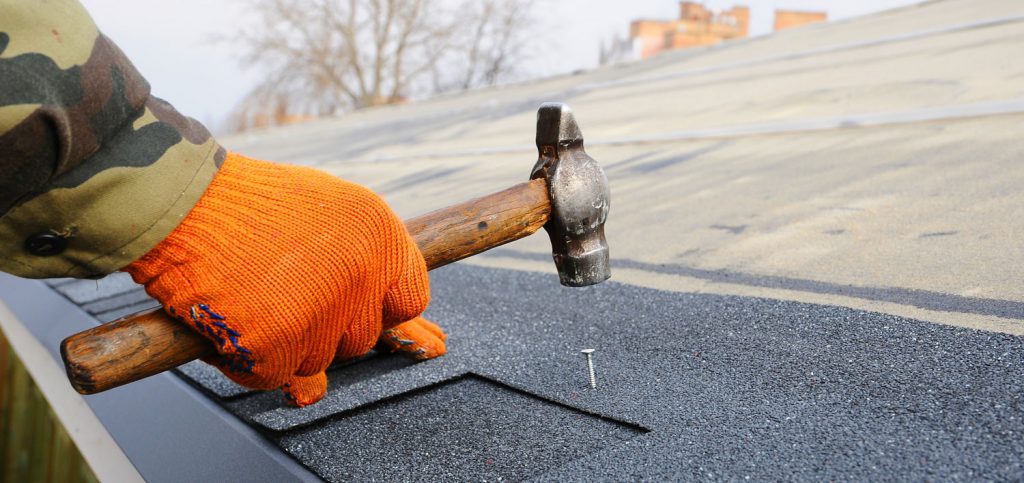
- Pull the popped nail if it comes out, then drive a new nail beside it into fresh wood.
- Cover or seal the old hole so water cannot follow it.
- Replace the shingle if the nail has worn through it, cracked it or torn its nail slot.
- Seal the lifted tabs back down.
If the new nail will not grip, the deck has lost its holding power. That calls for a look at the decking rather than another surface patch.
Why hammering the nail back down is not a fix
Hammering puts the nail back into the hole it has already loosened, so it has little to grip and tends to rise again. Striking an older shingle, especially in cold weather, can also crack it.
The old hole stays open as well. Unless it is sealed or covered, water still has a path into the deck.
Repairs in cold weather
Asphalt shingles get brittle in the cold, and lifting a sealed shingle on a freezing day can snap it. Non-urgent pop repairs are often best scheduled for a milder day.
An active leak is the exception. Our 24-hour storm line takes emergency calls whatever the weather.
Want a straight answer on your roof?
We'll inspect it, document everything, and tell you honestly what you're looking at, even if the answer is patch it for now. No pressure.
When many nail pops point to a bigger problem
Pops spread across a whole roof plane, or pops that come back after a repair, usually mean the cause is under the shingles. Surface repairs alone only buy time in that case.
The pattern helps. A tight cluster or a straight line often traces to one rafter bay or one sheet of decking, while pops spread evenly across a slope point to heat and moisture cycling the deck.
Attic ventilation
Poor ventilation lets heat and moisture build up under the deck, which drives the swell-and-shrink cycle harder. In winter it also feeds ice dams and condensation under the roof.
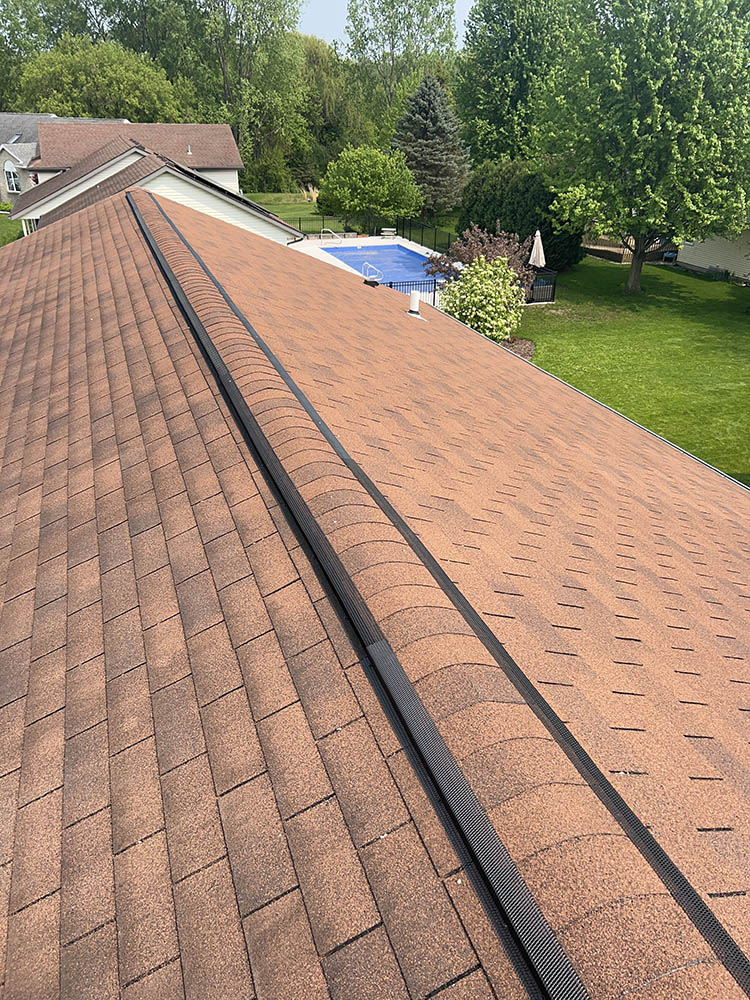
Air needs to come in low at the soffits and leave high near the ridge. Our attic ventilation service corrects the intake and exhaust, and our comparison of ridge vents and box vents explains how each one works.
Insulation on the attic floor is a separate trade. Ventilation is the part of the fix that sits on the roof.
The roof decking
Nails need sound wood to hold. Thin, delaminated or swollen decking, or boards already nailed through several times, will keep letting fasteners go.
If pops return after a good repair, our roof decking service replaces the damaged sheets. Our guide on when roof decking needs replacing covers the signs.
Repair or replace an older roof
On an older roof with pops across several slopes, repair money is often better put toward a replacement. You would be resetting nails in a deck and shingles that are both near the end of their life.
A spot repair can still make sense to get through a winter. An inspection shows which choice fits your roof.
Preventing nail pops at your next replacement
A roof replacement is the best chance to prevent nail pops, because the deck is open and easy to fix. A few choices matter most.
- A full tear-off to the deck, so every nail goes into wood instead of an old shingle layer
- Replacing soft or damaged decking while it is exposed
- Nailing in the shingle maker's nailing zone, flush and with nails long enough to grip the deck
- Balanced attic ventilation so the deck is not overheating all summer
These are all part of how a residential roofing job should be specified. Ask any contractor how they handle bad decking once it is exposed and what they plan for ventilation.
Get those bumps checked
Buckshot Exteriors is family-owned, has served homeowners since 1979, and has offices in Madison, Wisconsin and Centerville, Iowa. Our on-site roof inspection is free, so you can find out whether you need a quick repair, a ventilation fix or a larger roof decision.
Call (608) 909-9109 to schedule your free inspection, or send us a message and we will set a time. If you would rather check first, the ground and attic checks above are a good start.
Get a straight answer on your Madison roof
Wisconsin storm season and insurance non-renewal letters do not wait. Get a free, no-obligation inspection and an honest assessment of exactly what your roof needs, even if the answer is to wait.