Usually not. Blistering is generally treated as a product or manufacturing condition rather than a sudden accidental loss. Genuine blistering is handled through the shingle manufacturer's warranty, which typically covers materials only.
Get My Free Estimate →- What shingle blistering is
- What hail damage looks like on asphalt shingles
- Blistering vs hail damage: the differences
- How to confirm hail hit your address
- Why adjusters and contractors disagree
- What to do if your claim is denied as blistering
- Check the rest of the house too
- Choosing a roof that resists hail
- Getting your roof inspected
- FAQs
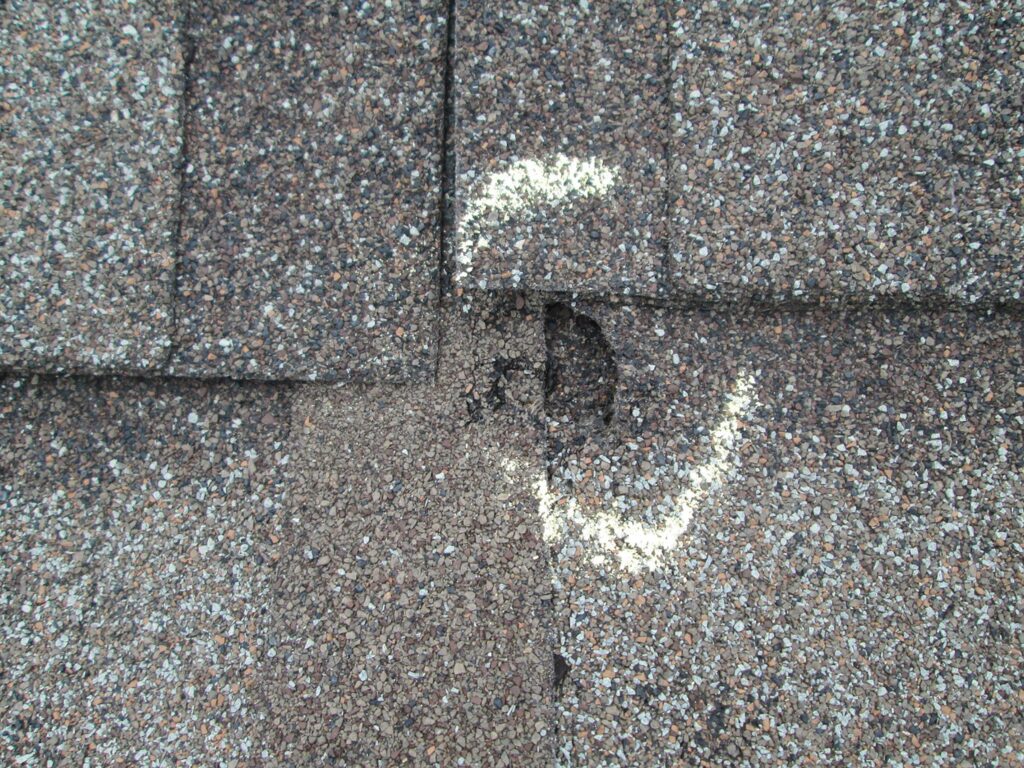
Blisters are small, steep-sided pits where gases inside the shingle's asphalt expanded and popped through the surface. Hail damage is a shallow, rounded bruise where a stone struck, scattered randomly and heaviest on the slopes that faced the storm.
From the ground both look like dark spots, which is why blistering is a common reason given when a hail claim is reduced or denied. The edges, the depth, the granules, the pattern across the roof and dents on the soft metal around the house usually settle it.
What shingle blistering is
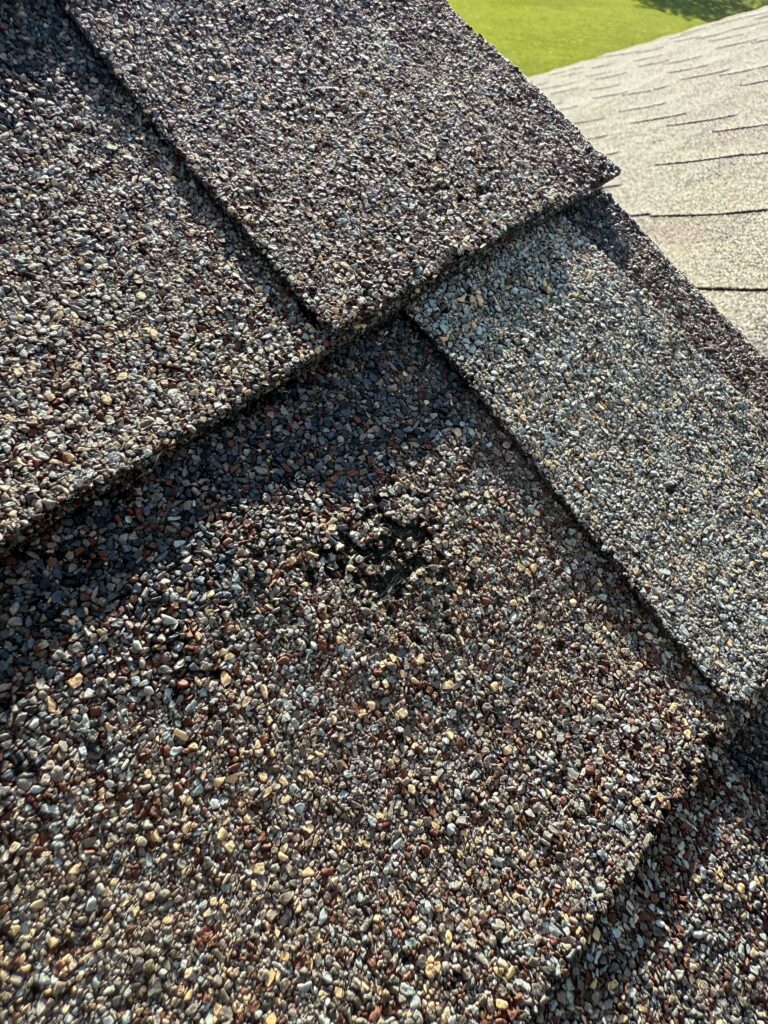
Blistering is a condition of the shingle itself, not storm damage. Gases or trapped moisture inside the asphalt layer expand in the heat, push up against the granule surface and eventually break through.
What is left is a small crater with steep sides and a ragged rim. The asphalt at that spot is gone, and in worse cases the mat at the bottom of the pit is exposed.
Unopened blisters look like small raised bumps. Once they pop, the shingle loses granules faster at each spot because nothing holds them there anymore.
What causes blistering
Heat triggers blistering, so south- and west-facing slopes usually show it first. Product and manufacturing factors play a large part, which is why one roof blisters while a neighboring roof with similar exposure does not.
Poor attic ventilation is commonly cited as a contributor, because a hot attic heats the roof deck from below. Treat it as a commonly cited factor rather than a proven cause on every roof.
Is blistering a problem?
Scattered blisters on a newer roof are often mostly cosmetic. Widespread open blistering is more serious, because the asphalt is the waterproofing layer and the granules protect it from the sun.
Genuine blistering is usually handled through the shingle manufacturer's warranty rather than insurance. Those warranties generally cover materials only, so labor and tear-off usually fall to the homeowner.
What hail damage looks like on asphalt shingles
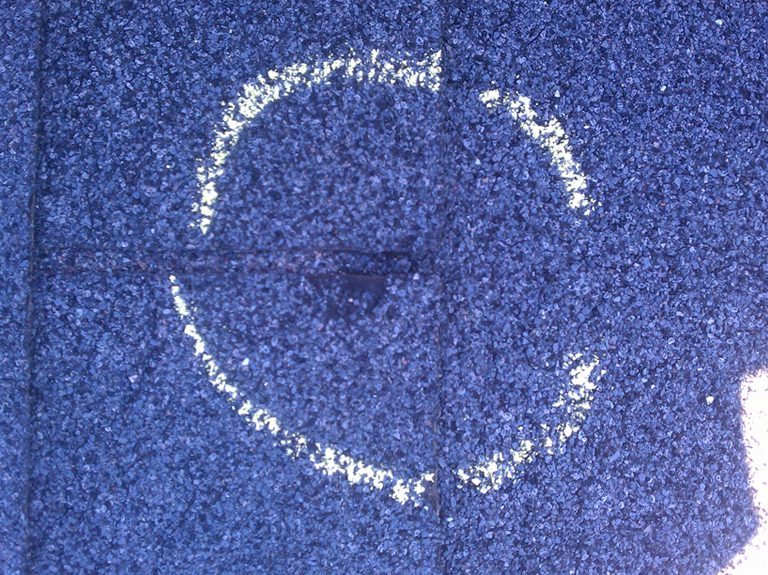
Hail leaves impact damage. The stone knocks granules loose at the point of contact and compresses the asphalt beneath into a shallow, rounded bruise with gently sloping sides.
Granules are a useful clue. On a fresh hit they are often still in the dent or pushed to one side, and the exposed asphalt looks darker and shinier than the weathered surface around it.
Hail can also fracture the mat underneath without breaking the surface. That hidden fracture is what lets water reach the deck later, which is why a bruise without a hole still counts as damage.
Where hail damage shows first
Ridge and hip caps usually take the worst of it. Cap shingles are bent over the ridge without solid deck directly beneath them, so they crack under impacts a field shingle would survive.
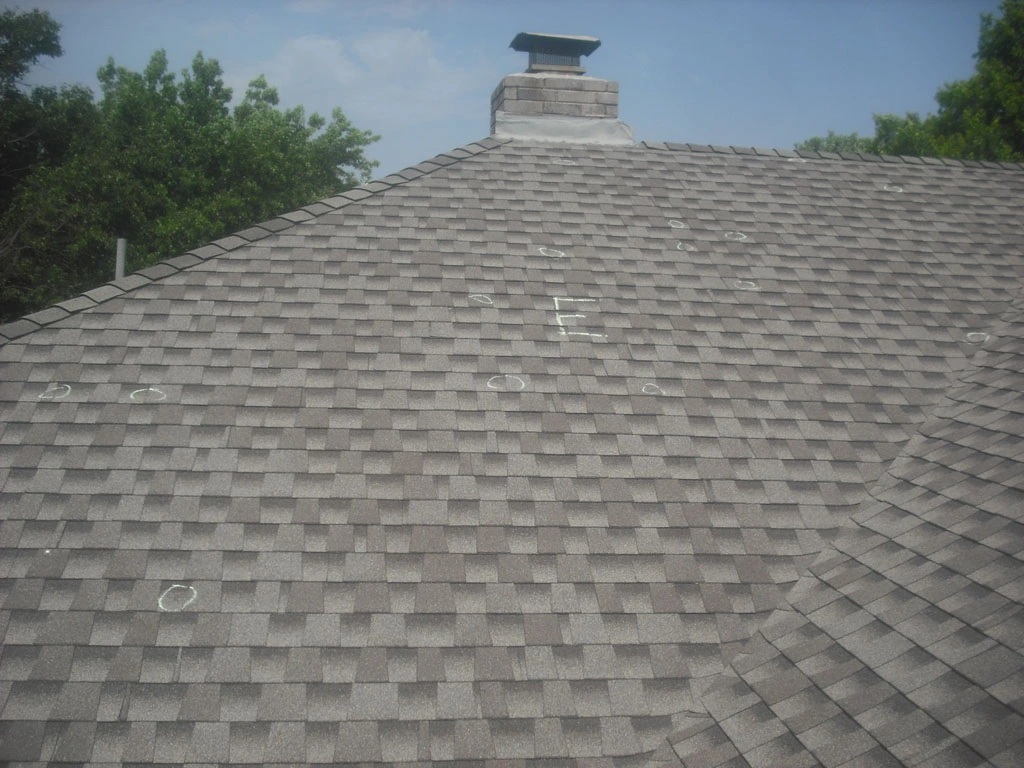
Next, look at the slopes that faced the storm. Wind drives hail at an angle, so real hail damage is random within a slope and heavier on one or two sides of the roof than the others.
Stone size matters too. Our guide to what size hail damages a roof explains when hail starts to bruise shingles rather than just denting metal.
Stay off the roof yourself. Loose granules are slippery underfoot, and a steep or wet roof is dangerous, so leave the close inspection to a roofer with fall protection.
Blistering vs hail damage: the differences
No single clue settles the question. Together, these are what a careful inspector and a careful adjuster look at.
| Clue | Blistering | Hail damage |
|---|---|---|
| Shape and edges | Steep-sided pit with a sharp or ragged rim | Shallow bruise with sides that blend into the shingle |
| Granules | Asphalt and granules gone together | Granules often still in the dent or pushed aside |
| Mat | May be exposed at the bottom of the pit, not fractured | Can be fractured from above, often felt more than seen |
| Pattern | Follows heat, often fairly even on the hottest slopes | Random and directional, uneven from slope to slope |
| Location | Mostly in the field of the shingle | Ridges, hips and storm-facing slopes hit hardest |
| Soft metals | No dents | Dented gutters, vents, downspouts, AC fins and trim |
Soft-metal evidence is the strongest single clue. Hail heavy enough to bruise shingles almost always dents gutters, roof vents, pipe flashings, downspouts or air-conditioner fins, and blistering never dents a gutter.
Findings should come from your own roof and every slope of it, not from what a neighbor's roof showed. Hail can fall unevenly, so two houses on the same street can see different damage.
When it is neither hail nor blistering
Some damaged roofs fit neither pattern. Ice dam damage concentrates at the eaves, wind damage creases or tears shingle tabs rather than denting them, and normal aging shows as even granule loss, cracking and curling across the whole roof.
How to confirm hail hit your address
Check the public weather record before you dispute anything. The National Weather Service and the Storm Prediction Center archive local storm reports by date, so you can see whether hail was reported near your home on the day in question.
A documented hail date near your property, paired with your own dated photos of dented gutters and vents, moves the conversation from opinion to record.
Why adjusters and contractors disagree
The two conditions genuinely overlap. On an older roof, weathered blisters round off at the edges and can start to resemble old hail hits in flat light.
Scope matters too. An inspection that samples only one or two slopes can miss the storm-facing side where the real hail damage sits, along with cracked ridge caps that would support it.
A blistered roof can still take real hail damage. Both conditions often appear on the same slope, and a stone that strikes an existing blister can fracture an already thin spot, so the real question is whether impact damage is also present.
Some policies now carry a cosmetic damage exclusion that can limit payment for appearance-only damage. Our guide to cosmetic damage exclusions explains what to look for in your policy.
Told your hail damage is "just blistering"? Call (608) 909-9109 for a free on-site inspection, and we will meet your adjuster on site.
Want a straight answer on your roof?
We'll inspect it, document everything, and tell you honestly what you're looking at, even if the answer is patch it for now. No pressure.
What to do if your claim is denied as blistering
Ask for the denial in writing, with the policy wording the insurer relied on and every photo the adjuster took. Then work through these steps in order.
- Get an independent inspection. Have a roofer document every slope, including ridges and hips.
- Use close-up photos with a scale. A coin or tape measure beside each mark shows the edge profile and size.
- Document the soft metals. Dented gutters, vents, downspouts, air-conditioner fins and trim separate an impact event from a product condition.
- Attach the storm record. Include the National Weather Service or Storm Prediction Center report for the date.
- Request a reinspection with your contractor present. Looking at the same shingle together resolves many disputes.
- Use appraisal for amount disputes. If the insurer agrees there was hail but disputes the scope or price, most policies include an appraisal clause.
- File a complaint if you are stonewalled. The Wisconsin Office of the Commissioner of Insurance accepts consumer complaints at no cost.
- File a warranty claim if it truly is blistering. Expect manufacturer warranty coverage to be limited to materials.
Our guide to what to do when a roof insurance claim is denied covers the dispute path in more detail.
Check the rest of the house too
Hail rarely hits only the roof, and the rest of the house often carries the claim when shingle evidence is borderline. Walk the storm-facing sides and look at siding, window trim, screens, gutters, light fixtures and painted metal doors.
Our guide to hail damage on siding shows what to look for on each siding type.
Choosing a roof that resists hail
If the roof is replaced, consider Class 4 impact-rated shingles. They pass a test in which steel balls are dropped onto the surface, and many insurers offer a premium discount for them.
Our guide to Class 4 impact-resistant shingles explains the rating and how to ask your insurer about a discount, and our residential roofing page covers what a replacement includes.
Getting your roof inspected
Call for an inspection when you know hail came through, when you see marks you cannot identify, or when a denial reason does not sit right. Call sooner if granules are piling up in the gutters, metal on the house is dented, or a new ceiling stain appears.
Buckshot Exteriors is family-owned and has worked on roofs since 1979, with offices in Madison, WI and Centerville, IA. We offer a free on-site inspection and meet your insurance adjuster on site to document hail and wind damage.
Our hail damage page explains repairs, our insurance claims page explains the process, and our storm damage team page covers what we inspect. Call (608) 909-9109 to schedule a free inspection, or use the same number for our 24-hour storm line if water is coming in.
Get a straight answer on your Madison roof
Wisconsin storm season and insurance non-renewal letters do not wait. Get a free, no-obligation inspection and an honest assessment of exactly what your roof needs, even if the answer is to wait.