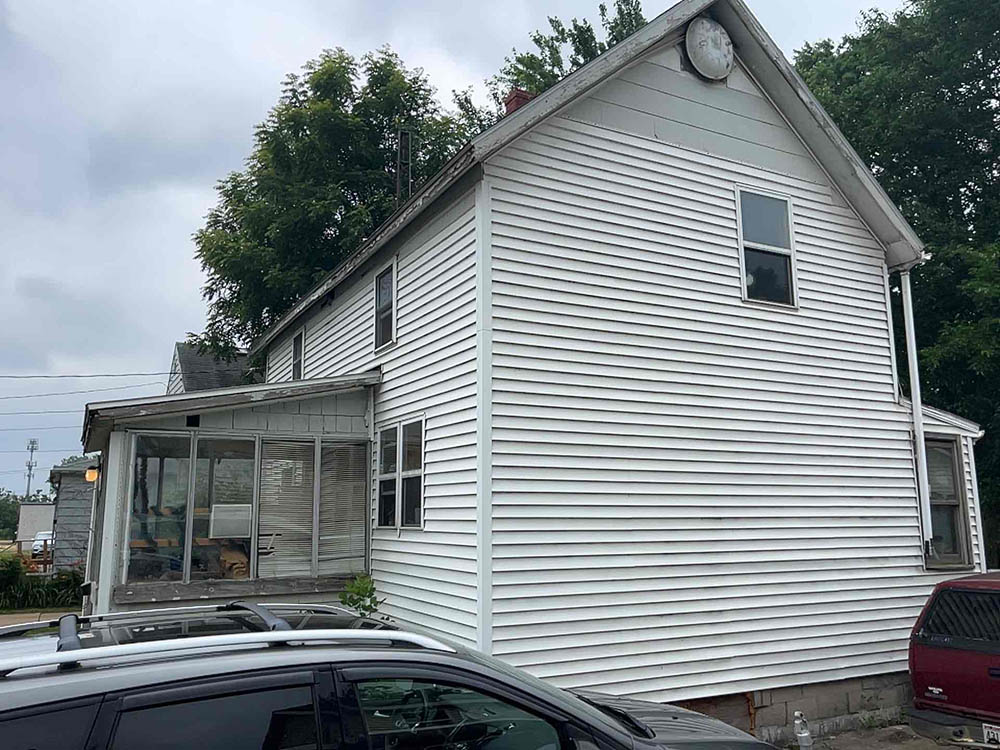
The sun warms the panels, and vinyl grows as it warms. If the nails are driven tight or the panel ends are jammed against trim, the panel cannot slide smoothly, so it moves in sudden jumps that you hear as pops.
Get My Free Estimate →Vinyl siding that pops, ticks or snaps as the sun hits it or the evening cools is usually nailed too tight to move. Siding that rattles or flaps in the wind is usually loose.
Both sounds trace back to how the panels were hung, and both are repaired panel by panel. Buckshot repairs and replaces vinyl siding across Wisconsin and Iowa, and this guide helps you tell a harmless sound from one worth fixing.
Why vinyl siding moves
Vinyl grows in the heat and shrinks in the cold. Installation guidance from the Vinyl Siding Institute, now the Polymeric Exterior Products Association, says a 12-foot-6-inch panel can change length by half an inch or more over a normal year.
The siding is designed to hang on its nails and slide. The same guidance places nails in the center of each nailing slot, leaves about the thickness of a dime between the nail head and the panel, and says installed panels should move freely from side to side.
When a tight nail or a jammed panel end stops that movement, the panel builds up stress. It then slips in sudden jumps, and each jump is the pop you hear. Our guide to signs of bad siding installation covers the nailing and clearance rules in more detail.
What each sound usually means
The sound, and when you hear it, points to the cause.
| Sound | When you hear it | Usual cause |
|---|---|---|
| Popping, ticking or snapping | As the sun reaches a wall, or as it cools in the evening | Panels nailed too tight, or jammed against trim, slipping in jumps |
| Loud, repeated bangs from one wall | On sunny days, often on the south or west side | Tight panels with no room at the ends, sometimes with buckling |
| Rattling or flapping | In the wind | Loose panels, missing nails, or a panel unhooked from the course below |
| Crinkling or rustling behind the panels | In the wind | Loose house wrap moving behind the siding |
House wrap that was never fastened well can flap behind sound siding. Our guide to house wrap explains what it does and how it should be installed.
Is it normal for vinyl siding to make noise?
A faint tick as a wall warms up is not a concern on its own. Loud or repeated sounds, or sounds that come with visible changes, point to a problem worth checking.
- Popping that repeats every sunny morning from the same wall
- Waves or bulges that come and go with the temperature
- Panel ends pulled away from the trim at windows, doors or corners
- Panels that rattle or move when you press them in
- A gap along the bottom edge of a course, where a panel has come unhooked
Waves in one spot that show up only on sunny summer days can have a different cause. Our guide to siding melting from window reflection explains how reflected sunlight warps panels.
How to check your siding from the ground
Pick a mild day, because cold vinyl is brittle and cracks easily. Our guide to vinyl siding cracking in cold weather explains why.
- Try the slide. Press gently on a panel near its end and push it sideways. A properly hung panel moves a little, and a tight one will not budge.
- Sight down the wall. Stand at a corner and look along the wall for waves, bulges or panels that bow outward.
- Check the ends. Look where panels meet windows, doors and corner posts. Panels jammed hard into the trim have no room to grow.
- Look for loose courses. Check the bottom edge of each row for gaps, and press panels in to feel for any that move or rattle.
Note which walls make the noise and when. That record helps whoever repairs the siding find the right panels quickly.
Siding popping or rattling? Our siding inspection is free, and we will show you which panels are tight or loose and what it takes to fix them.
Free on-site inspection · Family-owned since 1979
Want a straight answer on your roof?
We'll inspect it, document everything, and tell you honestly what you're looking at, even if the answer is patch it for now. No pressure.
How noisy siding is fixed
Most noise is fixed without replacing the siding. Our crews work through it in this order.
- Unlock the course. A siding unlocking tool releases the row above, so the problem panel can be reached without damage.
- Free the tight panels. Nails driven tight are pulled and reset in the center of the slot, with room for the panel to slide.
- Make room at the trim. Panel ends jammed into corner posts or J-channel are trimmed back so they can move.
- Refasten loose panels. Missing or missed nails are replaced, and each panel is locked back into the course below.
- Replace damaged panels. Cracked or warped panels are replaced, matched to the existing profile and color where possible.
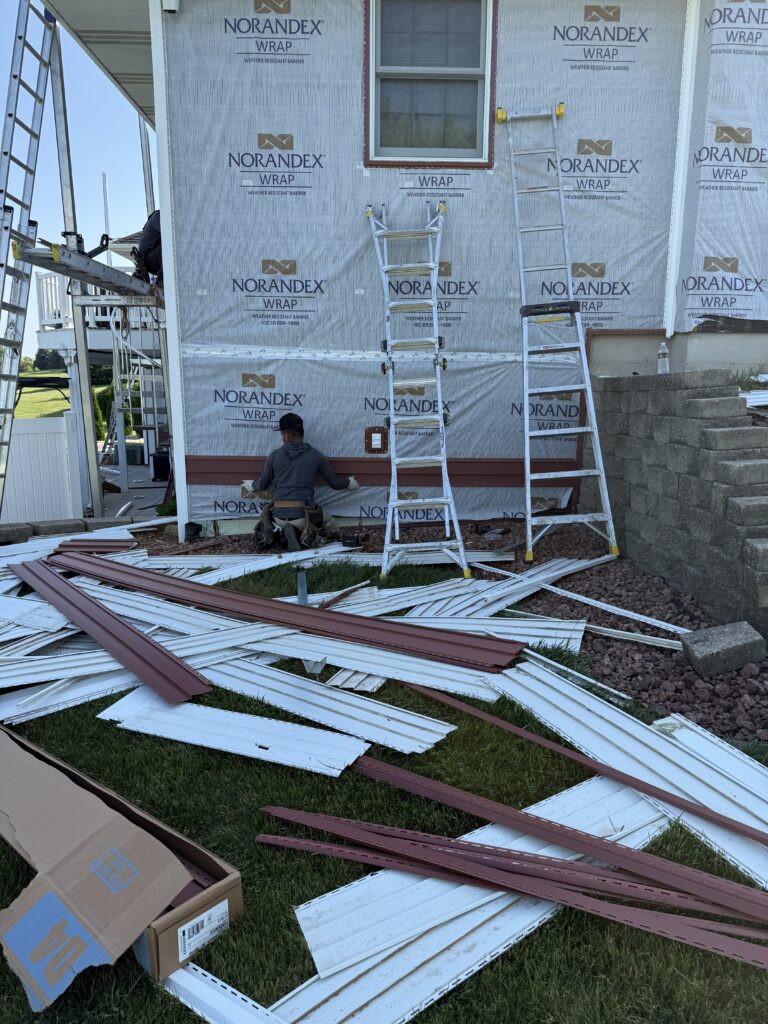
- Check behind the siding. Loose house wrap is secured, and any water damage found behind an opened panel is repaired.
When a whole house was hung tight or loose, the repair reaches every wall. If the siding is also near the end of its life, a siding replacement can be the better value, and our guide to how long siding lasts helps you judge.
Why noisy siding is worth fixing
Tight panels keep fighting their nails, so they buckle in summer and crack as they shrink in winter. Buckled panels and open gaps at the trim let rain behind the siding, where it can cause mold and rot.
Loose panels are the first to blow off in a windstorm. Our guide to storm-damaged siding shows what wind does to siding that is already loose.
Repairs can go ahead in winter with extra care, because cold panels crack if they are forced. Our guide to siding work in winter explains how crews handle the cold.
Get your siding checked
Buckshot Exteriors is family-owned, has served homeowners since 1979, and has offices in Madison, Wisconsin and Centerville, Iowa. Our own crews repair, re-hang and replace vinyl siding, and we match existing siding where we can.
Call (608) 909-9109 to schedule a free siding repair inspection, or send us a message and we will set a time. If you would rather check first, try the slide test on the noisiest wall on the next mild day.
Get a straight answer on your Madison roof
Wisconsin storm season and insurance non-renewal letters do not wait. Get a free, no-obligation inspection and an honest assessment of exactly what your roof needs, even if the answer is to wait.