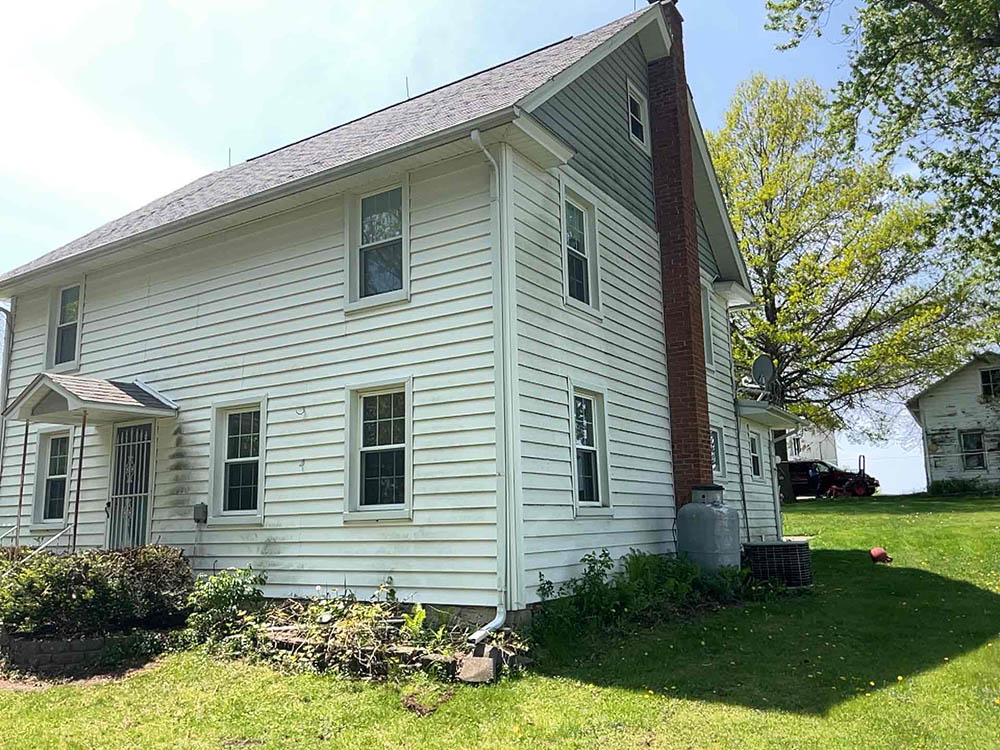
Figure 20-30 years for mid-grade and premium vinyl installed correctly here, and 15-20 years for thin builder-grade panels. Freeze-thaw movement, hail and UV on the south and west walls are what usually end it, through cracking, fading and loose panels, not rot.
Get My Free Estimate →- Siding Lifespan by Material in South-Central Wisconsin
- What Shortens Siding Life in Wisconsin
- Warranty Length Is Not Service Life
- Repair, One Elevation, or Full Re-Side?
- What Re-Siding Actually Costs Here
- Older Homes: Asbestos-Cement Siding and Lead Paint
- Permits, Historic Districts and HOA Rules
- Can New Siding Go Over the Old?
- Storm Damage, Insurance and Door-Knockers
- Choosing Color and Style Without Regret
- Timing, Disruption and Simple Upkeep
- Get a Straight Answer Before You Spend Anything
- FAQs
In south-central Wisconsin, most siding lasts 20-50 years depending on the material, and the spread inside each material is huge because installation quality and moisture detailing matter more than the badge on the box. Vinyl usually runs 20-30 years here, though thin builder-grade panels often tap out at 15-20. Fiber cement and steel can go 40-50 plus. Cedar lasts exactly as long as your maintenance habits allow.
That's the short answer. The longer one is worth a few minutes, because what actually ends most siding around Dane, Rock and Green counties isn't the material wearing out. It's water getting behind it at a window, a roof-wall intersection or at grade, and nobody noticing for six years.
Here's how each material really ages in our climate, what it costs installed, what kills it, and how to tell whether you're looking at a repair, one wall, or a full re-side.
Siding Lifespan by Material in South-Central Wisconsin
Realistic service life in our freeze-thaw climate, assuming a competent installation:
| Material | Service life here | Cost tier | Maintenance rhythm |
|---|---|---|---|
| Builder-grade vinyl | 15-20 years | $ | Wash, occasional panel swap |
| Mid to premium vinyl | 20-30 years | $ | Wash annually |
| Insulated vinyl | 25-35 years | $$ | Wash annually |
| Engineered wood | 25-40 years | $$ | Repaint every 8-15 years, seal cut ends |
| Fiber cement | 35-50+ years | $$$ | Repaint every 10-15 years, caulk joints |
| Steel | 40-50+ years | $$$ | Wash, touch up scratches |
| Aluminum | 30-40 years | $$ | Wash, chalks and dents |
| Cedar / real wood | 20-40+ years | $$$ | Stain every 3-7 years or paint every 7-10 |
Those are honest ranges, not marketing numbers. A 30-year vinyl job on a well-flashed, properly wrapped wall is common. So is a 14-year vinyl job on a wall that got nailed tight with no expansion gaps.
Vinyl: cracking, fading and loose panels end it
Vinyl doesn't rot and doesn't need paint, which is why it's on so many homes around Madison, Sun Prairie, Janesville and Monroe. What ends it is brittleness and UV.
Vinyl expands and contracts hard between a minus-15 January night and a 95 degree July afternoon. That's why panels are supposed to hang, not be pinned. When a crew drives the nails home, the panel can't move, so you get buckling in summer and cracks in winter.
Cold vinyl is also brittle. A spring hailstorm on a 35 degree April morning, a rock out of the snowblower, or a ladder foot in March will crack a panel that would have shrugged off the same hit in July.
Fading is the other clock. South and west walls lose color years before the north wall, and once your south elevation is two shades off, replacement panels won't match. Our vinyl siding page breaks down panel grades, and the vinyl siding cost guide for Wisconsin covers what drives the number up or down.
Insulated vinyl: tougher panel, same UV clock
Insulated vinyl has EPS foam laminated to the back. Be clear on what that buys you: rigidity. The panel resists impact cracks better, stays flatter (less oil-canning), sounds more solid, and adds roughly R-2 to R-3.5 of continuous insulation over the studs.
What it doesn't change is the vinyl skin itself. Same polymer, same sun, same fading clock. That's why we show 25-35 years instead of 40. The gain is mostly impact resistance and appearance, not a decade of extra UV life.
On energy, set expectations honestly. Continuous foam cuts thermal bridging through the studs and takes the edge off a drafty older wall, and homeowners usually notice fewer cold spots on a windy February evening. It isn't a furnace replacement. On an older Wisconsin house, expect a modest change in heating energy and treat comfort, not payback, as the reason to buy it.
Fiber cement: long life, but you're signing up for paint
Fiber cement (James Hardie and similar) is the long-haul choice for a lot of homes here. It won't rot, won't burn, and hail rarely does more than chip it. Realistically 35-50 plus years.
Two things end it early in Wisconsin:
- Missed paint cycles. Factory finishes last a long time, but every fiber cement wall eventually needs repainting, generally in the 10-15 year window. Failing paint lets the board take on water.
- Moisture at cut ends and bottom edges. Field-cut ends have to be sealed, and the bottom course needs a starter strip plus proper clearance. Unsealed cut ends sitting against a wet deck ledger is how fiber cement swells and delaminates.
More on board types and finishes on our fiber cement siding page.
Engineered wood: good product, unforgiving of sloppy detailing
Engineered wood (LP SmartSide and similar) is treated wood strand with a resin binder. It cuts like wood, holds paint well, handles impact better than fiber cement, and runs 25-40 years here.
It lives or dies on moisture management. Cut edges sealed. No panel touching a roof surface or a deck. No sprinkler hitting the bottom course twice a day. Ignore those and the bottom edge swells and mushrooms inside a decade. Respect them and it's an excellent Wisconsin product. Details on our engineered wood siding page.
Steel and aluminum: longest life, two specific weak points
Steel is the durability leader here, often 40-50 plus years, and modern profiles look nothing like the 1970s stuff. Aluminum is lighter and softer, generally 30-40 years, and it chalks as the finish oxidizes.
The failure modes are specific:
- Denting. Golf-ball hail dents steel and really dents aluminum. The wall still sheds water, but it looks hammered. Whether that's payable depends on your policy: cosmetic-damage exclusions and cosmetic-dent endorsements are common on metal cladding and roofing, so some policies cover functional damage only. Read that section before you assume dents are covered.
- Cut-edge corrosion. A field cut exposes raw steel. Left unsealed down low where it gets splashed and salted, it rusts from the cut inward.
See profiles and finishes on our steel and aluminum siding page.
Cedar and real wood: lifespan equals maintenance
Cedar can outlast everything on this list or fail in 15 years. It's entirely about the finish cycle: stain every 3-7 years, paint every 7-10, and stay ahead of coating failure on the south and west walls.
Let it go three cycles too long and you get cupping, splitting, open joints and rot at the bottom courses. On older homes in Madison's near-downtown neighborhoods it's often the right call for character. Just go in knowing the commitment. Our cedar and wood siding page covers species and finishes.
What Shortens Siding Life in Wisconsin
The material sets the ceiling. Our weather and the installation decide whether you ever reach it.
- Freeze-thaw. Our winters put walls through dozens of freeze-thaw cycles a year. Every one works at caulk joints, fasteners and any trapped moisture behind the panel.
- Wind-driven rain. Most lap and vinyl siding here is installed as a drainage-plane assembly, not a sealed skin. Some water is expected to get behind the panels and drain back out. The water-resistive barrier and flashing are what keep it out of your sheathing.
- Hail. South-central Wisconsin sees hail regularly through the summer storm season. It cracks vinyl, dents metal and chips fiber cement, and it's easy to miss because everyone looks at the roof first.
- Ice at the eaves. Ice dams back water up behind the top courses and into the wall. Siding failing at the top of a wall is almost always an ice or flashing story.
- Sun by elevation. South and west walls age noticeably faster than north and east. When one wall looks ten years older, functionally it is.
The installation details that matter more than the material
If you remember one thing, remember this list. It separates a 30-year wall from an 18-year wall:
- Housewrap (WRB) lapped shingle-style so water runs out and down instead of into the laps.
- Flashing at windows and doors, including head flashing above the trim. Caulk above a window is not flashing.
- Kickout flashing where a roof meets a wall. When we open up a wall and find rotten sheathing, a missing or undersized kickout is the single most common reason. That detail costs almost nothing and skipping it costs sheathing, insulation and sometimes drywall.
- Clearance at grade and above roof surfaces so the bottom edge isn't wicking.
- Correct fastening and expansion gaps, with vinyl hung loose and ends gapped for cold-weather movement, and fastener types that won't stain metal or split board.
Not sure which category your walls are in? We'll walk all four elevations and tell you straight. Free, no-pressure inspection, call (608) 909-9109.
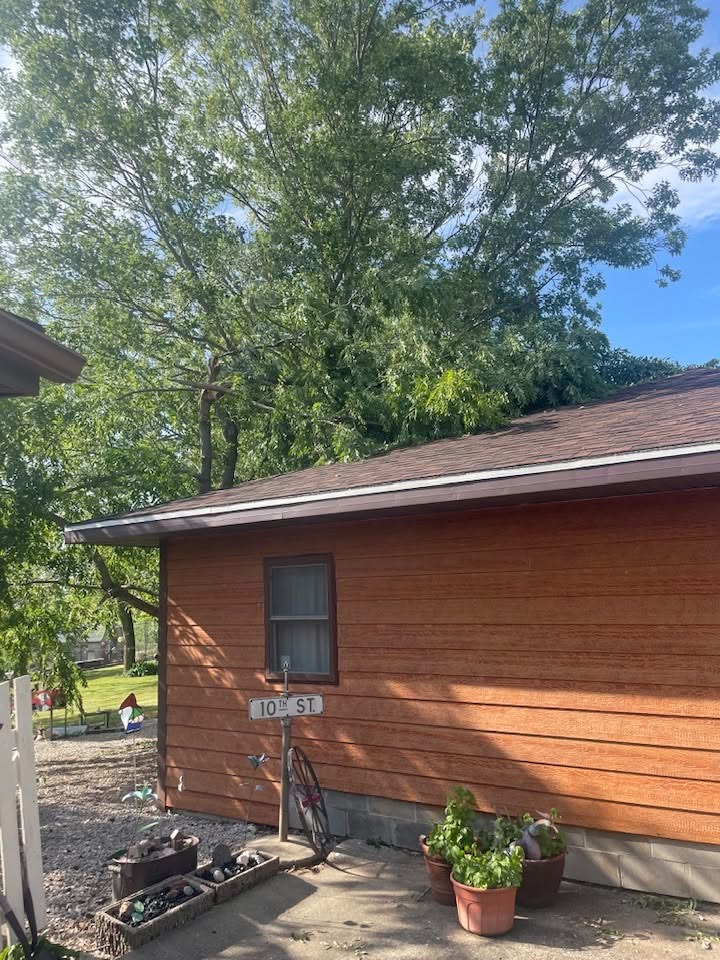
Warranty Length Is Not Service Life
A "lifetime" or "50-year" siding warranty is a manufacturing defect warranty. It isn't a promise that your wall will look good for 50 years.
Read the exclusions: hail and wind, improper installation, fading beyond a stated limit, labor after the first few years, and coverage that prorates down over time. Transfer to a new owner is usually limited too. None of that makes warranties worthless. It means you should choose on realistic service life in our climate and treat the paper as backup.
The workmanship warranty is the one that protects you
Here's the part homeowners skip. Almost nothing that fails early on a siding job is a defective panel. It's flashing, fastening and clearances, and those are covered by the installer's workmanship warranty, not the manufacturer's.
Contractor workmanship warranties in this market commonly run anywhere from one year to ten, and some manufacturer-certified systems extend labor coverage further. That's a big spread, so get it in writing and read what's actually covered: does it include water intrusion at flashings, or only panel installation? Is it transferable? Ours is spelled out in the written proposal, and we'll tell you the exact term and what it covers before you sign anything. So should every bidder.
Repair, One Elevation, or Full Re-Side?
The honest test is whether the problem is cosmetic and local, or systemic.
Repair makes sense when a handful of panels cracked from a ladder or one hail event, the rest of the wall is sound, the color still matches reasonably, and there's no sign of water behind it.
One elevation makes sense when only the south or west wall is chalked, brittle or hail-bruised. The honest warning: faded panels and current production colors rarely match, so a single wall can read as a patch.
Full re-side makes sense when you see any of these:
- Soft or spongy spots when you press the wall, meaning the sheathing is going
- Interior clues: bubbling paint, stained drywall at window corners, a musty smell on an exterior wall
- Multiple walls loose, waving or with open joints
- Rot at bottom courses, behind gutters, or at roof-wall intersections
- Patches that keep chasing a new failure to a new spot
We walk through that call in more detail in signs your siding needs replacement in south-central Wisconsin.
What Re-Siding Actually Costs Here
Lifespan and price are the same decision, so here are working ranges for south-central Wisconsin. These are market bands, current as of this writing and reviewed as material and labor pricing moves. They are not a quote for your house.
Installed, per square foot of wall area:
- Vinyl: about $6-$11
- Insulated vinyl: about $9-$14
- Engineered wood: about $9-$15
- Fiber cement: about $11-$18
- Steel: about $12-$20
- Cedar: about $12-$20 and up
A typical 1,500-2,000 sq ft home has roughly 1,500-2,200 sq ft of wall, so whole-house projects commonly land between $12,000 and $22,000 in vinyl, $17,000-$28,000 in insulated vinyl, and $22,000-$40,000 in fiber cement or steel. Multiple layers of tear-off, sheathing repairs, wrapped trim, soffit and fascia, and tricky two-and-a-half-story access all push it up.
Is a re-side the time to upgrade the wall itself?
Yes, and it's the only time it's cheap to do. The siding is off, the sheathing is exposed, and adding materials then costs a fraction of doing it later.
Three upgrades worth pricing:
- New housewrap and proper flashing. On any tear-off this should be standard, not an upgrade. If a bid doesn't list the WRB by name and flashing at windows, doors and roof-wall intersections, it's incomplete.
- Continuous exterior insulation. Rigid foam or an insulated vinyl panel over the sheathing cuts thermal bridging through the studs. Figure roughly $1-$3 per square foot of wall for foam plus the extra trim and fastener work, and expect window and door details to get thicker, which has to be planned, not improvised.
- Rainscreen furring. A vented gap behind the siding lets the wall dry. It adds cost and is most worth it on wood-based siding or a shaded, wind-driven-rain elevation.
Paying for it
Most whole-house re-sides get paid one of four ways: cash, a home equity loan or HELOC through your own bank or credit union, an unsecured home improvement loan through a third-party lender (contractor financing is almost always a third-party lender, not the contractor, with terms usually in the 3-15 year range and rates set by your credit), or phasing the job by elevation over two or three seasons. If a lender program is offered on your estimate, ask three questions in writing: the APR, the term, and whether it's a deferred-interest promotion where unpaid interest gets added back if you miss the payoff date. Phasing by elevation is a legitimate plan when your walls are aging at different rates, and it's what we'd suggest before anyone signs a loan they aren't comfortable with.
Older Homes: Asbestos-Cement Siding and Lead Paint
If your house was built before 1980, two things need to be settled before a single bid means anything.
Asbestos-cement siding. Those hard, brittle, roughly 12x24 inch cement shingles you see on a lot of pre-1980 Wisconsin homes can contain asbestos. You can't tell by looking; it takes lab testing of a sample. If it tests positive, removal and disposal are regulated, the material generally can't go in a standard dumpster, and the work has to be handled by properly trained and equipped people under state and federal rules. Practically, that means a separate line item and a longer schedule. Some homeowners choose to leave intact asbestos siding in place and go over it for exactly this reason, which is one of the few cases where not tearing off is the defensible choice. What you never want is a crew ripping it off dry with pry bars and a grinder.
Lead paint and the EPA RRP rule. Any painted surface on a home built before 1978 is presumed to have lead paint unless testing says otherwise. Disturbing it during a tear-off, on wood siding, trim, soffit or old window casings, triggers the EPA Renovation, Repair and Painting rule: a certified renovator on site, contained work areas, plastic on the ground, wet methods, HEPA cleanup and documentation for you. That's real time and material, and it's also why an unusually cheap bid on an older near-downtown Madison or Janesville home should make you nervous. A contractor who doesn't bring up lead on a 1920s house either doesn't know the rule or isn't planning to follow it.
Both of these are cost and schedule realities, not reasons to avoid the project. They just need to be in the scope in writing.
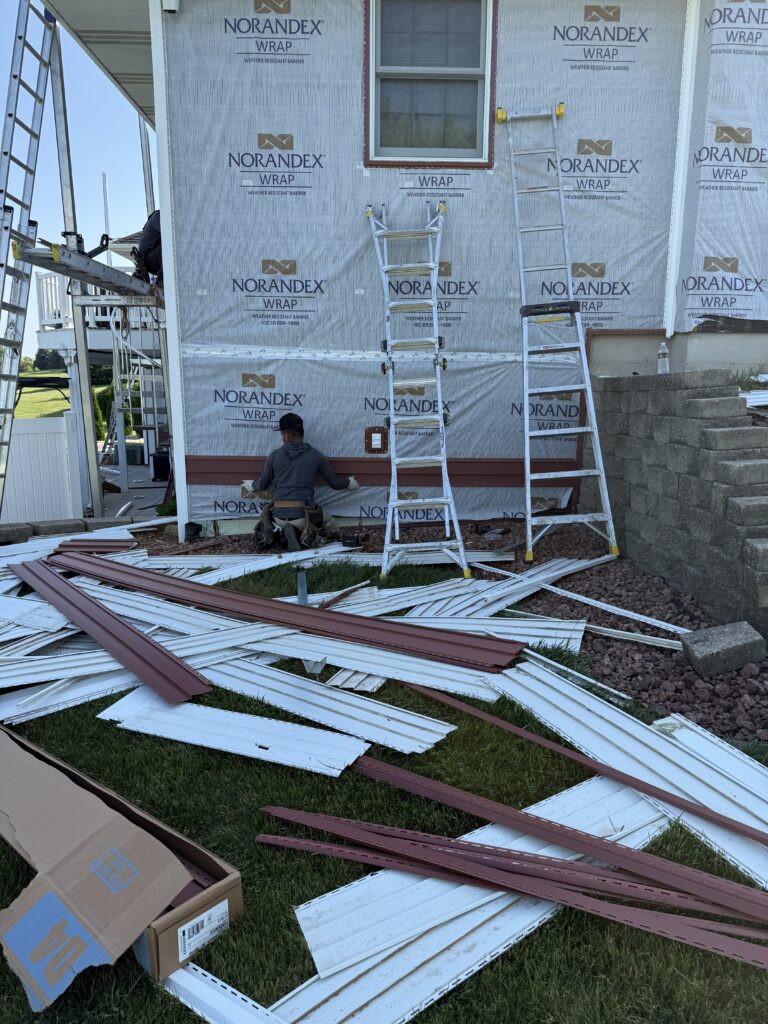
Permits, Historic Districts and HOA Rules
Re-siding usually requires a building permit, and the rules vary by municipality, so confirm before ordering material. Madison, Sun Prairie, Janesville, Verona and the surrounding towns each have their own permit process and inspection expectations, and a permitted job means someone besides your contractor looks at the work.
Two extra layers catch people off guard:
- Historic districts and landmark properties. Parts of Madison and several older downtowns have local historic district oversight that can restrict material, profile, exposure and sometimes color. A fiber cement lap with the right reveal may be approved where a wide vinyl panel isn't. Approval takes time, so start early.
- HOA and condo associations. Many newer subdivisions require written approval of color and material, and some limit you to an approved palette. Get that approval in hand before the order goes in, because custom colors are typically non-returnable.
We handle the permit work as part of the project and will tell you upfront if your address looks like it needs historic or association review.
Want a straight answer on your roof?
We'll inspect it, document everything, and tell you honestly what you're looking at, even if the answer is patch it for now. No pressure.
Can New Siding Go Over the Old?
Sometimes, but it's usually the wrong shortcut. Going over an existing layer can be acceptable when the old siding is flat, dry and well fastened, there's a sound water-resistive barrier behind it, the flashing at windows, doors and roof-wall intersections can still be verified, and when the existing layer is intact asbestos-cement that's better left undisturbed.
Tear-off is the right call when:
- Anything suggests wet or soft sheathing, rot or insect damage
- There's no housewrap at all, common on homes built before the 1980s
- Flashing needs to be inspected, corrected or replaced
- There's already more than one layer on the wall
- The existing surface is wavy, cupped or full of nail pops
Layering also buries problems. If water is already getting in, covering it up just means you find out later with a bigger bill. When we recommend tear-off, it's because we want eyes on the sheathing, not because it adds a line item.
Storm Damage, Insurance and Door-Knockers
If hail or straight-line wind hit your elevation, there may be a claim, and timing matters. Wisconsin law and most policies impose short deadlines, often around 12 months from the date of loss, and the exact clock is in your policy. Report the loss promptly and read your declarations page. If there's a dispute, talk to your agent or an attorney. This is general information, not legal or insurance advice.
How the money usually works:
- Deductible is yours, whether it's a flat amount or a percentage of dwelling coverage.
- ACV vs RCV. With replacement cost coverage, the carrier typically pays actual cash value (depreciated) first, then releases the withheld depreciation after the work is completed and invoiced. With an ACV-only policy, that depreciation isn't coming.
- Scope and matching. Adjusters commonly write the damaged elevation corner to corner rather than individual panels. Whether undamaged walls get included depends on your policy's matching language and whether your color and profile are still manufactured. Discontinued colors are where most siding disputes happen, so document them.
We meet your adjuster on-site and document every elevation, not just the one they look at first. That process is on our hail and storm damage restoration page.
One warning. After every big hail event, out-of-state crews work the neighborhoods across Dane and Rock counties. Before you sign anything: read any contingency agreement in full and never sign one on the doorstep, require a written scope (material brand, profile and color, housewrap type, flashing details, trim, clearances, cleanup, payment schedule), ask for the Wisconsin Dwelling Contractor Certification and insurance and look them up, and check reviews on more than one platform.
Choosing Color and Style Without Regret
This is the part homeowners lose sleep over, and it's fixable with a little process. Siding color reads two to three shades lighter in full sun than it does on a 4x6 sample, so get large samples or a panel board and look at them on the actual wall, at midday and again in the evening.
A few things we walk clients through:
- Pick the roof, siding, trim and gutter colors as one package. Fascia, soffit, gutters and downspouts either disappear into the design or fight it.
- Existing window cladding and brick or stone accents are fixed points. Build the palette around what you're not replacing.
- Darker colors show dirt less but fade more on south and west exposures, and some dark vinyls need a specific formulation to handle heat.
- Mixing one accent, shake or board-and-batten gable with lap on the field is the cheapest way to add character.
You can see finished color and material combinations on our siding services page, and we'll bring samples out and hold them on your wall during the estimate.
Timing, Disruption and Simple Upkeep
Spring through fall is the sweet spot. Vinyl gets brittle below freezing, expansion gaps have to be cut for temperature, and most exterior sealants want surfaces above roughly 40 degrees to cure right. Winter work happens for storm and emergency repairs, but a planned whole-house job usually goes smoother once nights stay above freezing.
A typical home takes a few days to about two weeks, depending on size, tear-off and sheathing repairs. You can stay home the whole time. Expect daytime noise, ladders or scaffolding around the house, shrubs tied back, and a magnet sweep for nails at the end. We work one elevation at a time so the house is never fully open.
To stay at the top of your material's range: wash the walls annually with a hose and soft brush (skip the pressure washer, it drives water behind panels), aim sprinklers away from the bottom course, keep mulch and soil a few inches below the siding, touch up caulk at trim joints, and spot-prime chipped cut ends on painted board. Leave flashing, sheathing, second-story panel work and hail documentation to a crew.
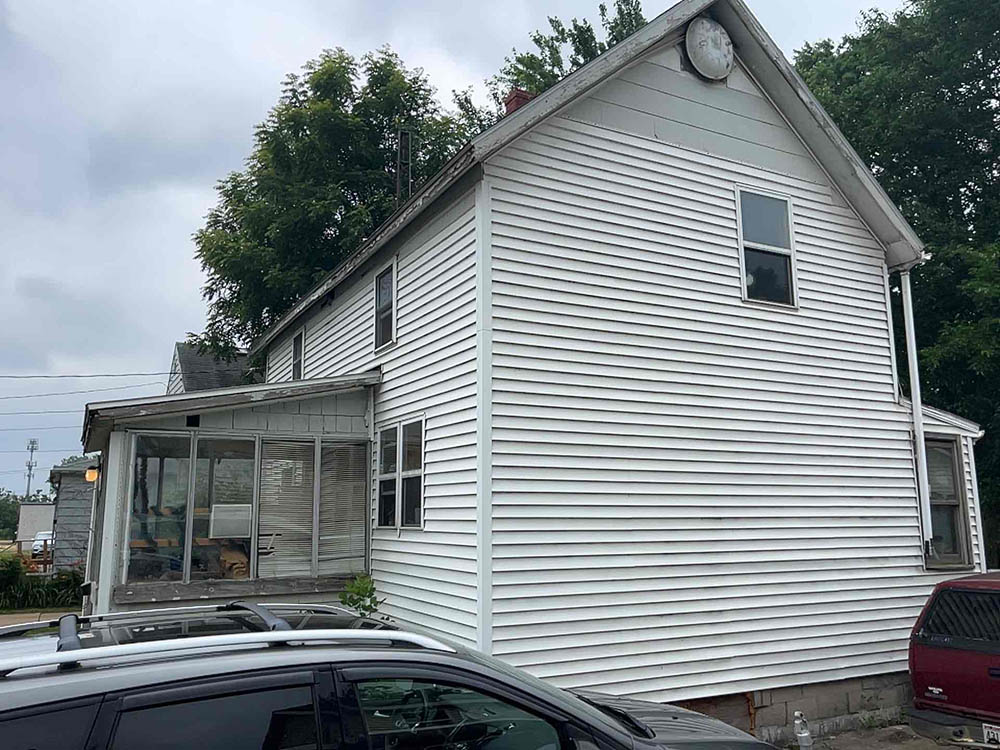
Get a Straight Answer Before You Spend Anything
Most homeowners who call us about siding want one question answered: do I have years left, or am I already losing the wall behind it? That takes a ladder, a moisture check, and someone who has seen plenty of Wisconsin walls opened up.
Buckshot has been locally owned and operated since 1979, doing roofing, siding, gutters, windows and storm restoration across south-central Wisconsin. You can read our real customer reviews on Google, Birdeye, Angi and HomeAdvisor before you ever let us on the property.
The inspection is free, there's no obligation, and if the answer is "wash it and call us in six years," that's what you'll hear. If it is time, you'll get photos of what we found, honest notes on asbestos, lead or permit issues if your home's age raises them, and material options side by side with real numbers.
Call (608) 909-9109 or request your free siding inspection. We'll walk all four elevations with you and leave you with something useful either way.
Get a straight answer on your Madison roof
Wisconsin storm season and insurance non-renewal letters do not wait. Get a free, no-obligation inspection and an honest assessment of exactly what your roof needs, even if the answer is to wait.