
Vinyl becomes stiffer and more brittle as the temperature drops, so an impact that would only flex a panel in warm weather can crack it in winter. Siding nailed too tightly can also crack as it shrinks in the cold, because it cannot move on its fasteners.
Get My Free Estimate →- Why cold weather makes vinyl siding crack
- What cracks vinyl siding in a Wisconsin winter
- Installation problems that show up as winter cracks
- How to tell an impact crack from installation or heat damage
- Why a cracked panel needs attention before spring
- What to do about a cracked panel right now
- Does homeowners insurance cover cracked vinyl siding?
- How to prevent vinyl siding from cracking in winter
- Getting cracked siding checked
- FAQs
Vinyl siding cracks in cold weather because it gets stiffer and more brittle as the temperature drops. An impact that would only flex a panel in summer can split it in winter.
Siding that was nailed too tightly is the other common cause. A panel pinned to the wall cannot move as it shrinks in the cold, so it cracks or buckles at the fastener.
Why cold weather makes vinyl siding crack
Vinyl is flexible in warm weather and stiff in cold weather. In summer, a panel that takes a hit bows in and springs back, while the same hit in January has nowhere to go and splits the vinyl.
Age makes it worse. Years of sun exposure leave older, faded vinyl less flexible than new panels, so cracks often appear first on the sunny sides of a house even when every wall takes the same knocks.
Vinyl also expands in heat and shrinks in cold. Every panel on the house moves slightly through the year, which is why vinyl is designed to hang loosely on its nails rather than be fastened tight.
What cracks vinyl siding in a Wisconsin winter
Most winter cracks come from an impact on cold, brittle panels. Snow and ice management causes more of them than storms do.
- Snow blower discharge. Wet snow, gravel and ice chunks thrown at a wall from a few feet away.
- Shovels and roof rakes. Scraping along the wall or swinging the rake into the siding.
- Falling ice. Icicles and chunks of ice that slide off the roof and land on or bounce into the wall.
- Ladders. Ladder rails leaned against cold vinyl for gutter work or holiday lights.
- Hail and wind-blown debris. Cold panels crack at impacts they would survive in summer. Our guide to hail damage on siding shows what storm damage looks like.
The wall where you blow or throw snow is usually the wall that cracks. Cracks at the same height along one side of the house often point to the snow blower.
Installation problems that show up as winter cracks
If cracks start at a nail slot, at a corner post, or where a panel presses hard into trim, the installation is probably part of the cause. Cold weather exposes the mistake by shrinking the panel against whatever is holding it.
These are the installation errors that most often lead to cracking.
- Nails driven too tight. Vinyl should hang loose enough to slide side to side. A pinned panel tears at the fastener as it shrinks.
- Nails at the end of the slot. Fasteners belong in the center of each slot, so the panel can move both ways.
- No expansion gap at trim. Panels need clearance where they enter corner posts and J-channel, as the manufacturer specifies, with more room when installed in cold weather.
- Panels not locked into the course below. A panel that never snapped fully into place sits under tension and cracks easily.
- Siding installed in freezing weather. Cold vinyl can crack while it is being cut and nailed. Our guide to whether siding can be installed in winter explains how cold-weather installation should be handled.
Cracks that repeat at the same spots around windows or corners suggest an installation problem rather than bad luck. Our guide to signs of bad siding installation lists what to check.
If a recent installation is the cause, look for a workmanship warranty in the original contract and contact the installer in writing with dated photos.
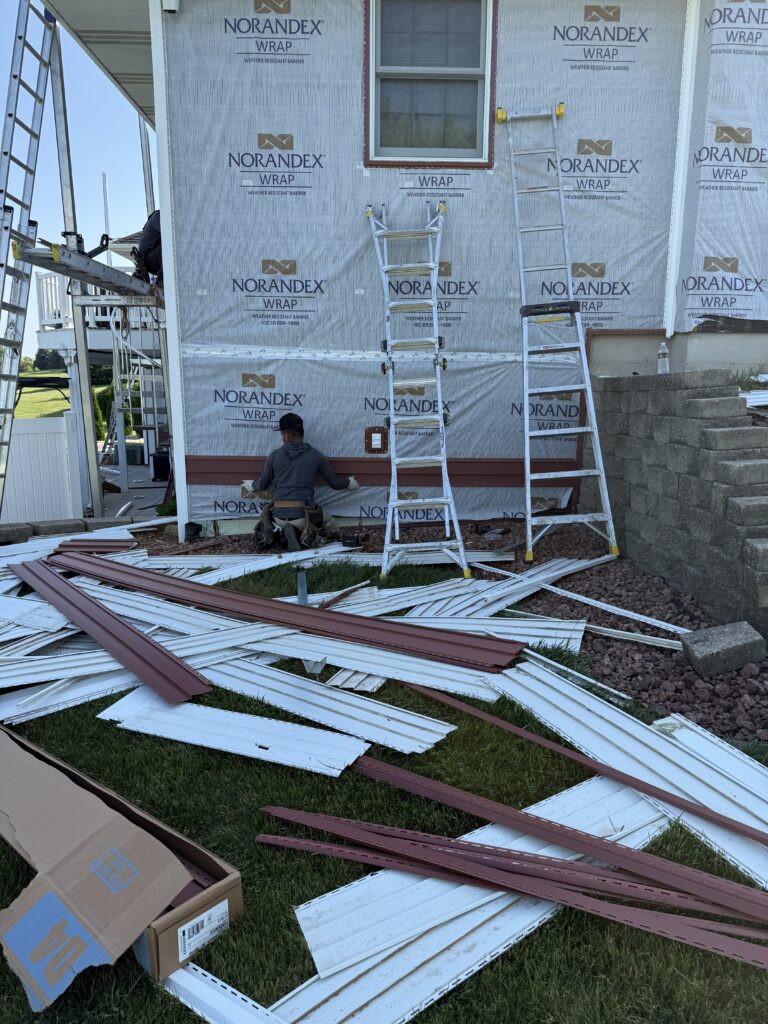
How to tell an impact crack from installation or heat damage
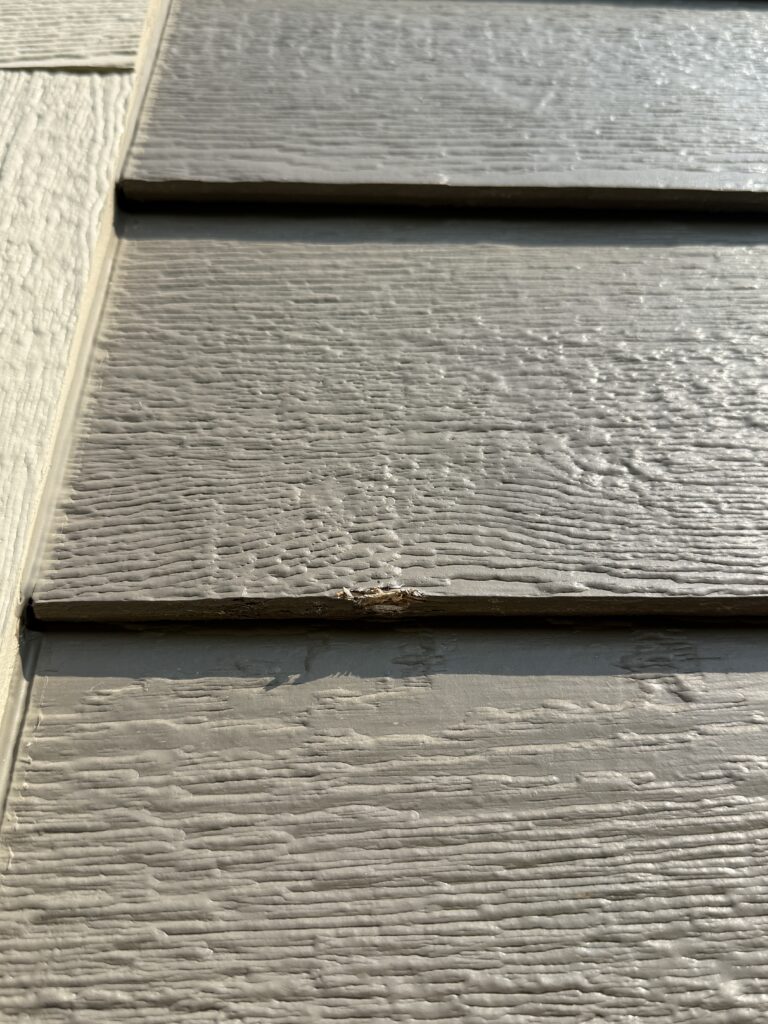
Where the crack starts and its shape usually reveal the cause.
Impact cracks spread from one point, often with a scuff or a small star pattern where the object hit. They appear at random spots and heights.
Installation cracks start at a fastener or at the end of a panel. They tend to repeat in a pattern, along with wavy courses or seams pulled apart.
Heat damage is not a crack at all. Wavy, drooping or glossy panels in a band facing a neighbor's window point to reflected sunlight, explained in our guide to vinyl siding warping near windows.
Press gently beside a crack. If the panel rattles or feels loose, fastening is part of the problem even if an impact caused the final split.
Not sure which you have? Call (608) 909-9109 for a free on-site inspection.
Why a cracked panel needs attention before spring
A crack lets water behind the siding. That water can soak the housewrap and sheathing, then freeze and expand, and the cycle repeats every time the temperature crosses freezing.
Over a winter, that can lead to wet sheathing and insulation and, if the wall stays damp, mold. Openings behind the siding can also give insects and wasps a sheltered spot.
Want a straight answer on your roof?
We'll inspect it, document everything, and tell you honestly what you're looking at, even if the answer is patch it for now. No pressure.
What to do about a cracked panel right now
Keep water out first, then replace the panel when the weather is mild.
Seal the crack temporarily
Clean and dry the area, then seal the crack from the outside with an exterior sealant rated for cold application, or cover it with a color-matched siding repair patch. The goal is shedding water until the real repair.
Avoid caulking panels to the trim or sealing the seams between panels. Those gaps let the siding move and drain, and sealing them creates new problems.
Treat the patch as a one-winter fix. Sealant shrinks and pulls away from vinyl after a season of sun and temperature swings, so schedule the replacement for the first mild stretch.
Replace the panel in mild weather
Vinyl siding is designed to come apart. A repair uses a zip tool to unlock the panel above, removes the cracked piece and locks in a new one.
Working with stiff panels in freezing weather can crack the neighboring pieces, so wait for a mild day. If the crack is above the first floor or next to window flashing, a professional siding repair is the safer choice.
Matching older siding
Matching is the hardest part of a vinyl repair. Siding fades over the years, so a new panel in the same color name often looks brighter than the wall, and older profiles are discontinued.
One common fix is to move a matching panel from a hidden spot, such as behind a deck, to the visible repair and put the new panel where it will not be noticed.
Does homeowners insurance cover cracked vinyl siding?
Sometimes. Policies generally cover sudden, accidental damage such as hail or wind-blown debris, and generally exclude wear, aging and damage caused by faulty installation.
Adjusters often tell the two apart by pattern. Random impact cracks across storm-facing walls point to a storm, while splits lined up at nail slots point to installation.
Photograph the damage before you patch anything. Take a wide shot of the wall, a closer shot of the affected panels, and a close-up with a coin or tape measure for scale.
If only some panels are replaced and they do not match, our guide to whether insurance will replace all your siding explains how matching is handled.
How to prevent vinyl siding from cracking in winter
Keep hard objects away from cold walls, and make sure the siding can move.
- Point the snow blower chute away from the house and keep a few feet back on the pass nearest the wall.
- Shovel away from the wall and watch the roof rake on the way down.
- Deal with ice dams and heavy icicles, since falling ice damages siding as well as gutters.
- Pad ladder rails or lean the ladder on trim rather than bare vinyl.
- Store bikes, sleds and mowers away from the walls during winter.
- On new work, insist on nails centered in the slots, snug but not tight, with expansion gaps at every corner post and J-channel.
If one exposed wall keeps cracking, consider a tougher cladding for that wall. Insulated vinyl has a foam backing that absorbs impacts better than standard vinyl, while fiber cement and steel resist cracking, each with its own maintenance needs. Our vinyl siding and siding pages cover the options.
Getting cracked siding checked
A cracked panel can be a simple repair or a sign of an installation problem across the wall. An inspection tells you which, and whether water has already gotten behind it.
Buckshot Exteriors is family-owned and has worked on exteriors since 1979, with offices in Madison, WI and Centerville, IA. Our free on-site inspection checks the siding, the trim and the fastening, and we meet your insurance adjuster on site when storm damage is involved.
Call (608) 909-9109 to schedule a free inspection. If water is getting behind your siding after a storm, our 24-hour storm line is the same number.
Get a straight answer on your Madison roof
Wisconsin storm season and insurance non-renewal letters do not wait. Get a free, no-obligation inspection and an honest assessment of exactly what your roof needs, even if the answer is to wait.