
Wind blew fine snow through a vent. A line of snow under the peak points to the ridge vent, a drift under an end wall points to a gable vent, and a pile under one roof vent points to that vent.
Get My Free Estimate →- How snow gets into an attic
- Snow, frost or an ice dam?
- Why ridge vents let snow in
- Gable vents, box vents and mixed vents
- Is snow in the attic a problem?
- What to do when you find snow in the attic
- Should attic vents be closed in winter?
- How snow intrusion is fixed
- Fixing the vents during a reroof
- Get your attic checked
- FAQs
Snow on the attic insulation after a windy storm almost always blew in through a roof or gable vent. Fine, dry snow rides the wind through any vent that is not baffled against it and settles on the insulation below.
The fix is a better vent, not a sealed one. Buckshot fixes attic ventilation across Madison from our office on North Sherman Avenue, and this guide shows how to find which vent let the snow in.
How snow gets into an attic
An attic breathes through its vents. Air comes in low at the soffits and leaves high through the ridge, box or gable vents, and a strong wind speeds that airflow up.
Light, dry powder that falls in deep cold blows in most easily, because it drifts in the wind and fits through narrow gaps. Once inside, it sits on the insulation until a thaw, then soaks in or drips through ceiling fixtures and the attic hatch.
Snow, frost or an ice dam?
Three winter problems put water in an attic, and each one has a different fix. Where the snow or water sits tells you which one you have.
| What you see in the attic | Likely cause | Where to look |
|---|---|---|
| A narrow line of snow on the insulation directly under the peak | Snow blowing through the ridge vent | Ridge vent type, slot width and ridge ends |
| A drift fanned out below a louver in the end wall | Snow blowing through a gable vent | The gable vent facing the storm wind |
| A small pile under one roof vent | Snow through a box vent or turbine | That vent's cap and flashing |
| Frost spread across the underside of the roof deck and on nail tips | Moist house air freezing on the deck | Bath fans, the attic hatch and gaps in the attic floor |
| Wet insulation and stains near the outside walls after a thaw | An ice dam forcing meltwater under the shingles | Ice along the eaves and attic heat loss |
Our guide to frost in the attic covers the frost pattern, and our guide to ice dams in Wisconsin explains the meltwater one. On a home with a metal roof, drips from the roof itself on clear, cold mornings point to metal roof condensation.
Why ridge vents let snow in
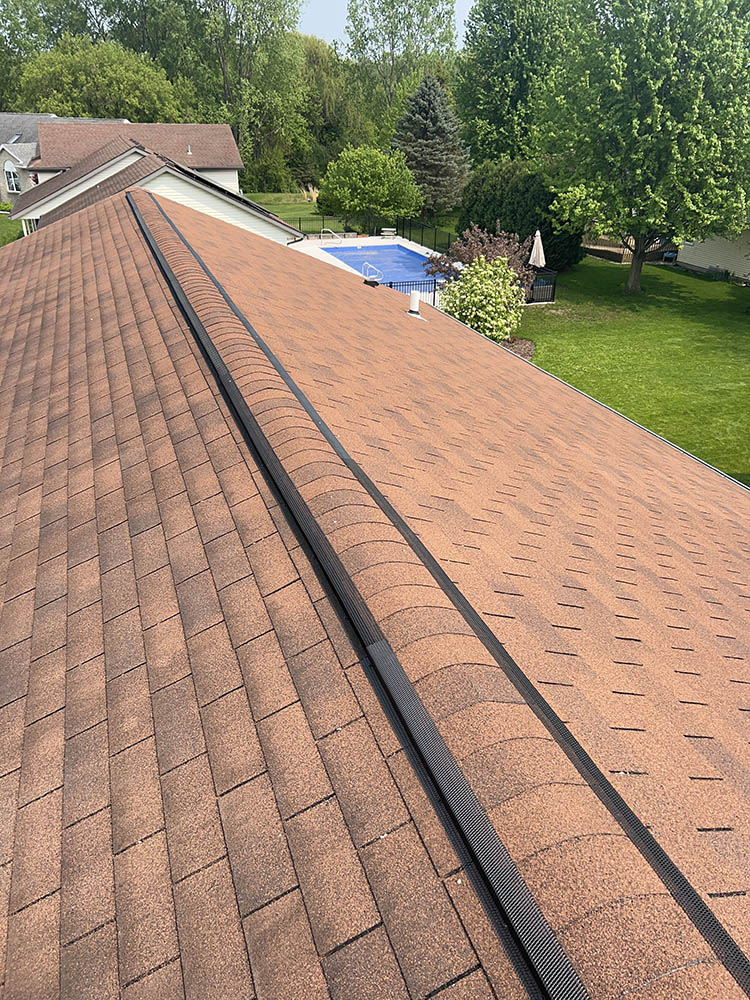
A well-made ridge vent keeps blowing snow out. When snow gets through, one of three things is usually wrong, and all three leave a line of snow under the peak.
- No external baffle. Thin rolled mesh or foam vents have nothing to deflect the wind, so wind-driven snow passes straight through. A baffled vent has a raised outer edge that pushes the wind up and over the opening.
- Slot cut too wide. The opening cut along the peak has to match the width the vent maker rates the vent for. A wider slot leaves gaps the vent cannot cover.
- Open ridge ends. The slot should stop short of the ends of the ridge as the maker specifies, and the vent ends should be plugged. Open ends let wind blow straight along the ridge.
Our comparisons of ridge vents vs box vents and turbine vents, power fans and ridge vents cover how each exhaust vent handles wind.
Gable vents, box vents and mixed vents
Gable louvers sit upright in the end walls, so a storm wind blowing at that end of the house drives snow straight through the slats. That is why gable drifts tend to follow storms from one direction.
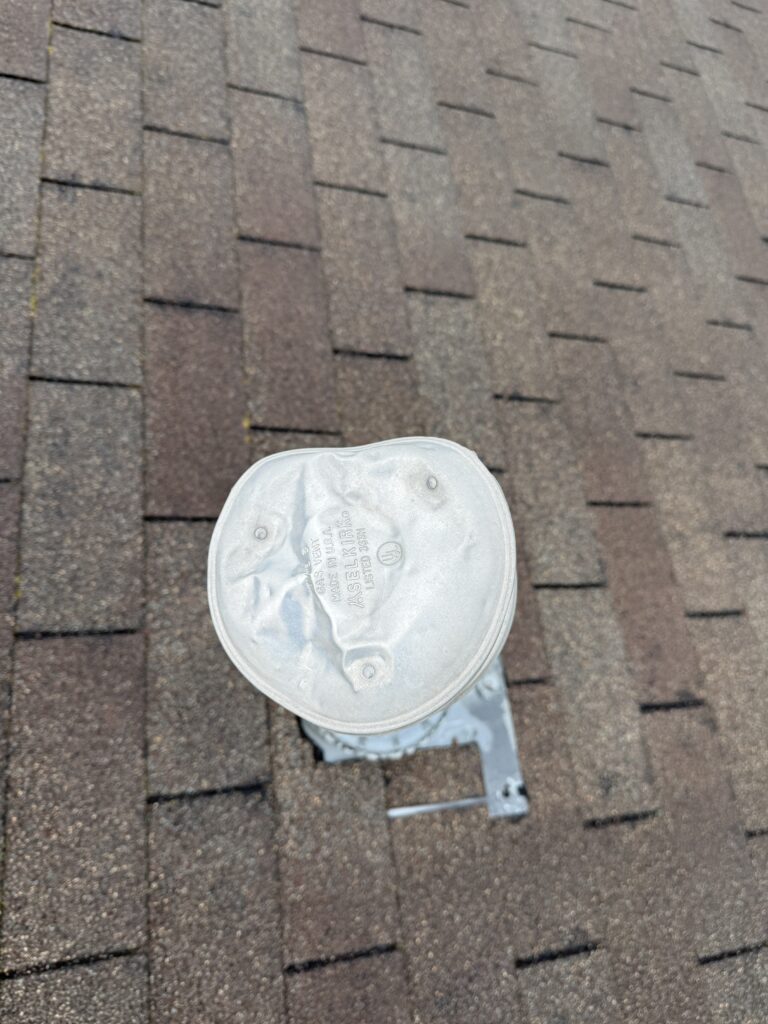
Box vents and turbines let snow in through a cracked, bent or loose cap. A pile directly under one vent points to that vent.
Mixing vent types makes all of this worse. When a ridge vent shares an attic with gable or box vents, the ridge vent can pull outside air in through the lower vents, and that air carries snow with it.
Blocked soffits do the same. When insulation buries the soffit vents, the attic draws air through the easiest opening it can find, including vents meant to let air out, and our guide to vented vs solid soffit covers the intake side.
Is snow in the attic a problem?
A light dusting that melts once usually dries without lasting harm. Snow that drifts in every storm is a problem, because each thaw soaks the insulation and the drywall below it.
Wet insulation loses much of its insulating value, and the water finds the ceiling through light fixtures, the hatch and drywall seams. Our guide to water stains on the ceiling helps tell a melt stain from a roof leak.
What to do when you find snow in the attic
- Look from the hatch first. Use a flashlight from the hatch, and if you go in, step only on the joists so you do not come through the ceiling.
- Photograph where the snow sits. A line under the peak, a drift under a gable or a pile under one vent points straight to the source.
- Scoop it out while it is frozen. Lift snow off the insulation into a bucket before it melts, and leave any damp insulation to dry.
- Leave the vents open. Stuffing insulation into a vent or taping it shut traps the house moisture the attic has to shed, which leads to frost and wet sheathing.
- Watch the ceiling after the thaw. Note any stains or drips below where the snow sat, so they can be checked when the vent is fixed.
Snow in the attic after the last storm? Our attic assessment is free, and we will tell you which vent let the snow in. Call (608) 909-9109 to schedule it.
Free on-site inspection · Family-owned since 1979Want a straight answer on your roof?
We'll inspect it, document everything, and tell you honestly what you're looking at, even if the answer is patch it for now. No pressure.
Should attic vents be closed in winter?
No. Attic vents stay open all year, because winter airflow carries moisture out of the attic and keeps the roof deck cold.
Closing them traps moist house air under a cold roof, where it freezes on the deck as frost and drips when it melts. A cold, evenly vented roof deck also stops the melt and refreeze cycle that builds ice dams at the eaves.
The one exception is a gable vent in an attic that also has a ridge vent. Closing that gable vent from the inside stops it short-circuiting the ridge vent, and our guide to attic ventilation in Wisconsin explains how a balanced system works.
How snow intrusion is fixed
- Find the entry point. The snow pattern in the attic is matched to the vents on the roof, and the ridge vent, slot and ridge ends are checked from above.
- Replace an unbaffled ridge vent. Rolled mesh or foam vent comes off, and an externally baffled ridge vent with a weather filter goes on under new ridge cap shingles.
- Re-cut the slot and plug the ends. The slot is trimmed to the width the new vent is rated for, and both ridge ends are closed.
- Stop the short circuit. Old box vents come out and the holes are patched with new decking, and gable vents are closed from the inside once the ridge vent takes over.
- Open the intake. Buried soffit vents are cleared and baffles go in at the eaves, so the attic draws its air in low.
- Check for moisture at the same visit. Bath fans venting into the attic and gaps in the attic floor feed frost, and our guide to bath fans venting into the attic covers that fix.
Our attic ventilation crews size intake to exhaust for each roof and install to the shingle maker's specification, which keeps the warranty valid.
Fixing the vents during a reroof
A roof replacement is the easiest time to get the vents right. Exhaust vents go in with every new Buckshot roof, and the ridge slot, ridge ends and soffit intake are all set as the roof goes on.
If the shingles are near the end of their life, fixing the vents as part of a roof replacement avoids paying for ridge work twice. Our Madison roofing page covers how we handle reroofs across the city.
Get your attic checked
Buckshot Exteriors is family-owned, has served homeowners since 1979, and is headquartered on North Sherman Avenue in Madison. Our own crews fix the vents and intake, and on older Isthmus and near west side homes they also check the attic heat loss behind ice dams.
Call (608) 909-9109 to schedule a free attic assessment, or send us a message and we will set a time. If you would rather look first, check the attic from the hatch after the next windy snowfall and photograph where the snow lands.
Get a straight answer on your Madison roof
Wisconsin storm season and insurance non-renewal letters do not wait. Get a free, no-obligation inspection and an honest assessment of exactly what your roof needs, even if the answer is to wait.