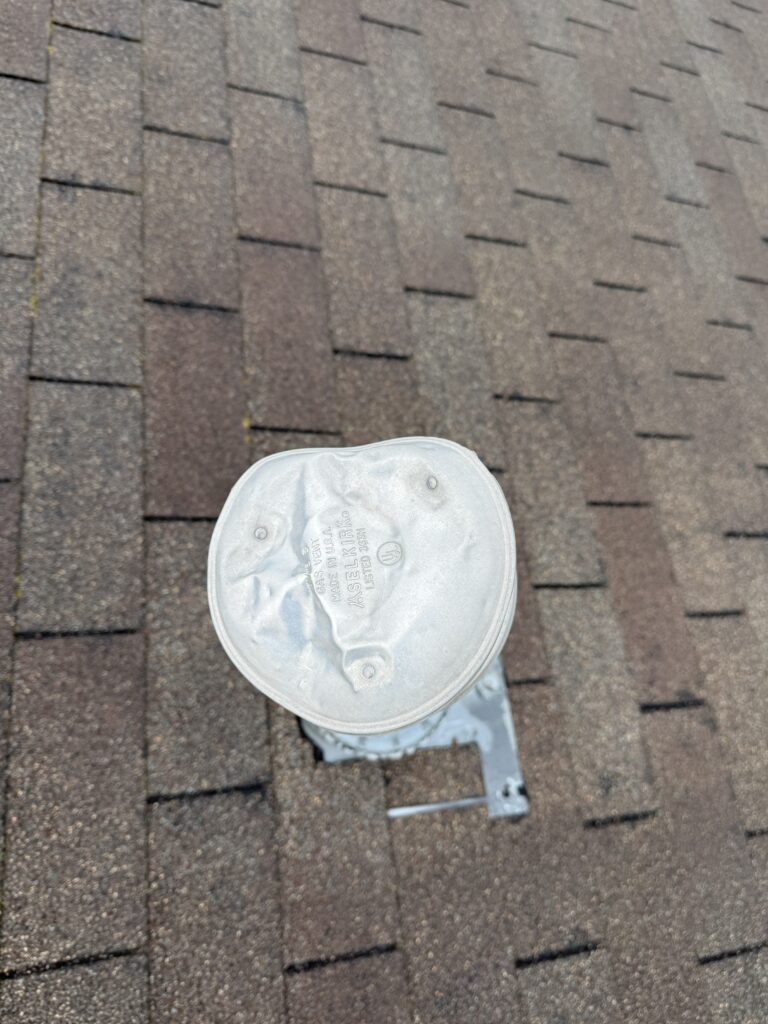
A basic rule of thumb is 1 square foot of net free ventilation area for every 150 square feet of attic floor space - or 1:300 if you have a vapor barrier. But the real test is what you see: frost on the sheathing in winter, excessive heat in summer, or ice dams along the eaves all point to a ventilation problem. A professional inspection can give you a definitive answer.
Get My Free Estimate →- Why Wisconsin's Climate Makes Attic Ventilation Critical
- What Attic Ventilation Actually Does
- The Real Cost of Poor Ventilation (What We See Every Year)
- How a Balanced Ventilation System Works
- Warning Signs Your Attic Ventilation Is Failing
- What to Do About It
- Ventilation and Your Roof Warranty
- One Last Thing: Don't Mix Exhaust Types
- Get a Free Attic and Roof Inspection
- FAQs
Most homeowners in south-central Wisconsin don't think about their attic until something goes wrong. A ceiling stain shows up. The upstairs is unbearably hot in July. Ice dams tear the gutters off in February. By that point, the damage is already done - and it usually traces back to one overlooked system: attic ventilation.
This isn't complicated stuff, but it does matter a lot in our climate. Here's what you need to know.
Why Wisconsin's Climate Makes Attic Ventilation Critical
We get both extremes. Humid, hot summers push heat and moisture up into the attic. Then we get brutal winters where that same moisture freezes, and warm air leaking from the living space below creates the perfect conditions for ice dams and rot.
Most of the country only has to worry about one or the other. We have to design for both - and most attic ventilation systems installed 20 or 30 years ago weren't built with that in mind.
What Attic Ventilation Actually Does
Think of your attic as a space that needs to breathe. Cool, dry outside air enters through vents in the soffits (the underside of your roof overhang). That air flows up through the attic and exits through vents near the ridge. This continuous movement does two things:
- In summer: It flushes out superheated air before it radiates down into your living space and overworks your AC.
- In winter: It keeps the roof deck cold and uniform, which is the single most important factor in preventing ice dams.
Without that airflow, you get a stagnant, moisture-laden attic that slowly destroys everything it touches - the sheathing, the rafters, the insulation, and eventually the roof itself.
The Real Cost of Poor Ventilation (What We See Every Year)
After 47 years of working on roofs in Wisconsin and Iowa, we've opened up a lot of attics. Here's what shows up when ventilation has been inadequate for years:
Rotted roof sheathing. This is the most expensive surprise. The plywood or OSB decking that your shingles nail into gets saturated with moisture, softens, and loses its holding strength. You won't see it from the outside until shingles start to buckle or sag.
Premature shingle failure. Shingle manufacturers have ventilation requirements for a reason. Excessive heat from a poorly ventilated attic literally bakes shingles from below, shortening their lifespan by years. If you're replacing a 30-year roof after 15 years, ventilation is one of the first things to check.
Mold in the attic. Warm, damp, dark, and stagnant - that's a mold incubator. We find black mold on rafters and sheathing more often than homeowners expect, and it's almost always tied to ventilation or air sealing issues.
Ice dams. This one gets attention because it's visible and dramatic. But most homeowners don't connect the ice dam on the eave to the warm, under-ventilated attic above it. The two are directly linked.
If you've dealt with any of these issues, it's worth getting a proper look at your attic before your next roof replacement in Madison - otherwise you're putting new shingles over an unresolved problem.
How a Balanced Ventilation System Works
The key word is balanced. You need roughly equal amounts of intake (low, at the soffits) and exhaust (high, at or near the ridge). When those two are out of balance, the system doesn't work the way it should.
Intake vents are typically:
- Continuous soffit vents (a mesh strip running the length of the eave)
- Individual round or rectangular soffit vent inserts
- Over-fascia vents when soffits are enclosed
Exhaust vents are typically:
- Ridge vents (the most effective option for most homes)
- Box vents / static vents near the peak
- Power attic ventilators (fans) - useful in some situations, but can cause problems if the intake side isn't adequate
One mistake we see contractors make: installing ridge vents without checking whether the soffit vents are blocked. Insulation batts pushed right up to the eave, missing baffles, or vinyl soffit panels that were never punched for ventilation - any of these will choke the intake and make the ridge vent nearly useless.
Warning Signs Your Attic Ventilation Is Failing
You don't need to climb into your attic to spot some of these. Walk around your house and look:
- Ice dams in winter - heavy ridges of ice at the eaves, icicles thicker than your finger
- Uneven snow melt - some areas of the roof bare while others hold snow (heat escaping unevenly)
- Shingles that look wavy, cupped, or granule-bare earlier than expected
- Upstairs rooms that are significantly hotter than the rest of the house in summer
- Frost or condensation visible on the underside of the roof deck if you do look in the attic
- Musty smell in upper rooms or the attic itself
Any one of these is worth investigating. More than one, and you likely have a real problem developing.
Want a straight answer on your roof?
We'll inspect it, document everything, and tell you honestly what you're looking at, even if the answer is patch it for now. No pressure.
What to Do About It
If you suspect a ventilation issue, here's a reasonable sequence:
- Check the soffits from outside. Are they vented at all? If you see solid vinyl or wood with no perforations or inserts, that's a problem.
- Look in the attic on a cold morning. Frost on the sheathing? Wet insulation near the eaves? That tells you moisture is accumulating.
- Check whether insulation is blocking the eaves. Baffles (also called rafter baffles or vent chutes) should hold insulation back from the soffit area to keep the airflow path open.
- Count and measure your vents. The general rule is 1 square foot of net free vent area per 150 square feet of attic floor space, split roughly 50/50 between intake and exhaust.
If you're not comfortable doing this yourself - or if you want a second opinion before making any changes - this is exactly the kind of thing we look at during a residential roofing inspection.
Not sure what you're dealing with? We offer free inspections and will give you a straight answer about what we find - no pressure, no upsell. Get in touch here or give us a call.
Ventilation and Your Roof Warranty
This is worth knowing before you file a claim or buy new shingles. Most major shingle manufacturers - including GAF - require proper attic ventilation as a condition of their warranty. If your attic doesn't meet the ventilation specs and you have a premature failure, the manufacturer can and will deny the claim.
We see this come up in storm claims too. An insurance adjuster may approve the hail or wind damage, but if the underlying deck is rotted from moisture, that portion of the repair often doesn't get covered. It's one reason we walk through attic conditions as part of our storm damage assessments - so nothing catches you off guard.
One Last Thing: Don't Mix Exhaust Types
This is a contractor mistake that causes real problems. Mixing ridge vents with box vents or power fans on the same roof can actually short-circuit the airflow - air exits through the lower exhaust point and never makes it to the ridge. The result is dead zones in the attic where moisture builds up. If you're adding ventilation or replacing a roof, make sure whoever does the work understands how the system is supposed to function as a whole.
We've fixed a lot of these situations over the years. Check out some of our customer reviews if you want to hear directly from homeowners who've been through it.
Get a Free Attic and Roof Inspection
Buckshot Exteriors has been serving south-central Wisconsin homeowners since 1979. We're locally owned, we know this climate, and we'll tell you honestly what we find - whether that's a simple fix or something that needs more attention.
If you're seeing any of the warning signs above, or if your roof is more than 15 years old and has never had a ventilation check, now is a good time to get eyes on it. Schedule your free inspection today and let's make sure your attic is set up to protect your home through whatever Wisconsin throws at it next.
Get a straight answer on your Madison roof
Wisconsin storm season and insurance non-renewal letters do not wait. Get a free, no-obligation inspection and an honest assessment of exactly what your roof needs, even if the answer is to wait.