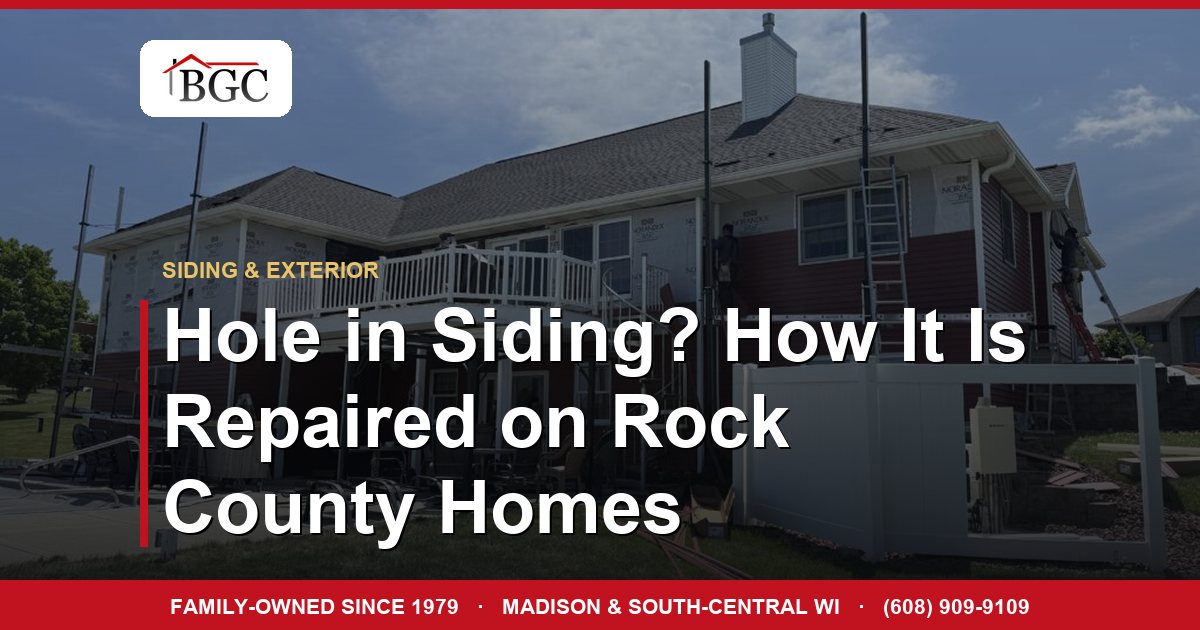
A small hole, such as a screw hole from an old mount, can be filled with a color-matched exterior sealant made for siding. A larger hole or a crack needs a new panel, because a patch shows and does not lock into the wall the way a panel does.
Get My Free Estimate →A small hole in siding, such as a screw hole from an old mount, can be sealed with a color-matched sealant. A larger hole, a crack or a broken panel means replacing that panel or board, then checking the house wrap behind it for water.
Hail and wind move through Rock County every season, and punctured or cracked panels are among the siding damage we repair every week. Buckshot's owner, Chad Yates, grew up in Orfordville and learned the trade on Rock County rooftops, and this guide covers how each kind of hole is repaired.
What made the hole
The cause decides the repair, so look at the size, shape and height of the hole first.
| Cause | What it looks like | Usual repair |
|---|---|---|
| Hail | Cracks, chips and holes on the side of the house that faced the storm | New panels, often through an insurance claim |
| Stones thrown by a mower, trimmer or snow blower | Small punctures low on the wall | Sealant for pinholes, a new panel for anything larger |
| A grill or other heat source too close | A warped or melted area with a hole in it | A new panel, and moving the heat source |
| Woodpeckers | Round holes high on the wall, often near the soffit | A new panel or board, covered in our woodpecker guide |
| An old dish, light, cable or hose reel mount | Screw holes and a faded outline where the mount was | Sealant in the holes, or a new panel if the outline shows |
| An impact in cold weather | A crack spreading from the point of impact | A new panel, covered in our guide to vinyl siding cracking in cold weather |
Small holes that can be sealed
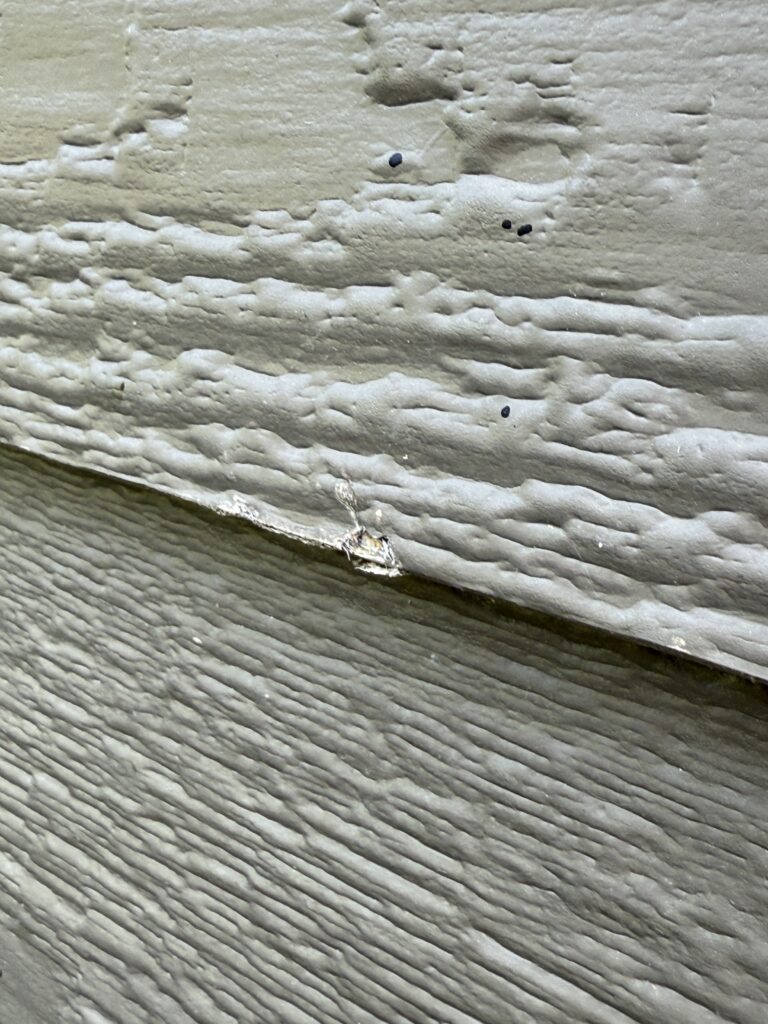
Screw and nail holes left by an old mount can be filled with a color-matched exterior sealant made for siding. Fill only the hole, and never caulk a panel's bottom edge or seal panels to the trim, because vinyl moves as it heats and cools.
A color-matched siding repair patch can cover a small puncture until the panel is replaced. On a front wall the patch will show, so treat it as a way to keep water out rather than the final repair.
Larger holes and broken boards
Vinyl siding is made to come apart. A zip tool unlocks the panel above, the nails holding the damaged panel come out, and a new panel locks into the course below and is nailed back in place.
The new panel is nailed in the center of its slots and left loose enough to slide, so it expands and contracts with the rest of the wall. Vinyl is brittle in hard cold, so a replacement goes best on a mild day, with the hole covered until then.
Fiber cement and engineered wood are repaired by cutting out the damaged length of board and fitting a new one. The new piece is fastened, the joints are sealed, and it is primed and painted to match.
Matching the new panel to the old siding
Matching is the hard part of any siding repair, because siding fades and profiles get discontinued. We match existing siding in profile and color where it is available, and we tell you up front when a repair will show.
When new stock does not match faded siding, a panel can be moved from a hidden wall, such as behind a deck, to the damaged spot. The new panel then goes on the hidden wall.
If a storm damaged the siding, matching is also an insurance question. Our guide to whether insurance replaces all the siding when one side is damaged explains how adjusters handle a mismatch.
Check the wall behind the hole
A hole in siding lets rain and melting snow in behind the panel. House wrap is the layer that keeps that water off the wall sheathing, and a tear in it lets water reach the wood.
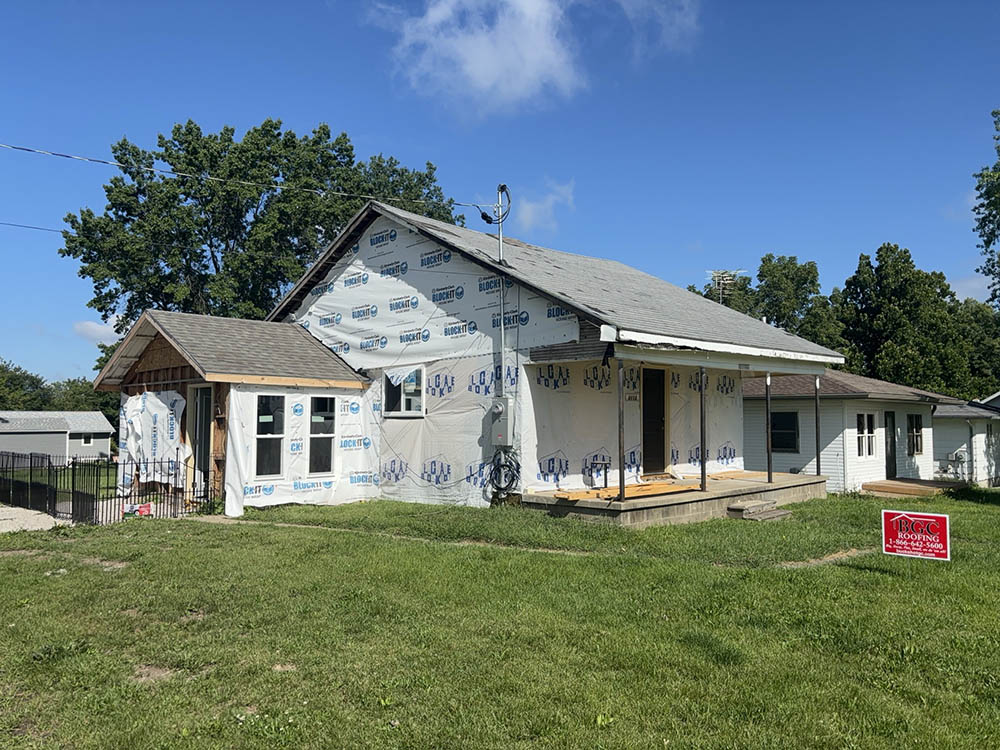
When a panel comes off, the house wrap and sheathing are checked before the new panel goes on. Wet or soft sheathing is replaced, and torn house wrap is patched and taped, as our guide to house wrap behind siding explains.
A hole left open for months can lead to rot and mold inside the wall. Our guide to mold behind siding covers the signs to look for inside the house.
Want a straight answer on your roof?
We'll inspect it, document everything, and tell you honestly what you're looking at, even if the answer is patch it for now. No pressure.
Holes after a hail storm
Hail cracks and punctures vinyl rather than denting it, and the damage usually shows on the side of the house that faced the storm. If the siding took hail, the roof, gutters and window trim likely did too.
Storm damage to siding is covered under most homeowner policies when the claim is documented properly. Our guide to hail damage on siding shows what to look for on each material, and our insurance claims team puts siding and roof damage in the same adjuster scope.
Our guides for Janesville and Beloit homeowners cover storm damage and hail claims in Rock County.
What to do about a hole today
- Photograph it. Take a close-up and a wide shot of the wall before anything is covered.
- Keep water out. Cover the hole with exterior-rated tape or a patch until the repair, and keep sprinklers off that wall.
- Check inside. Look for damp drywall, peeling paint or a musty smell on the inside of that wall.
- Look for spare siding. Many homes have leftover panels from the original install in the garage, basement or attic, and they match better than new stock.
- Walk the whole house. After hail, check every side and look at the roof edges and gutters from the ground.
Found a hole in your siding? Our siding repair estimate is free, and you get a straight repair-or-replace answer. Call (608) 909-9109 to schedule it.
Free on-site inspection · Family-owned since 1979How we repair holes in siding
Our siding repair crews start from repair, not replacement. Most damage is on one wall or a few panels, and it is fixed without touching the rest of the house.
- Assess the damage. We find the cause and check how far the damage goes.
- Source the match. We match the profile and color of your vinyl siding or other material where it is available.
- Open the wall. The damaged panel comes off, and the house wrap and sheathing are checked and repaired.
- Install the new panel. It is fastened correctly, and the seams and trim are finished cleanly.
- Document storm damage. If hail caused it, we photograph it for your insurer.
Replacement makes sense when damage is spread across many walls, or when the siding is at the end of its life, which is 20 to 25 years for vinyl. Our guide to signs siding needs replacement covers that decision.
Get a hole in your siding repaired
Buckshot is family-owned and has served southern Wisconsin since 1979. Our own siding crews work across Rock County, including Janesville, Beloit, Edgerton, Milton and Evansville, and we respond within 2 hours.
Call (608) 909-9109 to schedule a free siding repair estimate, or send us a message with a photo of the damage.
Get a straight answer on your Madison roof
Wisconsin storm season and insurance non-renewal letters do not wait. Get a free, no-obligation inspection and an honest assessment of exactly what your roof needs, even if the answer is to wait.