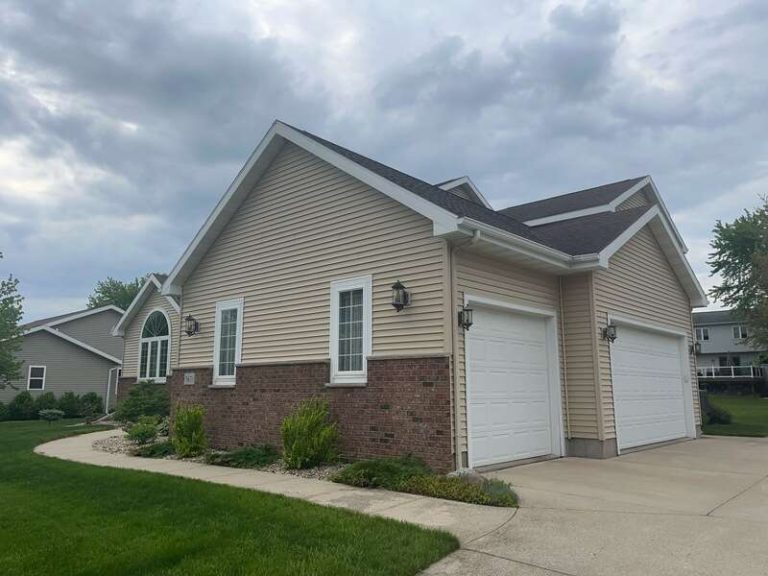
Steel is the strongest practical pick because it does not crack, shatter or turn brittle in the cold. Insulated vinyl is a solid second, since the foam backing stiffens the panel so it flexes instead of breaking, and fiber cement is close behind. The honest trade-off with steel is that hail leaves dents, and dents do not pop back out. Standard thin vinyl is the most likely material to crack in a hard hail hit, especially in winter.
Get My Free Estimate →- What Iowa weather actually does to siding
- Material by material: how each one really behaves
- Quick "best for" guide
- What affects siding cost in Iowa
- The weather barrier matters as much as the panels
- How to tell if hail already got your walls
- The insurance side of hail-damaged siding
- What an older Iowa home can hide
- How to vet a siding contractor after a hail storm
- Get an honest read on your walls, free
- FAQs
In Iowa, picking siding is really a decision about three things: hail, straight-line wind, and big temperature swings. Looks matter. Weather decides whether you do this once or twice.
So rank materials by how they fail, not by how they look in a showroom. Steel and insulated vinyl tend to resist cracking best. Fiber cement is tough and fire-resistant but chips under a hard hit. Standard thin vinyl is the cheapest and the most likely to crack. Engineered wood looks great and is strong, but it punishes sloppy trim and flashing. Cedar is the prettiest and the most work.
Below is the honest breakdown, plus what your policy will and will not pay when hail finds your walls, and what an older home can hide under the old siding.
What Iowa weather actually does to siding
Four loads matter, and each one breaks siding a different way.
Hail. Hail is a regular feature of Iowa's spring and early summer storm season. It does two things to siding: it cracks brittle materials and it dents soft ones. Vinyl cracks and holes. Fiber cement chips and develops spider cracks. Steel and aluminum dent. Which failure you can live with should drive your choice.
Straight-line wind. Iowa gets serious non-tornadic wind events, and the August 2020 derecho is the one everybody remembers. Wind failures rarely trace back to the material itself. They trace back to fastening. Panels nailed too tight cannot move, panels nailed too loose peel, and under-fastened starter strips, J-channel and corner posts are common places for unzipping to start.
Hot, humid summers. Sun fades pigment, heat softens vinyl, and humidity swells anything that drinks water. Exposed west and southwest walls take the most UV and wind-driven rain, so they tend to age faster than the rest of the house even with the same siding and the same install date. If you have exposed walls, spend your care on those elevations.
Freeze-thaw. Iowa cycles above and below freezing all winter. Water that gets behind siding and then freezes works joints loose, pops caulk, and rots sheathing. The bottom course of siding and the trim near grade are common places for the first soft spot to show up.
One more thing worth saying plainly: vinyl gets more brittle the colder it gets. The same hail stone that bounces off a panel in July can punch through it in February.
Material by material: how each one really behaves
Vinyl siding
Lowest cost, lowest upkeep, widest color selection, and the most common siding in the Midwest for good reason. It never needs painting and it does not rot.
The weak spot is impact. Thin builder-grade vinyl siding is the material most likely to crack or hole in a hail event, and cold makes it worse. Wind performance varies a lot, and it is mostly an install question: panels need to hang, not be pinned, so they can expand and contract through the seasons.
Best for: tight budgets, rental property, lower hail exposure, anyone who wants zero maintenance.
Insulated vinyl
This is vinyl with rigid foam bonded to the back of the panel, and it is a real upgrade rather than a sales pitch. The foam stiffens the panel so it flexes instead of shattering, it flattens the wall so it looks and sounds more solid, and it adds a modest amount of insulation. We go deeper on the thermal side in our guide to insulated siding and its R-value.
Best for: hail-prone areas on a moderate budget, older homes with thin wall insulation.
Fiber cement
Heavy, dense, fire-resistant, and it holds paint beautifully. Insects ignore it and it will not melt next to a grill. In straight-line wind it performs very well because it sits tight to the sheathing with plenty of fasteners.
The honest drawbacks: it is brittle in its own way, so a hard hail hit chips the surface or leaves spider cracks instead of denting. It is also a long-term maintenance material. Caulked joints and painted surfaces need attention, and butt joints that were not detailed with flashing will drink water and swell. Install quality matters more with fiber cement siding than with almost any other option, because cut edges must be sealed and fasteners cannot be overdriven. If this is your finalist against vinyl, our vinyl vs fiber cement head-to-head walks the cost and upkeep trade-offs for freeze-thaw climates, which is the same load Iowa walls carry.
Best for: curb appeal with real durability, fire or insect concerns, owners who do not mind repainting on a long cycle.
Steel and aluminum
If hail is your number one fear, metal deserves a hard look. Steel does not crack, does not shatter, does not get brittle in the cold, and will not burn. Panels lock together and handle wind well. Our steel vs vinyl comparison covers the upgrade decision in more detail.
The complaint is cosmetic. Metal dents, and dents do not pop back out. A big hail event can leave a wall that is structurally perfect and visually pebbled. Aluminum is softer and dents more easily than steel. Finish quality is the other variable, because the coating is all that stands between the panel and rust at cut edges and scratches.
Now the part you want before you commit: many carriers attach a cosmetic damage exclusion or waiver to metal siding and metal roofing. That language says dents that do not affect performance are not covered. So you can have the most hail-resistant wall on the block and still be told the dents are yours. Call your agent and ask how your policy treats cosmetic damage to metal first. Steel and aluminum siding can be one of the longest-lasting exteriors you can put on an Iowa house, as long as you go in knowing the dents may be yours to live with.
Best for: high hail exposure, exposed acreages, owners who want maximum lifespan and would rather have dents than holes.
Engineered wood
A real wood look with real strength, lighter and more impact-tolerant than fiber cement, and it cuts and fastens cleanly. It tends to take hail better than you might guess because it has some give.
The catch is moisture. Engineered wood lives or dies on details: factory-sealed cut edges, clearance at grade and at roofs, flashed horizontal joints, and trim that genuinely sheds water. Failures typically show up as swelling along bottom edges near a deck ledger or a roof-to-wall transition where flashing was skipped.
Best for: a wood look with less upkeep than cedar, as long as your installer sweats the trim.
Cedar and real wood
Nothing else looks like it, and nothing else asks for as much. In Iowa humidity and freeze-thaw, cedar needs staining or painting on a schedule, and south and west walls come due first. Hail tends to dent and gouge rather than hole.
Best for: historic homes, accent walls and gables, owners who enjoy maintaining their house.
Quick "best for" guide
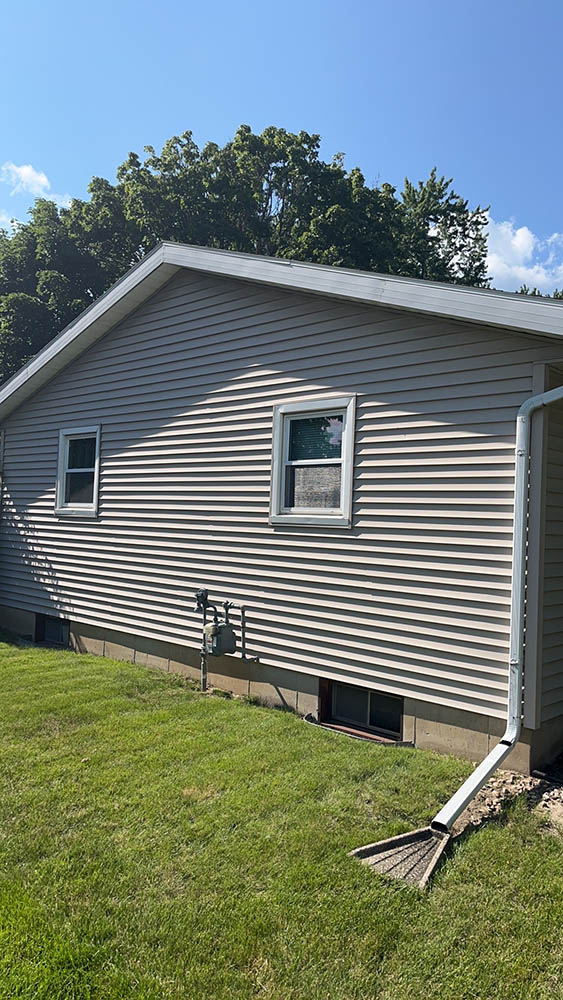
Hail-prone area: steel first, insulated vinyl second, fiber cement third.
- Tight budget: vinyl, in the thickest grade you can afford, installed correctly.
- Lowest maintenance: steel or vinyl. Neither needs paint.
- High wind exposure (open acreage, west-facing): fiber cement or steel, with real attention to fastening and corners.
- Best looks for the money: engineered wood or fiber cement.
- Insulation gain while you are at it: insulated vinyl, or continuous foam board under any material.
- Humid, shaded or low-lying lots: anything but untreated wood, and get grade clearance and flashing right.
Exposure changes the answer house to house. Our Dubuque siding materials guide looks at the same material choices for a different part of the state.
What affects siding cost in Iowa
Prices move with material costs and labor, and every house is different, so there is no honest single number. Relative order is more useful: standard vinyl is generally the least expensive, insulated vinyl costs more, and engineered wood, fiber cement and steel sit above that. Cedar is generally at the top of the range because of both material and upkeep.
What actually moves your number more than the material choice:
- Wall area, not floor area. A ranch can have less wall than a smaller two-story.
- Access. Two and three stories mean staging and slower work.
- Trim complexity. Window and door count, gables, dormers, soffit and fascia wrap.
- Tear-off and disposal. More layers, more dumpster. Asbestos-cement or lead paint changes this a lot.
- Rotted sheathing. Usually priced per sheet and found after tear-off. Ask for that unit price up front.
- Add-ons. House wrap upgrade, continuous foam board, new windows while the walls are open.
If financing matters, ask for the APR, the term length and any dealer or origination fee in writing before you sign, and compare it against your bank or credit union.
Not sure which material fits your exposure and your budget? A free on-site look sorts it out fast. Call (608) 909-9109.
The weather barrier matters as much as the panels
Most siding failures are install failures wearing a material's name. Ask any bidder how they handle nailing (panels must be able to move), the weather-resistive barrier with lapped and taped seams plus flashing at windows and doors, trim, fascia and soffit, and clearance at grade. We cover the barrier in detail in our guide to house wrap behind siding, and the cold-weather side in whether siding can be installed in winter.
How to tell if hail already got your walls
Walk the house yourself on a bright day. Hail is directional, so one elevation can be wrecked while the street-facing wall looks fine.
- Check soft metals first: gutters, downspouts, window and door wraps, and the fins on your AC condenser. Dings there mean hail was big enough to matter.
- On vinyl, look for cracks at the butt joints, holes, and split corner posts. Hold a light at a low angle along the wall, because cracks show up sideways that they hide head-on.
- On fiber cement and painted wood, look for chips, chalky craters and spider cracking, usually on the upper courses.
- On steel or aluminum, look for round dents in a random pattern, not the straight dings a ladder or weed trimmer leaves.
- Look for spatter marks, the clean spots where hail blasted dirt off the siding or the top of a deck rail. They fade within a few months, which is one reason not to wait.
If you find any of that, our guide to hail damage on siding walks through what an adjuster looks for and how damage gets documented. Then get a trained look at it, because bruising on painted wood and hairline chipping on fiber cement can be hard to see.
Want a straight answer on your roof?
We'll inspect it, document everything, and tell you honestly what you're looking at, even if the answer is patch it for now. No pressure.
The insurance side of hail-damaged siding
Hail-damaged siding is commonly part of a storm claim right alongside the roof. Plenty of homeowners never file for the siding because they only looked at the wall facing the street.
First, the misconception worth clearing up: you pick your contractor, not your carrier. Preferred or recommended vendor lists are a convenience the insurance company offers, not a requirement.
The policy terms that decide your claim:
- Deductible. Check whether you have a flat deductible or a percentage wind and hail deductible, which many policies use. At 1% or 2% of dwelling coverage, a $300,000 home would carry a $3,000 to $6,000 deductible. Know that number before a storm, not after.
- ACV vs RCV. On a replacement cost policy, the carrier typically pays actual cash value (minus depreciation) first, then releases the depreciation holdback once work is completed. On an actual cash value policy there is no second check.
- Supplements. If the crew finds damage the adjuster did not include, the contractor submits a supplement with documentation. This is normal, and it is why photos during tear-off matter.
- Matching. Whether a carrier pays to replace a full elevation so colors match, or only the damaged panels, depends on your policy wording and the adjuster's call. Do not assume either way.
- Cosmetic damage language. The one that matters most for metal, as covered above.
Practical steps: document damage promptly with dated photos and have all four elevations inspected, because hail is directional. We meet your adjuster on site so siding damage gets documented, not just the roof.
What an older Iowa home can hide
New siding can physically go over old siding, and that is exactly the problem: covering a wall hides soft sheathing, missing house wrap and flashing that was already leaking. Ask every bidder whether the price includes full tear-off and disposal, whether they will photograph the sheathing before new siding goes on, and what they charge per sheet if they find rot.
Homes built before about 1980 add two checks. Some have asbestos-cement siding, usually small gray shingles with slightly wavy bottom edges that snap rather than bend. It needs to be tested by a qualified inspector before anyone disturbs it, and if it is positive, removal follows the rules for asbestos work, which adds cost and time. For homes built before 1978, work that disturbs painted surfaces falls under the EPA's Renovation, Repair and Painting rule, and the firm doing it should be EPA lead-safe certified. Sometimes the cheaper legal path is leaving old asbestos-cement material undisturbed and siding over it, and a contractor who knows older homes should raise that before you do.
How to vet a siding contractor after a hail storm
After a hail event, some out-of-state crews show up fast, knock doors and sell on urgency. Before you sign anything, ask for:
- Proof of registration and insurance. Ask what the state requires of contractors in your area, and ask for certificates of general liability and workers' compensation insurance sent directly from the insurance agent.
- A local physical address, not a PO box and not a truck.
- References nearby, with addresses you can drive past.
- Manufacturer credentials for the product you are buying. Some extended warranties apply only to certified installers.
- Warranty terms in writing, both kinds. The manufacturer warranty on the product, and a workmanship warranty from the contractor. Ask the length, what it covers, and whether it transfers if you sell.
Red flags: pressure to sign today, an offer to "waive" or "absorb" your deductible (that can amount to insurance fraud and put you in it too), a large deposit demanded before material is delivered, and no written scope.
Get an honest read on your walls, free
The right siding depends on your house, your exposure, and whether a storm already did damage you have not spotted. A catalog cannot tell you that. A walkaround can.
Buckshot Exteriors is family-owned, has been in business since 1979, and has offices in Centerville, Iowa and Madison, Wisconsin. If you want someone to look at your walls in person, start with our southern Iowa siding page or the main siding services overview. The inspection is free, there is no obligation, and you get a written estimate you can compare against other bids. Call (608) 909-9109.
Get a straight answer on your Madison roof
Wisconsin storm season and insurance non-renewal letters do not wait. Get a free, no-obligation inspection and an honest assessment of exactly what your roof needs, even if the answer is to wait.