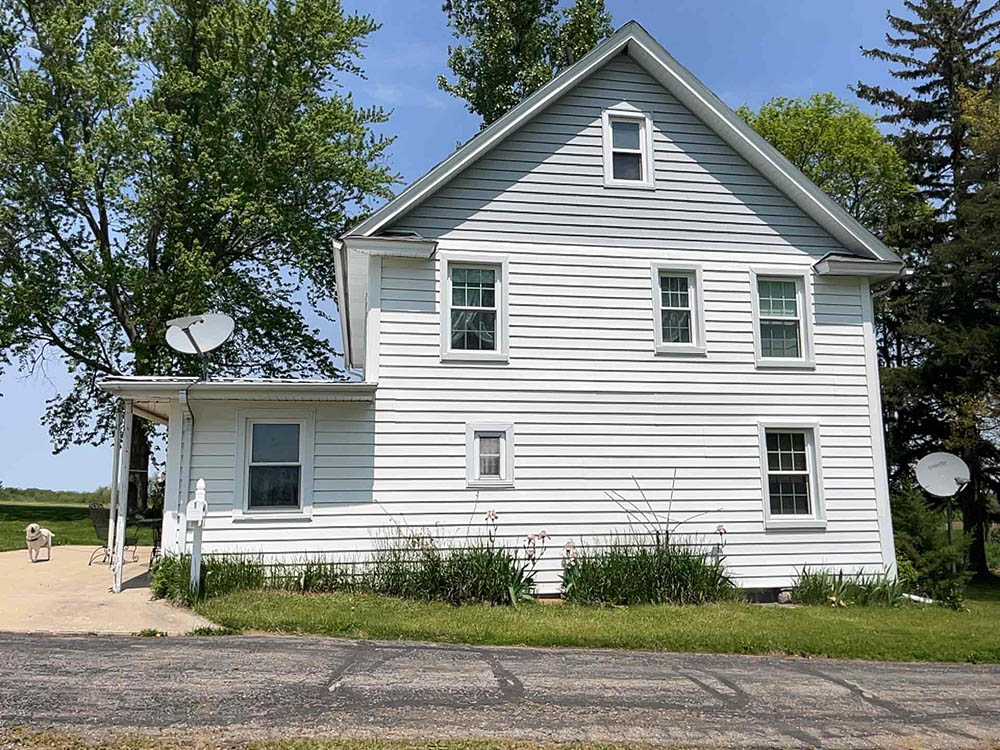
Most foam-backed vinyl panels add roughly R-2 to R-3, depending on foam thickness. That is real, continuous insulation across the whole wall including over the studs, but it is a modest number. Any quote promising R-5 or more from siding alone is either counting your whole wall assembly or overselling.
Get My Free Estimate →- What insulated siding actually is (and the real R-value)
- Does the foam trap moisture against my sheathing?
- What insulated siding genuinely does well in Wisconsin
- Insulated vs standard vinyl: what it costs around Madison
- Where insulated vinyl loses to other materials
- Can it go over my existing siding?
- Thickness, trim and windows: the part nobody mentions
- Warranty, hail claims and the color-matching problem
- Maintenance, lifespan and swapping one bad panel
- Permits, HOA and Madison's historic districts
- When insulated siding is genuinely worth it
- When that money belongs somewhere else
- Will you get it back at resale?
- How to read the quote (and the contractor)
- Our honest take
- FAQs
Short answer: insulated vinyl siding adds about R-2 to R-3. That is real, but it is not going to cut your Madison heating bill in half, and any salesperson who says otherwise is stretching it.
The two-line verdict:
- Worth it for durability, dent and hail resistance, flatter looking walls, and covering thermal bridging on walls you aren't opening up.
- Not worth it as an energy investment on its own. The payback math almost never works if your attic, rim joist and air sealing haven't been handled first.
The rest comes down to what's already inside your walls and which side of the house you're talking about. We'd rather you spend the money in the right place than be unhappy with us in three winters.
What insulated siding actually is (and the real R-value)
Insulated vinyl siding is standard vinyl siding with a contoured piece of rigid EPS foam laminated or fitted to the back of each panel. The foam fills the hollow space and follows the panel profile so it sits tight.
Typical foam thickness runs about 1/4 inch to 3/4 inch, which puts most products in the R-2 to R-3 range.
For comparison:
- Hollow-back vinyl siding alone: roughly R-0.6, basically nothing
- Housewrap: no meaningful R-value, it's an air and water barrier
- A 2x4 wall with fiberglass batts: nominal R-13, closer to R-11 whole-wall once you count the studs
- A 2x6 wall with batts: nominal R-19 to R-21
So insulated siding is roughly a 15-25% bump on an insulated 2x4 wall. On an uninsulated wall, it's the difference between almost nothing and something.
What matters is where that R-value sits. It's continuous, running across the studs and not just the cavities. That's the one technical advantage worth understanding.
Why the marketing number and the real savings differ
Wood studs conduct heat. Every 16 inches your insulated cavity is interrupted by a stud that's about R-4.4 in a 2x4 wall. That's thermal bridging, and it's why insulated walls still show up as stripes on an infrared camera in January. Continuous foam cuts across those stripes. Good.
But your walls usually aren't the biggest hole in your heating budget. In older south-central Wisconsin homes, the leaks that cost real money are attic bypasses, a bare rim joist, tired windows and doors, and duct losses. Siding does nothing for any of those.
R-value only addresses conduction, too. Air leakage is often the bigger driver of a cold house, and foam-backed siding doesn't stop it. The air and water control in a re-side comes from the layer underneath: a properly lapped water-resistive barrier (WRB) with taped seams, flashed window and door openings, and sealed utility penetrations. Siding is the rain jacket over all of that.
Does the foam trap moisture against my sheathing?
No, not in a wall that's built right, and this is the objection we get asked about most.
Three reasons the assembly still dries:
- EPS is vapor-open. At the thicknesses used behind siding it runs in the range of several perms, more permeable than the plywood or OSB behind it and more permeable than a couple coats of interior paint. Many insulated lines also use grooved or perforated backers specifically so water can drain and air can move.
- Vinyl is a vented cladding, not a sealed skin. It hangs loose on nails, laps are open, and there are weep holes in the starter strip. Water that blows past drains down the WRB (the drainage plane) and back out at the bottom. The mistake amateurs make is caulking that bottom termination closed, which turns a drainage plane into a bathtub.
- Exterior foam actually warms the sheathing. Continuous insulation on the outside keeps the sheathing slightly warmer in January, which lowers the chance of interior moisture condensing on it. That's the same physics behind exterior rigid foam on new construction.
Where it goes wrong is never the foam. It's unflashed windows, a missing kickout flashing at a roof-to-wall, no taped WRB, or foam-backed panels shot over old wavy siding where nobody can see what's rotting underneath.
What insulated siding genuinely does well in Wisconsin
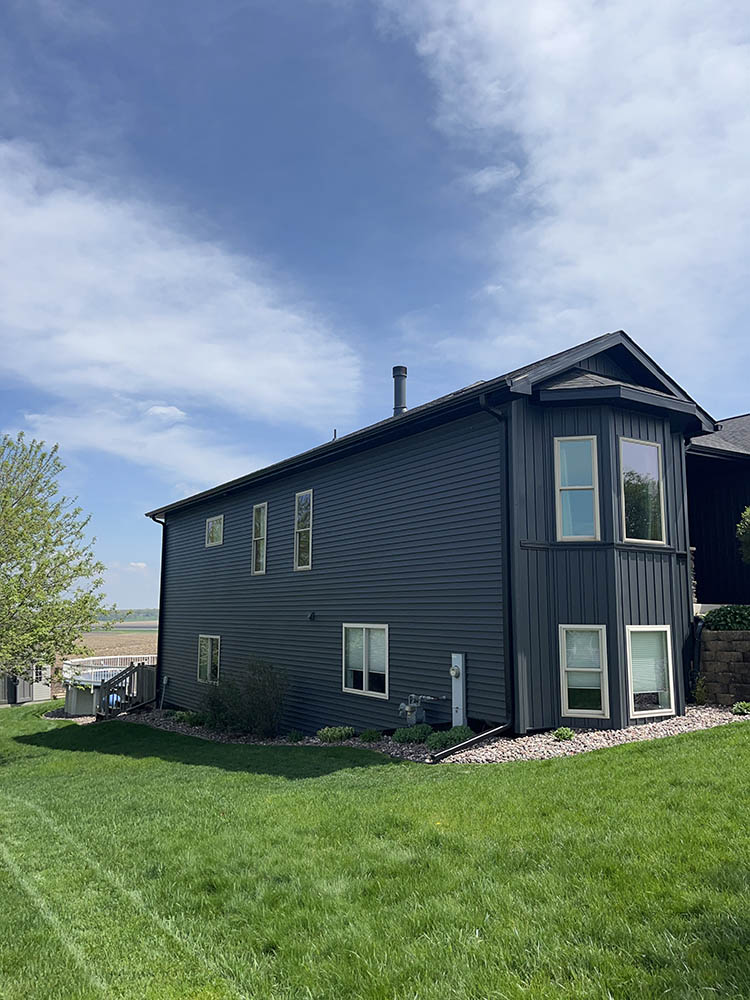
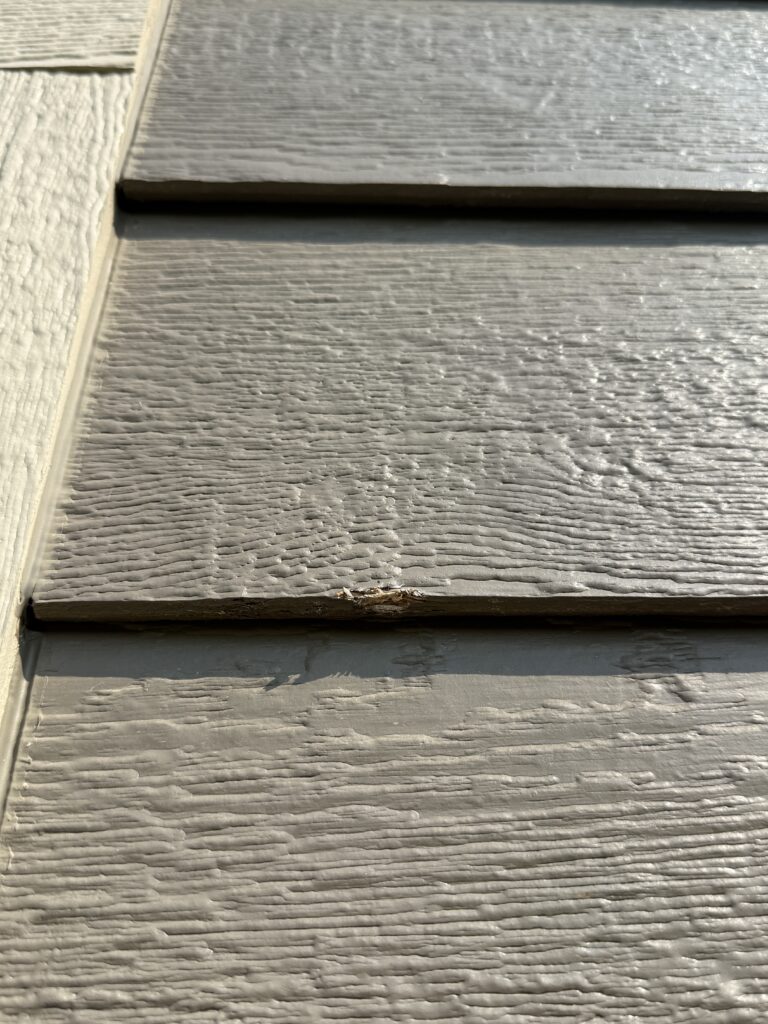
It resists dents and hail better. Hollow-back vinyl has nothing behind it, so a ladder foot, a stray baseball or a hailstone leaves a crack or a permanent dimple. Rigid backing supports the panel and spreads the impact. After the hail seasons we see across Dane, Rock, Columbia and Sauk counties, that matters. Not hail-proof, but better.
Walls look flatter. Vinyl shows every wave in old sheathing and every bit of thermal movement. Foam-backed panels are stiffer and hold their shape, so you get fewer waves and straighter shadow lines in low sun. On a 1950s Madison ranch with wavy board sheathing, that's often the most noticeable difference of all.
Wind performance. Vinyl panels are wind-load tested under ASTM D5206, and published ratings across the market range from about 110 mph up past 160 mph depending on the specific panel and fastening schedule. Insulated lines often sit at the upper end of a manufacturer's lineup, but read the rating for the exact product rather than assuming foam automatically means higher wind numbers.
Modest sound damping. Slightly quieter inside. Real, but small. Near the Beltline or Verona Road you'll notice a little. On a quiet street you won't.
Insulated vs standard vinyl: what it costs around Madison
Using 2025 Dane County labor and material pricing, installed:
- Standard vinyl siding: roughly $400-$800 per square (100 square feet)
- Insulated foam-backed vinyl: roughly $700-$1,200 per square
On a 2,000 square foot two-story with 22-25 squares of wall, the upgrade usually works out to several thousand dollars.
Those are ranges, not quotes. Story count, soffit and fascia work, trim details, and how much rotted sheathing we find all move the number. Our siding page walks through vinyl siding cost, insulated vinyl, aluminum, steel, fiber cement and board-and-batten side by side.
If the upgrade delta is the sticking point, we'll write standard and insulated as separate line items so you can see exactly what the foam costs, and we offer financing if you'd rather spread it out. Either answer is fine with us.
Not sure which category your house falls into? A walk-around tells us a lot, and it costs you nothing.
Where insulated vinyl loses to other materials
Be fair to the alternatives before you commit:
- Steel siding takes impact better than any vinyl and won't get brittle at 10 below. If you're on an exposed rural lot in a hail corridor, steel is worth pricing.
- LP SmartSide (engineered wood) gives you thick, deep-shadow lap and true board-and-batten looks, takes paint, and can be patched and repainted. Trade-off is repainting every 10-15 years and sealing cut edges.
- Fiber cement wins on fire resistance and dimensional stability, and it holds a factory paint finish beautifully. It's heavier, pricier, and unforgiving about ground clearance and cut-edge detail in a freeze-thaw climate.
Vinyl, insulated or not, can't practically be painted and still reads as vinyl up close. If you're chasing an authentic look on a Nakoma or Shorewood Hills bungalow, insulated vinyl may not be your product.
Can it go over my existing siding?
We strip to the sheathing on essentially every job. The one case worth discussing is a single original layer of flat, sound, nailable wood siding over solid sheathing with no water history, where the manufacturer's instructions allow it. Even then we'd rather open it.
Here's why. Siding over old siding means nobody sees the sheathing, nobody sees whether the WRB failed, and nobody can correct window flashing. Every hump telegraphs through the new panel, which defeats the main reason people buy insulated. And in a freeze-thaw climate, two layers give water a place to sit.
Tearing off costs a little more in labor. It's also the only way anyone can honestly warranty the wall.
Thickness, trim and windows: the part nobody mentions
Foam-backed panels build the wall out roughly 1/2 inch to 1 inch farther than hollow vinyl. That changes how the siding meets your windows, doors, corners and brick.
In practice: deeper J-channel or trim, sometimes jamb extensions or wider casing so the frame doesn't look buried, and thicker corner posts. Done right it reads as substantial. Done carelessly, windows look sunken and the house looks bulky. We show you the trim detail on your own windows before you sign, because this is where cheap bids cut corners.
Warranty, hail claims and the color-matching problem
Most insulated lines carry a limited lifetime panel warranty, a stated fade limit, and on some products a hail endorsement that replaces damaged panels. Coverage is usually prorated after an initial period, and transfer to a buyer is often allowed once within a set window. Read the certificate, not the brochure. The factory covers the product; your contractor covers the workmanship.
On the insurance side, here's how a vinyl hail claim really goes. Adjusters look for cracks, punctures and chipping on the storm-facing elevations, not dimples, and they photograph a test square. You pay your deductible; most Wisconsin policies then pay ACV (depreciated value) up front and release the remaining RCV (replacement cost) after the work is done and invoiced. The fight is almost always matching: if your color has been discontinued, patching one wall leaves a visible mismatch, and that's an argument for replacing the full elevation or more. Second common shortfall is estimating software defaulting to hollow-back vinyl when you actually have foam-backed panels, which is a real dollar difference per square. That's exactly what we document, and it's why our storm damage restoration crew meets your adjuster on the roof and at the wall.
Want a straight answer on your roof?
We'll inspect it, document everything, and tell you honestly what you're looking at, even if the answer is patch it for now. No pressure.
Maintenance, lifespan and swapping one bad panel
Expect roughly 30-40 years in south-central Wisconsin. Freeze-thaw is hardest on caulk joints and flashing, not the vinyl itself. The real aging is UV: fade and chalking on south and west walls, which is what the fade warranty addresses.
Maintenance is a once-a-year wash with a hose, soft brush and mild detergent. If you pressure wash, low pressure, wide fan, spray straight on, never up under the laps. High pressure pushes water behind panels and can crack them.
And yes, a single foam-backed panel can be replaced. A zip tool unlocks the lap and the panel comes out. The catch is that the contoured foam is profile-specific, so the replacement has to be the same product line, and colors do get discontinued. Keep a few leftover panels and write down the manufacturer, line and color name.
Permits, HOA and Madison's historic districts
Most full re-sides in Dane County require a building permit, and we pull it. Requirements vary between Madison, Fitchburg, Middleton, Sun Prairie and the townships, so we verify before we order material.
Bigger issue: Madison has locally designated historic districts (Mansion Hill, Third Lake Ridge, First Settlement, University Heights and Marquette Bungalows) where exterior material changes go before the Landmarks Commission, and substitute materials like vinyl are commonly restricted or denied. Newer subdivisions frequently have HOA covenants on color and profile. Ask first, before you fall in love with a sample.
When insulated siding is genuinely worth it
Wall cavities are empty or badly settled. Common in pre-1950 Madison homes and balloon framing.
- Exposed elevations. West and northwest walls taking February wind, and walls over unheated space.
- Hail-prone or high-traffic areas. Kids, ladders, driveways, tight lot lines.
- Wavy walls where you want a flat, high-end look from the street.
- Replacing dented aluminum siding and you don't want that dimpled look again.
A ranch we re-sided in Monona is a good example. The owner had been quoted insulated vinyl for the whole house on an energy pitch. When we pulled the old siding, the batts in the west and north bays had settled about two-thirds up the stud cavity, which explained the cold back bedroom. We dense-packed those cavities while the wall was open, ran a new taped WRB, then used insulated panels on the west and street-facing elevations where hail and appearance actually mattered. Less money than insulated everywhere, and it fixed the real problem.
When that money belongs somewhere else
Thin attic insulation. Attic R-value is the cheapest you'll ever buy. Getting a Madison attic to R-49 and air sealing the top plate, wiring penetrations and can lights beats R-2.5 on the walls for a fraction of the cost. Focus on Energy offers insulation and air sealing rebates through participating trade allies (verify current terms with the program). Insulated siding itself generally does not qualify.
A bare rim joist. That band above the basement wall leaks badly. Foam there is cheap and immediately noticeable.
Empty cavities you could fill. With the wall open during tear-off, dense-packing usually buys far more R per dollar than foam-backed panels.
Active water intrusion or rotted sheathing. Fix the cause first. Burying a wet wall is how small problems turn structural.
A roof at the end of its life. Ice dams and soft decking outrank siding every time.
Will you get it back at resale?
Honestly, not as a line item. Buyers pay for how a house looks and for siding that isn't cracked or chalky. Nobody has ever paid extra for R-2.5. Selling in two years? Put the money into clean standard vinyl and good trim work. Staying 15 years or more? Buy insulated for the comfort and dent resistance and enjoy it yourself.
How to read the quote (and the contractor)
Insist on this in writing:
- Exact product name and foam thickness. "Insulated vinyl" is not a spec.
- Whether the R-value is the panel or the "system." R-4, R-5 and R-6 claims are almost always whole-wall numbers, not the siding.
- Tear-off scope, WRB type, and the trim detail at windows, corners and any brick transition.
Then check credentials: Wisconsin's Dwelling Contractor Qualifier certification, current general liability and workers' comp, and manufacturer or VSI installer training. Ask for copies. On the roofing side we hold GAF Master Elite status, which is the same principle applied to shingles: manufacturer-verified installation standards, not just a logo.
Red flag: any savings promise with a dollar figure attached. Nobody can predict your gas bill.
Timeline: most Madison-area re-sides run about three to seven working days depending on size and trim. If weather rolls in mid-project, we dry the house in each evening, no wall gets left open overnight.
Our honest take
Insulated siding is a good product marketed for the wrong reason. Buy it for durability, flatness and dent resistance and you'll be happy. Buy it expecting an energy miracle and you won't.
Buckshot Exteriors has been family-owned since 1979, out of Madison and Centerville, Iowa. We do roofing, siding, gutters, windows and doors, so we have no reason to sell you a siding upgrade when the real problem is your attic or your roof.
Get a free, no-pressure siding estimate. We'll walk your house, check sheathing and existing insulation where we can, show you the real dollar difference between standard and insulated vinyl on your square footage, and leave a written itemized quote with financing options if you want them. If you have wind or hail damage, we document it and meet your insurance adjuster on-site. Nothing to pay to find out, no doorstep pitch, no obligation. Reach out here or call the office and we'll get someone out to you.
Get a straight answer on your Madison roof
Wisconsin storm season and insurance non-renewal letters do not wait. Get a free, no-obligation inspection and an honest assessment of exactly what your roof needs, even if the answer is to wait.