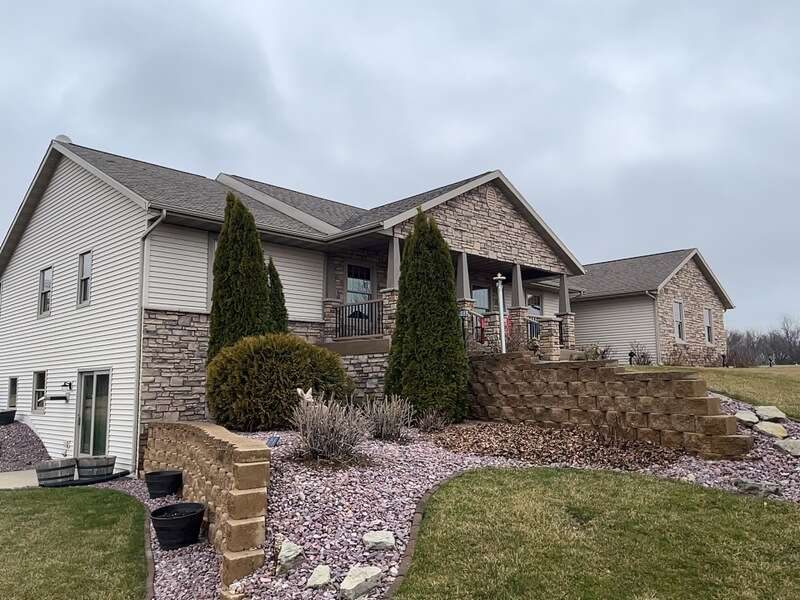
Both can handle Wisconsin winters, but they fail differently. Vinyl gets brittle in extreme cold and can crack if hit by ice or debris. Fiber cement handles temperature swings well but is porous - if it isn't painted and caulked properly, it can absorb moisture and swell or rot at the edges over time. With proper installation, either material can last decades here.
Get My Free Estimate →- The Short Version (If You're in a Hurry)
- What Wisconsin Weather Actually Does to Siding
- Vinyl Siding: What It Does Well (and Where It Falls Short)
- Fiber Cement Siding: What It Does Well (and Where It Falls Short)
- Side-by-Side: The Honest Comparison
- Which One Is Right for Your Home?
- What About Storm Damage? (This Changes the Math)
- What Buckshot Exteriors Homeowners Say
- Get a Free Estimate - No Pressure, No Obligation
- FAQs
You've got quotes in hand, or you're just starting to research, and you keep running into the same two names: vinyl and fiber cement. Maybe a neighbor just had one installed. Maybe a contractor pushed one without really explaining why. Either way, you want a straight answer before you spend thousands of dollars on your home's exterior.
Here it is - no sales spin, just what we've seen over 47 years of putting siding on Wisconsin homes.
The Short Version (If You're in a Hurry)
Vinyl siding costs less upfront, installs faster, and needs almost no maintenance. Fiber cement costs more, looks more like real wood, and holds up better to impact and heat. Both work in Wisconsin - but they fail in different ways, and installation quality matters more than which one you pick.
Now let's dig in.
What Wisconsin Weather Actually Does to Siding
South-central Wisconsin is rough on exteriors. You get:
- Freeze-thaw cycles that run from October through April
- Summer hailstorms that can drop golf ball-sized ice on a calm Tuesday afternoon
- Humid summers that trap moisture behind siding if it wasn't installed with proper drainage
- UV exposure that bleaches and degrades painted surfaces faster than homeowners expect
Any siding choice you make has to survive all of that. Neither vinyl nor fiber cement is perfect. What matters is understanding their specific weaknesses so you can make the right call for your home.
Vinyl Siding: What It Does Well (and Where It Falls Short)
Vinyl has been the dominant siding choice across Wisconsin for decades, and there are real reasons for that.
The strengths:
- Low cost. It's typically the most affordable option per square foot, materials and labor combined.
- Zero painting. The color is molded in. You wash it, you don't paint it.
- Fast installation. A good crew can side an average home in a few days.
- Moisture resistance. Vinyl itself doesn't rot, swell, or absorb water.
The weaknesses Wisconsin homeowners need to know:
Vinyl gets brittle in extreme cold. Below about -10°F, a hard impact - a chunk of ice, a branch, even a baseball - can crack a panel that would have just flexed in warmer weather. We see this every winter.
Cheaper vinyl also fades. Darker colors (navy, deep green, charcoal) can look noticeably different within 10 years on south- and west-facing walls. Premium vinyl from manufacturers like CertainTeed or Mastic holds color better, but it costs more.
And here's the one contractors don't always mention: vinyl expands and contracts significantly with temperature swings. If it's nailed too tight during installation, panels buckle and ripple. We've re-sided homes where the previous contractor made this exact mistake. It's a rookie error, but it's common.
Fiber Cement Siding: What It Does Well (and Where It Falls Short)
Fiber cement - James Hardie is the name most homeowners know, though there are other manufacturers - has grown fast in popularity, and it earns it in certain situations.
The strengths:
- Impact resistance. It doesn't dent or crack from hail the way vinyl can. It can chip, but it takes a harder hit.
- Fire resistance. Fiber cement is non-combustible. That matters for homes in areas with fire risk or for insurance purposes.
- Looks like wood. The texture options are excellent. On higher-end homes, it's genuinely hard to tell from a distance.
- Holds paint longer. Factory-applied finishes (like James Hardie's ColorPlus) can go 15+ years before needing attention.
- Dimensional stability. It doesn't expand and contract like vinyl, so you don't get the buckling problem.
The weaknesses:
Fiber cement is heavy - roughly 2.5 times heavier than vinyl per square foot. That means more labor hours, which means higher installation cost. It also means you need a crew that knows how to handle it. Improper fastening or gaps in caulking are where fiber cement fails.
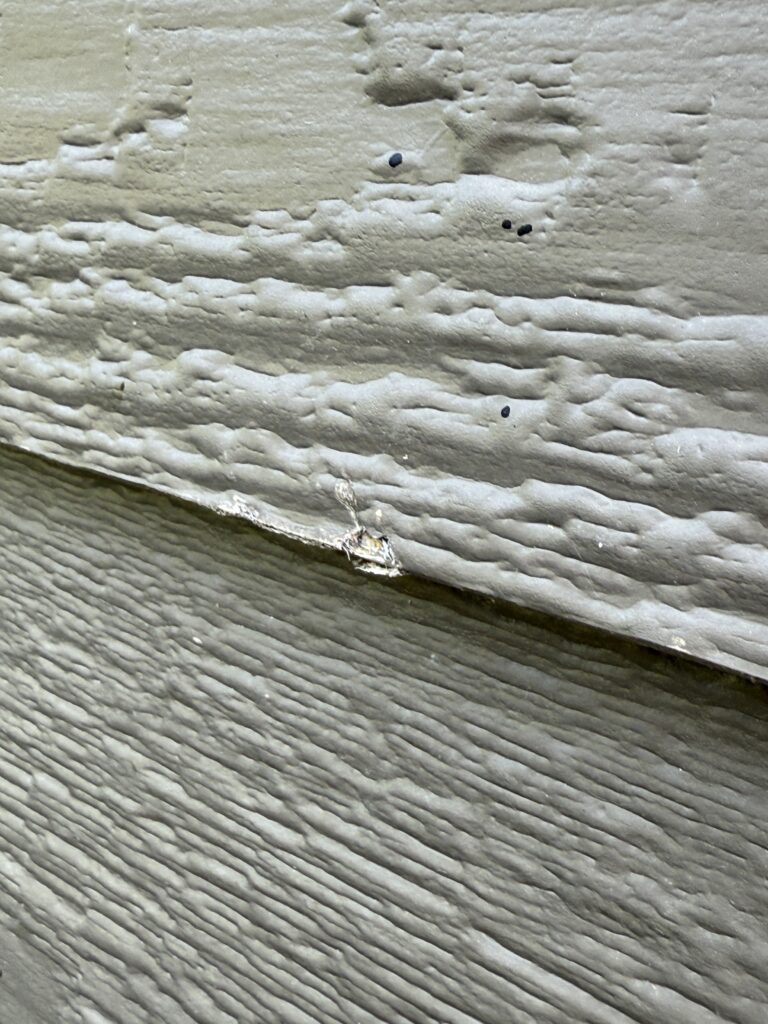
It's also porous at the cut edges. Every cut end needs to be primed and painted before installation. If a contractor skips this step - and some do to save time - moisture gets in at the edges and you get swelling, paint failure, and eventually rot. We've repaired plenty of fiber cement jobs where this happened.
Finally, the cost. On a typical south-central Wisconsin home, a fiber cement job will run meaningfully more than vinyl. That's not a reason to avoid it, but it's a real number you need to factor in.
Side-by-Side: The Honest Comparison
| Vinyl | Fiber Cement | |
|---|---|---|
| Upfront cost | Lower | Higher (30-50% more typical) |
| Maintenance | Very low | Low-moderate (repainting eventually) |
| Cold-weather performance | Brittle below -10°F | Stable |
| Hail resistance | Dents/cracks easier | More impact-resistant |
| Fire resistance | Melts/burns | Non-combustible |
| Curb appeal | Good | Excellent (wood-like) |
| DIY-friendly | More so | Less so (heavy, requires skill) |
| Lifespan (well-installed) | 30-40 years | 40-50+ years |
Want a straight answer on your roof?
We'll inspect it, document everything, and tell you honestly what you're looking at, even if the answer is patch it for now. No pressure.
Which One Is Right for Your Home?
Here's how we'd think through it:
Choose vinyl if:
- You want the lowest upfront cost with solid long-term performance
- You're planning to sell within 5-10 years and want ROI
- Your home is modest or mid-range in value (vinyl matches the neighborhood)
- You want truly zero-maintenance siding
Choose fiber cement if:
- You have a higher-value home and want curb appeal that matches it
- You've had hail damage before and want something tougher
- You're staying in the house long-term and want the best-looking finish
- Fire resistance matters to you (some insurers offer discounts)
One thing we tell every homeowner: the material is only as good as the installation. We've seen $15/sq ft fiber cement jobs fail in five years because of bad caulking and skipped primer. We've seen budget vinyl jobs look great at 20 years because the crew took their time. The contractor you hire matters.
If you're weighing your options and want a second set of eyes on your home, our team at Buckshot Exteriors is happy to walk through it with you - no pressure, just honest advice. Check out our siding services page to see what we offer and the materials we work with.
What About Storm Damage? (This Changes the Math)
If your siding project is being driven by hail or wind damage rather than just age, the cost calculation changes entirely.
A significant hail event - and south-central Wisconsin gets them - can damage both vinyl and fiber cement. Vinyl shows it clearly: cracks, dents, broken panels. Fiber cement can chip or show impact marks that are subtle but still document as storm damage.
The key is having someone who knows what insurance adjusters look for walk the job with you. We do that. When we see storm damage on a home, we document everything and meet with your adjuster on-site to make sure nothing gets missed. That can be the difference between a partial payment and a full replacement covered by your policy.
Don't assume your damage "isn't bad enough." Let someone who does this every day take a look.
What Buckshot Exteriors Homeowners Say
We've been doing this since 1979 - that's 47 years of Wisconsin winters, hailstorms, and homeowners who needed real answers. You can read what our customers say about working with us on our reviews page, and see recent siding jobs on our recent projects page.
We're not the cheapest contractor in Madison. We're also not the one you'll be calling two years later because something was done wrong.

Get a Free Estimate - No Pressure, No Obligation
If you're trying to decide between vinyl and fiber cement, the best thing you can do is have someone walk your home with you. We'll look at what you have, talk through what makes sense for your situation, and give you a straight number.
Call Buckshot Exteriors or fill out our contact form to schedule your free estimate. We serve Madison, Verona, Sun Prairie, Stoughton, Janesville, and the surrounding south-central Wisconsin area. Whether you're replacing aging siding, dealing with storm damage, or just ready for a change - we'll give you an honest answer and a fair price.
Get a straight answer on your Madison roof
Wisconsin storm season and insurance non-renewal letters do not wait. Get a free, no-obligation inspection and an honest assessment of exactly what your roof needs, even if the answer is to wait.