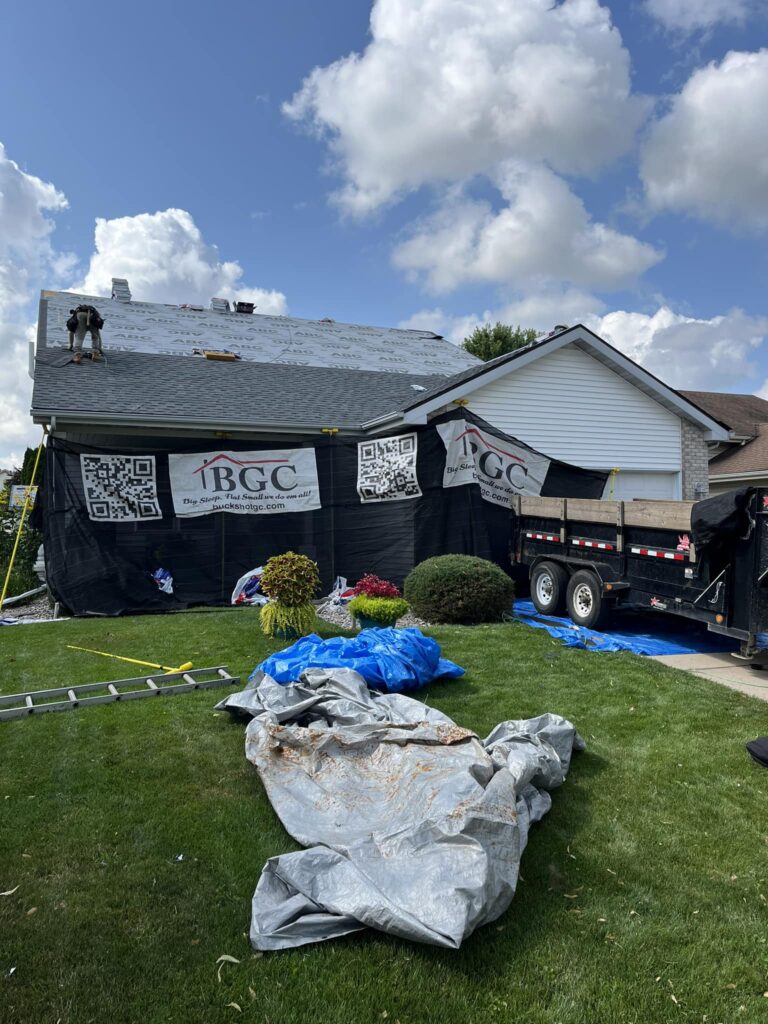
Only if a sudden covered event damaged it, which usually means hail or wind. Standard homeowners policies exclude wear and tear, so a roof that simply aged out is on you. If a storm came through, get the roof inspected and documented before you decide whether to file, and know your deductible first.
Get My Free Estimate →- Step 1: Find out whether insurance applies
- Know what you're paying for first
- Step 2: Savings and timing, and when waiting costs you money
- Step 3: Roof financing, with honest pros and cons
- Step 4: Repair assistance programs worth checking
- How to compare offers the right way
- What not to do
- Get a straight answer before you borrow
- FAQs
Most homeowners pay for a new roof with some mix of four things: an insurance claim (only when a storm actually damaged the roof), savings, financing, and occasionally a repair assistance program. The right mix depends on why the roof needs replacing, how urgent it is, and your credit and home equity.
There is no secret program handing out free roofs, and anybody telling you otherwise at your front door is selling something. Here is the order to check things, because doing it backwards is how people end up financing a roof insurance would have paid for.
Step 1: Find out whether insurance applies
Insurance pays for a new roof when a sudden, covered event damaged it. In south-central Wisconsin that usually means hail or wind. It does not pay because the roof got old.
A roof with curled shingles and bare spots where the granules washed off after decades of weather is wear and tear, which standard homeowners policies exclude. A roof that took hail during storm season is a different conversation.
Adjusters look for hail bruises where the shingle mat is fractured, a random damage pattern, creased or missing shingles from wind, dents on soft metals like gutters, vents and AC fins, and a date of loss that matches a real storm. Your policy also requires prompt notice, so don't sit on storm damage.
Get it inspected before you file. Filing on a roof that is simply old can go nowhere and still land in your claim history. Our on-site inspection is free, and if the answer is "this is age, not hail," you should hear that before you file.
Know your deductible. Many policies use a separate wind and hail deductible, sometimes a percentage of your dwelling coverage, which can be much larger than people expect. We break that down in our guide to wind and hail percentage deductibles.
Know ACV vs RCV. Replacement cost value (RCV) pays what it costs to replace the roof today, usually in two parts, with the second part released after the work is finished and invoiced. Actual cash value (ACV) pays depreciated value only, which on an older roof can be a fraction of the real cost. Your declarations page says which you have. For the full picture, see our guide to hail damage roof replacement and what insurance covers.
If you have a mortgage, your lender may be named on the claim check and release the money in stages, so call the lender early and ask what paperwork they need. And if a claim is denied or underpaid, our guide on what to do when a roof claim is denied covers reinspections, supplements and the appraisal clause.
Some insurers also change coverage on aging roofs, for example settling them at actual cash value or asking for replacement before renewal. If you got a letter like that, the roof becomes your bill on a deadline, which is where the next steps come in.
Roof replacement cost by home size (Madison, 2026)
| Home | Roof size | Typical total |
|---|---|---|
| Small ranch / bungalow | 14-18 squares | $9,000-$13,000 |
| Average two-story | 18-26 squares | $12,000-$18,000 |
| Large or complex (steep) | 26+ squares | $17,000-$25,000+ |
Cost by roofing material (average Madison home, installed)
| Material | Lifespan | Typical total |
|---|---|---|
| Architectural asphalt (standard) | 25-30 yrs | $12,000-$18,000 |
| Impact-resistant (Class 4) | 30+ yrs | $15,000-$22,000 |
| Standing-seam metal | 40-50 yrs | $25,000-$45,000 |
Common add-on costs
| Item | Typical cost |
|---|---|
| Extra tear-off layer | $500-$1,500 |
| Decking replacement | $50-$80 per sheet |
| New flashing & pipe boots | $300-$700 |
| Seamless gutters | $1,000-$2,500 |
Typical Madison-area 2026 ranges. Your exact price depends on an on-site inspection. A new asphalt shingle roof recoups about 61% of its cost at resale on average (2024 Remodeling Cost vs. Value Report).
Quick roof replacement cost estimator
Get a ballpark in 20 seconds. For an exact figure, book a free on-site inspection.
- A price dramatically lower than every other bid (corners are getting cut somewhere)
- Pressure to sign on the spot, or a "today only" discount
- A request to sign over your insurance claim (Assignment of Benefits)
- An offer to "waive your deductible" (that is insurance fraud, and it puts you at risk)
- No written, itemized estimate, or no proof of insurance
- A large upfront payment (more than 30%) before any work begins
Know what you're paying for first
Roofs are priced by the square (100 square feet of roof area), then adjusted for everything that makes yours harder than the next one:
- Size and pitch. Steep roofs are slower and need more safety setup.
- Layers. One tear-off layer versus two changes labor and disposal.
- Decking condition. Soft or delaminated sheathing found at tear-off gets replaced.
- Complexity. Valleys, dormers, chimneys, skylights, multiple planes.
- Materials. Standard architectural shingles versus impact-rated or premium products.
- Accessories. Ice-and-water shield, ventilation, flashing, gutters tied into the job.
Our roof replacement cost in Wisconsin guide walks through how each of those shows up, including how house size turns into roof size. Get a measured, itemized estimate in writing before you borrow anything, so you finance the right scope.
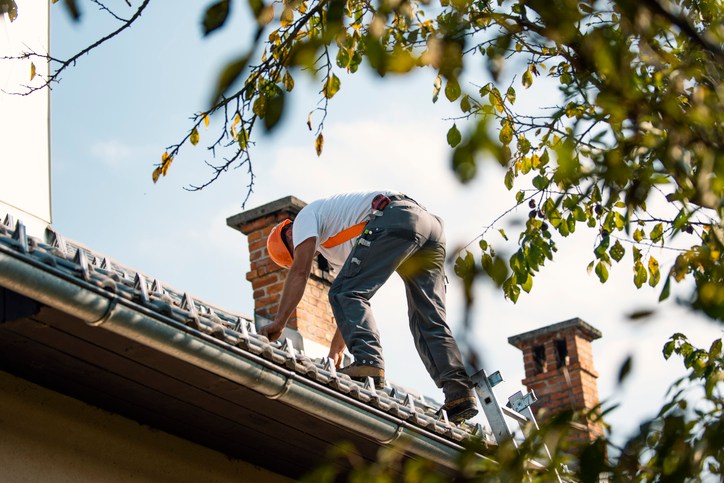
Step 2: Savings and timing, and when waiting costs you money
If insurance doesn't apply, savings plus smart timing is the cheapest way to pay: no interest and no paperwork. The only question is whether your roof can wait.
If the roof is aging but not leaking, the decking is solid and there is no staining in the attic, you may be able to buy a few months. What you don't want is to gamble through a Wisconsin winter on a marginal roof, because freeze-thaw cycles and ice dams are exactly what turn marginal into leaking.
When waiting goes wrong, the bill grows: soft decking replaced during tear-off, soaked insulation, stained drywall and paint, attic mold, and rotted fascia that pulls gutters into the project.
Phasing can be legitimate. Re-flashing a chimney or replacing a failed pipe boot to stop active water while you line up money is smart. Patching a roof at the end of its life usually isn't, because you pay twice for the same slope. Our roof replacement page shows what a full replacement includes.
Not sure whether you're looking at a repair, a claim or a replacement? Call (608) 909-9109 for a free on-site inspection.
Step 3: Roof financing, with honest pros and cons
Financing bridges the gap between what insurance and savings cover and what the job costs. The common routes are not equally priced.
Contractor-arranged financing and "zero down" offers
Convenient, and some programs let work start before you pay anything, which is where "zero down" language comes from. Zero down is not the same as cheap, so get these in writing:
- The APR, not just the monthly payment
- The term in months
- The total of payments over the life of the loan
- Any origination, dealer or processing fees
- What happens when a promotional interest period ends, including whether deferred interest is added back if a balance remains
That last one catches a lot of people. Start with our roof financing options, and for a deeper comparison read our guide to roof financing for Wisconsin homeowners.
Home equity loan or line of credit
Usually lower-cost borrowing if you have equity, because it is secured by your house. A home equity loan is a lump sum with a fixed payment; a line of credit lets you draw as needed, which helps if the scope grows once the decking is exposed. The trade-off, plainly: your home is the collateral, and the application takes longer than other options.
Personal loan
Unsecured, so it doesn't touch your home equity. The rate depends heavily on your credit and terms are often shorter, so the monthly payment can be higher even when the total cost is lower.
Credit cards
Generally the most expensive way to carry a large balance. Reasonable for a deductible you'll clear quickly; risky for a whole roof.
If your credit is limited or you have little equity
You still have options to explore:
- A co-signer or joint applicant with stronger credit
- A larger down payment with a shorter term, which lenders may see as less risk
- A local credit union, which may look at your whole banking relationship
- Income-qualified assistance programs (next section)
- Phasing: stop the active leak now and replace on a timeline you can fund
Step 4: Repair assistance programs worth checking
If you income-qualify, real programs exist. They are not fast and not universal.
USDA Section 504 Home Repair serves very-low-income homeowners in eligible rural areas who own and live in the home and cannot get affordable credit elsewhere. The program currently lists loans up to $40,000 and grants up to $10,000. Grants are limited to homeowners age 62 and older and must be used to remove health and safety hazards. Apply through your local USDA Rural Development office, which is also where you confirm current limits, eligibility and whether your address is in an eligible area.
Some cities, counties and community action agencies also run home repair loan or grant programs for income-qualified homeowners. Funding changes year to year, so call your local housing department and your area community action agency to ask what is open now, and expect weeks to months rather than days. Don't take a door-knocker's word on what programs exist.
Want a straight answer on your roof?
We'll inspect it, document everything, and tell you honestly what you're looking at, even if the answer is patch it for now. No pressure.
How to compare offers the right way
Compare total cost, not the monthly payment. A low payment stretched long with fees built in can cost far more than a higher payment over a shorter term. Put APR, term and total of payments side by side.
Get the written estimates before the financing. Borrow first and scope second and you either come up short when the decking turns out rotten or borrow more than you need. A proper estimate spells out tear-off and layer count, decking replacement, underlayment and ice-and-water shield, drip edge, flashing, ventilation, shingle grade and cleanup.
Then nail down the mechanics: a payment schedule tied to milestones (material delivery, completion, final inspection) rather than a large cash sum before anything is ordered, and lien waivers at final payment. Be careful with anyone pushing same-day financing at your door; a legitimate contractor leaves the estimate with you.
What not to do
Don't let a contractor "cover" your deductible. Your deductible is your share under the policy, and an offer to waive, absorb or rebate it can amount to insurance fraud with your name on the claim.
Don't skip tear-off when the roof needs it. Shingling over an existing layer hides soft decking, makes proper ice-and-water shield at the eaves harder, and adds weight. Codes generally limit how many layers you can have.
Don't skip the permit. It keeps the inspection on record, which matters when you sell.
Don't take the first insurance payment and settle for a cheaper partial job. On a replacement cost policy, the held-back money depends on the work being completed.
Get a straight answer before you borrow
The cheapest step available to you right now is also the free one: find out exactly what your roof needs and whether insurance is in play. Savings, financing and programs all follow from that.
Buckshot Exteriors is family-owned and has been doing roofs and exteriors since 1979, with offices in Madison, WI and Centerville, IA. A free on-site inspection can tell you whether you're looking at a repair, a storm claim, or a full residential roofing replacement, and if there is hail or wind damage, we meet your adjuster on site. Call (608) 909-9109; if water is coming in right now, our 24-hour storm line is the same number.
Get a straight answer on your Madison roof
Wisconsin storm season and insurance non-renewal letters do not wait. Get a free, no-obligation inspection and an honest assessment of exactly what your roof needs, even if the answer is to wait.