
A rainscreen is a small gap between the siding and the water-resistive barrier. It lets water that gets behind the siding drain out and helps the wall dry.
Get My Free Estimate →A rainscreen is a small gap between the back of your siding and the water-resistive barrier on the wall. Water that gets behind the siding drains out through the gap, and air moving through it helps the siding and the wall dry.
A rainscreen matters most behind siding that soaks up water, such as wood, engineered wood and fiber cement, and on walls that take the brunt of the weather. Standard vinyl siding hangs loosely enough to act as its own rainscreen.
Buckshot replaces siding, including fiber cement, engineered wood and vinyl, through our siding replacement service. This guide explains how a rainscreen works, which homes need one and what it changes in a siding job.
How a rainscreen works
Almost all siding lets some water through eventually, especially in wind-driven rain. Without a gap, that water sits between the siding and the wall, where it soaks the back of the siding and the house wrap seams.
A rainscreen gives that water a path down and out. Fine Homebuilding describes it as a system of materials that creates a gap between the siding and the water-resistive barrier, so the wall can drain and dry.
A vented rainscreen is open only at the bottom. A ventilated rainscreen is open at the top and bottom, so air can move through the gap.
Which siding needs a rainscreen
Building scientists call siding that absorbs water a reservoir cladding. These materials benefit most from a rainscreen, because the gap lets them dry from the back.
- Fiber cement: absorbs some water and dries faster with a gap behind it
- Engineered wood and wood: a gap lets the boards dry and protects the paint finish
- Stucco and stone veneer: absorb water and need drainage behind them
- Vinyl: hangs loose and is already vented, so it usually needs no separate gap
Wetter, colder climates and more absorbent siding call for a larger gap, according to Fine Homebuilding. In Wisconsin, walls that face the prevailing storms and walls with past moisture problems gain the most.
How big the rainscreen gap needs to be
The gap does not need to be large to drain water. Fine Homebuilding notes that gaps of about 1/16 inch, sometimes called drainscreens, drain water but allow little air movement.
Building scientist John Straube recommends at least 1/4 inch to stop water wicking across the gap, with 3/8 inch as a safer choice. Absorbent siding on a cold, wet wall belongs at the larger end of that range.
Ways to build a rainscreen
There are three common ways to create the gap.
- Drainable house wrap: a wrap with channels or bumps that creates a shallow drainage gap, such as Tyvek DrainWrap
- Drainage mats: a plastic mesh layer installed over the house wrap
- Furring strips: thin strips of wood, plastic or metal behind the siding, run at right angles to the siding boards
Openings at the top and bottom of a furred gap need insect screen or vent strips to keep bugs out. Flashing at windows and doors still has to tie into the water-resistive barrier behind the gap, not stop at the face of the strips.
Furring strips move the siding outward, so trim around windows and doors has to be planned to match. Our house wrap guide explains the barrier layer the rainscreen sits on.
Planning new fiber cement or engineered wood siding? Our siding estimate is free, and we bring samples so you can compare materials on your own walls.
Free on-site inspection · Family-owned since 1979Want a straight answer on your roof?
We'll inspect it, document everything, and tell you honestly what you're looking at, even if the answer is patch it for now. No pressure.
Is a rainscreen worth it?
For absorbent siding on a Wisconsin home, a rainscreen is usually worth the extra material and labor. It protects the sheathing and framing behind the siding, where hidden rot is hardest to see and fix.
For vinyl on a sheltered wall, a well-detailed house wrap is generally enough. The decision is best made wall by wall, based on the siding material and how much weather each wall takes.
A rainscreen adds material and labor, so it raises the cost of a siding job. Your written estimate shows what each option includes.
When to add a rainscreen
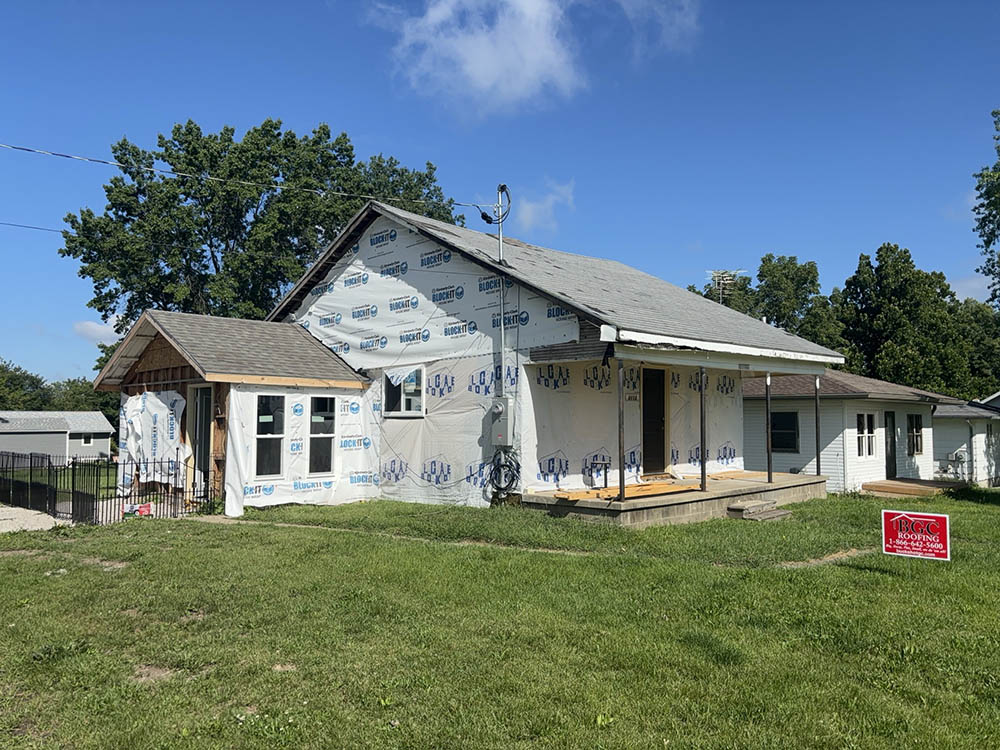
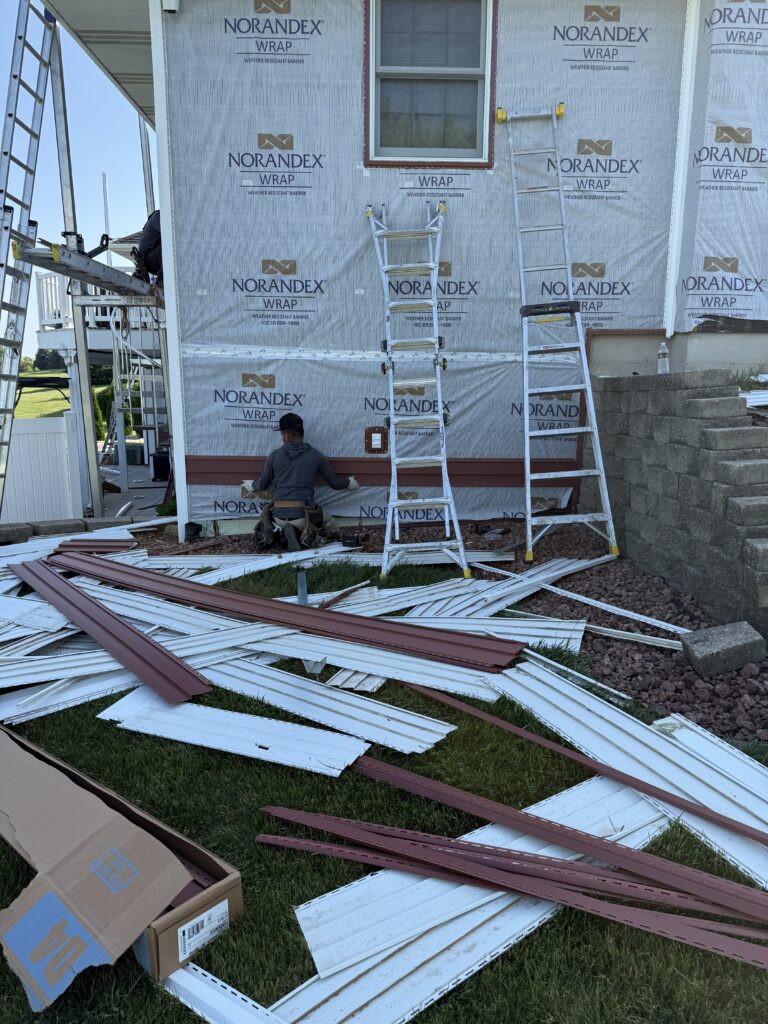
A rainscreen can only be added when the old siding comes off, so the right time is a full siding replacement. A siding replacement strips the wall to the sheathing, where damaged wood and house wrap can be repaired before the new layers go on.
Our fiber cement, engineered wood and cedar siding pages cover the materials that gain most from a rainscreen. If you are still choosing, our comparison of engineered wood vs fiber cement siding explains how each handles moisture.
Signs of trapped water, such as mold behind siding or a missing kickout flashing, are worth fixing in the same project.
Get a free siding estimate
Buckshot Exteriors is family-owned, has served homeowners since 1979, and has offices in Madison, Wisconsin and Centerville, Iowa. We replace siding of the main types, including fiber cement, engineered wood and vinyl, and our on-site estimate is free.
Call (608) 909-9109 to schedule your free estimate, or send us a message and we will set a time. If you would rather plan first, note which walls take the most weather and which siding you are considering.
Get a straight answer on your Madison roof
Wisconsin storm season and insurance non-renewal letters do not wait. Get a free, no-obligation inspection and an honest assessment of exactly what your roof needs, even if the answer is to wait.