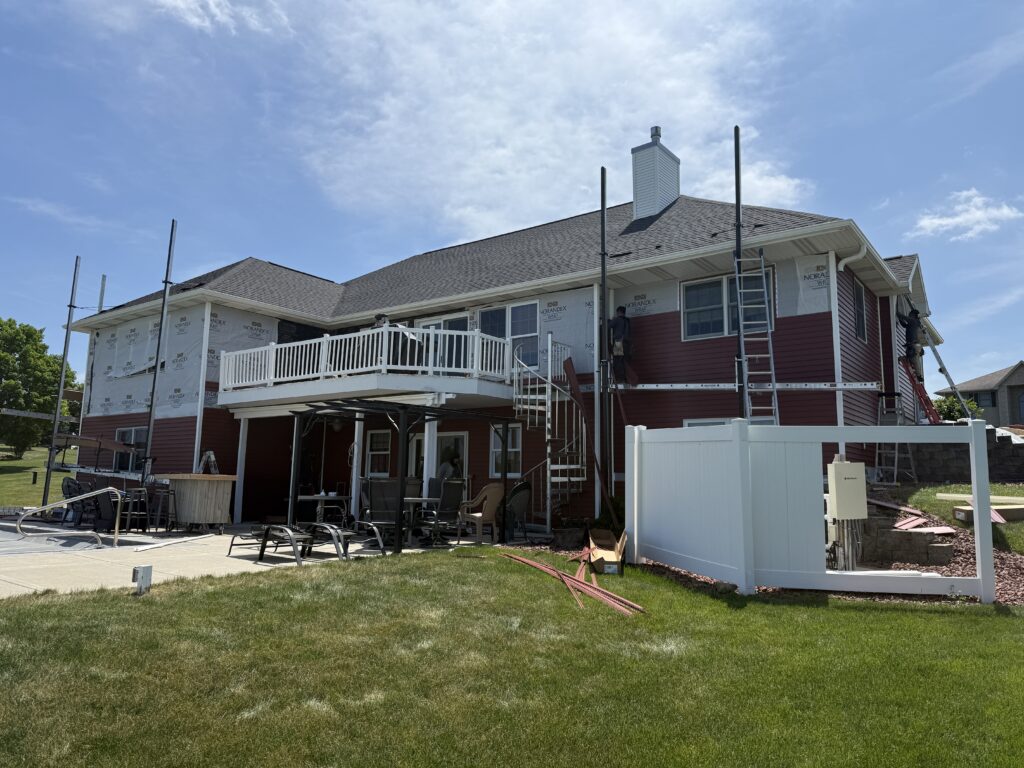
Neither is better on every point. Fiber cement resists rot, fire and woodpeckers, while engineered wood is lighter, has a deeper wood grain and usually costs less to install.
Get My Free Estimate →- What engineered wood and fiber cement siding are made of
- Engineered wood vs fiber cement at a glance
- How each handles moisture and Wisconsin winters
- Hail, impact and woodpeckers
- Looks, paint and installation
- Which siding is better for your home
- What a siding replacement with either material involves
- Get a free siding estimate
- FAQs
Fiber cement is the better choice if you want siding that will not rot, will not burn and does not attract woodpeckers. Engineered wood is the better choice if you want a deep wood-grain look, longer and lighter boards, and a lower installed cost than fiber cement.
Both handle Wisconsin winters well when they are installed to the manufacturer's rules. Most problems with either one trace back to installation, especially unsealed cut ends and missing gaps above the roof and ground.
Buckshot installs both engineered wood siding and fiber cement siding. This guide compares them point by point so you can decide which fits your home.
What engineered wood and fiber cement siding are made of
Engineered wood siding is made from wood strands or fibers bonded with resins and waxes, then treated to resist decay. LP SmartSide, the best-known brand, treats its boards with zinc borate to resist fungal decay and termites.
Fiber cement siding is made from Portland cement, sand and cellulose fibers, pressed into boards and panels. James Hardie is the best-known brand, and it sells a line called HZ5 that is made for climates with freezing temperatures, snow and ice.
Both come in lap siding, panels, shakes and trim, and both can be bought primed or with a factory-applied finish. Our LP SmartSide review covers that brand in more detail.
Engineered wood vs fiber cement at a glance
| Factor | Engineered wood | Fiber cement |
|---|---|---|
| Main material | Treated wood strands or fibers and resin | Cement, sand and cellulose fibers |
| Look | Deep wood-grain texture | Wood-like texture or smooth |
| Board weight | Light and easy to handle | Heavy, needs more handling |
| Typical board length | Up to 16 feet | Usually 12 feet |
| Cutting | Standard wood saw blades | Silica dust control required |
| Fire | Wood-based | Noncombustible |
| Woodpeckers | Can be drilled | Rarely targeted |
| Installed cost | Usually lower | Usually higher |
How each handles moisture and Wisconsin winters
Moisture is the biggest difference between the two. Fiber cement resists rot, so water that gets behind it is far less likely to decay the board itself.
Engineered wood is treated, but it is still wood. If water gets in through an unsealed cut end or a board touching a roof, the edge can swell and soften over time.
That is why the manufacturers set strict installation rules. LP, for example, calls for 6 inches of clearance above finished grade, 1 inch above shingles and sealed or painted cut ends.
Fiber cement has its own rules for clearances, joints and caulking, and both makers tie their warranties to them. Our guide to fiber cement maintenance explains the caulking and repainting it needs over time.
Hail, impact and woodpeckers
Both materials resist hail better than standard vinyl, which can dent or crack in a hard storm. Each manufacturer markets its siding as impact resistant, and a hail damage claim can be a chance to upgrade to either one.
Woodpeckers are a different story. They can drill into engineered wood as they would into any wood siding, while fiber cement gives them little reason to try.
If woodpeckers have already damaged your siding, our guide to woodpecker holes in siding explains why they drill and how the damage is repaired.
Looks, paint and installation
Engineered wood has a deeper, more natural wood-grain texture, and its longer boards mean fewer joints on a long wall. That suits homes where a real wood look matters, including board-and-batten and shake details.
Fiber cement can look like painted wood or have a smooth, modern face. Its boards are heavier and more rigid, which keeps long runs straight but makes installation slower.
Both take paint well and come in factory finishes. Cutting fiber cement releases crystalline silica dust, so installers must follow OSHA's silica rules and use dust-controlled saws or shears.
Weighing engineered wood against fiber cement for your home? Our on-site estimate is free, and we bring samples of both so you can compare them on your own walls.
Free on-site inspection · Family-owned since 1979Want a straight answer on your roof?
We'll inspect it, document everything, and tell you honestly what you're looking at, even if the answer is patch it for now. No pressure.
Which siding is better for your home
Neither material wins on every point, so the right choice depends on what matters most to you.
Choose fiber cement if:
- Woodpeckers have damaged your siding before
- Fire resistance matters to you
- You want the least worry about moisture at the roof and ground lines
- You plan to stay in the home for decades and want a rigid, stable wall
Choose engineered wood if:
- You want the deepest wood-grain look, including shakes and board and batten
- You want a lower installed cost than fiber cement
- Your walls are long and you want fewer visible joints
- You want a lighter material for a faster installation
Both are a step up from vinyl in durability and look. If you are still deciding between vinyl and a premium siding, start with our comparison of vinyl vs fiber cement siding.
What a siding replacement with either material involves
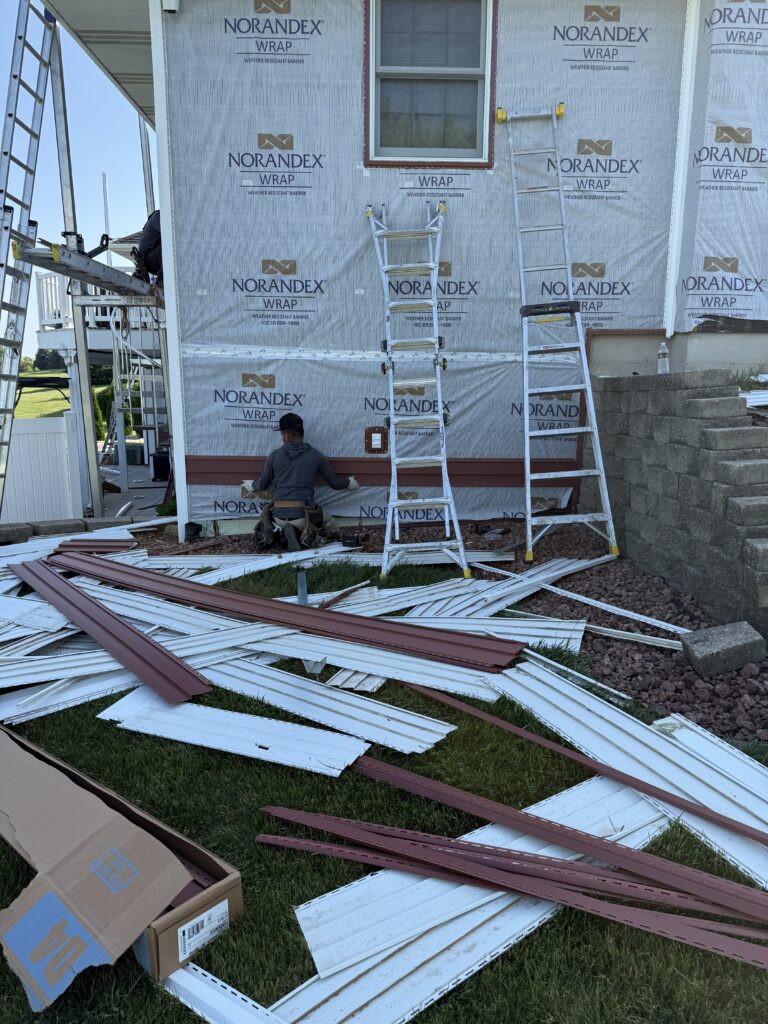
A full siding replacement removes the old siding down to the sheathing, so damaged wood and house wrap can be repaired before the new siding goes on. With either material, the flashing around windows, doors and roof joints matters as much as the boards.
Installing to each manufacturer's instructions, including the clearances and sealed cut ends, is what keeps those warranties valid. Your estimate shows the price of each option for your home, and siding financing is available if you want to spread the cost.
Get a free siding estimate
Buckshot Exteriors is family-owned, has served homeowners since 1979, and has offices in Madison, Wisconsin and Centerville, Iowa. We install engineered wood, fiber cement, vinyl and other siding types, and our on-site estimate is free.
Call (608) 909-9109 to schedule your free estimate, or send us a message and we will set a time. If you would rather compare on your own first, use the checklist above.
Get a straight answer on your Madison roof
Wisconsin storm season and insurance non-renewal letters do not wait. Get a free, no-obligation inspection and an honest assessment of exactly what your roof needs, even if the answer is to wait.