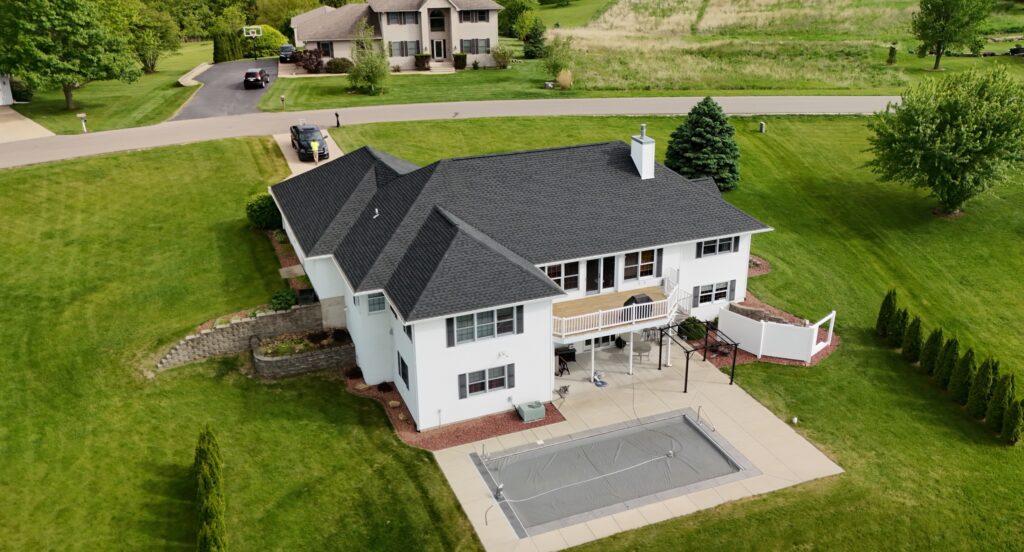
Take a wide shot, a mid shot and a close-up with something for scale of each damaged area. Cover every side of the house, every visible roof slope, gutters, siding, soft metals such as air-conditioner fins, and any interior water damage. Turn on date and location stamps first.
Get My Free Estimate →- Why documentation decides your claim
- Safety first: stay off the roof
- How to take the photos
- What to photograph outside
- What to photograph inside
- Keep a written log
- Temporary repairs, tarps and receipts
- Confirm the storm hit on that date
- What to give the adjuster
- Policy details to check before you file
- What not to do
- Getting storm damage documented
- FAQs
Before you call your insurer, make the area safe, then record the damage in dated photos and video from the ground and from inside the house. Keep a written log, and save receipts for any temporary repairs.
Good documentation is often what turns a borderline hail or wind claim into a paid one. It takes about an hour with your phone, and it gives the adjuster a dated record of the house right after the storm.
Why documentation decides your claim
Your claim is decided from a file. The adjuster writes a report with photos, and someone reviews it later, so damage that is not in the file is easy to miss.
Common reasons given for reducing or denying roof claims are wear and tear or a shingle defect. Dated photos tied to a known storm date are the strongest answer to both.
Timing matters too. Documenting soon after the storm records the condition at the time of loss, before winter freeze-thaw cycles make storm damage harder to tell apart from aging.
A roof can look fine and still be damaged
A hail bruise is a spot where impact knocked granules loose and fractured the mat underneath. The shingle still lies flat and looks normal from the ground, but it can fail early.
Wind damage hides in a similar way. A gust can break a shingle's seal and crease it near the nail line, and the shingle lies back down looking untouched until the next storm lifts it.
Photograph what you can see from the ground, and have someone inspect the rest up close.
Safety first: stay off the roof
Do not climb onto a damaged or wet roof, even to take pictures. Storm-damaged shingles can be loose, wet decking can be soft, and granule-covered slopes are slippery.
Shoot from the ground with your phone's zoom, from upstairs windows, from a deck, or from a neighbor's yard for an angle on the back slopes. Watch for downed power lines, broken glass and hanging branches on the ground.
If water is pouring in or a tree is on the roof, secure the home first and document afterward. Our 24-hour storm line, (608) 909-9109, is for exactly that situation.
How to take the photos
Turn on location services for your camera before the first photo, so each file records where and when it was taken. If your camera app does not show a date stamp, photograph a note with the date and time as your first shot.
Then photograph every damaged area three times.
- Wide shot. The whole side of the house or roof slope, so there is no doubt which part of the house it is.
- Mid shot. Close enough to show the damage beside a landmark such as a vent, chimney, window or gutter corner.
- Close-up with scale. Tight on the damage with a tape measure or coin beside it.
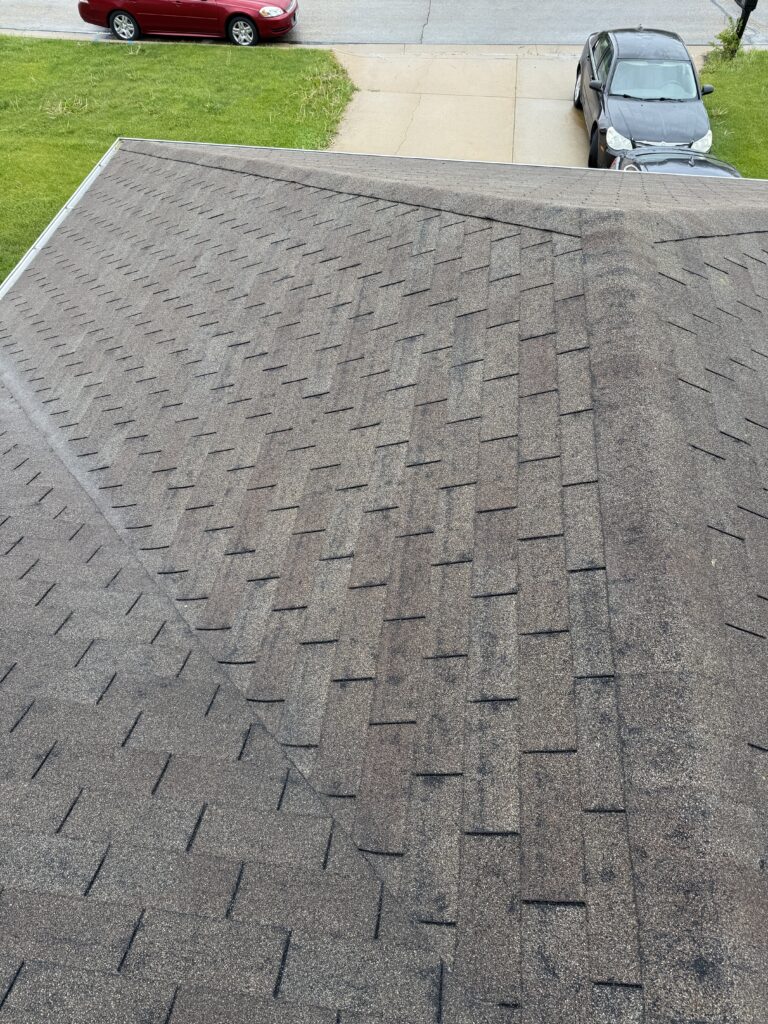
Phone zoom will catch missing shingles, lifted or creased tabs, dented metal and torn flashing. It will not reliably show hail bruising, which an inspector finds up close, so treat your ground photos as the record of what is visible.
Shoot video as well. Walk around the house slowly with the camera running and say the date out loud as you describe what you see.
What to photograph outside
Photograph every side of the house, not just the side you think was hit. Adjusters look for a damage pattern, and damage concentrated on the storm-facing sides is itself evidence of wind-driven hail.
- Every roof slope visible from the ground, including dormers and porch roofs
- Missing, cracked, creased or lifted shingles, and shingles in the yard where they landed
- Ridge and hip caps
- Roof vents, pipe boots, chimney caps and flashing
- Gutters and downspouts, including granules collected at the outlets
- Siding, trim, fascia and soffit on every side
- Window screens, window trim and garage doors
- Soft metals such as air-conditioner fins, mailboxes and grills, which dent more easily than shingles
- Decks, fences, sheds and detached garages
- Stripped leaves and damaged plants, which help show how severe the storm was
Siding damage is usually its own line on a claim, so do not skip it. Our guide to hail damage on siding shows what to look for, and our guide to checking for wind damage on a roof covers creased and unsealed shingles.
What to photograph inside
Interior photos show that water actually got in. Photograph ceiling stains, bubbling paint, water running down walls, damaged flooring and wet belongings, with a wide shot of each room so the location is clear.
Photograph the attic only if it is safe to enter. Look for wet or matted insulation, stains on the underside of the roof deck, daylight through the sheathing and wet rafters, and stay on the joists. Skip the attic if the ceiling below is sagging.
A dated photo of an active drip, with a bucket under it, ties the storm to the interior damage clearly.
Keep a written log
Claims turn on dates and names, so start a notebook or phone note today. Files often pass between several people at the insurance company.
Record the storm date and when you first noticed damage. For every call, note the date, time, the person's name and what they said, along with your claim number and your adjuster's contact details.
Record every contractor who inspects the house, keep every email and letter in one folder, and note any promised date and whether it was met.
Temporary repairs, tarps and receipts
Photograph the damage before you tarp or patch anything, then keep every receipt. Most policies expect you to take reasonable steps to prevent further damage after a loss.
If water is already coming in, tarp first and photograph the tarp going on, along with the interior damage. Keep receipts for tarps, plywood, fasteners, fans, dehumidifier rental and emergency service, and note on each receipt what it was for.
If you already made repairs or noticed late
You can still document after the fact. Check your phone's camera roll, ask family and neighbors for photos, and look for security or doorbell camera footage from the storm date, which carries its own timestamps.
Then photograph the current condition the same way, and keep the invoice and any photos from whoever made the temporary repair. Tell the insurer plainly when you noticed the damage and why.
Want a second set of eyes before you file? Call (608) 909-9109 for a free on-site inspection.
Want a straight answer on your roof?
We'll inspect it, document everything, and tell you honestly what you're looking at, even if the answer is patch it for now. No pressure.
Confirm the storm hit on that date
Pull the official storm report for the date, because it backs up your claim independently. National Weather Service local storm reports and the Storm Prediction Center archive let you look up hail and wind reports by date and area.
A screenshot of reported hail size or wind gusts near your home belongs in the file. When your record matches the insurer's own weather data, the question of whether a storm hit your address mostly goes away.
What to give the adjuster
Give the adjuster an organized packet rather than a camera roll. Group outside photos by side of the house and inside photos by room, and add the video, the storm report, your log and your receipts.
Be home for the inspection, and have your contractor there too, so every damaged slope and accessory makes it onto the estimate. Our storm damage team meets adjusters on site for that reason.
When the estimate arrives, read it line by line. Our guides to reading a roof insurance estimate and roof insurance supplements explain why the first estimate can be incomplete, and our guide to the roof insurance claim process covers the steps from filing to payment.
Policy details to check before you file
Check your declarations page and endorsements before the adjuster visits. Two items can change the outcome on their own.
A cosmetic damage exclusion lets an insurer decline dents that do not affect how the roof works, most often on metal roofing and siding. Our guide to cosmetic damage exclusions explains what to look for.
A roof payment schedule, sometimes called an actual cash value roof endorsement, pays the roof based on its age, so an older roof may be heavily depreciated even on a clear hail loss. Ask your agent to read you the exact wording.
Find your wind and hail deductible too. Many policies use a separate deductible for wind and hail, sometimes a percentage of your dwelling coverage, and if the damage is clearly below it, filing may not make sense.
If only part of your roof or siding is replaced and the material is discontinued, matching becomes the question. Our guide to whether insurance will replace all your siding explains how matching works.
If the insurer will not budge, our guide to what to do when a roof claim is denied covers reinspection, appraisal and complaints to the Wisconsin Office of the Commissioner of Insurance.
What not to do
Do not throw away damaged materials before they are photographed. Blown-off shingles, cracked siding and dented gutter pieces are evidence, so label them with the date and set them aside.
- Do not discard damaged belongings until they are photographed and listed.
- Do not go on the roof.
- Do not sign over your claim rights to a contractor at your door in the days after a storm. Read any contract fully before signing.
- Do not wait. Policies require prompt notice of a loss.
Getting storm damage documented
You should not have to guess whether you have a real claim. Buckshot Exteriors is family-owned and has worked on roofs since 1979, with offices in Madison, WI and Centerville, IA.
Our free on-site inspection documents roof and exterior damage, and we meet your insurance adjuster on site so the full scope is recorded. See how our storm damage team works, then call (608) 909-9109 to schedule a free inspection.
Get a straight answer on your Madison roof
Wisconsin storm season and insurance non-renewal letters do not wait. Get a free, no-obligation inspection and an honest assessment of exactly what your roof needs, even if the answer is to wait.