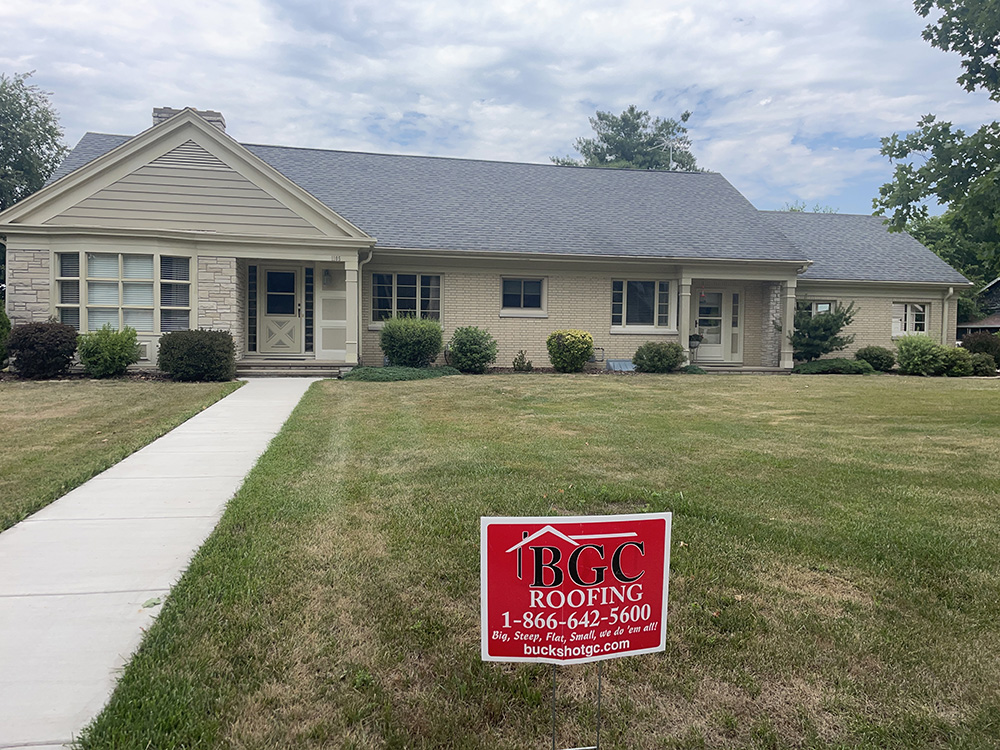
Judge remaining service life, not age. If the roof will not last as long as the array, which is commonly warrantied for 25 years or more, the roof fails first and you pay to move the panels. An older asphalt roof is often a replace-first candidate. A newer roof with sound decking, flashing and ventilation usually is not.
Get My Free Estimate →- Start with remaining service life, not age
- What to check before you decide
- Can I just re-roof the slope the panels go on?
- Can my roof carry the weight of panels and racking?
- How the array attaches, and why a sound roof comes first
- What re-roofing under an existing array involves
- Sequence, coordination, and the paperwork file
- Wisconsin specifics worth thinking through
- Roof materials that match a 25-year array
- When you do not need to replace first
- Bring this to your roof inspection
- Get a straight answer before you commit
- FAQs
Short answer: if your roof is in the second half of its service life, replace it before the panels go up. If it is newer and passes a real inspection, go ahead and install.
The reason is lifespan math. Solar arrays are commonly warrantied and expected to produce for 25 years or more. If your roof will not last that long, the roof gives out first, and you end up paying a solar company to pull the entire array off and set it back just so a roofer can get underneath.
Everything below is how to tell honestly which side of that line you are on.
Start with remaining service life, not age
The useful question is not how old the roof is. It is how many good years are left on it compared with how long you expect the array to run.
- Plenty of life left and a clean inspection: install the solar. There is no reason to tear off a healthy roof.
- Somewhere in the middle: a judgment call. Get a detach-and-reset quote from your solar installer and weigh it against replacing now, knowing you will face the same decision later with an array already paid for and bolted down.
- Near the end of its life, or with active problems: replace first.
Remaining life depends heavily on what is up there. Three-tab asphalt, architectural asphalt and metal all age at different rates through our freeze-thaw cycles, and our breakdown of how long each roofing material actually lasts in Wisconsin sorts it out by product type.
"Don't the panels protect the shingles underneath?"
Partly true, and it is a common reason homeowners talk themselves into skipping the roof. Shaded shingles see less direct UV, so the covered footprint can weather a bit slower.
The trouble is that only the array footprint is shaded. The perimeter, the rest of the slope, the ridge and the eaves keep aging at normal Wisconsin speed, and you still need a tear-off of the whole slope eventually. Meanwhile you have added a set of deliberate penetrations to the area that is supposedly being protected, and debris and snowmelt can sit longer in the gap behind the panels where nobody can see what is happening.
Roof replacement cost by home size (Madison, 2026)
| Home | Roof size | Typical total |
|---|---|---|
| Small ranch / bungalow | 14-18 squares | $9,000-$13,000 |
| Average two-story | 18-26 squares | $12,000-$18,000 |
| Large or complex (steep) | 26+ squares | $17,000-$25,000+ |
Cost by roofing material (average Madison home, installed)
| Material | Lifespan | Typical total |
|---|---|---|
| Architectural asphalt (standard) | 25-30 yrs | $12,000-$18,000 |
| Impact-resistant (Class 4) | 30+ yrs | $15,000-$22,000 |
| Standing-seam metal | 40-50 yrs | $25,000-$45,000 |
Common add-on costs
| Item | Typical cost |
|---|---|
| Extra tear-off layer | $500-$1,500 |
| Decking replacement | $50-$80 per sheet |
| New flashing & pipe boots | $300-$700 |
| Seamless gutters | $1,000-$2,500 |
Typical Madison-area 2026 ranges. Your exact price depends on an on-site inspection. A new asphalt shingle roof recoups about 61% of its cost at resale on average (2024 Remodeling Cost vs. Value Report).
Quick roof replacement cost estimator
Get a ballpark in 20 seconds. For an exact figure, book a free on-site inspection.
What to check before you decide
Roof age and documented history. Find the paperwork. When was it last done, what product went on, and was it a full tear-off or a layover over the old shingles? If you bought the house, the permit record or the seller's disclosure may answer it.
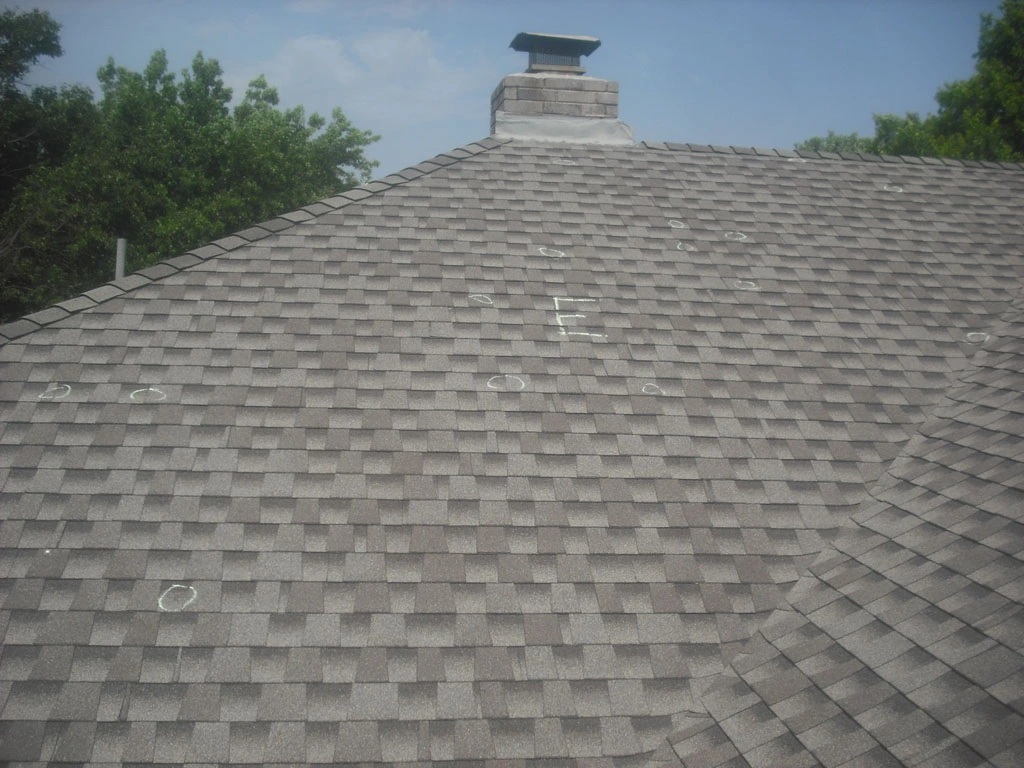
Shingle condition. On asphalt, the end-of-life signals are curling or clawing at the edges, granule loss and bald spots with granules piling in the gutters, cracking and splitting, and shingles that crumble when handled. Brittleness matters because installers have to walk that roof and set mounts, and brittle shingles can get damaged during the solar install.
Decking under the shingles. This is the item you cannot judge from the driveway and the one that matters most for solar, since every mount is a fastener driven through the sheathing into framing. Soft or delaminated decking will not hold a fastener the way it should, and soft spots often only show once the shingles come off. If you want to know what an inspector is feeling for, read what roof decking is and when it needs replacing.
Flashing and existing penetrations. Pipe boots, bath and kitchen vents, chimney and sidewall step flashing, skylights. Cracked rubber boots and tired flashing are a common leak source on older roofs, and you do not want to chase those with panels covering half the slope.
Layers and ventilation. Two layers already on the house makes replace-first the obvious call: more weight, more trapped heat, and less reliable fastener bite. Ventilation matters too. If soffit intake is blocked or exhaust is undersized, the deck runs hot in summer and feeds ice dams in winter. Both get corrected during a replacement, not afterward.
Want trained eyes on all of that before you sign a solar contract? A free roof inspection is the cheapest step in this whole process. Call (608) 909-9109.

Can I just re-roof the slope the panels go on?
You can, but it rarely saves what homeowners hope. Roofs do get replaced one slope at a time, and if your south-facing slope is clearly worse than the rest, it is a fair question.
Here is what works against it. Permit, dumpster, setup and teardown, and ridge work barely change whether you do one slope or the whole roof, so the savings shrink fast. New shingles will not match a slope that has been weathering for years, even in the same product and color. And the untouched slope is usually the same age, which means another round of work soon.
There is also warranty exposure. Manufacturer coverage and a contractor's workmanship coverage can read differently on a partial replacement than a full one. Ask both before you choose slope-only to save money, and get the answer in writing.
Can my roof carry the weight of panels and racking?
On a conventionally framed roof with healthy sheathing, an array is normally not a structural issue, but your installer should confirm it for your roof. The cases worth a closer look, and sometimes an engineer's review, are low-slope sections, porch and addition roofs framed lighter than the main house, long rafter spans that already show a dip, roofs carrying two layers of shingles, and drift zones where snow piles against a dormer or upper wall. How snow load works on Wisconsin roofs covers those situations in more detail. Structural requirements and local codes vary, so have your installer confirm what applies where you live.
How the array attaches, and why a sound roof comes first
Most residential arrays on asphalt use mounts fastened through the shingles and decking into rafters or trusses, sealed and flashed. Done correctly, those penetrations can last as long as the roof. Done fast, or set into soft sheathing, each one is a possible slow leak.
Plan for the housekeeping nobody mentions at the sales table, too. Leaves, needles and loose granules collect behind the lowest panel row, small animals like the sheltered space under an array, and a minor future repair, like a pipe boot or a bit of flashing, becomes a coordinated job once panels sit over it. None of that is a reason to skip solar. It is a reason to start with a roof that will not need attention for a long time.
What re-roofing under an existing array involves
If the roof fails years into the array's life, the sequence is: the solar company detaches the panels and racking and stores them, your system goes offline, the roofers tear off and replace, then the solar crew returns to reset and re-commission.
Detach-and-reset is billed as its own job. Solar companies often quote it per panel, so ask your installer for their rate and build the real number today: panel count times the rate, plus the electrical disconnect and re-commissioning, racking removal and storage, any permit or re-inspection, and lift rental on steep or tall roofs. Add the production you lose while the system sits idle. It buys you nothing you did not already have.
Set that figure next to a replacement estimate. Our residential roofing work covers tear-off, decking repair and ventilation corrections, the roof replacement page walks through what a full replacement includes, and what drives roof replacement cost in Wisconsin explains the variables so you can compare estimates fairly.
A reset is also where warranty finger-pointing lives. A leak afterward can get blamed on the mounts by the roofer and on the roof by the solar company. Doing the roof first avoids that argument.

Sequence, coordination, and the paperwork file
Roof first, then solar. Simple rule, and it saves most of the headaches in this article.
Many solar installers want some proof of roof condition before mounting anything, such as a roof inspection report or documented roof age, and some may decline older roofs or ask for a signed waiver. Ask yours what they require before you schedule, because that answer may decide your sequence for you. Lead times also run long in spring and after big storms, so book the roof before your solar install date is locked.
Nobody appoints a general contractor over the two companies, so that job falls to you unless you ask for help. Tell both contractors the other exists, give each the other's contact, and ask your roofer whether they can coordinate dates with the installer.
While the roof is open, ask for a few things that make the array easier to live with: ice-and-water membrane where the slope warrants it, quality underlayment, pipe boots and flashings on that slope replaced rather than reused, and photos of the exposed framing so your installer can land mounts in solid wood.
Then keep one file with everything in it: the shingle warranty registration, the roofer's workmanship terms, the framing photos, the solar mount and flashing spec, and the installer's written detach-and-reset rate. The day you have a stain on a bedroom ceiling, that folder is worth real money.
Want a straight answer on your roof?
We'll inspect it, document everything, and tell you honestly what you're looking at, even if the answer is patch it for now. No pressure.
Wisconsin specifics worth thinking through
Snow shedding. Panels are smooth glass. Snow that would sit on shingles can release in slabs and land wherever gravity takes it: on a lower roof, on gutters, on the walk, on the deck below. Look at what sits under the array before the layout is final.
Ice dams. Freeze-thaw builds ice at cold eaves every winter here. Ask the installer how the layout treats the eave zone, and be generous with ice protection at replacement time.
Hail and your insurance. Panels are tough but not immune, and a storm that bruises shingles now involves two systems instead of one. Call your agent before the array goes up. Roof-mounted systems are sometimes covered as part of the dwelling and sometimes need to be scheduled or endorsed, so get the answer in writing. After a hail storm, a claim on a home with solar can mean two scopes, a roofing scope and a separate solar scope, plus detach-and-reset labor if the roof has to come off. We handle hail and wind damage inspections and meet your adjuster on site to document the roofing side while your solar company documents theirs.
Roof materials that match a 25-year array
If you are replacing anyway and plan to keep solar for decades, take a longer look at metal. Its service life lines up better with a 25-plus-year array, so you are far less likely to re-roof under the panels at all. Some standing seam systems also allow clamp-on mounting that grips the seams instead of drilling through the panels. Confirm that with the specific manufacturer and your installer, because not every profile and clamp combination is approved.
Metal costs more upfront than asphalt, and what goes into metal roof cost in Wisconsin lays out the tradeoffs. Treat this as a decision aid, not a push. Plenty of good solar installs sit on asphalt and do fine.
When you do not need to replace first
Be fair to your roof. A newer shingle roof with a single layer, no curling, no meaningful granule loss, no hail bruising, sound decking, decent flashing and working ventilation does not need to come off for solar. A clean inspection report is your green light, and anyone who tells you otherwise should be able to point at something specific.
Bring this to your roof inspection
How many years of service life does this roof realistically have left?
- Is there hail or wind damage that would support an insurance claim?
- What is the decking condition, and where can you not see it from above?
- Where is ice protection now, and where should it be for the solar slope?
- Can you document rafter or truss spacing for my solar installer?
- If I replace, what would you do differently to make this roof solar-ready?
Get those answers in writing, then decide with real information instead of a guess.
Get a straight answer before you commit
Before you sign a 25-year solar agreement, find out how many years your roof actually has left. A free on-site inspection can check the roof, flashing and decking and tell you whether to replace first or move ahead. If the roof is fine, you can book your solar install with confidence.
Buckshot Exteriors has been locally owned and operated since 1979, working out of Madison, Wisconsin and Centerville, Iowa on roofing, siding, gutters, windows and storm restoration, with 24-hour emergency storm response. You can read what local homeowners say in our customer reviews.
Call (608) 909-9109 to schedule your free roof inspection. No cost, no pressure, and you will know where you stand before the panels go up.
- A price dramatically lower than every other bid (corners are getting cut somewhere)
- Pressure to sign on the spot, or a "today only" discount
- A request to sign over your insurance claim (Assignment of Benefits)
- An offer to "waive your deductible" (that is insurance fraud, and it puts you at risk)
- No written, itemized estimate, or no proof of insurance
- A large upfront payment (more than 30%) before any work begins
Get a straight answer on your Madison roof
Wisconsin storm season and insurance non-renewal letters do not wait. Get a free, no-obligation inspection and an honest assessment of exactly what your roof needs, even if the answer is to wait.