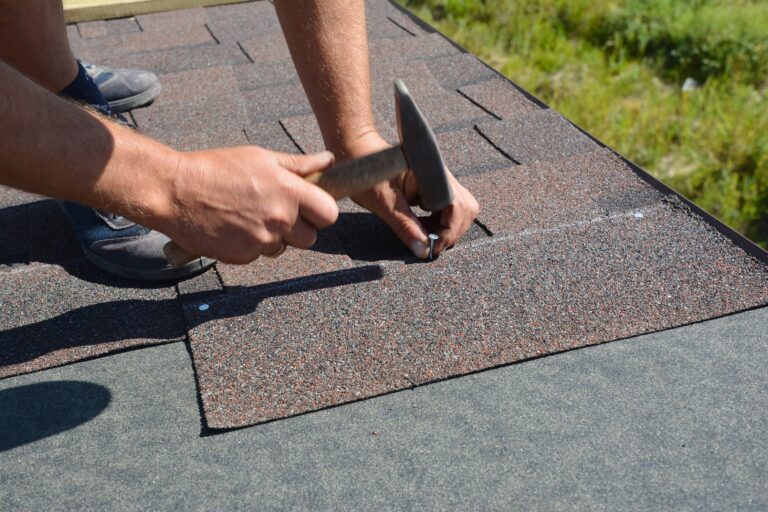
Most residential roof repairs in the Council Bluffs area land between $350 and $1,800. Replacing a cracked pipe boot or vent flashing, or swapping a handful of blown-off shingles, usually runs $350-$750. Chimney and wall flashing rebuilds and valley repairs run $600-$2,200. Decking replacement adds roughly $75-$160 per 4x8 sheet installed. A storm repair that means tearing off and rebuilding a full slope can reach $3,000-$3,500. The only way to get your real number is to have someone walk the roof.
Get My Free Estimate →- What roof repairs actually cost in the Council Bluffs market
- Who do I call first, my insurance company or a roofer?
- How long a repair takes, and what happens in your yard
- Why Council Bluffs roofs fail early: hail, wind, and ice dams
- Repair or replace? How to decide without guessing
- How storm damage claims work in Iowa
- Does a repair hurt resale value or insurability?
- Permits, warranties, and paying the deductible
- Vetting a Council Bluffs roofer after a hail event
- What a free inspection actually covers
- Get eyes on it before the next storm
- FAQs
Most roof repairs in Council Bluffs cost between $350 and $1,800. A cracked pipe boot or a dozen wind-lifted shingles sits at the low end. Flashing rebuilds and valley work push toward the top, and a storm repair that means tearing off and rebuilding a whole slope runs $3,000-$3,500.
That is the honest answer. Here is the part most articles skip: in western Iowa, a lot of "roof repair" calls turn out to be insurance claims, and some turn out to be roofs that should not be repaired at all. Knowing which one you are looking at is what actually saves you money.
Reviewed by the project manager who runs our Iowa storm restoration work out of our Centerville office. Buckshot Exteriors is family-owned, in business since 1979, and handles hail and wind claims across Iowa.
What roof repairs actually cost in the Council Bluffs market
Price comes down to three things: how hard the problem is to reach, whether the deck underneath is still sound, and whether the repair has to match existing shingles.
Missing or blown-off shingles: $350-$900
A few tabs gone from one slope after a 60 mph gust is the cheapest fix there is. The catch is matching. Shingle colors fade and manufacturers discontinue lines, so a patch on a 12-year-old roof often shows. If wind lifted shingles across several slopes, that is usually a claim, not a repair.
Pipe boot and vent flashing: $350-$750
Rubber pipe boots crack and split, usually around year 10-15. This is the single most common source of "there is a stain on my bedroom ceiling" calls we get. Cheap to fix, expensive to ignore.
Chimney, skylight, and wall flashing: $600-$2,200
Step flashing tucked behind siding, chimney counterflashing cut into brick, and skylight curbs are where water gets into an otherwise healthy roof. If a previous roofer caulked over old flashing instead of replacing it (a very common shortcut), the fix costs more because it has to be rebuilt from scratch.
Valley repairs: $700-$1,800
Valleys carry the most water and hold the most ice. Open metal valleys rust through at the bottom, and closed-cut valleys fail when the shingles were cut short. The repair means opening shingle courses on both sides, so labor drives the price.
Decking replacement: $75-$160 per 4x8 sheet, installed
That range is for standard sheet goods, 7/16 OSB or 1/2 inch plywood. Older Council Bluffs homes often have plank or skip-sheathed decks (1x6 boards with gaps), which price differently and, per your inspector's call and whatever code edition the city is enforcing at the time, may need an overlay of new sheathing so fasteners hold. Ask any bid to state which deck you have and what the allowance is.
This is the line item that turns a $600 repair into a $2,000 one, and it is exactly why waiting on a small leak is expensive.
Emergency tarping and board-up: $300-$800
After hail or a wind event, temporary protection stops interior damage while the claim gets sorted. Photograph before and after, and keep receipts. Emergency mitigation is often reimbursable, but coverage depends on your policy, so notify your carrier before you spend serious money.
Full replacement
If those numbers start stacking, you are in replacement territory. We break out materials, tear-off layers and square footage in our Iowa roof replacement cost guide so you can weigh a repair bill against the real alternative instead of guessing.
Roof replacement cost by home size (Madison, 2026)
| Home | Roof size | Typical total |
|---|---|---|
| Small ranch / bungalow | 14-18 squares | $9,000-$13,000 |
| Average two-story | 18-26 squares | $12,000-$18,000 |
| Large or complex (steep) | 26+ squares | $17,000-$25,000+ |
Cost by roofing material (average Madison home, installed)
| Material | Lifespan | Typical total |
|---|---|---|
| Architectural asphalt (standard) | 25-30 yrs | $12,000-$18,000 |
| Impact-resistant (Class 4) | 30+ yrs | $15,000-$22,000 |
| Standing-seam metal | 40-50 yrs | $25,000-$45,000 |
Common add-on costs
| Item | Typical cost |
|---|---|
| Extra tear-off layer | $500-$1,500 |
| Decking replacement | $50-$80 per sheet |
| New flashing & pipe boots | $300-$700 |
| Seamless gutters | $1,000-$2,500 |
Typical Madison-area 2026 ranges. Your exact price depends on an on-site inspection. A new asphalt shingle roof recoups about 61% of its cost at resale on average (2024 Remodeling Cost vs. Value Report).
Quick roof replacement cost estimator
Get a ballpark in 20 seconds. For an exact figure, book a free on-site inspection.
Who do I call first, my insurance company or a roofer?
Call a roofer first, unless water is actively coming in or something structural is damaged. A free inspection tells you whether you have a claimable loss before you open a claim file, and there is no upside to filing on a hunch and collecting a no-payment claim on your loss history.
If water is actively coming in: get it tarped, then notify your carrier the same day. Mitigation is your responsibility under the policy, and doing it protects your claim rather than hurting it.
Either way, do not sit on a storm date. Many carriers now limit how long after the date of loss you can report hail or wind, and adjusters get more skeptical the further out you are.

- A price dramatically lower than every other bid (corners are getting cut somewhere)
- Pressure to sign on the spot, or a "today only" discount
- A request to sign over your insurance claim (Assignment of Benefits)
- An offer to "waive your deductible" (that is insurance fraud, and it puts you at risk)
- No written, itemized estimate, or no proof of insurance
- A large upfront payment (more than 30%) before any work begins
How long a repair takes, and what happens in your yard
Typical timelines once we are on site:
- Pipe boot, small shingle repair, minor flashing: a few hours, often the same visit
- Chimney or wall flashing rebuild, valley repair: most of a day
- Repairs needing decking or a partial slope tear-off: one to two days
- Insurance-scoped storm work: driven by the claim. Adjuster inspection, approval, then material and crew scheduling
Winter changes things. Below roughly 40 degrees, asphalt sealant strips will not bond and shingles crack when flexed, so January work usually means a detailed temporary repair or hand-sealing now and permanent shingle work when the roof warms up. That is not stalling. It is the difference between a repair that holds and one that fails in April.
Property protection and cleanup
This is the part homeowners ask about most and contractors talk about least.
- Tarps and plywood over landscaping, AC condensers, decks and window wells on any tear-off
- Gutters protected, then checked and flushed of shingle grit before we leave
- Satellite dish and antenna: we can detach and reset a dish, but realignment is on the provider. Say so up front if you have one
- Nail control: magnet rolls over the drive, walks and lawn at the end of every work day, not just the last one. Ask any bidder how many nail sweeps they do
- Cars: move them out of the driveway. Debris and material staging need the space, and it keeps your paint away from falling shingles
- You do not need to be home. Most repairs are exterior. If we need attic or interior access, we schedule that window with you specifically
If a nail turns up in your tire a week later, call us. That is a fixable problem and we would rather hear about it than have you tell your neighbors about it.
Why Council Bluffs roofs fail early: hail, wind, and ice dams
Hail and straight-line wind are the top causes of premature roof failure in Pottawattamie County, and freeze-thaw ice damming is right behind them. Severe hail season here runs April through September, and the NOAA Storm Prediction Center logs large-hail reports across western Iowa and eastern Nebraska nearly every one of those seasons.
The damage that matters most is usually invisible from the driveway. We regularly see roofs that never leaked after a hail event fail years earlier than they should. The damage is in the mat, not the ceiling.
What hail and wind damage actually look like
- Bruising. The mat under the granules is fractured. It feels soft, like pressing a bruise on an apple. Water finds it later.
- Granule loss. Black spatter marks where asphalt is exposed. Once granules are gone, UV cooks the shingle.
- Creased shingles. Wind folds a shingle back and breaks the mat at the fold. The seal strip is finished even if it lays flat again.
- Soft metal dents. Adjusters check gutters, downspouts, furnace and roof vents, and AC condenser fins. Dents there establish hail size and direction, which is why we photograph them first.
- Broken seals. A gust can unseal shingles that never blew off. They look perfect from the ground and lift by hand up on the roof. Real, documentable, and one of the most commonly missed items on a first adjuster pass.
Ice dams at the eaves
Ice damming is one of the top leak causes we find on Council Bluffs homes in February, and it is not a hole in the roof. Heat escaping the attic melts snow up high, the water runs down and refreezes over the cold overhang, and the dam holds standing water that works backward under the shingles. Shingles shed water, they do not hold it back.
The fix is a system, not a patch: ice-and-water shield membrane at the eaves running from the edge up past the interior wall line (commonly at least 24 inches inside the exterior wall in cold climates), balanced intake and exhaust ventilation, and attic insulation that stops the heat loss in the first place. If you see heavy icicles along one gutter line and a stain on the wall below, that is your answer.
If a storm went over your neighborhood, get the roof looked at even if your ceiling is dry. Our hail and storm damage team does this every week, and a free inspection costs you nothing but twenty minutes.
Repair or replace? How to decide without guessing
Repair when the roof is under about 15 years old, shingles are still flexible, damage is confined to one area, the shingle line is still available so the patch will match, and the deck is solid.
Replace when hail bruising shows on multiple slopes instead of just the storm-facing one, shingles crack when you bend them (common past 18-20 years), you have already paid for two or three repairs in a few years, there are two layers up there or soft spots in the deck, or the color and profile cannot be matched and the patch will be obvious from the street.
Said plainly: patching a worn out roof is the most expensive way to buy two more years. If the honest answer is a $400 boot replacement, we will tell you that too. Our residential roofing crews do both.
How storm damage claims work in Iowa
Your policy covers sudden damage from hail, wind and impact. It does not cover age, wear or a bad previous install. Two terms decide what you get paid:
- ACV (actual cash value): the depreciated value of your roof today. Most carriers issue this first.
- RCV (replacement cost value): the full cost to replace, released after the work is completed and invoiced.
So the first check is usually smaller than the bid. That is depreciation being held back, not a lowball.
Read your declarations page before you assume anything
This blindsides Council Bluffs homeowners more than anything else. Many Iowa policies now carry one of these:
- ACV-only roof endorsement. The roof is paid at depreciated value, period. No recoverable depreciation, ever.
- Roof payment schedule. Payment is a percentage tied to roof age. A 16-year-old architectural shingle roof might be scheduled at 40 or 50 percent.
- Cosmetic hail damage exclusion. Dents that do not affect function, common on metal and soft metals, are not covered.
- Separate percentage wind and hail deductible. Often 1-2 percent of dwelling coverage. On a $300,000 home that is $3,000-$6,000 out of pocket.
Pull the declarations page out of the drawer and look. If you have an ACV-only endorsement on a 20-year-old roof, the math changes completely, and you deserve to know that before anyone starts talking about a new roof.
If the claim is denied or underpaid
- Request a reinspection in writing, and ask that your contractor be present.
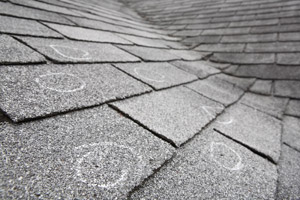
- Submit a supplement with dated photos, chalked test squares, slope measurements, and code-required items the original scope missed (ice-and-water shield, drip edge, ventilation, decking).
- Read the appraisal clause in your policy. It is a built-in dispute process, and most Iowa policies have one.
- File a consumer complaint with the Iowa Insurance Division if you hit a wall.
Also know this: Iowa law prohibits a contractor from paying, waiving or rebating your insurance deductible. Anyone offering to eat the deductible is telling you they are willing to break state law and pad your claim. Walk away.
We meet the adjuster on the roof whenever scheduling allows. That is not a sales gimmick. It is how the wind-creased shingles on the back slope and the dented furnace cap actually make it into the scope.
One Council Bluffs example
Details generalized for privacy, but this pattern repeats every season. Late-June hail on the north side of town. No leak. The homeowner called because a neighbor's roof was going on.
We found bruising in test squares on the west and south slopes, creased shingles along the north ridge, and hail dents in the gutters and furnace cap. The first adjuster scope approved one slope and missed the wind creasing, drip edge and ice-and-water shield entirely. We requested a reinspection, met the adjuster on the roof with photos of every test square, and supplemented with the code items. The revised scope covered a full replacement. The homeowner paid the wind and hail deductible and nothing else.
That whole difference came down to documentation, not argument. You can see dated before-and-after photo sets from our work on our recent projects page, and we will bring comparable Iowa hail-job photos with us when we walk your roof.
Want that kind of documentation on your roof? Call our office for a free, no-obligation Council Bluffs roof inspection. No pitch, no pressure, no cost, and for non-emergency estimate requests you should hear back from us within one business day.
Want a straight answer on your roof?
We'll inspect it, document everything, and tell you honestly what you're looking at, even if the answer is patch it for now. No pressure.
Does a repair hurt resale value or insurability?
No, not if it is documented and done right. This is one of the most common misconceptions we hear.
Appraisers and buyers' inspectors look at remaining useful life and evidence of active leaks, not at whether a repair ever happened. A permitted repair with an invoice, photos and a workmanship warranty is an asset at closing. An undocumented patch, ceiling staining or a 22-year-old roof is what triggers a repair request or a holdback.
On the insurance side, carriers underwrite roof age and condition. Older roofs increasingly get an ACV-only endorsement, a roof schedule or an inspection requirement at renewal, and a roof full of visible patches invites that scrutiny. One more thing worth knowing: replacing a single slope does not reset the roof's age in an underwriter's file. Full replacement does.
Keep every invoice and photo set. It is the cheapest resale insurance you will ever buy.
Permits, warranties, and paying the deductible
Permits
Reroof and structural decking work in Council Bluffs generally requires a permit from the City of Council Bluffs Building Department, and your contractor should pull it. Verify current requirements and any local registration rules with the city. If a roofer asks you to pull the permit in your own name, he is moving liability onto you and probably cannot pull one himself.
Warranty on a repair
Two separate warranties, and homeowners mix them up constantly.
- Workmanship (labor). In this market, repair labor is commonly warranted one to two years, versus 10 or more years of workmanship coverage on a full manufacturer-backed replacement system. Get the term written on the invoice, not promised in the driveway.
- Manufacturer (the shingle). A correctly performed repair with compatible materials does not void a shingle warranty. What jeopardizes coverage: non-approved materials, shingling over a failed deck, layering a second roof on top, and blocked or missing ventilation. Enhanced warranties, including those available through GAF Master Elite certification, also carry installer requirements, so who does the work matters.
Paying the deductible, and what financing actually looks like
If your wind and hail deductible is $3,000-$6,000, that is real money. Two things usually make it workable.
First, sequencing. Insurance pays in stages, ACV up front and depreciation after completion, so the schedule can often be arranged so you are not carrying the full amount at once.
Second, financing. Exterior financing generally runs through third-party lenders, which means a credit application and a credit pull, usually with a same-day decision. Promotional structures such as a no-interest window (commonly 6 to 12 months, with the balance due inside that window) and longer fixed-payment terms are typical of what those lenders offer, but the exact programs and rates change, so ask us what is available at the time you get your estimate rather than trusting a number in an article. Plenty of homeowners never need financing at all. Ask before you sign, not after.
Vetting a Council Bluffs roofer after a hail event
Hail brings out-of-state crews into the metro within days. Some are fine. Many are gone by winter, and your warranty leaves with them.
Ask for these before you sign:
- A local address you can drive to, not a P.O. box or a hotel room
- Iowa contractor registration number. Iowa does not issue a roofing trade license, but contractors above a small annual volume must register with the state, and out-of-state outfits have to post a bond
- Proof of general liability AND Iowa workers' compensation, emailed directly from their agent, with your name listed as certificate holder so you get notified if it lapses. Verify the workers' comp separately rather than taking a printed copy at face value. If an uninsured crew member gets hurt on your roof, that exposure can land on you and your homeowners policy
- Manufacturer credentials that unlock warranties a fly-by-night crew cannot offer
- BBB and Google review history that goes back years, not weeks
- A written scope listing tear-off layers, underlayment type, ice-and-water shield at eaves and valleys, ventilation, and a decking allowance
What a contingency agreement is: a contract saying you will hire the contractor for the work if your insurance claim is approved, at the insurance-approved price. It is normal in storm restoration. What is not normal is signing one on your doorstep before anyone has been on your roof. And know your out: Iowa law requires that a residential roofing contract to be paid from insurance proceeds let you cancel within five business days after you learn the carrier has denied all or part of the claim, and the contract has to say so in writing. If that language is missing, that tells you something about the contract and the company.
Other red flags: large cash deposits up front, no physical office, and any promise involving your deductible.
Can a Centerville-based company really service Council Bluffs?
Fair question. Our Iowa office is in Centerville and we run storm restoration statewide, which is why we will give you a straight answer on the phone about when we can be on your roof instead of posting a response-time promise nobody can hold during a busy hail week.
The part that matters more is year three, when a flashing detail needs a look. Ask any contractor, us included, how they handle a warranty callback two years out and who you would call. A company that has been family-owned since 1979 answers that differently than a crew running plates from three states away.
What a free inspection actually covers
No cost, no obligation, no kitchen-table pitch.
- Walk the roof, not a drive-by, and check every slope, valley and penetration
- Test-lift shingles to find broken seals from wind
- Photograph hail strikes on soft metals, gutters and vents to establish storm evidence
- Check the attic side where accessible for staining, wet decking or ventilation problems
- Hand you the photos and a straight recommendation: repair, replace, or nothing yet
Sometimes the answer is "your roof is fine, that water is coming from siding or a plugged gutter." Plenty of our inspections end with us telling a homeowner there is not enough damage to be worth their deductible. An inspection never obligates you to file a claim or hire anybody.
Get eyes on it before the next storm
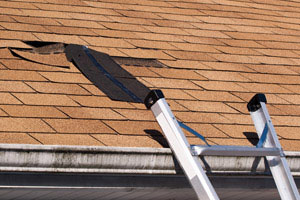
If you have a stain on the ceiling, shingles in the yard, or a storm date you cannot stop thinking about, have it looked at while a repair is still a repair.
Call our office to schedule a free, no-pressure roof inspection in Council Bluffs, or read how we work on our Council Bluffs roofing page. Not a phone person? Send us the details here and we will get back to you within one business day. We will show you photos of exactly what we find, explain your options in plain English, tell you honestly whether filing a claim makes sense, and if there is a claim in it, we will be on the roof with your adjuster. Family-owned since 1979, and we will still be here when your warranty matters.
Get a straight answer on your Madison roof
Wisconsin storm season and insurance non-renewal letters do not wait. Get a free, no-obligation inspection and an honest assessment of exactly what your roof needs, even if the answer is to wait.