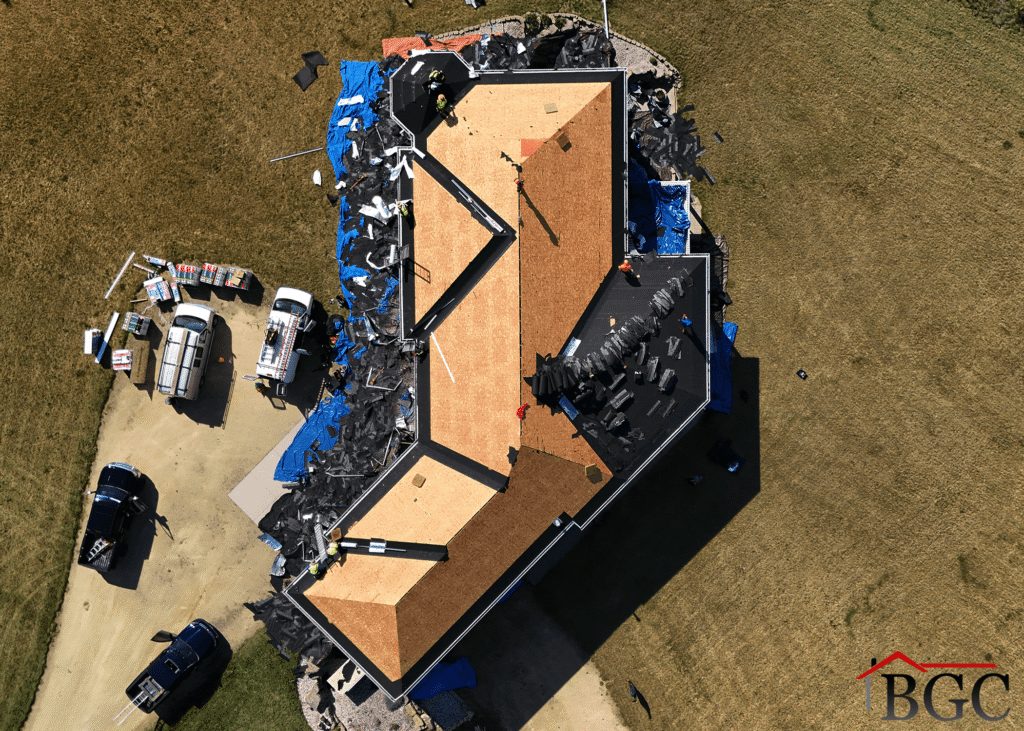
Most single-family asphalt shingle roof replacements in the Fort Atkinson and Jefferson area fall somewhere between about $9,000 and $22,000, which works out to roughly $450-$700 per square (100 square feet) for a straightforward tear-off with architectural shingles. A typical 1,900 sq ft gable ranch with a 4/12 pitch, one layer coming off and no surprises in the decking usually lands around $11,000-$16,000. A cut-up two-story with dormers, steeper pitch, two layers to remove and skylights can run $18,000-$30,000 or more. Those are honest ballparks at current material pricing, not quotes. We measure, look in the attic, and give you an itemized number for free.
Get My Free Estimate →- What to do in the first hours of a roof leak
- Roof repair or full replacement: how to tell
- What an asphalt shingle roof replacement costs here, and what drives the number
- Paying for a roof you did not plan on
- Timeline, lead time and what install week looks like
- Warranties: material, workmanship, and what voids them
- Skylights: replace them during the reroof
- Rock River valley weather: wind, hail and ice dams
- The insurance side, straight
- Commercial, farm and outbuilding roofs in Jefferson County
- What to ask any roofing contractor in Fort Atkinson before you sign
- Get a free roof inspection in Fort Atkinson or Jefferson
- FAQs
If water is coming through a ceiling in Fort Atkinson or Jefferson right now, do this: contain the water inside, stay off the roof, take photos, and call a local roofer for an emergency tarp. Call us at (608) 909-9109. The permanent repair can wait a day. Stopping the water cannot.
If you are here for the slower questions (patch or replace, what a new roof actually costs, how to pay for it, whether that last hail storm did real damage), keep reading. We have been doing roofing and exteriors as a family-owned company since 1979, and we cover the Fort Atkinson area along with Jefferson, Johnson Creek, Lake Mills and Watertown.
Here is the honest version of what homeowners in this corner of Jefferson County ask us most.
What to do in the first hours of a roof leak
Protect the inside of the house first. Insurance covers sudden storm damage, but your policy also expects you to prevent further loss once you know about it.
In order:
- Put a bucket or tote under the drip and move furniture and electronics clear.
- Shut off power to any circuit where water is near a fixture, can light or outlet.
- Photograph and video everything before you clean up. Dated photos are worth real money in a claim.
- Do not climb up there. Wet shingles, a steep pitch and a ladder foot on soft spring ground is how people get hurt.
About draining a bulging ceiling: a small sag can be relieved with a tiny hole at the low point, poked from beside the bulge, never from under it. But set a hard limit. If the sag is wider than a dinner plate, or the water is anywhere near a light box or ceiling fan, do not touch it. Catch what you can, keep people out of the room, and call. Also leave it alone entirely if the ceiling is textured or plaster in a home built before about 1980, since older textures can contain asbestos.
Then call a roofer for an emergency dry-in. A proper tarp is fastened, not weighted with bricks, and it runs up over the ridge so wind and the next rain cannot get under it. That is what our 24-hour emergency roof repair service is for, and yes, we come out to Fort Atkinson and Jefferson.
Say this plainly too: a small leak does not stay small. Water tracks along rafters and soaks OSB decking, and rotted decking turns a shingle repair into a decking-and-shingle repair. Two weeks of dripping can add a few hundred dollars of plywood. A winter of it can mean mold in the insulation and a stained ceiling that has to come down.
Roof repair or full replacement: how to tell
Repair when the damage is localized and the rest of the roof still has life. Replace when the roof itself is the problem.
Signs a roof repair makes sense
- One clear cause: a cracked plumbing boot, failed chimney or wall flashing, a nail pop, a dozen shingles lifted by a straight-line gust.
- Shingles elsewhere are still flexible, granules intact, no widespread cupping.
- Under about 15 years for three-tab, under 20 for architectural shingles.
- Decking is solid when we walk it and probe from the attic.
Signs you are better off replacing
- Age past roughly 18-25 years, depending on shingle grade and how much afternoon sun that slope takes.
- Granule loss across whole slopes, so the black mat shows and the gutters are full of grit.
- Curling, brittle shingles that crack when lifted. You cannot repair a roof you cannot lift without breaking it.
- Leaks in several different areas, or a repeat leak somewhere already patched.
- Two existing layers of shingles already on the house. The residential code Wisconsin adopts does not allow a new roof covering to be laid over two or more existing applications, so a third layer is not the plan. Verify your specific address with the Fort Atkinson building inspector or Jefferson County at permit time.
- Spongy spots underfoot, which usually means the decking is already gone.
We will tell you which one you are in, in plain language, and we will say "repair" when repair is the right answer. Not every inspection ends in a replacement. Our full process is laid out on the residential roofing page.
About the "just shingle over it" shortcut
A layover is cheaper on paper and a bad deal anyway. You never see the decking, so hidden rot stays hidden. New shingles lay over old high spots and telegraph every flaw. The roof runs hotter and ages faster. Most manufacturers will not extend full system coverage over a layover. And when it fails, you pay to remove two layers instead of one.

What an asphalt shingle roof replacement costs here, and what drives the number
Real numbers first, then the variables. Most single-family asphalt shingle roof replacements in the Fort Atkinson and Jefferson market run about $9,000-$22,000, which is roughly $450-$700 per square (a square is 100 square feet) for a standard tear-off with architectural shingles.
Two worked examples at current material pricing:
- 1,900 sq ft gable ranch, 4/12 pitch, about 22 squares with waste, one layer off, architectural shingles, new pipe boots, drip edge, ice-and-water shield at the eaves, ridge vent: typically $11,000-$16,000.
- Two-story with three dormers, 8/12 pitch, two layers to remove, two skylights, some board sheathing to replace: typically $18,000-$30,000 or more.
Those are ballparks for budgeting, not quotes. What moves your number inside those bands:
- Square footage and pitch. Steeper means more labor, staging and fall protection. An 8/12 costs more per square than a 4/12 with the same footprint.
- Tear-off layers. One layer is normal. Two doubles disposal weight and dumpster cost.
- Decking condition. Older homes in both towns often have 1x board sheathing with gaps, or first-generation OSB with delaminated spots. We had a 1920s home on the east side of Fort Atkinson where the boards had spread wide enough that we had to sheet the whole roof over them before shingles could be nailed correctly. That is real money, and it is why we look before we price.
- Shingle grade. Architectural (dimensional laminated) shingles are the workhorse here. Upgrades include heavier designer profiles and Class-4 impact-resistant shingles, which hold up better to hail and can earn a premium credit from some carriers. Worth asking about if you have been hit twice.
- Details. Valleys, chimneys, dormers, skylights, sidewall flashing, low-slope porch transitions. All hand work.
- Ventilation and ice protection. Ridge vent, real intake at the soffits, ice-and-water membrane at eaves and valleys. In this climate those are not upsells. They are the difference between a roof that lasts and one that dams up every February.
What about a metal roof?
Plenty of homeowners around Jefferson, Sullivan and the farms east of town ask about standing seam, usually because they already have metal on an outbuilding. Figure roughly two to three times the cost of an architectural shingle roof on the same house, and expect 40-50 years or more out of it instead of 25. It sheds snow well and will not blow off in a straight-line wind event, though some carriers now exclude cosmetic hail denting on metal, so read the policy. Details are on our residential metal roofing page.
How long should the new roof last, and what does it need?
In southern Wisconsin, a properly ventilated architectural shingle roof realistically gives you 22-30 years. Freeze-thaw cycling and attic moisture are what shorten that, not the shingle brand. Roofs with blocked soffit intake routinely die ten years early.
Maintenance is light but not zero:
- Keep gutters and valleys clear, spring and fall. Standing debris in a valley is the number one preventable leak.
- Have someone look at pipe boots, chimney flashing and sealant every few years. Boots crack long before shingles wear out.
- After any significant hail or wind event, get a free look. Damage documented now is a claim. Damage found in four years is "wear and tear."
- Do not pressure-wash shingles, and do not let anyone walk it in July heat without reason.
Not sure whether you are looking at a repair or a replacement? Call (608) 909-9109 for a free on-site roof inspection in Fort Atkinson or Jefferson. We climb it, photograph it, and show you what we found. No charge, no pressure.
Paying for a roof you did not plan on
Three common paths, and most people use two of them.
- Insurance, if wind or hail caused the damage. You pay the deductible, the carrier covers the approved scope.
- Financing. Monthly payment options get the roof on now and keep your savings intact. We walk through what is available on our roof financing options page and at the estimate, rather than tossing out rates over the phone that may not apply to you.
- Phasing. Sometimes the right call is to dry in and stabilize the worst slope now and schedule the rest in spring. We will say so if that is your situation.
Deposits, the balance, and your insurance check
On insurance work, the first ACV check from your carrier usually functions as the deposit and the balance comes due after completion, once the recoverable depreciation is released. On retail work we ask for a reasonable deposit when materials are ordered, with the balance due at completion after you have walked the job with us.
You do not sign your claim check over to a contractor. Claim payments are issued to you, often with your mortgage holder named as well, which means the bank endorses it and may release funds in draws. We invoice you and you pay us. Any roofer who wants to be named on your claim payment, or wants most of the money before a single bundle hits the driveway, is telling you something about how they operate.
Timeline, lead time and what install week looks like
Most single-family reroofs here are a one to two day job. Bigger, steeper, cut-up roofs and anything with significant decking replacement run two to three days.
Lead time is the honest question after a hail event. When a storm tracks across Jefferson County, every reputable roofer in the area books out, and it can stretch to several weeks at the peak of the season. We will not quote you a date we cannot hold. What we will do is triage: active water intrusion and emergency tarps get handled ahead of scheduled replacements, and having us dry your roof in does move you into the queue while the claim is being written. Call and ask where we actually stand that week.
On the job itself:
- The dumpster or dump trailer goes in the driveway, usually the day before or that morning.
- Crews typically start around 7 a.m. Tear-off is the loud part and it is mostly over by midday.
- You do not need to be home. We do ask that you be reachable by phone, because decking surprises and color decisions come up. Plan to park on the street, keep pets inside and away from the work side, and take fragile pictures off upstairs walls (vibration knocks things crooked).
- Cleanup includes magnetic nail sweeps of the drive, walkways and lawn. Ask us to run it again if you find anything.
Your driveway, landscaping, gutters and septic
Fair question, and one we get constantly out here where driveways are long and the mound system is closer to the house than anyone would like.
We lay plywood under dumpster wheels and jacks on asphalt drives, tarp beds and shrubs along the drip line, and stage catch tarps off the eaves so tear-off debris does not shred landscaping. Tell us before we arrive where the septic tank, mound, well head and any buried lines are. We will keep the dumpster and trucks off them. Same for a soft lawn in spring, which is when most driveway and turf damage happens.
If we damage something, we fix it or pay for it. That is what our general liability coverage is for, and it is a question you should ask every bidder along with a certificate of insurance.
What if it rains mid-tear-off?
We only open what we can close. Crews strip in sections and dry in each section with underlayment the same day, and we watch radar rather than start a tear-off ahead of a storm cell. If weather turns unexpectedly, the exposed area gets tarped and fastened before anyone leaves. Weather does move schedules, and we would rather call you and reschedule than gamble with your attic.
Winter installs are possible with cold-weather methods: hand-nailing where guns would over-drive stiff shingles, keeping bundles warm, and hand-sealing starter, hips and ridge because self-adhering strips will not bond until temperatures come up.
Warranties: material, workmanship, and what voids them
Two separate warranties matter, and bids often blur them.
Manufacturer material warranty. Architectural shingles usually carry a limited lifetime warranty with a non-prorated initial period, then it prorates. It covers defects in the shingle, not installation. Enhanced system warranties covering labor and the full accessory system are only available through certified contractors. We are a GAF Master Elite contractor, which is how we can offer those upgraded coverages.
Contractor workmanship warranty. This covers how the roof was installed. Ask every bidder for the length in writing. A storm chaser's "lifetime workmanship" means nothing if the company is gone next spring.
What voids coverage in real life: inadequate attic ventilation, installing over an existing layer, mixing off-brand accessories into a system warranty, unauthorized repairs by someone else, and failing to register the warranty.
Skylights: replace them during the reroof
If your skylights are more than 15-20 years old, replace them while the shingles are off. The glass may look fine, but seals, gaskets and flashing kits age on the same clock as the roof around them, and most "leaking skylight" calls trace back to failed flashing at the head of the unit, not the glass.
At tear-off we set a matched flashing kit into a fresh field of shingles. Three years later means cutting into your new roof and adding a seam. Same work, more money, more risk. See skylight replacement and installation.
Want a straight answer on your roof?
We'll inspect it, document everything, and tell you honestly what you're looking at, even if the answer is patch it for now. No pressure.
Rock River valley weather: wind, hail and ice dams
Fort Atkinson sits on the Rock River, and Jefferson is seven miles north where the Crawfish comes in. Two patterns beat up roofs here.
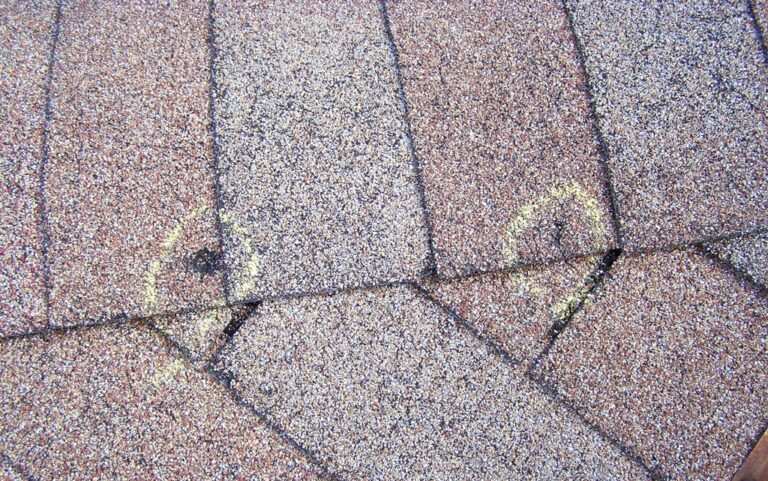
Spring and summer: straight-line winds and hail riding the same storm tracks that cross Dane and Jefferson counties. Wind damage often shows up as creased shingles rather than missing ones, and a creased shingle has a broken fiberglass mat even after it lays back flat. Hail shows as bruised, granule-free dents in the mat plus dings on soft metals: gutters, downspouts, vents, A/C fins. Adjusters check soft metals first, because that is where hail is hard to argue with.
Winter: ice dams, and the older housing stock in both towns is prime territory. Shallow attics, thin insulation over the exterior walls, blocked or missing soffit intake. Heat escapes, snow melts mid-slope, water runs to the cold eave, refreezes, and backs up under the shingles. Then it stains a bedroom ceiling in January. The permanent fix is air sealing, insulation, balanced intake and exhaust ventilation, and ice-and-water shield at the eaves, all of which get addressed properly at reroof time.
The insurance side, straight
Insurance pays for storm damage, not for old roofs
A worn-out 24-year-old roof with no storm damage is a maintenance expense, not a claim. If a contractor promises to "get insurance to pay" for a roof that simply aged out, walk away. That conversation ends in a denial and, in the worst cases, a fraud investigation.
Your deductible, and why nobody can eat it
You pay your deductible. More carriers in Wisconsin have been moving to percentage wind and hail deductibles, and we see them regularly on renewals in this area. On a $300,000 dwelling limit, a 2% wind/hail deductible is $6,000, not the flat $1,000 you may remember. Check your declarations page before you assume.
If a contractor offers to waive, rebate, absorb or "work around" your deductible, understand what is actually happening: Wisconsin insurers treat a waived or rebated deductible as a misrepresentation of the cost of repairs, which can void your claim and create exposure for both of us. That is why no legitimate roofer will do it.
ACV, RCV and the check that does not cover the job
Replacement cost policies usually pay in two parts. The first check is actual cash value: replacement cost minus depreciation minus your deductible. The held-back piece, recoverable depreciation, is released after the work is finished and invoiced. That is normal, and it surprises almost everyone the first time.
We also file supplements when the approved scope is short on real items like decking, drip edge, ice-and-water shield, or code-required ventilation.
"My roof is only 12 years old and they denied it"
It happens, and you have recourse:
- Request a reinspection with your contractor present. Many partials get corrected right there.
- Provide dated photos, storm reports for the date of loss, and a chalked test square documenting hits per square.
- Ask for a second adjuster or an engineer review if the file is disputed.
- Check your policy for an appraisal clause, a defined dispute path short of litigation.
- If you believe the claim was handled improperly, the Wisconsin Office of the Commissioner of Insurance takes consumer complaints.
We had a hail claim in Jefferson come back approved as a partial slope repair. We met the adjuster back at the house, walked the roof with him, and pointed out mat bruising on two slopes he had not tested plus fresh dings on the gutters and furnace vent. It was rewritten as a full approved replacement. That is the whole reason we meet adjusters on-site.
Do not sit on it
Your policy carries a duty to give prompt notice of a loss, and many policies limit claims to a defined period after the date of loss (often one year) with a separate deadline for filing suit. Read your policy's notice provision or ask your agent. Practically speaking, proving which storm caused what gets harder every month you wait. Our hail and storm damage restoration team documents damage and meets your adjuster at the house so impact damage does not get written off as wear and tear.
Commercial, farm and outbuilding roofs in Jefferson County
Low-slope and flat sections need membrane systems (TPO, EPDM, modified bitumen) or standing-seam metal, not shingles. The usual failures are ponding water, split seams at curbs and drains, and backed-out fasteners with shot washers on old screw-down metal.
If you own a storefront, shop, church, apartment building or ag building in Fort Atkinson or Jefferson, our commercial roofing crew handles repair and replacement on those systems and will tell you honestly whether you are looking at a seam repair, a recover or a full tear-off.
What to ask any roofing contractor in Fort Atkinson before you sign
Storm chasers show up in Jefferson County within days of a hail event, collect deposits, and disappear. A few questions sort them out:
- Are you licensed and insured in Wisconsin, and can I see the certificates? General liability and workers comp. If an uninsured worker gets hurt on your roof, that can land on your homeowners policy.
- Where is your office? A physical local address beats a magnet sign and an out-of-state area code.
- What manufacturer certification do you hold? Certification unlocks the stronger system warranties. We hold GAF Master Elite.
- Is the estimate itemized? Shingle brand and line, underlayment, ice-and-water coverage, ventilation, flashing, decking allowance, disposal, permit. Vague one-line bids hide corner-cutting.
- Who handles the insurance side? The right answer is that the contractor meets the adjuster on-site with photos and measurements.
- How long is the workmanship warranty, and does it transfer?
What exactly am I signing on that clipboard?
This is the biggest trust gap after a storm. When a door-knocker hands you a tablet and says it is "just so we can talk to your insurance," read what it says.
- Contingency agreement. Common and not automatically bad. It says you hire that contractor if and only if the claim is approved, at the insurance-approved scope and price. What matters is the fine print: cancellation terms, any cancellation fee, and whether it locks you in before you have seen a scope or a price.
- Assignment of benefits (AOB) or "authorization to act on my behalf." This is different. It can hand a contractor the right to deal directly with your carrier, and in some forms to collect your claim proceeds. You do not need to sign away your benefits for a roofer to help with your claim. We document damage and meet your adjuster without taking control of your policy.
- Cancellation. Wisconsin's home solicitation rules generally give you three business days to cancel a contract signed in your home. Get the cancellation language in writing, and do not accept "we already ordered materials" as an answer on day one.
Never sign anything the same hour a stranger knocks. Get a second opinion. A real local company will still be here next week.
Shortcuts to watch for on the install itself: reusing old pipe boots, shingling over rotten decking, skipping ice-and-water shield at the eaves to shave a few hundred dollars, nailing too high so fasteners miss the nailing zone, and "sealing" flashing with a caulk gun instead of replacing it. All of those pass a driveway inspection and fail in five years.
Get a free roof inspection in Fort Atkinson or Jefferson
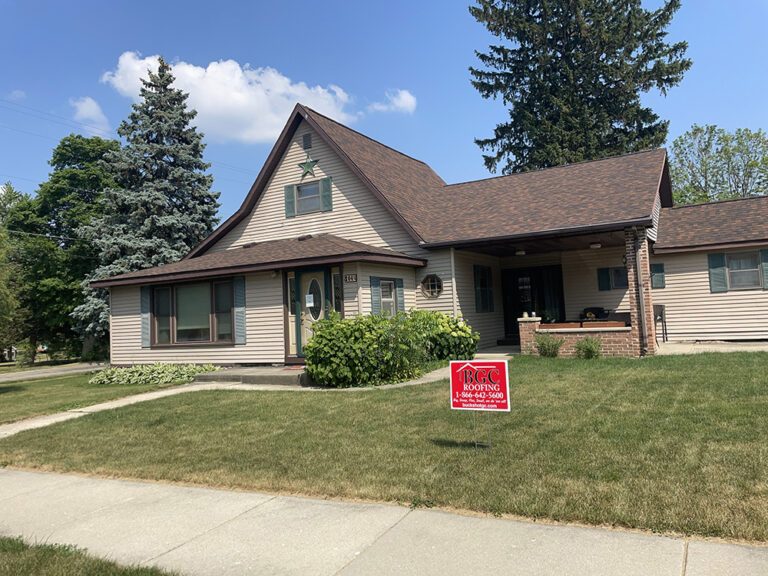
Here is what it costs to find out where you stand: nothing. We come to the house, walk the roof, check the attic when we can get into it, photograph what we find, and give you a straight assessment. If you need a repair, we say repair. If the roof is done, we show you why with pictures and hand you an itemized estimate with financing and insurance options.
No pressure, no scare tactics, no same-day-only pricing. Family-owned since 1979, and you can read what local homeowners say on our customer reviews page plus Google, Birdeye, Angi and HomeAdvisor before you ever pick up the phone.
Call (608) 909-9109 for your free, no-obligation roof inspection in Fort Atkinson, Jefferson and the surrounding area, or request an inspection online. If you have active water coming in, say so when you call and we will treat it as an emergency.
About this guide: written and reviewed by the estimating and production team at Buckshot Exteriors (Buckshot General Contracting), family-owned roofing and exterior contractors serving south-central Wisconsin since 1979, GAF Master Elite certified, and on-site with homeowners' insurance adjusters on hail and wind claims across Jefferson and Dane counties.
Get a straight answer on your Madison roof
Wisconsin storm season and insurance non-renewal letters do not wait. Get a free, no-obligation inspection and an honest assessment of exactly what your roof needs, even if the answer is to wait.