Sometimes, but it depends entirely on your carrier. Some Wisconsin insurers give an impact-resistant roof credit, others give nothing, and no roofer can promise you a discount. Call your agent before you buy and ask three things: do you credit UL 2218 Class 4 roofs, how much, and what documentation do you need. We hand you the product data sheet and an invoice naming the exact shingle installed, which is normally all they want.
Get My Free Estimate →- What Class 4 impact-resistant shingles actually are
- What GAF Master Elite status changes for you
- Is Class 4 asphalt even the right call, or should you look at metal?
- Hail and wind exposure in Rock County
- Straight answers on storm claims
- What a roof replacement costs in the Evansville area
- Permits and inspections in the City of Evansville
- Older Evansville homes: plank decking and layers
- Repair or replace?
- Can you roof in a Wisconsin winter?
- What the job actually looks like at your house
- How to vet a roofing contractor in Evansville
- Get a free, honest look at your roof
- FAQs
If you're looking for a roofing contractor in Evansville, WI, it's usually for one of two reasons: a storm just crossed Rock County and you're worried about hail, or your roof is old enough that you're pricing an asphalt shingle roof replacement and you keep running into "Class 4" and "GAF Master Elite" with no straight explanation of either.
Short version. Class 4 is an impact rating from a lab test (UL 2218), not a promise your roof will never be damaged. Master Elite is a manufacturer certification that unlocks longer warranties and a factory inspection of your finished roof. Both matter in southern Wisconsin. Neither replaces a careful tear-off and a proper install.
Here's everything we'd tell you standing in your driveway, including permits, winter work, financing and the insurance questions most roofing pages dodge.
What Class 4 impact-resistant shingles actually are
Class 4 is the highest impact rating under UL 2218. In the test, a two-inch steel ball is dropped on the shingle from about 20 feet, twice in the same spot. To pass, the mat cannot crack or split. That's the whole test. It measures mat integrity, not "hail-proof."
Why that matters here: the mat is what keeps water out. When hail bruises a standard shingle, the fiberglass mat fractures under the granules. It may not leak today, but that soft spot sheds granules, ages fast and eventually fails. Class 4 shingles use a tougher mat or SBS-modified (rubberized) asphalt that flexes instead of fracturing, which also helps through Wisconsin freeze-thaw, when a brittle January roof meets an April hailstone.
Which shingle lines actually carry the rating
Ask for the product data sheet, every time. It will state UL 2218 Class 4 in plain print.
- GAF Timberline AS II, an SBS-modified architectural shingle, is GAF's Class 4 line.
- CertainTeed Landmark IR and Malarkey Legacy (polymer-modified) are common SBS alternatives.
- Standard architectural shingles like plain Timberline HDZ are excellent shingles, but they are not Class 4.
If a salesperson says "these are basically Class 4," they aren't.
The insurance discount question, answered honestly
Some carriers credit a Class 4 roof. Some credit nothing. It varies by insurer and policy form, and no roofer can promise you a discount.
Before you sign anything, call your agent and ask: do you offer an impact-resistant roof credit, how much, and what proof do you need.
While you have them on the phone, read your declarations page for two phrases: a separate wind/hail deductible (often 1%-2% of your dwelling limit instead of a flat dollar amount) and "Actual Cash Value Loss Settlement, Windstorm or Hail Losses to Roof Surfacing" or a "roof surfacing payment schedule." Either one means an older roof gets paid at depreciated value, not replacement cost. Homeowners with 15+ year-old roofs are the ones most often surprised by that.
How long shingles really last around here
Plan on roughly 20-25 years from standard architectural shingles in southern Wisconsin and 25-30 from a Class 4 SBS shingle, regardless of what the word "lifetime" on the wrapper suggests. Our heat, hail and freeze-thaw shorten everything.
Ventilation drives service life more than the shingle label does. A roof baking over a sealed, under-vented attic curls and loses granules years early. That's why we price intake and exhaust ventilation as part of the roof, not as an upsell.
What GAF Master Elite status changes for you
Master Elite is a factory certification GAF extends to a limited share of contractors based on documented insurance coverage, state credentials and a clean track record. In Wisconsin that means a Dwelling Contractor and Dwelling Contractor Qualifier credential through DSPS, since Wisconsin issues no roofing-specific license.
As a GAF Master Elite contractor, we can register warranties non-certified roofers are not authorized to offer, including the Golden Pledge, which adds 25 years of GAF-backed workmanship coverage on top of the shingle warranty. GAF also inspects the finished roof.
That inspection is the part homeowners overlook. Someone other than the company that installed your roof verifies the nailing, ventilation and accessories. It matters, because the most common failures we find are nailing and ventilation errors, not defective shingles.
Selling in a few years? GAF's enhanced warranties are transferable to the next owner, generally one time and within a set window early in the term. The exact rules are printed on the certificate GAF mails you, so file it with your closing paperwork. Ask us to put our own workmanship warranty term and its transfer terms in the contract, in writing, not verbally. A shingle warranty does nothing for a leak caused by a bad valley.
Also know that manufacturer coverage assumes a complete system: matching starter strip, ridge cap, underlayment, ice-and-water shield and proper intake plus exhaust ventilation. Swap in the cheapest accessories and the coverage narrows quietly.
Is Class 4 asphalt even the right call, or should you look at metal?
For most Evansville homes, a Class 4 asphalt shingle is the best value. But metal deserves an honest look, and it's the question we get most from homeowners who've been hailed twice.
- Standing-seam steel: concealed fasteners, 40-60 year service life, sheds snow well. Typically 2.5-3 times the installed cost of architectural asphalt.
- Stone-coated steel: many profiles carry Class 4 and hide small dents better than smooth panels.
- The catch: some carriers exclude cosmetic dents on metal or require a cosmetic-damage waiver, so a dented but watertight panel may not be paid for. Ask your agent before you commit.
- Snow and ice: shedding metal over a walk or driveway usually needs snow guards, and that's a real cost line.
If you want the pros and cons on your specific roof pitch and layout, see our metal roofing page or just ask when we're out.
Not sure what shape your roof is in? We'll come out in Evansville, get on the roof, photograph everything and give you a straight answer at no cost. Call (608) 909-9109.
Hail and wind exposure in Rock County
South-central Wisconsin sits in a real hail corridor, and the damaging events are narrow. Your block can get harmless pea-size while a neighborhood a mile off takes three-quarter-inch stones and 60 mph gusts. "My neighbor's roof was fine" is weak evidence.
Wind matters as much as hail. Straight-line winds crease shingles along rakes and ridges, breaking the seal strip and fracturing the mat while the shingle still looks flat from the street.
What an adjuster looks for, and what we document before they arrive:
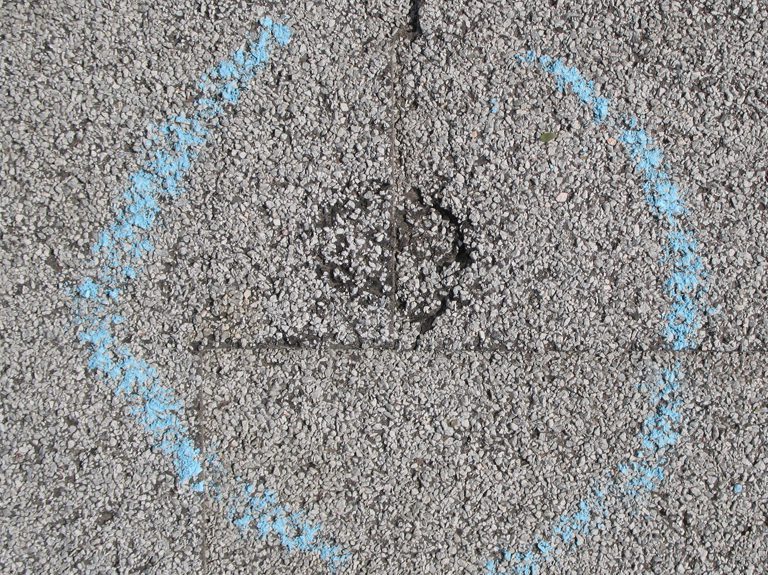
- Dents in soft metals: gutter aprons, downspouts, roof vents, flashing, AC condenser fins. Soft metals confirm and date the storm.
- Random bruising in the mat, felt with fingertips, with granule loss exposing dark asphalt.
- Creased or lifted shingles, broken seal bonds, missing tabs.
- Damage to window wraps, screens, siding and paint, which supports a full-property claim instead of a roof-only claim.
We meet your adjuster on the roof and walk it together. It isn't adversarial. It just means the damage gets counted once, correctly. More on our process on the hail and storm damage restoration page, and we run the same playbook for storm damage restoration in Dane County.
A pattern we see repeatedly in this area
Here's how these claims commonly go on an older two-story in Rock County. Summer hail comes through, the first adjuster writes one slope, skips the ice barrier and skips the gutters. We ask for a re-inspection, meet the adjuster on the roof with dated photos of dented vent caps and gutter aprons on all four elevations, and the claim gets supplemented to the full roof, plus deck overlay once the tear-off exposes gapped plank sheathing.
We won't publish a homeowner's address or claim numbers without permission. Ask us and we'll give you names, addresses and phone numbers of nearby completed roofs you can drive by and call. You can also see finished work on our recent projects page and read real feedback on customer reviews.
Straight answers on storm claims
"Will you cover my deductible?" No, and neither should anyone else. Your deductible is your obligation under your policy. The only ways to absorb it are misrepresenting the price on the invoice sent to your insurer, which can constitute insurance fraud and void your claim, or silently downgrading your roof. This is the number one storm-chaser pitch in this area.
ACV vs. RCV and the two checks. Most carriers issue the first check at actual cash value: full replacement cost minus depreciation for roof age, minus your deductible. If your policy is replacement cost value, the withheld recoverable depreciation is released after the job is complete and we submit the final invoice, photos and any supplements. Supplements cover items nobody could see from the ground, like rotten decking or extra layers. Expect two checks (three with supplements), and expect your mortgage company to be named on them.
How long do you have to report it? Two separate clocks. Your policy requires prompt notice of a loss, usually worded "as soon as practicable," and a stale report is the easiest thing for a carrier to deny because damage can no longer be tied to a specific storm date. Separately, your policy's "Suit Against Us" section and Wisconsin statute limit how long you have to take legal action on a claim, and for some property losses that window is as short as 12 months from the date of loss. Don't guess. Read those two sections or have your agent read them to you.
If the claim is denied or underpaid, you're not out of options. We request the adjuster's estimate line by line, flag missing items (ice-and-water shield, drip edge, ridge vent, code items, steep or multi-story charges), and support a reinspection or supplement with dated photos and measurements. You can also request a different adjuster or invoke the appraisal provision in your policy.
What a roof replacement costs in the Evansville area
Honest ranges, not quotes. Roofing is priced per square (100 square feet). In our market, a full tear-off and replacement with standard architectural shingles generally runs $450-$700 per square installed.
Most simple, walkable ranch roofs here measure 22-28 squares, so that math lands somewhere around $10,000-$19,500 depending on where your roof falls in that per-square range. A cut-up, steep two-story with dormers and multiple layers commonly runs $18,000-$30,000+.
What moves your number, roughly in order of weight:
- Squares (roof area), the single biggest driver.
- Pitch and access. Anything over 7/12 needs staging and slows everything down.
- Layers. Each additional layer of old shingles adds roughly $50-$100 per square in labor and landfill fees.
- Decking. Replacing or overlaying sheathing typically runs about $70-$120 per installed 4x8 sheet. Get that per-sheet price in writing before work starts.
- Class 4 upgrade. Usually a 10%-20% premium on the total versus standard architectural.
- Details. Chimneys, skylights, valleys, new flashing, ventilation corrections, gutters.
Financing and when you pay
Financing runs through third-party lenders, not through us. Typical structures are a short-term deferred-interest promotion (often 12 to 18 months) or a fixed installment loan with terms commonly in the 3 to 12 year range. Many of these lenders offer a soft-pull prequalification that shows your likely rate and payment without affecting your credit score.
Your rate, term and approval come from the lender based on your credit, not from us, so we won't quote you an interest rate. We'll show you the options with your estimate and let you apply if you want to.
We don't ask for the full amount up front. On a retail job, a deposit at contract and the balance at completion is typical. On an insurance job, most homeowners pay us the ACV check plus their deductible, then the depreciation check once the carrier releases it.
Permits and inspections in the City of Evansville
A re-roof in Evansville requires a building permit, the same as most municipalities in Rock and Dane County. We pull it. The fee appears as its own line on your estimate, and we schedule any required inspection, so you never have to call the city.
Two code items the inspector cares about in our climate: an ice barrier (ice-and-water shield) at the eaves, and a limit on how many old layers can stay on the roof. Both are reasons a cheap layover bid can fail inspection and cost you more than the tear-off would have. If a bid doesn't mention a permit at all, ask why.

Want a straight answer on your roof?
We'll inspect it, document everything, and tell you honestly what you're looking at, even if the answer is patch it for now. No pressure.
Older Evansville homes: plank decking and layers
Evansville has a lot of older housing stock around its historic downtown, and old homes bring specifics a national article won't mention.
Plank (board) decking. Many older Wisconsin homes were sheathed with 1x6 or 1x8 boards. Boards shrink, gaps open, and modern shingles need consistent nail holding, so wide gaps usually mean overlaying the planks with new sheathing. On a hail claim that gets photographed and submitted as a supplement, not sprung on you at the end.
Multiple layers. Two, occasionally three layers show up regularly on homes re-roofed since the 1970s. A layover hides rot, shortens fastener penetration and disqualifies the better warranties. We tear off to the deck.
Ice dams. Steep older roofs with retrofit insulation and marginal ventilation dam at the eaves every February. Ice barrier plus corrected soffit intake is the fix. New shingles alone just buy another cycle.
Repair or replace?
Repair when damage is isolated and the roof is otherwise sound: one wind-lifted slope, a failed pipe boot, a leaking valley, chimney flashing. Good roof repair work buys real years on a 10-year-old roof.
Replace when you see hail bruising across multiple slopes, curling and cupping, bare asphalt, granules filling the gutters, nail pops throughout, or multiple layers with active leaks.
Waiting is where it gets expensive. A pipe boot or flashing repair is a few hundred dollars of work. Left through one Wisconsin winter, that same leak becomes rotted sheathing, wet insulation, stained drywall and sometimes mold.
Can you roof in a Wisconsin winter?
Yes. We install through December, January and February, with cold-weather methods that a lot of crews skip.
- Asphalt seal strips need roughly 40-50 degrees and sun to bond on their own. Below that we hand-seal with roofing cement under the tabs per the manufacturer's instructions.
- Shingles get brittle in the cold, so bundles are kept warm and handled carefully instead of flexed and snapped.
- We never shingle over snow, frost or ice. The deck gets cleared and dry first.
- We only open as much deck as we can dry in the same day.
Should you wait for spring? If the roof is old but not leaking, waiting is fine and you'll have more scheduling choices. If water is coming in, we tarp or dry-in now and replace as soon as conditions allow. Don't sit under an active leak from November to April.
What the job actually looks like at your house
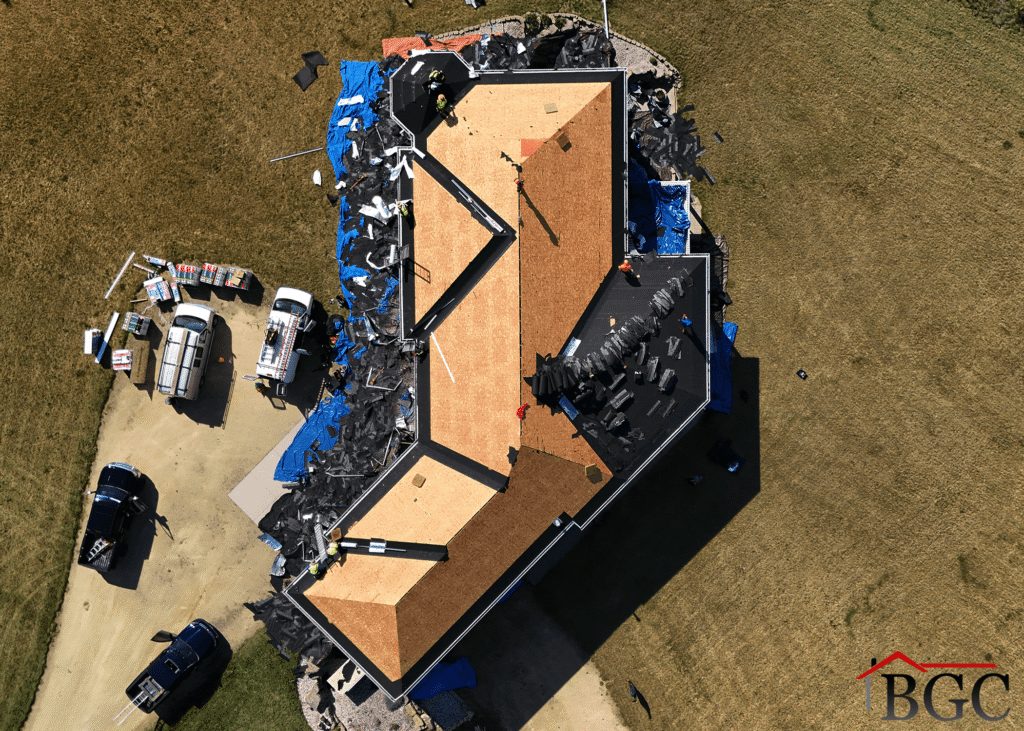
Timeline: one to three days for most homes, longer for steep, complex or decking-heavy roofs.
- Noise: it's loud. Nail guns and boots directly over your ceilings, starting early. If you work from home, take calls elsewhere. Naps and night-shift sleepers are worth telling us about so we can plan which slope we start on.
- Pets and kids: keep pets inside or off-site, because tear-off day means debris, strangers and open gates. Kids stay out of the yard while we're loading out.
- Vehicles: move cars out of the driveway and off the apron, and out of the garage if you'll need them. We need driveway access for the dumpster or dump trailer.
- Satellite dishes: we can detach and reset a dish, but aiming may need a call to your provider. Say so up front.
- Solar panels: your solar installer or an authorized company detaches and resets them. We coordinate the schedule, we don't touch the array.
- Inside: on plank-decked homes, dust sifts into the attic, so cover stored items. Pictures on walls under the work area can shift.
- Protection: tarps over landscaping and siding, plywood over windows, window wells and the AC condenser.
- Cleanup: hand pickup, then magnetic nail sweeps over drive, walks and lawn, repeated at the end. Find a nail later? Call us and we'll come sweep again.
How to vet a roofing contractor in Evansville
Storm chasers work this area hard after hail. Out-of-state plates, a door knock, a tailgate contract. Do this instead:
- Verify the credential yourself. Ask for the company's Wisconsin DSPS Dwelling Contractor credential number and look it up in the state's online license search. Two minutes, free.
- Get the certificate of insurance from the insurance agency directly, not a PDF forwarded by the salesperson. Confirm general liability and worker's comp are current.
- Ask for local references with addresses. Nearby completed roofs you can look at and homeowners you can call are the best evidence there is.
- Ask who's actually on your roof, the company's crew or a sub they've never met.
- Get the warranty in writing: which manufacturer warranty, the workmanship term, and whether it transfers.
- Get the per-sheet decking price in writing before work starts.
- Ask if they'll meet your adjuster on-site. We do.
We've been family-owned since 1979 and we handle the full exterior: roofing, siding, gutters, windows and doors, which matters when hail hits more than the roof (we're also siding contractors that work with insurance). If you want maximum storm resilience, ask about FORTIFIED roofing standards for sealed decking and enhanced edge attachment. We're through the area regularly, including Janesville, Edgerton, Oregon and Brodhead.

Get a free, honest look at your roof
You shouldn't have to guess whether you have hail damage, and you shouldn't pay to find out. Call Buckshot Exteriors at (608) 909-9109 for a free on-site inspection in Evansville. We climb the roof, check the soft metals, photograph what we find and email you the photos with a plain recommendation: repair, replace, file a claim, or leave it alone for now.
No charge, no pressure, no obligation. If your roof has five good years left, we'll say so. If a storm hit it, we'll document it properly and stand with you when the adjuster comes out. And if water is coming in right now, we offer 24-hour emergency response so it isn't running into your house while you wait.
One call, no cost, and you'll finally know where you stand.
Get a straight answer on your Madison roof
Wisconsin storm season and insurance non-renewal letters do not wait. Get a free, no-obligation inspection and an honest assessment of exactly what your roof needs, even if the answer is to wait.