
Common repairs like replacing a cracked pipe boot typically run $150-$350 in the Madison area, materials and labor. Resealing chimney flashing often falls in the $300-$600 range depending on complexity. If the leak has soaked the decking, costs climb further once rotted plywood is factored in. Ranges vary based on what we find. Get a written estimate before anyone touches your roof.
Get My Free Estimate →- What to Do Right Now (Before You Call Anyone)
- Where Roof Leaks Actually Come From
- Why the Leak Shows Up Far From the Source
- How to Tell If a Leak Is Old or New
- What Roof Leak Repairs Typically Cost in Madison
- When Repair Is Not the Right Answer
- Why Waiting Makes It Worse
- Emergency Response, Tarping, and Temporary Protection
- Should You Call Insurance or a Contractor First?
- About Our Repair Warranty
- Serving Madison and All of Dane County
- FAQs
A roof leak is not a "deal with it later" problem. If water is coming in right now, the damage is growing by the hour. Here is exactly what to do first, where leaks actually come from, what repairs typically cost in the Madison area, and when it makes sense to file an insurance claim.
What to Do Right Now (Before You Call Anyone)
Stop the interior damage first. Every minute water runs freely makes the repair bill bigger.
Move your belongings. Pull furniture, electronics, and anything you care about out of the wet zone. Water will keep traveling even after the rain stops.
Catch the water. Put buckets down, but also lay plastic sheeting or old towels under the drip area to protect your floors and subfloor.
If your ceiling is bulging, you may be able to drain it. A ceiling full of pooled water can collapse under its own weight. If you are comfortable doing this and you are confident there is no electrical wiring, plumbing, or fixtures directly above the bulge, you can use a screwdriver to poke a single small hole at the lowest point and let it drain in a controlled way into a bucket. If you have any doubt about what is above that ceiling, if the water looks discolored, or if you smell anything burnt, stop and call a professional. It is not worth the risk.
Take photos and video. Document the wet ceiling, the stain, any visible roof damage, and the date. Your insurance company will ask for this, and so will we.
Do not go on the roof in rain or wind. A wet roof is dangerous. Wait until conditions are safe, and let a professional handle the inspection.
Where Roof Leaks Actually Come From
Here is something most homeowners do not know: the vast majority of roof leaks do not start in the middle of a shingle field. They start at edges, penetrations, and transitions.
Flashing Failures
Flashing is the metal that seals joints where your roof meets something else: a chimney, a wall, a skylight, a dormer. It expands and contracts with Wisconsin's dramatic temperature swings, and over time the sealant cracks, the metal lifts, or the original installation was simply done poorly. This is the single most common source of leaks we find in Madison homes.
Pipe Boots and Vent Penetrations
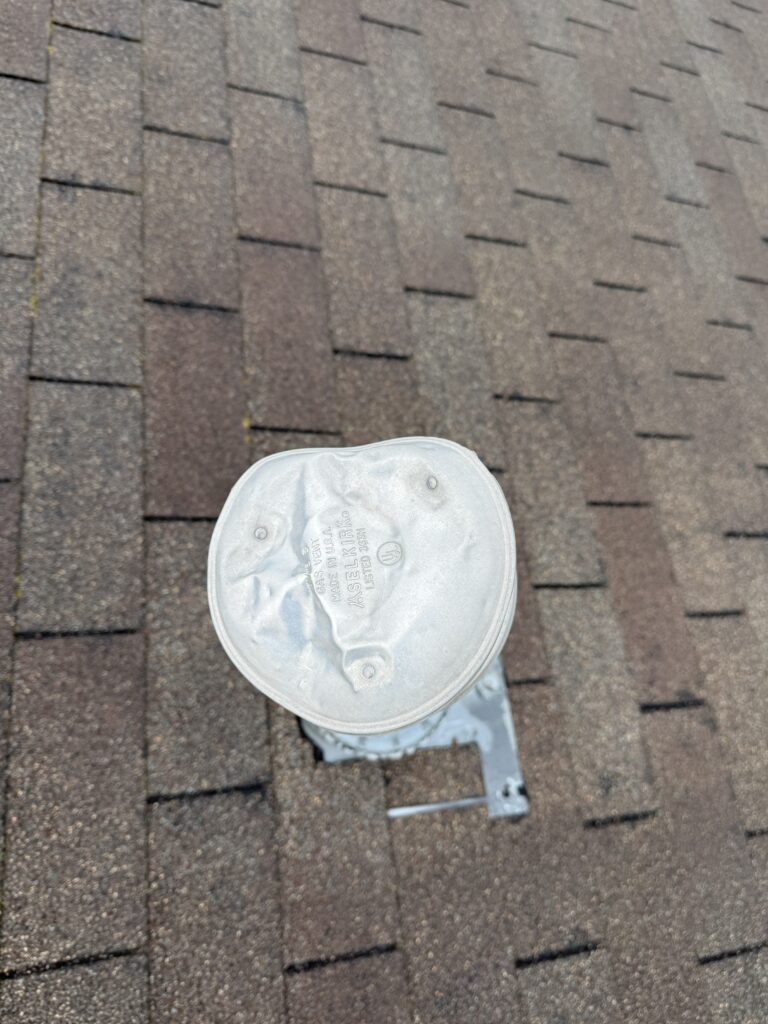
Every plumbing stack and exhaust vent that pokes through your roof has a rubber or metal collar (called a pipe boot) sealing it. The rubber ones crack and harden after years of UV exposure and our freeze-thaw cycles. A cracked pipe boot is a quick fix for an experienced roofer. Left alone, it soaks your decking and insulation for months before you notice anything inside.
Valleys
A roof valley is where two slopes meet. Water concentrates there. If the valley flashing is undersized, improperly installed, or the shingles have worn through, that concentrated flow will find a way in.
Ice Dams
Madison winters are hard on roofs. When heat escapes through a poorly insulated attic, it melts snow on the upper roof. That water runs down and refreezes at the cold eaves, building a dam. Water backs up behind the dam and forces its way under shingles. You will often see the leak show up at an exterior wall or ceiling near the eaves, sometimes weeks after the ice dam formed. Proper attic insulation and ventilation are the real fix. A residential roofing inspection will catch ventilation problems that make ice dams worse every year.
Worn or Missing Shingles
This is the one homeowners usually suspect first, and it does happen. Wind-lifted shingles, hail-cracked shingles, or shingles that have simply reached the end of their life can let water in. But even here, the leak path usually travels well away from where the shingle is damaged.
Why the Leak Shows Up Far From the Source
Water follows the path of least resistance. It enters at one point, runs along the roof decking or a rafter, and drips down wherever it finds a gap. A stain in your hallway may trace back to a flashing seam near your chimney fifteen feet away. This is why a visual ceiling inspection is only the starting point. Tracing the real entry point takes experience and usually involves checking the attic with a flashlight.
We have found leaks in Madison homes where the water traveled eight to ten feet before it ever showed up on a ceiling. Do not let a contractor caulk the spot directly above your stain and call it done.
How to Tell If a Leak Is Old or New
This matters more than most homeowners realize, especially if you are thinking about an insurance claim.
A fresh leak typically shows a dark, wet stain with soft or damp drywall. The paint may be bubbling or the ceiling may feel spongy. If you press on it, it gives. There may be active dripping or a musty smell that just started.
An older leak looks different. The stain is usually brown or yellowish and has a defined ring around it where the water dried repeatedly. The drywall feels firm but may be stained in layers. You might see mold or mildew starting at the edges of the stain. The smell tends to be more persistent and musty rather than sharp and fresh.
Why does this matter for insurance? Insurers generally cover sudden, accidental damage. A stain that clearly shows repeated wetting over months is harder to tie to a single storm event. If you see a stain you do not recognize and are not sure how old it is, document it immediately with photos and timestamps before anything dries out further or gets disturbed.
What Roof Leak Repairs Typically Cost in Madison
Repair costs vary based on what failed and how much damage the water caused before you caught it. The ranges below reflect what we commonly see in the Madison area, though your actual cost depends on what we find when we get on the roof.
- Pipe boot replacement: roughly $150-$350 per boot, materials and labor
- Flashing resealing (chimney, skylight, dormer): often $300-$600 depending on complexity
- Small shingle section repair: varies by scope and shingle match
- Valley repair or re-flashing: depends on valley length and flashing type
- Rotted decking replacement: priced per sheet of plywood plus labor; costs add up quickly if multiple sheets are affected
- Full chimney flashing replacement: higher end of the repair range, depending on chimney size
Any contractor who quotes you a firm price over the phone without seeing the roof is guessing. Get a written estimate after an in-person inspection.
One thing that is consistent: the longer a leak goes unaddressed, the more those numbers grow. Wet decking, soaked insulation, and mold remediation can turn a modest repair into a much larger project.
When Repair Is Not the Right Answer
Most leaks are worth repairing. But there are situations where a repair is throwing good money at a roof that is already at the end of its life.
If your asphalt shingle roof is 20 years or older and showing widespread granule loss, cracking, or curling, a single repair may stop one leak while three more develop within a season. At that point, a full replacement often makes more financial sense than patching. We will tell you honestly which situation you are in after we inspect the roof. We are not going to sell you a replacement when a repair will hold, and we are not going to sell you a repair when the roof needs to come off.
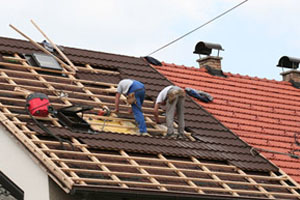
Want a straight answer on your roof?
We'll inspect it, document everything, and tell you honestly what you're looking at, even if the answer is patch it for now. No pressure.
Why Waiting Makes It Worse
A small leak does not stay small. Here is the chain of damage that happens when water sits:
- Roof decking (the plywood under your shingles) gets wet, softens, and rots. Replacing decking adds significant cost to any repair or replacement.
- Attic insulation soaks up water and loses most of its R-value (its ability to slow heat transfer). Wet insulation also becomes a breeding ground for mold.
- Mold can begin growing in wet insulation or drywall surprisingly fast in warm conditions, especially during Madison's humid summers. Once mold gets into wall cavities or ceiling framing, remediation costs can dwarf the original roof repair.
- Drywall and ceiling finishes stain, sag, and eventually fail.
We see this regularly in Dane County homes where a slow leak went unnoticed for a full season. Catching it early is almost always the cheaper path.
If you have an active leak or a suspicious ceiling stain, do not wait to find out how bad it is. Contact Buckshot Exteriors for a free inspection. We serve Madison and all of Dane County and aim to respond the same day for active leaks.
Emergency Response, Tarping, and Temporary Protection
For active leaks, we aim to have someone out the same day you call, often within a few hours depending on weather and current call volume. We will be straight with you about timing when you call.
If the damage is significant and conditions prevent a permanent repair right away (a major storm, wet decking that needs to dry, or materials that need to be ordered), we can install a temporary tarp to stop water intrusion until the permanent repair is completed. This is not a long-term solution, but it protects your home and your interior while we get the right fix scheduled. Ask about this when you call.
Should You Call Insurance or a Contractor First?
Call a contractor first, or at minimum at the same time you call your insurer.
Here is why the order matters. If you file a claim before you have solid documentation, and an adjuster shows up before a contractor has assessed the damage, secondary damage to decking and flashing can be missed or misclassified. A roofer who knows what storm damage looks like can document the full scope of what is there before anything gets disturbed or covered up.
Wisconsin homeowner's insurance generally covers sudden, accidental damage: hail, wind, a falling tree limb, or storm-driven rain that lifts flashing. Gradual deterioration, age-related wear, or neglected maintenance usually are not covered.
If your leak followed a storm, that changes the conversation. Storm damage in Dane County is something we deal with constantly. We will document what we find and meet your insurance adjuster on-site so nothing gets missed in the inspection.
A few things adjusters pay attention to:
- Date and photos of the damage
- Whether the damage is consistent with a specific storm event
- The condition of the rest of the roof (age, prior maintenance)
- Whether the decking and interior have secondary damage from the leak
Having a contractor present who knows what to look for and how to document it thoroughly can help ensure the full scope of damage is captured in the adjuster's report.
About Our Repair Warranty
A common question we hear: "If it leaks again in the same spot, do you come back?"
Yes. We stand behind our repair work. If the area we repaired leaks again, call us and we will come back out. Specific warranty terms vary depending on the type of repair and the materials involved, so ask about coverage when we give you the written estimate. We will put it in writing.

Serving Madison and All of Dane County
Buckshot Exteriors has been doing this work since 1979. That is 47 years of Wisconsin winters, spring storms, and ice dams. We work throughout Madison, Middleton, Sun Prairie, Verona, Fitchburg, Stoughton, DeForest, Waunakee, and the surrounding Dane County communities. If you are not sure whether we cover your area, just call.
Want to see how other homeowners in the area have experienced working with us? Read through our customer reviews. Real people, real projects.
A roof leak is stressful. The good news is that most are fixable quickly and affordably when you catch them early. The bad news is that every day you wait, the damage gets worse and the repair gets more expensive.
Call Buckshot Exteriors today for a free roof inspection. We will find the source, give you a straight answer about what it costs to fix, and handle the insurance side if a storm is involved. For active leaks, we aim to respond the same day. No runaround, no pressure. Just honest work from a family-owned company that has been taking care of Wisconsin homes since 1979.
Get a straight answer on your Madison roof
Wisconsin storm season and insurance non-renewal letters do not wait. Get a free, no-obligation inspection and an honest assessment of exactly what your roof needs, even if the answer is to wait.