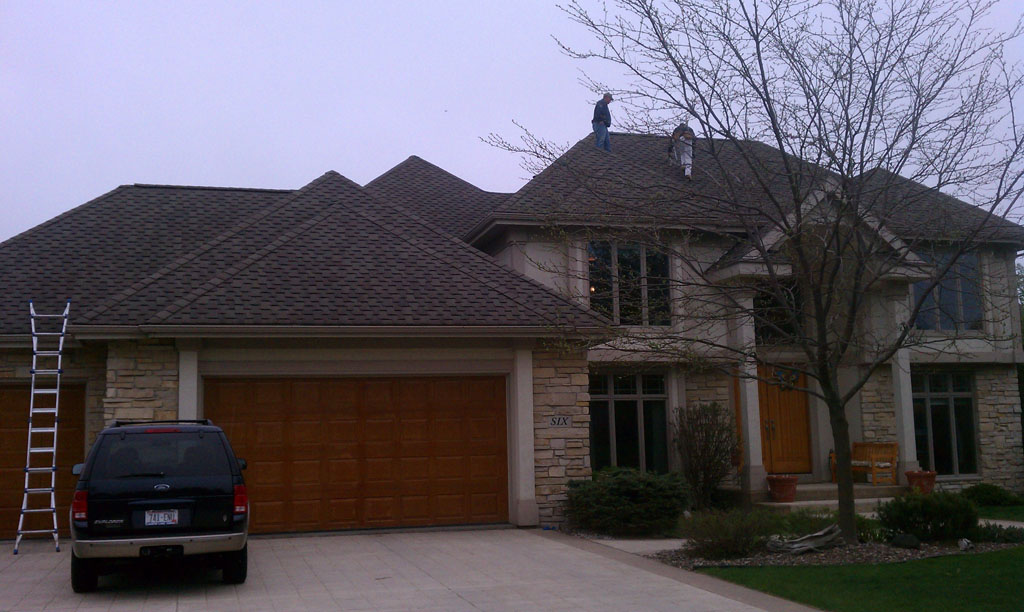
It depends on what is feeding the damage. Rough order-of-magnitude anchors on Dane County homes: a cracked pipe boot or small flashing repair is commonly a few hundred dollars, chimney or step flashing rebuilds run higher, roof decking replacement is priced per 4x8 sheet on top of the roof work, and a leak that ran for two or three winters (decking, shingles, wet insulation removal, sometimes drywall) gets into the thousands. A full architectural shingle replacement on most Madison homes lands in the five figures. A free inspection with photos tells you which bucket you are in, at no cost and no obligation.
Get My Free Estimate →- What each attic warning sign actually means
- Which problems are roof work, and who fixes what
- Why attic damage is a symptom, not the disease
- What air sealing and balanced ventilation actually buy you
- What attic repairs cost, and how people pay for them
- Repair or replace? A checklist you can run yourself
- Timeline, winter work, and living in the house
- Older Madison attics: two hazards to identify before insulation work
- What you can safely do yourself
- Insurance, mold coverage, and getting your claim prep right
- If the attic problem showed up in a home inspection
- Licensing and warranty, plainly
- Get someone up there before winter does more damage
- FAQs
If you just stuck your head into the attic and found dark stains, frost, crumbling wood, or matted-down insulation, here is the short version: attic damage is almost always a symptom, and the cause is usually above you on the roof or in the ventilation. Repairing the attic without fixing what is feeding it is money thrown away.
We have been crawling through attics in Madison, Sun Prairie, Verona, Middleton, Stoughton and the rest of Dane County since 1979. The same handful of problems show up over and over in Wisconsin houses, and each one tells you something specific. Let's decode what you are looking at, who fixes what, what it realistically costs, and what you can safely touch yourself.
What each attic warning sign actually means
Different symptoms have different causes. Match what you saw to this list before you call anybody.
Water staining or streaks on the sheathing
That is a leak above, almost certainly. Look at where the stain sits. If it runs down from a nail or a seam, water is getting past the shingles or underlayment. If it circles a pipe, vent stack, or chimney, the flashing or boot has failed. Cracked rubber plumbing boots are one of the most common leaks we find, and they are cheap to replace before they rot the deck.
Stains in a band near the eaves usually mean ice damming. Snow melts over the warm part of the roof, refreezes at the cold overhang, and backs water uphill under the shingles. Fixing that is a two-part job: stop whatever is warming the roof deck, and get ice-and-water shield down at the eaves the next time the roof is opened up.
Frost or dripping on the underside of the roof
That is condensation, not a roof leak. Warm humid air from your house is leaking into a cold attic and freezing on the sheathing and nail tips. During a January thaw it melts and rains on your insulation, and homeowners understandably think the roof failed.
The real culprits: bath fans venting into the attic instead of outside, unsealed can lights, open top plates, a leaky attic hatch, and unbalanced ventilation between soffit intake and ridge exhaust. We looked at a 1950s Cape on the near west side last winter with frost across every nail point. It had a new ridge vent fighting two wide-open gable vents, so the ridge was pulling air sideways from the gables instead of up from the soffits. The soffit bays had never been baffled. Nothing was wrong with the shingles at all.
Soft, spongy, or delaminating decking
Wood that flexes under your hand or shows separating plywood layers is past drying out. It gets cut out and replaced. If the OSB looks like shredded wheat or you can see daylight, stop walking on that roof and call somebody.
Wet, compressed, or blackened insulation
Soaked insulation loses most of its R-value permanently, especially blown fiberglass and cellulose that has settled into a dense mat. It also holds moisture against your framing. Wet insulation gets removed, not dried in place.
Mold on the sheathing, usually the north slope
North-facing sheathing stays coldest and dries slowest, so that is where growth starts. It confirms the attic has been running humid through multiple winters. Treat the moisture source or it comes right back after cleaning.
Pest damage at soffits and gable vents, and the bat rule
Squirrels and mice chew soffit corners, push through torn gable vent screens, and tunnel through insulation. On older Madison homes with wood soffits we see it constantly.
Bats are a different situation legally. All Wisconsin bat species are protected, and exclusion work is restricted during the summer maternity period (roughly June 1 through August 15) because sealing openings then traps flightless pups inside. Do not caulk or screen a bat entry on your own. Bring in a licensed wildlife professional for the exclusion, and we repair the soffit, fascia and vent screens after.
Which problems are roof work, and who fixes what
Homeowners get bounced between trades on this, so here is exactly how it splits, and who manages the sequence.
Our crews do:
- Leak diagnosis and roof repair (shingles, valleys, step flashing, chimney counterflashing, pipe boots)
- Cutting out and replacing soft or rotted roof decking
- Ice-and-water shield at eaves and valleys during a re-roof
- Soffit intake vents, baffles, ridge vent, gable vent corrections
- Damaged soffit, fascia and gutters dumping water where it does not belong
- Storm damage documentation for insurance
We coordinate and itemize on our estimate:
- Removing wet insulation and re-blowing to depth
- Air sealing the ceiling plane (top plates, wire penetrations, chases, can lights)
- Ducting bath and kitchen fans all the way outside
That insulation and air-sealing work runs through insulation partners we have used for years. It goes on our estimate and we schedule it in the right order after our roof work, so you make one call instead of three.
You contract directly (we tell you who and time our work around them):
- Live animal removal before entry points get closed
- Mold remediation when growth has moved into conditioned living space
Order matters: stop the water, fix the airflow, then insulate. Current Wisconsin Uniform Dwelling Code ceiling insulation requirements (SPS 322) commonly work out to about R-49 in our climate zone, and most attics we rebuild land in the R-49 to R-60 range. Blow that in before the leak and ventilation are fixed and you will be buying it twice.
Why attic damage is a symptom, not the disease
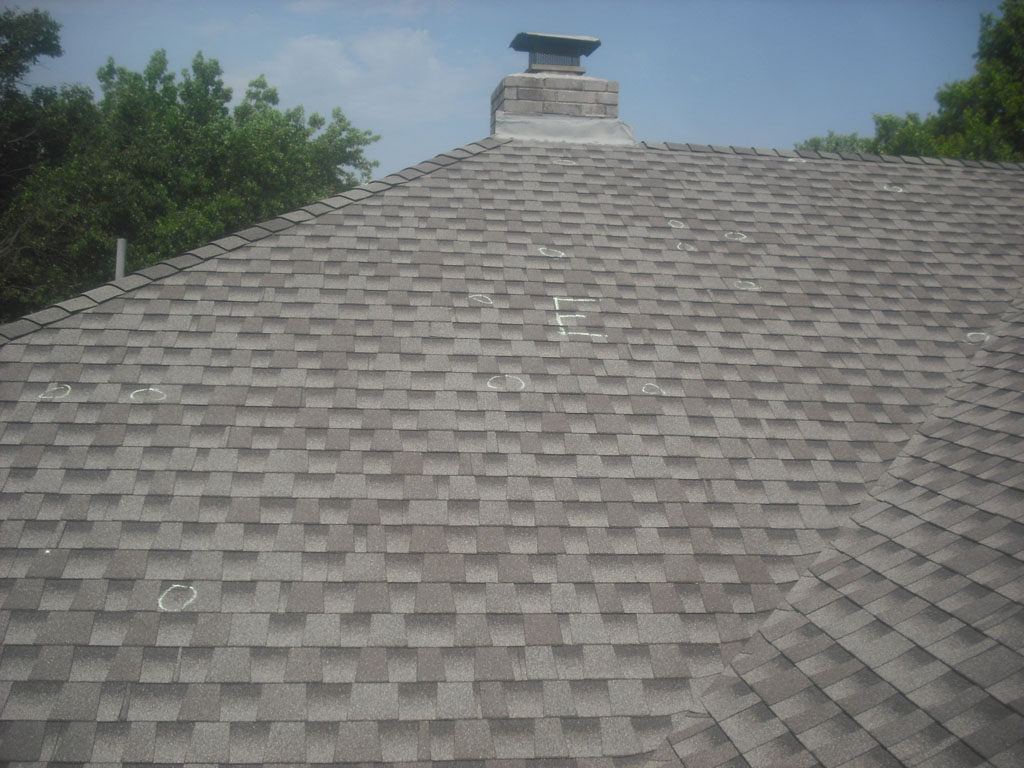
In most of the attic calls our crews run, the actual repair happens on the roof.
Follow the chain. A pipe boot cracks in year 12. Water trickles down a rafter for two winters, nobody notices, the sheathing goes soft, the insulation below stays damp, and eventually a brown ring shows up on the guest bedroom ceiling.
By then you are not paying for a boot. You are paying for decking sheets, shingle work, insulation removal, and drywall. That is not a scare tactic, it is how wood and water behave. A Stoughton ranch we did last fall needed 14 sheets of decking replaced from one failed valley that had been quietly leaking since at least 2019.
If you are not sure which problem you have, a set of eyes up there settles it in about half an hour. The inspection is free, there is no obligation, and you keep the photo report even if you hire someone else with it. Call our office (the number is at the top of this page) during business hours, or request a free attic and roof inspection any time. After hours that same line reaches our 24-hour emergency response, subject to storm volume and safe conditions.
What air sealing and balanced ventilation actually buy you
Two things: an upstairs that holds temperature, and ice dams that stop coming back.
Air sealing is the part people skip and the part that matters most. Every gap at a top plate, wire hole, chase or attic hatch is a chimney pulling heated air out of your living space all winter. Plug those, then restore real soffit intake with baffles and matched ridge exhaust, and the roof deck runs cold.
A cold deck is the whole ice dam prevention strategy. Melt-and-refreeze at the eaves needs a warm roof to happen. Take away the warm roof and the cycle mostly stops, which also protects the shingles above and the drywall below.
Most homeowners notice comfort before they notice the bill: the bedroom over the garage finally stays warm, the furnace cycles less, the second floor is not 8 degrees colder in February. Actual dollar savings depend on how leaky your ceiling plane was to start with, and most Madison attics we open are leaking plenty. Anyone who promises you a specific percentage off your gas bill is guessing.
What attic repairs cost, and how people pay for them
We will not quote your roof from a blog post, but you deserve honest anchors instead of "it depends."
- Pipe boot or small flashing repair: commonly a few hundred dollars.
- Chimney counterflashing or step flashing rebuild: meaningfully more, since it is masonry-adjacent detail work.
- Roof decking replacement: priced per 4x8 sheet on top of the roof work above it. Two bad sheets is a rounding error. Fourteen is not.
- Wet insulation removal and re-insulation to code depth: typically well into four figures, depending on attic square footage and whether it is fiberglass or cellulose.
- A leak that ran for multiple winters: decking, shingles, insulation, sometimes drywall. Thousands, not hundreds.
- Full asphalt shingle roof replacement: most Dane County homes land in the five figures with architectural shingles.
What moves the number: roof pitch and stories, how many decking sheets are gone, layers of existing shingles (a two-layer tear-off costs more to remove and dispose of), chimney or skylight involvement, and insulation removal.
On paying for it: we take normal payments, and for larger jobs financing through third-party lenders is available. That requires a credit application, and the practical upshot is a five-figure replacement becomes a monthly payment instead of one check. You see the rate and term in writing before you sign anything, and if you would rather not finance, ask us about staging the work so the leak gets stopped now and the cosmetic scope waits.
Repair or replace? A checklist you can run yourself
Age. Under 15 years on a decent architectural shingle, repair is usually right. Over 20, patching a failing system rarely pays.
- Number of leak points. One isolated leak is a repair. Three or four separate active leaks means the system is done.
- Granule loss. Bald spots, gutters full of granules, and shingles that crack instead of flex point to replacement.
- Decking condition. Widespread soft sheathing means the roof is coming off anyway.
- Layers. Two or more existing layers usually forces a full tear-off rather than a spot repair.
- Ventilation. If the attic has been running humid for years, the shingles have been aging from underneath too.
Don't know how old your roof is? Most people don't. Check the City of Madison or your municipality's permit records (re-roofs are permitted and searchable), ask the seller's disclosure from your closing packet, look for a shingle wrapper, chalk date or leftover bundle in the attic or garage, or check whether a prior owner filed a hail claim. Three consistent sources and you have a working roof age.
If you land on replacement, asphalt shingle roof replacement with proper baffles, ice-and-water shield and balanced ventilation solves the attic problem at the same time. If you land on repair, we say so, in writing.
Timeline, winter work, and living in the house
Free inspections in the Madison area are usually within a day or two. Active water intrusion gets same-day attention for tarping when weather and crew availability allow.
Flashing, decking, vent and emergency work all happen in winter. Asphalt shingles will not self-seal below roughly 40 degrees, so we hand-seal cold-weather repairs and sometimes recommend holding a full replacement for spring while keeping the leak stopped.
A boot or flashing repair is often a few hours. A section of decking with shingle tie-in is typically one to two days. Insulation removal adds a day, occasionally two.
We only open a ceiling if the drywall is already compromised or we need it to dry the cavity, and we tell you before we cut. You stay in the house for almost every attic repair, with the insulation-removal caveat noted above.
Want a straight answer on your roof?
We'll inspect it, document everything, and tell you honestly what you're looking at, even if the answer is patch it for now. No pressure.
Older Madison attics: two hazards to identify before insulation work
Madison has a lot of pre-1950 housing stock, and two things in those attics get identified first.
Vermiculite insulation. Loose, gray-brown, pebbly material that looks like tiny accordions may be vermiculite, some of which contains asbestos. Do not disturb it, do not vacuum it, do not rake it aside to "just look at the decking." It gets sampled and tested by a qualified lab.
Knob-and-tube wiring. Ceramic knobs and cloth-covered conductors are not rated to be buried in blown insulation. That is an electrician's call before anything goes back down.
We flag both during inspection. A contractor who blows insulation over either one is cutting a dangerous corner.
What you can safely do yourself
Reasonable DIY, if you can move around safely on the joists: duct a bath fan fully to the outside, weatherstrip and insulate the attic hatch, carefully clear one blocked soffit bay and install a baffle, add a depth marker so you can see settling.
Leave alone, every time: walking on spongy decking or working on a winter roof, disturbing suspected mold or bleaching sheathing (that hides it, it does not fix it), touching suspected vermiculite or anything near knob-and-tube, sealing a bat entry, and pulling soaked insulation before you know what is in it.
Insurance, mold coverage, and getting your claim prep right
If a hail or wind event tore up your roof and water got in, interior evidence matters. We meet your adjuster on site and walk the attic with them, because interior damage from a covered storm damage event is frequently missed on a fast exterior-only scope.
Long-term seepage and ventilation condensation are usually excluded as maintenance. So is mold, in most Wisconsin policies, or it is capped at a modest amount and only when it follows a sudden covered loss you reported promptly. We tell you which situation you are in before you call your carrier, because a denial on your record buys you nothing.
Before you file, have this ready:
- The storm date (Dane County hail and wind dates are easy to verify, and adjusters check them)
- Date-stamped photos of the attic, the ceiling stains and any interior damage, taken now
- Your wind and hail deductible amount, which on many Wisconsin policies is a percentage of dwelling coverage, not a flat $1,000
- Receipts for any emergency work, tarping or water cleanup
- Facts only when you talk to the adjuster: what you saw, when you saw it, when the storm hit. Do not guess at causes or ages, and do not volunteer "it's probably been leaking for years" when you don't actually know.
Anyone offering to "eat your deductible" is proposing insurance fraud. Show them the door, along with anyone who cannot produce a local address, a Wisconsin dwelling contractor credential, proof of liability and workers' comp, and photos of your attic instead of stock damage.
If the attic problem showed up in a home inspection
This one has a clock on it. When a buyer's inspector flags stained sheathing, frost or mold during the contingency period, you usually have days, not months, and the buyer's lender may want proof the moisture source was corrected before closing.
Get an inspection and a written scope fast, with photos and a cause statement (leak versus condensation) separated from the repair price. That document is what lets you negotiate a specific credit or repair instead of a buyer's worst-case guess. If you are the buyer, ask for the invoice and the warranty paperwork, not just a verbal "it's been fixed."
We turn these around quickly for Madison-area agents and sellers, and the report is yours to hand to the other side.
Licensing and warranty, plainly
We are locally owned since 1979, licensed and insured, and a GAF Master Elite contractor. Every estimate spells out the manufacturer warranty on materials and our workmanship warranty in writing.
Workmanship terms vary by scope, and any contractor who quotes you one number for everything is hand-waving: a pipe boot replacement does not carry the same term as a full tear-off with new decking, underlayment and ventilation. On full replacements we can register enhanced GAF system warranties that cover workmanship as well as materials, and those are transferable to a buyer if you sell (there are registration and timing rules, and we hand you the paperwork). Ask us for the specific term on your specific job and get it on the estimate before you sign.
You can read what your neighbors say in our customer reviews.
Get someone up there before winter does more damage
No pressure pitch, and it costs nothing to find out. We look at your attic and your roof, take photos, tell you plainly whether it is a leak, a ventilation failure, pests, or normal aging, and give you a written estimate only if repairs are actually needed. If nothing needs doing, we say so and leave, and the photo report is yours to keep either way, even if you hire someone else.
Frost, stains, soft decking and wet insulation do not fix themselves, and every south-central Wisconsin freeze-thaw cycle makes the repair a little bigger. Call our office at the number listed at the top of this page during business hours, or request your free attic and roof inspection any time. If water is coming in right now, call and say so, and we will get someone out as fast as conditions and the storm queue allow, day or night.
Get a straight answer on your Madison roof
Wisconsin storm season and insurance non-renewal letters do not wait. Get a free, no-obligation inspection and an honest assessment of exactly what your roof needs, even if the answer is to wait.