
Most single-location flashing repairs in south-central Wisconsin land between about $300 and $2,500, with the typical one-spot repair between $500 and $1,200. A pipe boot replacement sits at the low end, step flashing along a wall or a valley re-flash falls in the middle, and a full chimney re-flash with new counter-flashing cut into the mortar runs roughly $900-$2,500. Steep pitch, a second or third story, a tall stone chimney needing scaffold, and hidden rot all push the number up. We give you a written price after we look, not a guess over the phone.
Get My Free Estimate →- Water Coming In Right Now? Do This First
- What Roof Flashing Is (And Every Place It Lives)
- Why Flashing Fails Here
- How to Tell a Flashing Leak From Something Else
- Why Caulk Is a Patch and Re-Flashing Is the Fix
- What Flashing Repair Costs in Madison and Dane County
- Should You Even File an Insurance Claim?
- How We Prove the Leak Is Actually Fixed
- Mold, Wet Insulation and Your Ceiling
- Permits, Cleanup, and What We Have to Touch
- Warranty, License and Who's Actually on Your Roof
- Flashing on a Re-Roof: The Corner-Cut to Watch For
- Aluminum, Galvanized Steel or Copper
- Get Eyes On It Before Winter Does the Talking
- FAQs
If somebody looked at your leak and said "it's the flashing," they were probably right. Of the roof leaks we diagnose around Madison, Middleton, Sun Prairie, Verona and Fitchburg, most trace back to flashing, not to the age or brand of the shingles.
Here's the short version. The wide open field of a shingle roof rarely fails. The transitions fail. Anywhere your roof runs into a wall, a chimney, a skylight, a vent pipe, or another roof plane, there's a piece of sheet metal doing the waterproofing. That metal is flashing. When it's wrong, missing, rusted, or reused from the last roof, water gets in.
Flashing repair is usually one of the cheaper fixes in roofing. It's also one of the most commonly botched, and a leak you ignore for a season turns a $600 repair into decking, insulation and drywall work.
Water Coming In Right Now? Do This First
Five minutes of triage protects your house, your safety and your claim. Do these in this order.
- Kill power to the area first. If water is anywhere near a light fixture, ceiling fan or outlet, shut that circuit off at the panel before you touch anything or put a ladder up.
- Catch it and move your stuff. Bucket or tote under the drip, towels around it, and get furniture, electronics and boxes out of the path.
- Draining a bulging ceiling: only if it's safe. If drywall is sagging with trapped water and the area is clear of any fixture or wiring, a small hole at the low point with a screwdriver lets it drain into a bucket instead of the whole ceiling coming down. If the bulge is near a light or fan, or you're not sure what's behind it, do not puncture it. Call us and we'll handle it.
- Photograph everything. Wide shots and close-ups of the stain, the drip, the wet insulation and any damaged belongings. If this becomes a storm claim, those photos are worth real money.
- Stay off the roof. Wet shingles, frost and snow are how people end up in the ER. In cold weather you can crack shingles just by walking on them.
- Then call. Active leaks get priority, day or night: {{PHONE}}.
What Roof Flashing Is (And Every Place It Lives)
Flashing is thin sheet metal installed at roof transitions to direct water back onto the shingles and out to the gutter. It works by overlap and gravity, not by glue. That distinction matters more than anything else on this page.
Walk your roofline and you should be able to name all of these:
- Step flashing. Individual L-shaped pieces woven in with the shingles wherever a sloped roof meets a vertical wall, like along a dormer. Each piece steps up the wall with the shingle courses. This is the number one flashing leak we find.
- Valley flashing. The metal channel where two roof planes meet. It carries the most water on your roof, so it wears first, and it's where ice sits longest.
- Chimney flashing and counter-flashing. Base and step flashing at the chimney, plus counter-flashing that gets cut into a mortar joint and bent down over the top. Counter-flashing surface-mounted with a bead of caulk instead of cut in is a red flag.
- Pipe boots. The rubber collars around plumbing vents. The rubber dry-rots and cracks, usually around year 12-18 in our climate. Cheap to fix, extremely common.
- Skylight flashing. Head, sill and side flashing, ideally the manufacturer's own kit. Skylights get blamed for leaking when it's really the flashing around them.
- Drip edge. The metal along eaves and rakes that keeps water from curling back under the deck and rotting the fascia. Current Wisconsin Uniform Dwelling Code roof-covering requirements (SPS 321) call for drip edge on new asphalt shingle roofs; your local building inspector has the final word on specifics. Older homes often have none at all.
- Kickout flashing. A small diverter at the bottom of a roof-to-wall intersection that throws water into the gutter instead of behind the siding.
The Missing Kickout: The Leak You Never See
A missing kickout is the classic cause of hidden wall rot, and we find it on homes all over Dane County, including fairly new construction.
Picture a garage or dormer roof that runs downhill and dead-ends into a wall. All the water off that plane funnels to one spot. Without a kickout, it doesn't turn into the gutter. It runs behind the siding and soaks the sheathing, housewrap and framing.
No ceiling stain. No drip. Nothing to warn you. Then someone pulls siding for a project years later and finds black, spongy OSB. We've opened walls in this market where the sheathing came off in chunks and the bottoms of the studs had gone soft.
If you have any roof-to-wall intersection on your home, it deserves ten minutes on a ladder. It's one of the first things we check.
Why Flashing Fails Here
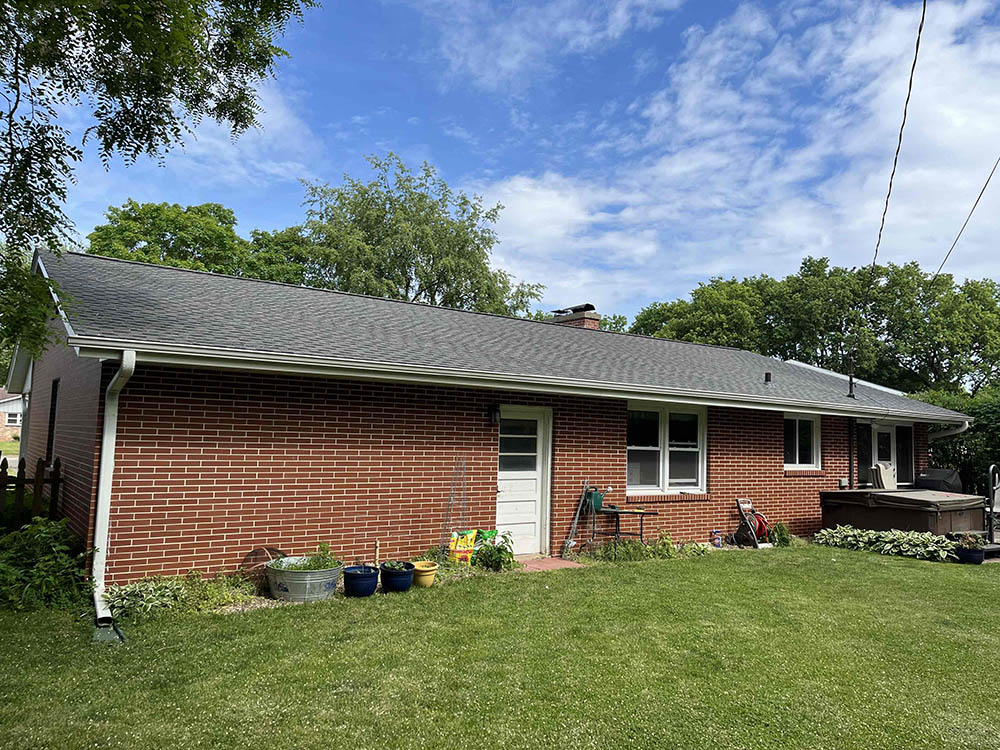
Flashing fails because it lives at the seams, and seams move. Metal expands and contracts, and Wisconsin gives it a brutal workout: 95 degrees in July, 15 below in January, freeze-thaw cycles all winter.
The failure modes we see over and over:
- Sealant-dependent installs. Caulk or black roof cement used instead of proper overlap. Looks fine for two years, then cracks.
- Rusted galvanized flashing. Old galvanized steel rusts through, especially in valleys where wet leaves sit.
- Nails through the face. Fasteners driven where water runs are just holes.
- Reused flashing under a new roof. More on that below.
- Ice damming. When a valley or roof-to-wall area ices up, water backs up under the flashing and finds every nail hole. That's why some homes only leak in February.
- Storm damage. Hail dents and dislodges flashing, and wind lifts step flashing off the wall. Flashing damage often gets overlooked next to shingle damage, which is why we walk the roof with your adjuster on hail and wind storm damage claims.
How to Tell a Flashing Leak From Something Else
Start with where the water shows up inside, then look at what's directly above it.
Points to flashing:
- Stain near a chimney chase, skylight, or a wall a roof runs into
- Water only during wind-driven rain from one direction
- Leaks that only appear during a winter thaw
- The same spot, every single time
Points elsewhere:
- Stains mid-ceiling with no penetration above (worn field shingles, storm damage, nail pops)
- Damp spots near bath fans with no roof issue (condensation off an uninsulated duct, very common in Wisconsin attics)
- Stains high on a wall only in winter (attic frost and ventilation, not a roof leak at all)
Real diagnosis means someone gets in the attic and traces the path, because water runs along rafters and sheathing before it drops. The stain is almost never directly under the hole.
Not sure what you're looking at? Call {{PHONE}} and we'll come out and tell you straight, free, no pressure. If it's a $350 pipe boot, that's what we'll say.
Why Caulk Is a Patch and Re-Flashing Is the Fix
Sealant has a place in roofing. It is not a substitute for correctly installed metal.
Caulk and roof cement cure hard, then move at a different rate than the aluminum or steel they're stuck to. Add UV and 100+ degrees of annual temperature swing and they crack and let go. Two years, three if you're lucky.
A proper re-flash means removing shingles and often a course or two of siding, installing new metal with correct overlap and correct fastener placement, then reinstalling shingles over it so water sheds naturally. Sealant is used only where the manufacturer specifies, as backup.
Here's how to spot a shortcut: if the previous "repair" is a black smear you can see from the driveway, it wasn't a repair. It was a delay.
What Flashing Repair Costs in Madison and Dane County
Typical Madison-area flashing repair cost: $300-$2,500 per location, with most single-spot repairs landing between $500 and $1,200.
- Pipe boot replacement: roughly $300-$550 for one, less each if we do several at once
- Step flashing section along a wall: roughly $500-$1,200 depending on length and siding removal
- Valley re-flash: roughly $700-$1,800 depending on length and shingle condition
- Chimney re-flash with cut-in counter-flashing: roughly $900-$2,500
- Adding kickout flashing: often $250-$600 if we're already working that area
- Drip edge added at eaves: priced by linear foot, usually best done at re-roof
These are ranges, not a quote. What pushes a job to the top of the range or past it: pitch steeper than about 7/12 (roof jacks and harness work), a second or third story, a tall brick or stone chimney that needs scaffold, brittle sun-faded vinyl siding that has to come off, and rot found once we open things up.
On the rot question everybody worries about: we quote decking replacement at a stated price per sheet up front, and nothing extra gets done without a written change order you approve first. No surprises on the invoice you didn't sign for.
Paying for it. For repairs in the $1,000-$2,500 range we can typically structure it as a modest deposit with the balance due on completion, so you're not fronting the whole amount. On larger projects we have financing available through a lending partner, and you'll see the actual rate, term and monthly payment in writing before you commit to anything. On an approved storm claim you generally only owe your deductible out of pocket, because the carrier pays the rest in two installments (the initial actual cash value check, then the replacement cost balance once work is complete and documented).
If your roof is past 20 years and flashing is failing in several places, spot repairs stop making sense. We'll walk you through the honest comparison with asphalt shingle roof replacement instead of letting you sink $3,000 into a roof with three years left.
Should You Even File an Insurance Claim?
For most flashing repairs, no. Do the math before you call your agent.
Most Wisconsin homeowners carry a $1,000-$2,500 deductible, and a growing number of policies here use a percentage wind/hail deductible, often 1-2% of the dwelling coverage. On a $350,000 home, 1% is $3,500. A $700 valley repair isn't a claim, it's a Saturday.
Two other realities worth knowing. Any claim you report, even one that closes without payment, sits on your CLUE report for several years, and carriers do look at claim frequency at renewal. And flashing that failed from age, wear or bad installation is considered maintenance and isn't covered in the first place.
Filing makes sense when the damage is clearly storm-caused (hail dents, wind-lifted metal, torn shingles) and the full scope, roof plus interior, comfortably exceeds your deductible. That's when we document it and meet your adjuster on-site so flashing damage doesn't get written off along with the shingles.
How We Prove the Leak Is Actually Fixed
Nobody wants to pay twice for the same leak, so we verify the repair before we call it done.
Once the new metal and shingles are in, we water-test the area: garden hose, low to high in stages, 10-15 minutes, with someone watching the attic or the ceiling below. Staged testing tells us exactly where water goes if anything is still wrong, instead of soaking the whole roof and guessing.
In a hard freeze we can't hose-test, so we tell you that plainly and set a follow-up. Call us after the next hard rain or the first real thaw and we'll come back and check it with you.
If water returns in the area we repaired, we come back and make it right under the written workmanship warranty. No second invoice.
Want a straight answer on your roof?
We'll inspect it, document everything, and tell you honestly what you're looking at, even if the answer is patch it for now. No pressure.
Mold, Wet Insulation and Your Ceiling
Timing matters more than the stain. Drywall and fiberglass that got wet and dried out within a couple of days generally need patching and paint, nothing more.
What actually concerns us is water that's been coming in for weeks or months, a musty smell in the room or attic, insulation that's soaked and matted, or a wet area larger than a few square feet. Soaked fiberglass batts lose their R-value and should come out and be replaced. Wet blown cellulose usually comes out too.
We don't do mold remediation, and we're not going to scare-sell you on it. If we see conditions that warrant a remediation contractor, we tell you what we see and why. If we don't, we'll say that too, which is more often the case than homeowners expect.
Permits, Cleanup, and What We Have to Touch
Permits: a flashing repair doesn't require one. You're repairing part of an existing roof covering, not replacing it, and that doesn't trigger a permit in the City of Madison or the surrounding Dane County communities. Full tear-offs are different, some municipalities here require a roofing permit, and if yours does we pull it and it's in the price.
Timeline: most flashing repairs are same-day. A pipe boot is 1-2 hours. Step flashing along one wall or dormer is a half day to a full day. A valley re-flash or a chimney re-flash with cut-in counter-flashing is typically one day.
Siding: yes, siding usually has to come off for step flashing and kickouts. Vinyl gets unzipped and reinstalled, and we warn you before we start if your vinyl is old, faded or brittle, because 20-year-old vinyl can crack coming off and discontinued colors don't always match. Cedar and lap siding usually come off and go back cleanly with new fasteners and touch-up. If a piece can't be salvaged, we source the closest match, show it to you, and quote it as a change order. We do siding as part of our full exterior work, so we're not guessing at somebody else's trade.
Cleanup: tarps over landscaping and the AC unit before anything comes off, all old metal and shingles hauled away, gutters cleared of anything we knocked loose, and a magnet sweep of the driveway, walks and lawn for nails. We walk the yard with you before we leave.
The inside: the roof side stops the water, it doesn't fix your ceiling. We're a general contractor, so we can quote the drywall patch, texture and paint too, or you can hand it to a painter you already use. Either way we tell you to let the area dry fully first, usually several days with a fan on it, before anybody closes it up. On an approved insurance claim, that interior repair typically belongs in the claim scope, and we'll make sure it's listed.
Warranty, License and Who's Actually on Your Roof
We put a written workmanship warranty on flashing repairs, with the term and coverage printed on the estimate before you sign. Ask any contractor for that in writing. A repair backed by a handshake is worth exactly that. Ask us too about crediting the repair toward a full replacement if the roof turns out to be near end of life.
What typically voids a repair warranty, anywhere in the trade: another trade working that area afterward, new penetrations cut through the repair (satellite mounts, exhaust vents, solar), a subsequent storm event, or a roof that was already worn out when we patched it. We tell you which of those applies to your house up front.
On credentials, be specific with everybody you talk to. In Wisconsin, residential work requires a Dwelling Contractor Certification for the business and a Dwelling Contractor Qualifier credential held by an individual. We carry both, plus general liability and workers' compensation, and the credential numbers and certificate of insurance information go on your estimate so you can verify them yourself. That matters more than usual on a flashing job, because somebody is on a ladder pulling siding off your wall. Also ask whether the crew doing the work is in-house or a sub, and whether that sub carries their own comp.
We've been working on roofs in south-central Wisconsin since 1979, which is 47 years of Madison winters, and the fastest way to check what that looks like in practice is our customer reviews on Google, Birdeye, Angi and HomeAdvisor. Read the ones about repairs, not just replacements.
Flashing on a Re-Roof: The Corner-Cut to Watch For
Every piece of flashing should be new on a re-roof. Step flashing, valley metal, pipe boots, drip edge, all of it.
Reusing old step flashing is one of the most common shortcuts in the industry, because pulling it means disturbing siding, and that's slow, fussy work. It's far faster to leave the old metal on the wall, tuck new shingles up to it, and run a bead of caulk.
The result is brand-new architectural shingles sitting on 20-year-old metal with nail holes in all the wrong places. Then you're calling somebody about a leak on a four-year-old roof.
Ask every bidder these four questions, in writing:
- Is all flashing new, including step flashing and pipe boots?
- Will you install kickout flashing at every roof-to-wall intersection?
- Is chimney counter-flashing cut into the mortar, or surface-mounted?
- Where is ice-and-water shield going? (Eaves and valleys at minimum in our climate.)
A bid that's $1,500 cheaper usually explains itself in those answers. Manufacturer certification helps, because certified installers are held to written flashing details, which is part of what GAF Master Elite standards cover.
Aluminum, Galvanized Steel or Copper
Aluminum is the residential workhorse. It won't rust, forms easily on site, and it's affordable. It does react with fresh masonry and treated lumber, so it needs correct detailing at chimneys.
Galvanized steel is stronger and takes impact better, which makes good valley metal. The zinc coating eventually wears and the steel rusts, so expect a shorter life in a wet valley.
Copper lasts essentially as long as the house, solders into watertight joints, and looks right on older homes near the isthmus and the near west side. It costs several times more and is usually reserved for chimneys, valleys and detail work.
For most homes, quality aluminum installed correctly outperforms expensive metal installed poorly. Installation beats material every time.
Get Eyes On It Before Winter Does the Talking
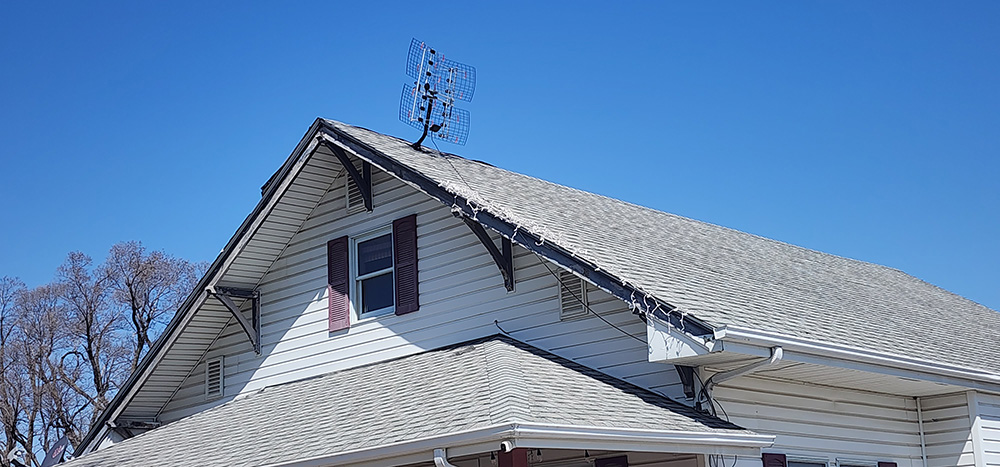
A flashing leak doesn't stay a flashing leak. Water follows framing, soaks insulation, rots decking, and by the time it stains your ceiling it's been working on the structure a while. Then a January ice dam parks a pool of meltwater right on top of the failure.
We'll get on the roof, get in the attic, find where water is actually entering, and show you photos of what we found. If it's storm-related, we document it and meet your adjuster on-site. If it's a $400 pipe boot, we'll tell you that and not one word more.
The inspection is free. No charge to find out, no obligation, and nobody from our crew is going to pressure you into a decision on your porch. In normal weather we can usually get out within a few days. After a hail or wind event the calendar fills fast, so call early. Active leaks and storm emergencies go to the front of the line, all year, including January.
Call {{PHONE}} for a free flashing inspection, or send us a message here and we'll get someone out. If water is coming in right now, don't wait on it. Put a bucket down and call.
Get a straight answer on your Madison roof
Wisconsin storm season and insurance non-renewal letters do not wait. Get a free, no-obligation inspection and an honest assessment of exactly what your roof needs, even if the answer is to wait.