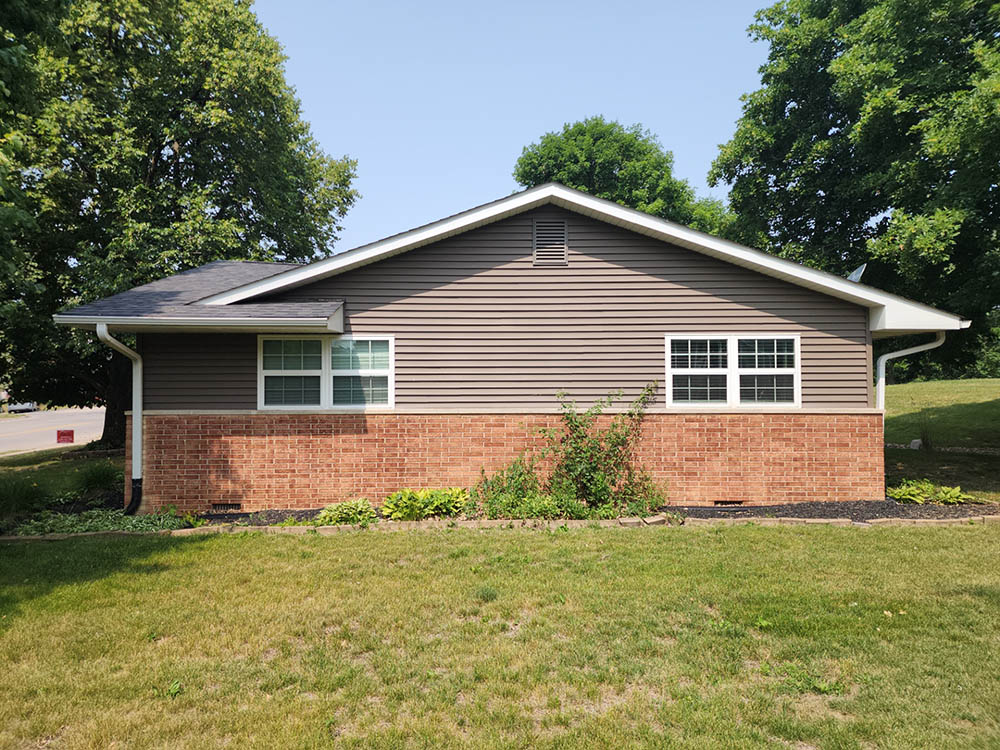
Yes. Water with a small amount of mild dish soap is one of the gentlest and most common cleaning solutions for vinyl siding. A diluted water-and-vinegar mix is another. Apply it with a soft cloth or soft-bristled brush on a long handle, work from the bottom up one section at a time, and rinse from the top down so dirty water does not streak clean panels.
Get My Free Estimate →For most homes you do not need a pressure washer to clean vinyl siding. A bucket of mild cleaning solution, a soft-bristled brush on a long handle and a garden hose will do it. Wash from the bottom up, one section at a time, then rinse from the top down so dirty water does not run across clean panels and streak them.
That is the whole method. What complicates it is the pressure washer in the garage. A wand pointed up under the panels can push water behind them and into the wall, and none of that shows until it becomes a repair.
Here is how to do the job safely, what to keep off vinyl, and how to tell whether you are scrubbing dirt or looking at the first sign of a siding problem.
What you need to clean vinyl siding
The gear that does the best job is also the gear least likely to hurt the panels.
- A soft cloth or a soft-bristled brush with a long handle. A brush head on an extension pole lets you reach the upper courses from the ground.
- Two buckets: one for cleaning solution, one with plain water to rinse the brush.
- A garden hose with a standard spray nozzle.
- A mild solution: water with a little dish soap, or a diluted water-and-vinegar mix.
- For mildew, a diluted household bleach solution, mixed and used as the product label directs.
- Plastic sheeting or tape for outlets, light fixtures and anything else you do not want soaked.
Your siding manufacturer's care guide is the final word on cleaners and methods, and it is worth reading before you start because some warranties restrict how siding can be cleaned.
What not to use
The Vinyl Siding Institute (now the Polymeric Exterior Products Association) and manufacturer care guides agree on this list. Keep these off vinyl: organic solvents, undiluted chlorine bleach, liquid grease remover, nail polish remover, and furniture polish or furniture cleaners. They can damage or permanently change the surface.
Skip wire brushes and abrasive pads, including melamine foam erasers, which are a fine abrasive and can leave a dull or shiny patch on weathered siding. If you use a ready-made siding cleaner, choose one whose label lists vinyl siding and follow its dilution and rinse directions. Never mix bleach with an ammonia-based cleaner; the combination gives off toxic fumes.
Plants, pets and runoff
Whatever you spray on the wall ends up in the soil along your foundation.
- Soak plants and shrubs with plain water before you start and again after you rinse.
- Keep pets inside until the wall is rinsed and the ground has dried.
- Use plain soap and water near vegetable beds and keep bleach off that side of the house.
- Cover window wells so runoff does not collect in them.
- Keep bleach runoff out of storm drains and away from ponds, streams and shorelines.
- Keep runoff off brick, stone and stamped concrete below the siding.
How to clean vinyl siding, step by step
Work in shade or during the cooler part of the day. On a hot, sunny wall the solution dries before you can rinse it, and dried cleaner leaves streaks of its own.
First: is it dirt or chalking?
Wet a rag and wipe a hidden panel. If the rag comes back gray or green, it is dirt, and washing will fix it. If a white, powdery film comes off, that is chalking: the weathered surface of the vinyl itself. Chalked siding looks better after a wash, but it will not look new. It is worth knowing that in ten seconds rather than after a day of scrubbing.
Walk around the house and check under the laps and in the soffit corners for wasp and hornet nests before you start, especially in late summer.
- Read the manufacturer's care instructions. Confirm which cleaners are allowed and whether power washing is permitted on your product.
- Close all windows, including storm windows and basement windows.
- Cover or tape off outlets, light fixtures, and dryer and bath vents. Those are the places water gets inside.
- Pre-wet plants, cover beds and window wells, and bring pets indoors.
- Start at the bottom and work up, in sections about an arm span wide and a few courses tall. Bottom-up washing keeps dirty water off panels you have not cleaned yet, which is what causes streaks.
- Apply with the soft brush or cloth using gentle pressure. If something will not move with a soft brush, it is a stain rather than dirt, and scrubbing harder only polishes a shiny spot into the finish.
- Rinse from the top down before the solution dries, and rinse thoroughly after any bleach mix.
- Move to the next section. Do not soap the whole house and then rinse the whole house.
- Use the extension pole from the ground wherever you can instead of moving a ladder around. Working a brush overhead from a ladder is how people get hurt.
Not sure what you are looking at halfway through? Call (608) 909-9109 and describe it. If it needs a closer look, the on-site inspection is free.
Pressure washing vinyl siding: when it does damage
Vinyl siding is designed to shed water on the outside. Panels hang loosely on their nails so they can expand and contract, and each course overlaps the one below. That overlap, the lap, is open from underneath. Spray aimed up into it drives water behind the panels onto the housewrap, sheathing and insulation, where nobody sees it and it dries slowly.
What a pressure washer can do to vinyl:
- Force water behind the panels through the laps and joints into the wall.
- Drive water into vents, fixtures, outlets and plumbing or dryer connections, which are built to shed rain falling down, not a jet pointed up.
- Push water past window and door frames, which can eventually stain interior walls.
- Blow water into vented soffit, soaking the eave and attic insulation.
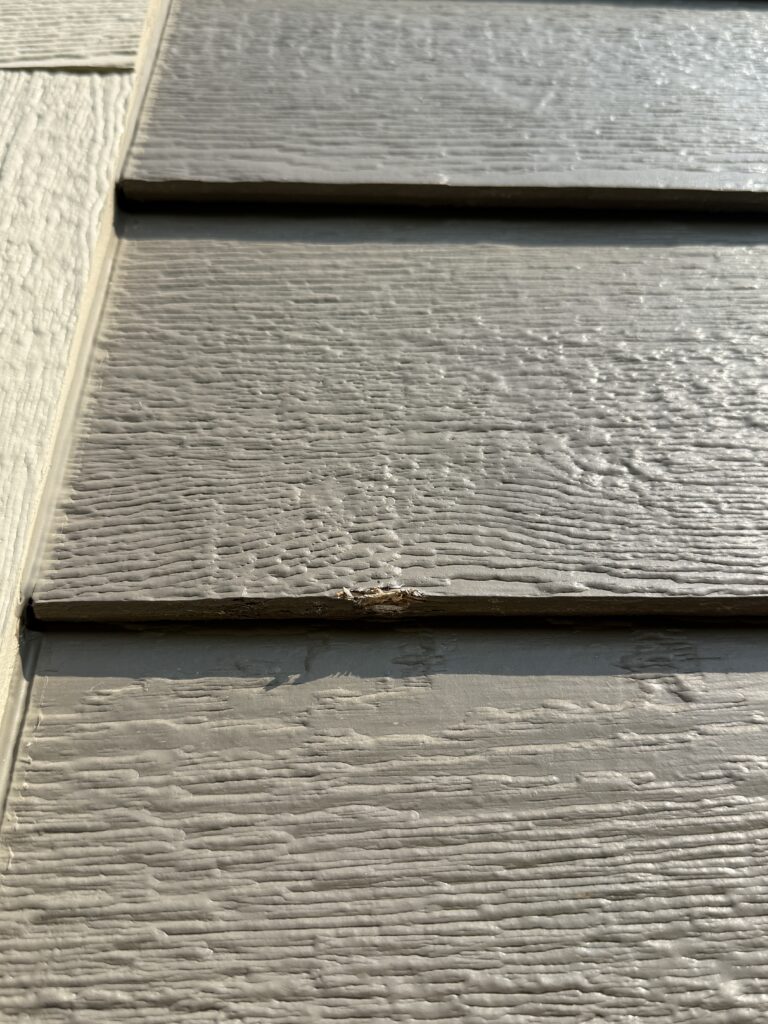
- Scar, gouge or crack panels when a narrow tip is held too close, especially on older siding that has become brittle.
- Loosen or unlock panels when the spray catches the panel edge.
Some manufacturers advise against power washing vinyl entirely. Others allow it with conditions. Your care guide decides.
Soft washing
Soft washing is low-pressure cleaning with a solution that does most of the work. The cleaner is applied, allowed to sit for the time its label directs, and rinsed at low pressure. It is gentler on vinyl because low pressure is much less likely to drive water behind the laps, scar the surface or unseat a panel. If you hire a cleaning company, ask what pressure they use, what is in their mix, how they protect plants, and whether they carry liability insurance.
If your manufacturer allows power washing
- Use the lowest setting that works and the widest tip you have.
- Keep your distance, so the spray is washing rather than blasting.
- Hold the spray straight at the wall at about eye level, or angled slightly down. Never aim upward under the laps or into the soffit.
- Keep the wand moving.
- Switch back to the brush around windows, doors, vents, fixtures, outlets and plumbing connections.
- Never pressure wash from a ladder.
Dealing with specific stains
Check your manufacturer's stain guidance before experimenting. A few common ones:
Green algae and black mildew. A mild solution and a soft brush handle light growth. Heavier mildew responds to a diluted bleach solution used per the label, rinsed well, with plants wetted before and after.
Rust streaks. Thin orange runs below fasteners, a hose bib or a railing, or from sprinklers using water with a lot of iron in it. Mild cleaners rarely remove rust, so use a product your manufacturer approves for vinyl and fix the source.
Soil splash-back. A gray-brown film along the bottom course where rain splashes bare soil. Soap and water lifts it, and mulch or a gravel border keeps it from coming back.
Grill grease and smoke. Liquid grease remover is on the do-not-use list. Start with warm soapy water, check the manufacturer's guidance, and move the grill away from the wall.
Caulk, tar, paint and sealant. This is where solvents cause real damage. Some of these stains are permanent, and a replacement panel is better than a ruined wall.
Want a straight answer on your roof?
We'll inspect it, document everything, and tell you honestly what you're looking at, even if the answer is patch it for now. No pressure.
When to wash siding in Wisconsin
Pick mild weather. Do not wash in freezing temperatures: solution and rinse water freeze on the wall, the ladder and the walk under you, and a frozen film does not rinse clean.
That leaves late spring through early fall. Spring is the natural time, after pollen season and winter road spray. Early fall works too, and it lets you look the walls over before winter. Shaded north walls and walls under mature trees stay damp longer and tend to grow mildew first, so they may need attention more often.
What cleaning reveals
Washing puts you within arm's reach of every panel on the house, which makes it the most thorough inspection most homeowners ever do. Watch for:
- Chalky fading. White residue on the rag means the surface has weathered and the color will not come back. Painting or coating vinyl can affect the warranty, so read yours before buying paint. Heavily chalked panels are often near the end of their life; see how long siding typically lasts.
- Cracks, holes and brittle panels. Vinyl gets stiffer in the cold and more brittle with age, and hail or wind-blown debris can crack it. Cracks let water into the wall.
- Warping, rippling or melted-looking panels. Heat distortion can come from sunlight reflected off nearby energy-efficient window glass. More in why vinyl siding warps or melts near windows.
- Loose, buckled or rattling panels. Vinyl has to hang loosely enough to move with temperature. Nailed too tight or butted too hard, it buckles. More warning signs in signs of bad siding installation.
- Stains below window corners. Dark runs under the bottom corners of a window usually mean flashing or sealant is letting water behind the trim.
If mildew keeps coming back in the same spot
Cleaning treats the symptom. When the same wall greens up every year, look for the water source. A common one is a gutter that overflows at one corner in heavy rain; next downpour, step outside and watch the gutters above that wall. Then work through the rest: aim sprinkler heads away from the house, make sure dryer and bath vents exhaust outside, trim shrubs back so air can move, and extend downspouts away from the foundation. Fix the water and the green stops coming back.
Everything in this section is a repair conversation, not a cleaning one. Small vinyl problems are often fixable, and we handle siding repair as well as replacement. A cracked or loose panel caught now costs far less than wet sheathing found years later. If the damage is widespread or the siding is old and chalked, our vinyl siding page explains what replacement involves, and our siding services page covers other materials.
Have someone look at it, free
If your wash turned up cracks, buckling, chalking, a stain under a window corner or mildew that will not quit, the next step is a walk-around of every wall, not another bucket of soap. Our free on-site siding inspection looks at the walls, trim, laps and the places water gets in, and gives you a plain answer: a panel, a flashing detail, or siding that is done.
Buckshot Exteriors has been family-owned since 1979, with offices in Madison, WI and Centerville, IA, and you can read our customer reviews before you call. If the honest answer is "wash it again next spring and watch that corner," that is what you will hear.
Call (608) 909-9109 or reach out through our contact page. If a storm just tore panels loose, our 24-hour storm line is the same number.
Get a straight answer on your Madison roof
Wisconsin storm season and insurance non-renewal letters do not wait. Get a free, no-obligation inspection and an honest assessment of exactly what your roof needs, even if the answer is to wait.