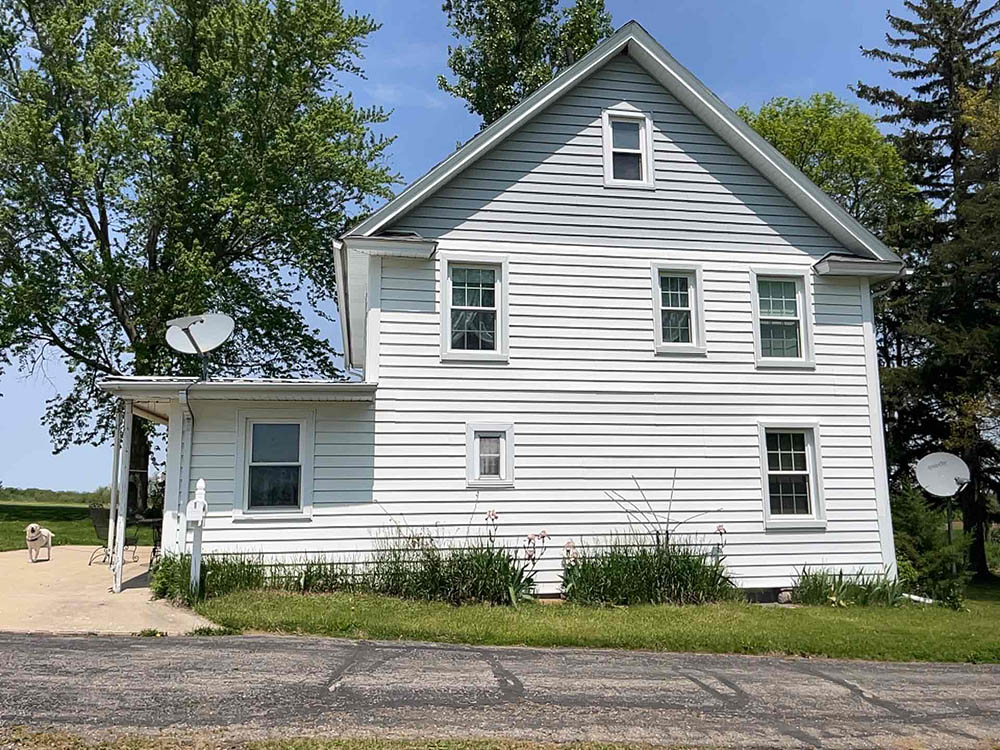
In almost every case, yes. Building codes generally require a weather-resistive barrier behind most types of siding, and your local inspector in Dane, Rock or Green County can confirm exactly what applies to your wall. Even where an exception exists, skipping the barrier on a Wisconsin house is a bad trade. Siding is a rain screen, not a seal, and the barrier is what sheds the water that gets behind it.
Get My Free Estimate →- What house wrap behind siding actually does
- House wrap is not your vapor barrier
- Water management versus air sealing, and what each does for your heating bill
- Why Wisconsin raises the stakes
- The real options, in plain terms
- What the barrier adds to your bill
- Where installs go wrong
- Signs your barrier is missing or failed
- "My house has had no wrap for 40 years and it's been fine"
- Siding replacement is the one real chance to fix it
- Does insurance pay for any of this?
- What to ask before you hire
- Find out what is behind your siding
- FAQs
House wrap behind siding is the second line of defense against water. Siding is the outer rain screen, not a waterproof seal, and on a Wisconsin wall, wind-driven rain, melting snow and condensation will get behind it somewhere. House wrap (or felt paper, or a liquid-applied coating) catches that water and sheds it down and out before it reaches your sheathing and framing.
It is the one layer homeowners never see and most contractors never explain. It is also where most hidden wall leaks start.
Here is what the barrier does, what it does not do, what it costs, and what separates a good install from the kind that quietly rots a wall for ten years.
What house wrap behind siding actually does
It gives water a path back outside. That is the job.
The industry term is a weather-resistive barrier, or WRB. It is a sheet or coating applied over your wall sheathing (the OSB or plywood under the siding) and under the siding itself. Water that blows past a lap joint, runs down a window, or condenses inside the wall hits that barrier and drains down instead of soaking into the sheathing.
A properly installed barrier does three things:
- Sheds bulk water. Rain and snowmelt get redirected down the face of the wrap and out at the bottom of the wall or over flashing.
- Lets the wall dry. A good WRB is vapor-permeable, so moisture inside the assembly can escape outward. That matters enormously in a cold climate.
- Protects the structure. Sheathing and framing stay dry, keep their strength, and keep their grip on fasteners.
What it does not do
It is not a waterproof membrane, and it is not a substitute for flashing at windows, doors, decks and roof-to-wall transitions.
It also only functions as an air barrier if the product is rated for that and every seam, penetration and transition is sealed per the manufacturer's instructions. Most major synthetic wraps and integrated sheathing-with-barrier panel systems can serve as a code-recognized air barrier when they are fully sealed. Taped sloppily, the same product is just a drainage plane. That is a detailing question, not a product limitation.
One more thing worth saying plainly: rigid foam board or an insulated siding backer is not a replacement for the barrier. Foam adds R-value and some backing behind the siding. It does not integrate with window flashing or give water a drainage plane.
House wrap is not your vapor barrier
This is one of the most common mix-ups, and it is worth getting straight before you spend money.
House wrap keeps liquid water out while letting vapor pass through. A vapor retarder does the opposite job: it slows water vapor from moving out of your heated rooms into the wall. In Wisconsin, that vapor retarder is the poly sheet or the kraft paper facing on the insulation, on the inside of the wall. Cold-climate building codes generally call for a vapor retarder on the warm side of insulated exterior walls, and your local building inspector can confirm the current requirement for your project.
So the correct cold-climate sandwich is: tight-ish vapor retarder inside, breathable barrier outside. The wall dries to the exterior.
The failure mode people rightly worry about is a double vapor barrier. Put poly on the inside and something nearly impermeable on the outside and any moisture that sneaks in is trapped between them. That is how sheathing goes punky with no visible leak anywhere.
If a contractor calls the house wrap a "vapor barrier," ask what the product's vapor permeability actually is. The language tells you how carefully they think about walls.
Water management versus air sealing, and what each does for your heating bill
Keep the two jobs separate in your head. Water management is the drainage plane doing its work, and it shows up as a wall that is still sound in twenty years. Air sealing is taping the wrap and its penetrations into a continuous barrier, and that is what you actually feel: fewer drafts at outlets and baseboards, rooms that hold temperature, less cold air washing through the insulation on a windy January night.
Air leakage is a meaningful part of the heating load in older south-central Wisconsin houses, so a barrier that is genuinely taped tight usually makes a noticeable comfort difference and can trim heating costs. It does not add R-value on its own, and nobody honest will promise you a number. If lower bills are part of why you are re-siding, the real conversation is house wrap detailed as an air barrier plus continuous exterior insulation, handled together.
Why Wisconsin raises the stakes
Our walls get beaten from both sides.
Repeated freeze-thaw cycling through the winter is hard on a damp wall. Water sitting in sheathing freezes, expands, thaws and does it again. OSB that gets wet repeatedly swells at the edges and loses strength, and it does not come back.
Then there is winter vapor drive. In January your indoor air is warm and humid, and it is single digits outside. That moisture pushes outward and condenses when it hits something cold. If the layer behind your siding cannot breathe, the moisture has nowhere to go. You get damp sheathing, musty wall cavities, mold behind drywall, and exterior paint peeling because moisture is pushing it off from behind.
Add spring and summer storms rolling across south-central Wisconsin. Wind-driven rain does not fall on a wall, it gets pushed sideways into every lap and seam. Horizontal siding handles gravity-driven water fine. It does not handle sideways-driven rain the same way.
The real options, in plain terms
Synthetic house wrap
The white or printed rolls you see on new construction. Lightweight, tear-resistant, wide rolls that cover a wall with fewer seams, engineered to shed liquid water while staying vapor-permeable. There are also integrated systems where the barrier is bonded to the sheathing panel and the seams get taped.
Is the premium wrap better than the cheap stuff? Honestly, the gap between reputable products is much smaller than the gap between a careful install and a sloppy one. What to look for: published water-resistance and vapor-permeance numbers, a stated UV exposure limit, and seam and flashing tapes from the same manufacturer so the warranty and the chemistry match.
Asphalt-saturated felt
The older approach, and still in use. Felt absorbs some water and releases it, which some builders prefer on certain assemblies. It comes in narrower rolls, so there are more horizontal seams to get right, and it tears more easily during install. Done correctly, felt works. No reason to panic if your 1970s house has felt behind the siding.
Liquid-applied barriers
A fluid membrane rolled or sprayed onto the sheathing that cures into a continuous film. More common on commercial and higher-end residential work. It handles complicated geometry well because there are no sheets to lap, but it costs more and needs the right temperature and a clean, dry surface.
Drainable wrap and rainscreens
This is the upgrade conversation worth having in a freeze-thaw climate. Standard wrap lies flat against the sheathing, so water drains down a very thin path. A drainable wrap is embossed or filament-backed to hold the siding off the wrap, creating a real gap for water to run out and air to dry the cavity. A furred rainscreen does the same thing with vertical strips behind the siding, opening a bigger gap.
Worth the extra money on absorptive claddings: wood, engineered wood, fiber cement, stucco and manufactured stone. Worth considering on any wall that takes the brunt of the weather or has had moisture problems before. For straightforward vinyl on a sheltered wall, a well-detailed standard wrap is generally plenty, since vinyl is already vented and hangs loose.
What the barrier adds to your bill
Not much, relative to the project. Standard synthetic wrap plus seam and flashing tape is one of the least expensive materials per square foot on a siding replacement, a small fraction of the total job. It is normally folded into the quoted price rather than itemized.
Drainable wrap typically runs higher, and furring out a rainscreen adds material and labor. Those are real line items worth asking about.
Compare any of that to the bill when rot wins: sheathing replacement, framing repair, new insulation, interior drywall and paint, and sometimes a window.
Where installs go wrong
When a wall fails, the cause is usually the detail, not the product.
- Reversed laps. Every horizontal lap has to be shingled, upper over lower, so water sheds out and down. One reversed lap funnels water straight into the sheathing, and it is invisible once siding goes up.
- Untaped seams and penetrations. Vertical seams, hose bibs, dryer vents, light boxes, electrical runs. Each one is a hole in the barrier until it is taped or flashed.
- Window and door openings not integrated. The barrier has to tie into the opening in the right order, with head flashing lapped over the wrap, not tucked under it. When a window leaks, the flashing sequence is often the culprit rather than the window itself.
- Tears left unpatched, wrong fasteners, too long in the sun. Ladders and staging tear wrap, and tears need manufacturer's tape. Cap nails or cap staples go in at a specified spacing for a reason. And synthetic wrap left past its published UV window degrades before siding ever covers it.
There is a warranty angle here too. Siding manufacturers write their installation instructions around a code-compliant barrier behind the cladding, and finish warranties typically exclude failures traced to installation that ignored those instructions. Bad detailing can cost you the product warranty on top of the wall. For the visible side of the same problem, our checklist on signs of bad siding installation walks through what to look for after the job is done.
Not sure what is behind your siding? A free on-site inspection answers it. Call (608) 909-9109 and we will come look, no obligation and no pressure.
Want a straight answer on your roof?
We'll inspect it, document everything, and tell you honestly what you're looking at, even if the answer is patch it for now. No pressure.
Signs your barrier is missing or failed
You cannot see the barrier, but you can usually see its consequences. The clearest tell is dark-stained, soft or crumbling sheathing found any time a wall gets opened for a repair, even a small one like a replaced light fixture. Short of that, trust your nose and your windows: a musty, earthy smell near an exterior wall that is worst in humid weather, and staining, soft drywall or bubbling paint just below or beside a window, are classic signs that water is getting past a bad flashing detail and running inside the wall instead of out of it.
Look at the outside too. Exterior paint peeling off siding or trim in patches is often moisture pushing from behind, not a bad paint job. Cupped, buckled or blistering boards, rust streaks weeping from nail heads, and insect activity in a wall (bugs follow damp wood) all point the same direction. Any single one of these can have another explanation. Two or three together usually mean water in the wall.
"My house has had no wrap for 40 years and it's been fine"
Fair point, and there is something to it. Older walls were built out of board sheathing, often with felt, and they leaked air like a screen door. They got wet and they dried fast.
Two things changed. Walls got insulated and tightened, so they dry much more slowly. And OSB replaced plank sheathing, which matters because OSB tolerates repeated wetting far worse than old 1x boards did.
The other half of the answer: "fine" is not the same as "dry." Nobody knows what is behind that siding until it comes off. Sometimes it is beautiful old shiplap in perfect shape. Sometimes it is black at every window header.
Siding replacement is the one real chance to fix it
The barrier goes on before the siding, so the only practical window to install or correct it is when the old siding comes off. There is no realistic way to add house wrap behind siding that is already on the house.
So a tear-off is the moment to do three things: inspect every square foot of sheathing, replace what is soft or rotted, and install the barrier correctly with taped seams and flashed openings. Ask for photos of the wall after the wrap is on and before siding covers it. That request is normal, and a crew doing it right will be glad to send them.
It also decides how long the finished job lasts, since the service life you read about for any cladding assumes a dry, sound wall under it. That is part of why siding lifespan varies so much house to house in Wisconsin.
What to expect while your walls are open
No wall should sit open for long, and the house should be dried in every night. The sane sequence is one elevation at a time: strip a section, inspect and repair the sheathing, get the barrier and flashing on that same section, then move on. Nobody should be stripping all four walls on a Monday and starting wrap on Thursday with a 60 percent chance of thunderstorms in between.
Before work starts, ask two questions: how do you sequence dry-in, and what happens if weather hits mid-job? A straight answer involves staged tear-off, tarps on anything left open, and a willingness to stop and button up when the radar turns green. Spring in south-central Wisconsin punishes crews that do not plan for rain.
Older cladding may need testing first
If your siding is pre-1980, add one step before anyone pulls a nail. Mid-century homes in our area sometimes have asbestos-cement shingle siding, which has to be tested and handled under the proper rules rather than snapped off into a dumpster. Pre-1978 wood siding and trim often carries lead paint, and federal renovation rules require a certified firm using contained work practices when that paint gets disturbed. Both are routine to deal with when identified up front, and both get expensive and ugly when they are discovered halfway through a tear-off.
If you are scheduling in the cold months
Barrier work can be done in winter, but the details change. Many flashing tapes and liquid-applied products have minimum application temperatures, and adhesion on frosty or damp sheathing is unreliable. Exposure time matters too. We cover the tradeoffs in our guide to siding installation in winter.
Does insurance pay for any of this?
Sometimes, and it depends on the cause. Carriers generally pay to restore what a covered event damaged. If hail or straight-line wind wrecked your siding and soaked the sheathing, the sheathing repair and a replacement barrier over it are usually part of putting the wall back. What carriers typically will not do is pay to add a barrier that was never installed, or upgrade you from standard wrap to a drainable system.
Long-term rot from a leak that has been working for ten years normally falls under wear, tear and neglect, which is excluded on most policies.
Two pieces of advice. Get the adjuster's scope in writing, line by line, before work starts. And have your contractor on-site for the inspection. We meet adjusters at the house to document storm damage to siding and roofing, because the things that get missed are usually the things nobody pointed out.
What to ask before you hire
Ask which weather-resistive barrier they will use and why that one for your walls. Ask them to walk you through seams, penetrations, and window and door flashing in order. Ask whether they will send photos of the wall before siding goes on. A crew that answers those cold has been doing this a while, and a vague "oh, we wrap it" is your cue to keep looking.
Also ask for credentials, and expect them without a fuss. In Wisconsin, contractors doing this kind of residential work are generally expected to hold the state's Dwelling Contractor credentials and carry liability insurance, and you can ask to see both. Any contractor who hesitates on that is telling you something.
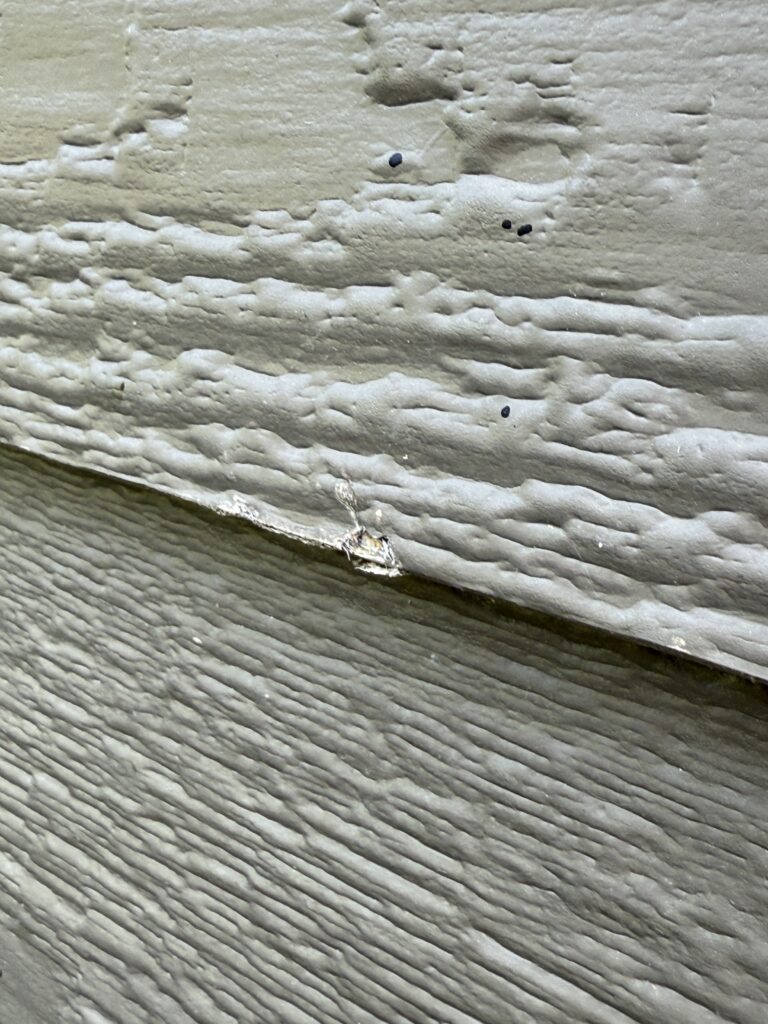
Find out what is behind your siding
If you are seeing peeling paint, staining around a window, drafts you cannot explain or a musty smell you cannot track down, let us take a look before it gets expensive. Buckshot Exteriors has been family-owned and working on south-central Wisconsin homes since 1979, and we know what this climate does to a wall that was never detailed right.
The inspection is free, there is no obligation, and if your walls are fine we will tell you so. Call (608) 909-9109 or reach out here to set a time. You can also look through our siding services for the full range of exterior work we do.
Get a straight answer on your Madison roof
Wisconsin storm season and insurance non-renewal letters do not wait. Get a free, no-obligation inspection and an honest assessment of exactly what your roof needs, even if the answer is to wait.