Because most of the cost is not the part. A pipe boot is a cheap piece of rubber and metal, but getting a crew, ladders, fall protection and a truck to your house, finding the actual leak, and doing the work safely is a half-day commitment. Our repair visits start at about $350 and move from there with pitch, access and scope, and that minimum covers the trip, the setup and the first block of labor. Confirm the current number when you call, because fuel and material prices move.
Get My Free Estimate →- Why small roof repairs feel expensive (the fixed costs)
- A few missing or blown-off shingles: $400-$900
- Pipe boot or vent collar failure: $400-$750
- Chimney flashing and counterflashing: $900-$2,500+
- Step flashing at a wall or dormer: $800-$2,200
- Valley leaks: $900-$2,500
- Ridge vent and ridge cap problems: $500-$2,000
- Skylight flashing and skylights: $700-$3,000+
- Ice dam damage at the eaves: $1,000-$4,000+
- Rotten decking found during a repair: $125-$300 per sheet
- Emergency tarping: $400-$1,200
- What repair day actually looks like at your house
- What a repair warranty should cover
- If a storm caused it, run the deductible math before you file
- When a repair is smart money, and when it is not
- How fast we can get out
- Get an honest answer before you spend anything
- FAQs
Most roof repairs in south-central Wisconsin land between about $400 and $2,500, and the width of that range has almost nothing to do with the size of the hole. It comes down to what is leaking, how steep the roof is, and whether anything under the shingles has already gone soft.
Here is the part nobody explains up front: a $30 part can absolutely be a $600 job. That is not a markup. That is the truck, the crew, the fall protection, the diagnosis and the drive.
Below is repair pricing organized the way people actually search for it, by the problem. Every number is an honest range for Dane, Rock and Green counties that moves with material prices and access. None of it is a quote. Only a written estimate, after someone has stood on your roof, is a quote.
Why small roof repairs feel expensive (the fixed costs)
On a small repair, the part itself is a small fraction of the bill. The rest is fixed cost that exists whether we replace one shingle or twenty.
- Minimum service charge. Ours starts at about $350 for a standard repair visit, and it moves with fuel and material prices. It covers the trip, the setup and the first block of labor. Ask for that number on the phone, from us or anyone else, before you schedule.
- Mobilization. A truck, ladders, a dump trailer, and two people who are not on another job that day.
- Safety setup. On a walkable 4/12 or 6/12 pitch, a roofer moves freely. On a 10/12 or 12/12, the same work needs roof jacks, planks, harnesses and anchor points, and setting all of that consumes hours before a single shingle gets touched. Steep-pitch repairs cost more for that mechanical reason, not because of the view.
- Diagnosis. Water travels. The stain on your bedroom ceiling is often several feet downhill from the entry point. Finding it properly takes time. Finding it improperly means you pay twice.
- Access. Two-story, over a deck, over landscaping, over a sunroom. All of it slows the work down.
That is why a "just fix the one shingle" call rarely comes in under $400. For the bigger financial picture, our roofing cost guide for south-central Wisconsin lays out replacement pricing so you can measure repair spend against the real number.
Roof replacement cost by home size (Madison, 2026)
| Home | Roof size | Typical total |
|---|---|---|
| Small ranch / bungalow | 14-18 squares | $9,000-$13,000 |
| Average two-story | 18-26 squares | $12,000-$18,000 |
| Large or complex (steep) | 26+ squares | $17,000-$25,000+ |
Cost by roofing material (average Madison home, installed)
| Material | Lifespan | Typical total |
|---|---|---|
| Architectural asphalt (standard) | 25-30 yrs | $12,000-$18,000 |
| Impact-resistant (Class 4) | 30+ yrs | $15,000-$22,000 |
| Standing-seam metal | 40-50 yrs | $25,000-$45,000 |
Common add-on costs
| Item | Typical cost |
|---|---|
| Extra tear-off layer | $500-$1,500 |
| Decking replacement | $50-$80 per sheet |
| New flashing & pipe boots | $300-$700 |
| Seamless gutters | $1,000-$2,500 |
Typical Madison-area 2026 ranges. Your exact price depends on an on-site inspection. A new asphalt shingle roof recoups about 61% of its cost at resale on average (2024 Remodeling Cost vs. Value Report).
Quick roof replacement cost estimator
Get a ballpark in 20 seconds. For an exact figure, book a free on-site inspection.
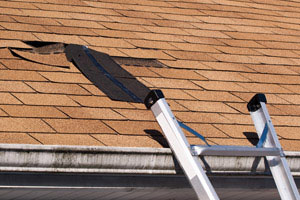
A few missing or blown-off shingles: $400-$900
The most common call after a Wisconsin windstorm, and usually the cheapest fix. A crew pulls the damaged shingles, checks the underlayment and nailing pattern, and weaves in matching replacements.
What pushes the price up:
- Color and profile matching. A 15-year-old discontinued shingle means hunting a close match or pulling from a hidden slope. Architectural shingles blend far more forgivingly than old three-tab.
- Scattered damage. Six shingles in one spot is one repair. Six shingles across four slopes is four repairs.
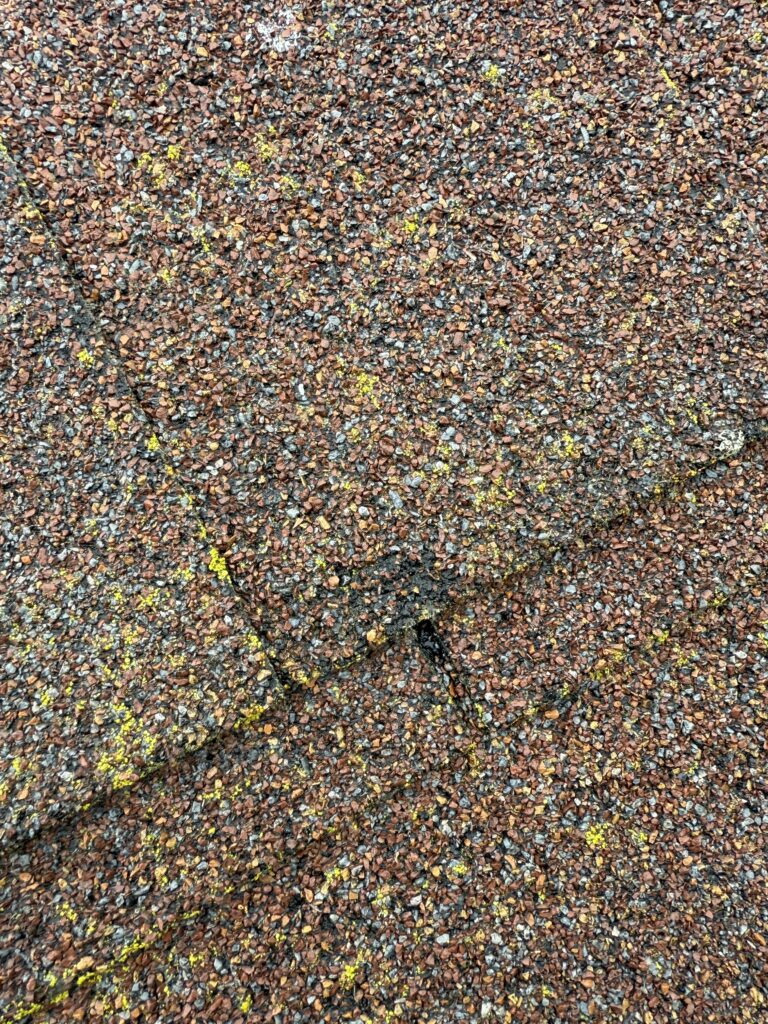
- Brittle shingles. Past roughly year 15, lifting a shingle to reach the nails often cracks its neighbors. The repair grows as you work.
Will the patch be visible, and does it hurt resale?
Honestly, sometimes you can see it. Weathering fades granule color, so a brand-new bundle of the same shingle rarely matches a sun-baked slope perfectly. It usually blends within a season or two.
What we do about it: pull the match from a rear or garage slope when the repair is on a street-facing wall, or use the closest current color rather than something obviously off. A slightly newer patch on a sound roof does not scare buyers. A ceiling stain and a "we caulked it" disclosure does.
If wind took shingles off in more than one or two places, the sealant strips across the whole roof may be broken, and you have a storm damage claim rather than a repair bill. Get it documented before you pay out of pocket.
Pipe boot or vent collar failure: $400-$750
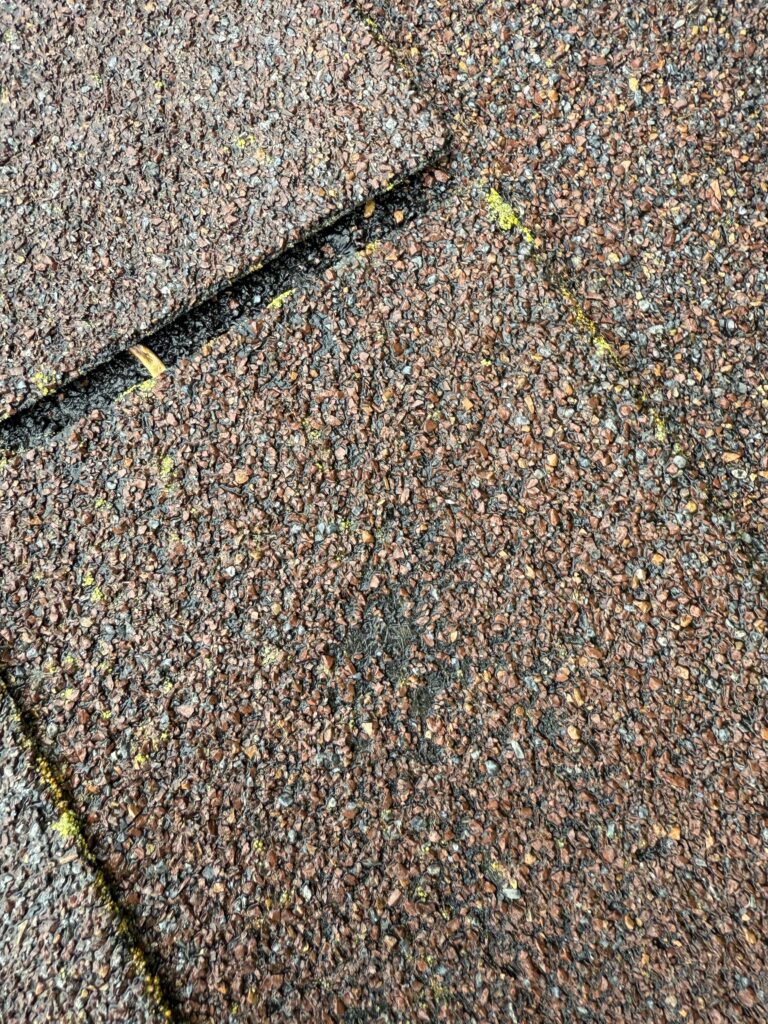
The single most common leak source on Wisconsin asphalt roofs. The rubber collar around a plumbing vent stack dries out, cracks and splits, typically somewhere in years 10-15, well before the shingles are done.
The repair: unweave the surrounding shingle courses, remove the old boot, install a new one (we prefer an all-metal or lead-lined collar over cheap rubber), lap it correctly under the courses above and reset. Doing two or three boots on one visit is much cheaper per boot, generally $600-$1,200 total, because you only pay the setup once.
Why this is the repair handymen get wrong
A pipe boot looks like a 20-minute job, and that is exactly the trap. Asphalt roofs shed water by overlap, so the new flange has to go under the shingles above it. The shortcut version sits on top with a bead of sealant. It holds through summer, survives one winter, then the sealant shrinks and water runs behind it into decking nobody is looking at.
The tell on a re-leaked boot is usually face-nailing: fasteners driven through the exposed shingle surface, each one a fresh leak path with a dab of caulk over it. If you have already had a boot "fixed" once and the stain came back, that is probably what is up there. Our roof leak repair walkthrough for Madison and the surrounding area explains what we look for before anything gets pulled apart.
Chimney flashing and counterflashing: $900-$2,500+
Chimneys leak more than any other penetration, and they are the most expensive routine repair. Done right means new step flashing up both sides, a saddle or cricket on the uphill side if the chimney is wide, and counterflashing cut into a mortar joint instead of smeared with caulk on the brick face.
The pattern we run into constantly in older Janesville and Beloit neighborhoods: a wide brick chimney on the back slope where three separate rounds of roof cement have been layered over each other across the years, each one a little thicker than the last. Under it, the original step flashing is rusted through and the decking behind the chimney is soft. Scraping all that mastic off, cutting fresh counterflashing into the mortar, framing and shingling a cricket so water stops pooling on the uphill side, plus a sheet or two of decking, and jobs like that typically land in the $2,000-$3,000 range. The caulk was cheaper three times. It also cost more.
Price drivers:
- Caulk-only history. Every layer of old mastic has to come off before new metal can seat.
- Masonry condition. Failed mortar joints or a cracked crown is masonry work stacked on roofing work.
- Size and location. A two-flue chimney near the ridge of a steep roof is a different animal than a small stack near the eave.
Step flashing at a wall or dormer: $800-$2,200
Where a slope runs into a vertical wall, every shingle course needs its own piece of step flashing tucked behind the siding. When it was installed wrong, and one long strip of bent metal instead of individual steps is the classic shortcut, water gets behind it and rots the wall sheathing.
This costs more than it looks like it should because doing it right means pulling back a section of siding to get new flashing behind the water barrier. That is roofing plus siding work. Find rotten sheathing behind it and the scope grows again.
Valley leaks: $900-$2,500
Valleys carry the most water on the roof, and in Wisconsin they carry ice too. Repairs range from redoing a short open valley with new metal and ice-and-water shield underneath, to rebuilding a long valley between two large slopes.
Cost depends on valley length, open metal versus closed-cut shingle valley, and whether the plywood underneath has gone soft from years of slow seepage. Valley rot is common and usually found mid-repair, not before.
Not sure whether you are looking at a $500 fix or a $500 down payment on a bad idea? We will come look and tell you straight, for free. Call (608) 909-9109. No pressure, and nothing to pay to find out.
Free on-site inspection · Family-owned since 1979Ridge vent and ridge cap problems: $500-$2,000
Blown-off ridge cap shingles, a ridge vent fastened with the wrong nails, or a vent with no external baffle that lets drifting snow blow straight into your attic. Wisconsin winters expose cheap ridge vents fast.
Recapping a short ridge section runs $500-$900. Replacing a full ridge vent run with a properly baffled vent and new cap on a typical house generally lands $900-$2,000. Worth doing right, because ridge venting is half of the system that keeps your attic cold and your eaves free of ice dams.
Skylight flashing and skylights: $700-$3,000+
Reflashing an existing skylight with a manufacturer flashing kit, new ice-and-water shield and new shingle courses around it generally runs $700-$1,800. If the unit itself is fogged, cracked, or a 25-year-old builder skylight with a failed seal, replacing the unit and flashing it correctly is more commonly $1,500-$3,000+ depending on size and glass package.
Blunt advice: if your skylight is original to a 1990s house and it is leaking, do not pay to reflash it. Replace the unit while the shingles are open.
Ice dam damage at the eaves: $1,000-$4,000+
This is the repair that belongs to our climate. Meltwater backs up behind ice at the eave, works under the shingles, and runs into the soffit, the wall or the ceiling.
- Emergency ice dam steaming (safe removal, not chopping with a hatchet): $500-$1,500 per visit depending on ice volume and roof area.
- Eave repair afterward: tearing off the bottom three to six feet, installing ice barrier membrane, new drip edge and new shingles. Commonly $1,000-$4,000 depending on affected linear feet.
- Root cause work: attic insulation and ventilation corrections, which is usually the real fix.
One reason an eave rebuild costs what it does: Wisconsin's Uniform Dwelling Code requires an ice barrier membrane at the eaves, running from the roof edge up the slope to at least 24 inches inside the interior face of the exterior wall. On a shallow-pitched roof that can mean membrane well past the first course of shingles, so a proper eave repair is not "slide in three shingles." Plenty of roofs built or re-roofed here never got that membrane, which is exactly why they dam and leak in the same spot every February.
On insurance, be precise here. Wisconsin homeowners policies commonly cover the resulting interior water damage from an ice dam, the ruined drywall, insulation and flooring, while removing the ice itself is frequently treated as maintenance and excluded. Some policies do pay removal as reasonable mitigation. Read your policy or ask your agent before you assume either way.
And repairing the eave without addressing the attic heat loss that caused the dam just buys you one winter. Ask whoever bids the job what they plan to do about it.
Want a straight answer on your roof?
We'll inspect it, document everything, and tell you honestly what you're looking at, even if the answer is patch it for now. No pressure.
Rotten decking found during a repair: $125-$300 per sheet
Nobody can price this before the shingles come off. Budget roughly $125-$300 per 4x8 sheet of OSB or plywood installed, higher on steep roofs, on older 1x6 plank decking, or where a second layer of shingles has to come off first. That range moves with lumber prices.
Two things to know. An estimate that states a per-sheet decking price up front is an honest estimate. And if a repair opens up and half the deck is soft, the repair is over. That roof needs replacing, and patching it further is throwing money at wet wood.
Emergency tarping: $400-$1,200
After a tree limb, a wind event, or a sudden active leak, tarping buys you time. Cost depends on area, pitch, and whether we are working on a two-story in bad weather. It is real work: the tarp has to run up over the ridge and be mechanically fastened, not weighted down with a couple of bricks.
Tarping is triage, not repair. It stops the interior damage clock. We run 24-hour emergency roof repair response, and when a storm caused the damage, the tarp is usually a claimable emergency mitigation expense.
What repair day actually looks like at your house
Fair questions that have nothing to do with price, and everybody asks them.
Time on site. Half a day for one clear problem. A full day for several boots plus a short valley. One to three days for a chimney rebuild with a cricket or a long eave repair.
Your roof does not stay open. Anything we cut into gets dried in the same day with underlayment or ice-and-water shield. If a matching shingle has to be ordered, the opening is watertight in the meantime.
Protection and cleanup. Tarps over landscaping and the deck, plywood where debris will fall, a cover over the AC condenser, and gutters cleared of the tear-out grit before we leave. Then we run magnets over the drive, walkways and lawn, and again along the drip line where nails bounce. Walk it with us before we pull out and point at anything you are not happy with.
Payment timing. Most repairs under about $2,500 need no deposit, and you pay on completion once you have seen the work. Special-order material or a multi-day repair may carry a material deposit, and it should be written on the estimate as a dollar figure. On insurance jobs, the carrier's first check typically funds the work and the withheld depreciation is released after the job is documented as complete.
What a repair warranty should cover
A targeted repair should carry a written workmanship warranty, not a handshake. Ours is printed on your estimate before you sign, so you know exactly what you have. If the same leak returns within that period, you call, we come back, and we make it right at no charge to you.
Two fair-minded limits to understand, from any contractor:
- A workmanship warranty covers the work performed. It does not turn the rest of a 19-year-old roof into a new roof. A new leak six feet away is a new problem.
- If we tell you in writing that the roof is at end of life and the repair is a stopgap, that is what the repair is. We would rather say it out loud than sell false comfort.
Does a repair void your existing roof warranty?
It can. Manufacturer material warranties generally survive a competent repair, but an enhanced system warranty, the kind issued through certified installers, can be jeopardized by non-certified work or mismatched components. If your roof was installed under a certified system, tell the repair contractor. We are a GAF Master Elite contractor, which means we can work inside those systems instead of quietly voiding them.
If a storm caused it, run the deductible math before you file
Wind, hail and falling limbs are sudden losses, and sudden losses are what homeowners insurance exists for. Wear, aging shingles and deferred maintenance are on you.
But a repair-sized loss and a claim are not always the same thing. Do the arithmetic:
- $1,800 chimney flashing repair, $2,500 deductible. Do not file. The claim pays nothing and you carry a loss on your record for no benefit.
- $1,800 repair, $1,000 deductible. Now there is $800 on the table, and it may be worth documenting.
- Check whether your policy has a separate percentage wind/hail deductible, which is increasingly common in Wisconsin. On a home insured for $400,000, a 1 percent wind/hail deductible is $4,000, not the $1,000 flat figure you remember.
Also add up the whole loss, not just the roof. The same hail that bruised shingles often dented gutters, downspouts, fascia, window wraps and the sunny side of your siding. Roof plus siding and gutter damage frequently clears a deductible that the roof alone would not. That is one reason we document every elevation, not just the slope you called about.
On timing, read two parts of your policy: Duties After Loss (the prompt-notice requirement) and Suit Against Us (the deadline to bring an action, often one year from the date of loss). Wis. Stat. 631.81 provides some relief when late notice did not prejudice the insurer, but do not plan around it. Get documented within weeks.
A free inspection is not a claim. Nothing is reported and nothing is opened. You get photos and a written opinion, then you decide.
The storm-chaser warning
After every significant hail event, out-of-state trucks show up door knocking in our neighborhoods. Some are competent. Many are not, and they will be three states away when the workmanship fails.
Red flags worth hanging up on:
- "We will cover your deductible." If the contractor eats your deductible, the invoice sent to your carrier is inflated by that amount. That is insurance fraud territory under Wis. Stat. ch. 943, and the homeowner whose name is on the claim can be exposed too. Walk away.
- A clipboard "authorization to inspect" that is actually a contract or an assignment of your claim proceeds. Read every line before signing anything on your porch.
- Pressure to sign today, before the adjuster has even been out.
- No local address, no proof of insurance, no verifiable Wisconsin presence.
Ask any contractor for a certificate of general liability insurance sent directly from their insurer, and proof of workers' compensation coverage. If someone gets hurt on your roof with no comp coverage in place, that can land on your homeowners policy.
One clarification on credentials, because it gets oversold: Wisconsin's Dwelling Contractor Certification and Dwelling Contractor Qualifier registrations are tied to obtaining building permits on one- and two-family dwellings, and many municipalities around here do not require a permit for a simple shingle repair. So the credential matters most on replacements, structural work and anything permitted. Still, a company doing residential roofing in Wisconsin at any real volume should hold it, and one that cannot produce it along with insurance certificates is telling you something. We hold the credentials required for the residential work we do, we have been family owned and operated since 1979, and our customer reviews are public for a reason.
When a repair is smart money, and when it is not
Repair is good value when the deck is sound, the shingles still have flexibility and granules, and the failure is a specific component: a boot, a valley, one flashing detail, a wind-lifted section. Those roofs have years left, and a few hundred dollars of flashing work protects an asset that costs many times that to replace (see the ranges in our roof cost guide).
Repair stops making sense when:
- The roof is past roughly 70-75 percent of expected life, call it year 16 and up on a standard 20-25 year asphalt shingle roof in our climate, and repair quotes approach a quarter to a third of replacement cost.
- You are on your third repair in a few years and every leak appears somewhere new.
- Shingles crack when lifted, granules wash off in sheets, or nail heads are backing out across multiple slopes.
- Decking is soft in more than an isolated spot.
If you are genuinely torn, read our comparison of repair versus replacement for south-central Wisconsin roofs, and our roof repair service page spells out what a repair visit includes.
How fast we can get out
Active water, storm damage or a tree on the house is emergency work, and we run 24-hour emergency response for exactly that. For a non-emergency repair in normal weather, expect an inspection within days. Be realistic after a major hail or wind event, though: when a storm hits the whole county at once, every legitimate roofer in the area backs up and scheduling stretches into weeks. Another argument for calling early rather than waiting for the ceiling to bubble.
On money, a $3,000 ice dam or chimney repair is not sitting in most people's checking account. Say so while we are there. Larger repairs can often be staged, and we can walk you through the financing options available rather than leaving you to figure it out alone.
Get an honest answer before you spend anything
Buckshot Exteriors has been family owned and operated since 1979, working across south-central Wisconsin on everything from a single pipe boot to full residential roofing replacements. When you call, a real person comes out, gets on the roof, photographs what is actually failing, and leaves you a written estimate with the options and the honest remaining life of the roof.
If it is a small fix, we will say so. If storm damage means insurance should be paying, we document it and meet your adjuster on site so nothing gets missed.
The inspection is free, the estimate is free, and there is no obligation and no pressure. Call (608) 909-9109 or request your free roof inspection here, and stop guessing what that stain on the ceiling is going to cost you.
- A price dramatically lower than every other bid (corners are getting cut somewhere)
- Pressure to sign on the spot, or a "today only" discount
- A request to sign over your insurance claim (Assignment of Benefits)
- An offer to "waive your deductible" (that is insurance fraud, and it puts you at risk)
- No written, itemized estimate, or no proof of insurance
- A large upfront payment (more than 30%) before any work begins
Get a straight answer on your Madison roof
Wisconsin storm season and insurance non-renewal letters do not wait. Get a free, no-obligation inspection and an honest assessment of exactly what your roof needs, even if the answer is to wait.