Fair question, and the honest answer is that a 50-year figure is a warranty term backed by laboratory testing plus roughly 25 years of real field history, not 50 years of roofs sitting in the weather. Polymer shake and slate shingles have only been on North American homes since about the late 1990s. Manufacturers support the number with accelerated weathering (xenon-arc and fluorescent-UV exposure under ASTM G155 and G154), heat aging, freeze-thaw cycling, UL 2218 impact and UL 790 / ASTM E108 fire testing. Ask for the actual test reports or the ICC-ES evaluation report, not a brochure. The 25 years of field roofs we can inspect have held up well, and that is the strongest evidence anyone has right now.
Get My Free Estimate →- What composite (synthetic) roofing actually is
- The 50-year question: what is actually proven
- Composite vs natural slate and cedar shake
- What composite roofing costs in Madison and south-central Wisconsin
- Insurance: the part most homeowners get wrong
- Two Madison-area jobs
- What a proper composite installation involves
- Who composite roofing is right for
- Get straight answers on your roof, at no cost
- FAQs
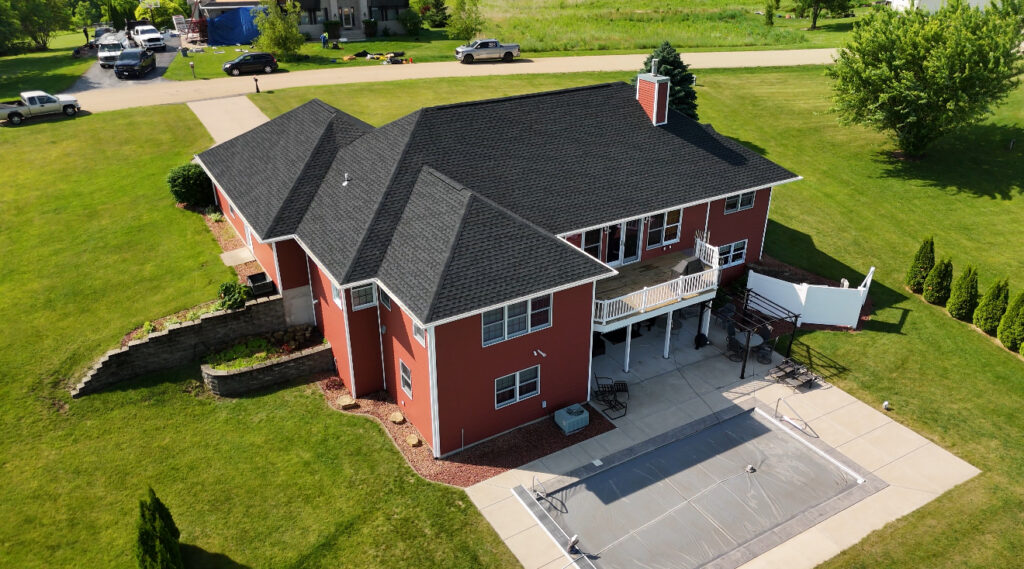
Composite roofing is an engineered polymer shingle molded from real slate or cedar shake, so it looks like stone or wood while weighing about as much as an asphalt roof. In Wisconsin the two things that matter most are that quality products carry a UL 2218 Class 4 impact rating against hail, and that polymer does not care about freeze-thaw the way natural slate and cedar do.
The catch is price. Composite runs roughly two to three times an asphalt roof, and the 50-year warranty everybody quotes is a limited warranty backed partly by lab testing rather than 50 years of field history. Both of those deserve straight talk, and you will get it below.
We have been roofing homes in Madison and across south-central Wisconsin since 1979. Here is what we tell homeowners who call asking about composite slate or synthetic shake.
What composite (synthetic) roofing actually is
It is a molded polymer shingle, usually a virgin or recycled resin with UV inhibitors and fire retardants blended all the way through the material instead of coated on the surface. The molds are pulled off real quarried slate and real hand-split cedar, so you get genuine stone cleft or wood grain instead of a repeating stamped pattern.
Two families cover almost everything on the market:
- Composite slate. Flat, squared or staggered tiles imitating Vermont or Pennsylvania slate, in single-width or multi-width layouts and slate colors like gray, black, purple and mottled blends.
- Composite shake. Thicker profiles with variable butt thickness and grain, imitating hand-split cedar. This is the one most Wisconsin homeowners look at, usually because they already have cedar and are done maintaining it.
The names you will run into are DaVinci Roofscapes (polymer slate and shake), CeDUR (a polyurethane shake with an unusually convincing split-cedar texture), and Brava Roof Tile (recycled polymer slate, shake and barrel tile). All three are legitimate. Which one we recommend depends on the look, the color palette and current lead times, not brand loyalty.
"Will my neighbors know it's fake?"
From the street, no. From six feet away on a ladder, someone who knows roofs may pick up the mold repeat, especially on single-width slate.
Two ways to settle it. Hold a physical sample outdoors against your brick or siding, not under showroom lights. Then go look at finished roofs. We will point you at composite installs around Dane County, or start with our recent projects and pick a few to drive past.
The 50-year question: what is actually proven
Polymer slate and shake shingles have only been on North American roofs since roughly the late 1990s. So a 50-year warranty is a contract term supported by accelerated laboratory testing plus about 25 years of field performance, not five decades of roofs in the weather. Any salesperson who tells you otherwise is guessing.
What you can verify:
- Accelerated weathering. Xenon-arc and fluorescent-UV exposure per ASTM G155 and G154, plus heat aging and freeze-thaw cycling, to model UV breakdown and color hold.
- Impact. UL 2218 Class 4, the top of that standard.
- Fire. UL 790 / ASTM E108, which is where the Class A or Class C rating comes from.
- Wind. ASTM D3161 (Class F is the 110 mph tier) or TAS 125, the Miami-Dade protocol.
- Third-party review. Many products carry an ICC-ES evaluation report that lists the exact standards and the assemblies they were tested in.
Ask for those reports rather than a brochure. And read the warranty itself: coverage is usually prorated after an initial period, often requires registration after installation, and covers manufacturing defects and excessive fade within stated limits, not installation mistakes or foot traffic. Most are transferable once, within a set window after a sale.
The 25-year-old composite roofs we get to inspect look good. That is real evidence. It is just not the same as a slate roof from 1910, and you should price the risk accordingly.
Composite vs natural slate and cedar shake
Composite wins on weight, hail, wind and maintenance. Natural materials win on authenticity and, with slate, on raw lifespan.
Weight. Natural slate runs roughly 8-10 pounds per square foot, which on most Wisconsin houses means an engineer's review and sistered rafters. Composite lands around 1.5-2.5 pounds, essentially the same as architectural shingles. Your existing framing handles it. This one fact is why composite exists.
Freeze-thaw. We cross the freezing line dozens of times each winter. Water gets into slate's cleft, freezes and delaminates the stone over decades. Cedar absorbs water, swells, cups and splits. Polymer barely absorbs water, so it does neither.
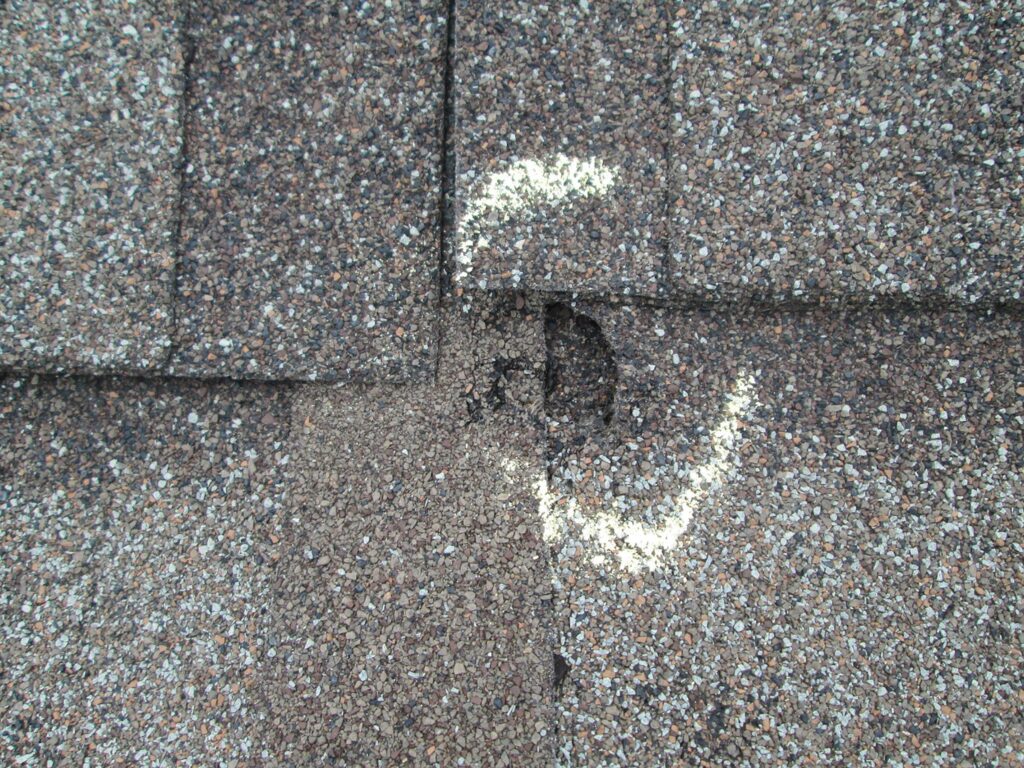
Hail and wind. Slate cracks, cedar splits, asphalt loses granules and bruises the mat. Composite flexes. On wind, composite slate and shake commonly carry 110 mph-class ratings, and some lines rate higher with the manufacturer's enhanced nailing pattern. That matters here: on our own repair calls in Dane, Rock, Jefferson and Columbia counties, straight-line wind damage keeps us as busy as hail does. Ask which nailing pattern your bid is based on.
Maintenance. Cedar wants cleaning and treatment. Slate wants a slater to reset broken pieces. Composite wants clear gutters and clean valleys.
Where natural wins. A well-built slate roof on solid structure can go 100 years. Nothing synthetic claims that.
Fire ratings differ by brand, so name it in the contract
Composite is a polymer, so it is combustible. Any contractor who waves that off is selling, not explaining.
Most polymer shingles rate Class C on their own and reach Class A only as a tested assembly, meaning a specific fire-barrier underlayment installed beneath the shingle. DaVinci products fall in that camp: Class A comes from the assembly, not the shingle alone. Brava lists Class A on certain profiles and assemblies. CeDUR markets a Class A rating on its shakes. The way to act on this is simple. Tell us Class A matters, and we will get you the UL 790 report showing the exact assembly, then write that underlayment into the contract by name.
Rain and hail noise
Comparable to asphalt. Composite is installed over solid decking and underlayment, so there is no air cavity to drum. That cavity is what makes exposed-fastener metal over open purlins loud. You will hear big hail on any roof.
Moss, algae and cleaning without voiding the warranty
Better than cedar, not immune. The black streaking people know from asphalt is algae feeding on limestone filler in the shingle, and polymer has no limestone, so that specific problem largely goes away. On a shaded north slope under overhanging trees you can still get organic film, dirt and light moss sitting on the surface, because moss grows in trapped debris, not in the tile.
Clean it the way the manufacturer says and keep your warranty. That generally means low water pressure, a soft brush and a mild cleaner. No pressure washing, no wire brushes, no solvents or harsh degreasers. Some products restrict chlorine-based cleaners. Abuse the surface and you have handed the manufacturer a reason to deny a fade or cracking claim, so get the cleaning instructions in writing at install and keep them with your paperwork.
What composite roofing costs in Madison and south-central Wisconsin
As of the 2025 season, installed ranges we quote in this market for a straightforward residential replacement, materials and labor:
- Architectural asphalt shingles: roughly $4.50-$8 per square foot
- Natural cedar shake: roughly $9-$16 per square foot
- Composite slate or shake: roughly $12-$20 per square foot
- Natural slate: roughly $20-$40 per square foot, plus framing work
Those are ranges, not quotes, and they move with resin pricing, freight and labor. Pitch (anything over 8:12 needs staging), tear-off layers, decking condition and flashing detail at dormers, sidewalls, valleys and chimneys all shift the number.
Where the math starts to work: the architectural shingle roofs we tear off around here are usually 18-25 years in, sometimes less if they took hail. A composite roof that reaches its expected service life replaces two asphalt roofs and possibly a third, plus two more tear-offs and two more rounds of hoping the decking held up. If you are selling in five years, an asphalt shingle roof replacement is the smarter money, and we will tell you so.
Want real numbers on both before you decide? We will come out, get on the roof and put honest figures in writing. Free, no obligation.
Insurance: the part most homeowners get wrong
Three separate issues here, and they get tangled constantly.
Your coverage type decides everything. On a replacement-cost (RCV) policy, the carrier owes the cost to replace what you had. Asphalt roof totaled by hail means an asphalt scope, and you fund the composite upgrade out of the difference. On an actual-cash-value (ACV) policy, or with a roof payment schedule or roof-surfaces endorsement, the carrier pays a depreciated amount tied to roof age. A 17-year-old shingle roof can depreciate hard, and the upgrade math changes dramatically. Even on an RCV policy, expect a depreciation holdback: you get the ACV check first, and the held-back depreciation is released after the work is done and invoiced. Pull your declarations page and look for those exact words before you build a plan around a number.
Class 4 discounts, and the trade you may be making. Many carriers writing in Wisconsin offer an impact-resistant roof credit for a Class 4 roof. It is not automatic. Your agent needs the UL 2218 certificate for the exact product installed, and we supply it. Read the fine print, though. Some carriers pair that credit with a cosmetic damage exclusion, which is exactly where composite gets interesting: your roof may survive 2-inch hail functionally while looking marked up, and a cosmetic exclusion means those marks are not a paid claim. That can be a fine trade. Just make it with your eyes open.
Underwriting. A composite roof should not raise your premium on its own, though a higher replacement cost on the dwelling can nudge it slightly. One real pitfall: make sure your agent codes the roof as composite or synthetic, not wood shake. Wood shake coding triggers surcharges and, with some carriers, a refusal to write. Send the agent the product data sheet.
Documentation is where claims are won or lost: original material identified correctly, adequate test squares, bruising marked on every slope, code items included. We meet the adjuster on the roof and walk it with them. If you are dealing with storm damage restoration in Dane County, do not have that conversation alone.

Want a straight answer on your roof?
We'll inspect it, document everything, and tell you honestly what you're looking at, even if the answer is patch it for now. No pressure.
Two Madison-area jobs
A 1920s Tudor near University Heights. Weathered cedar, three-quarters of the north slope in moss, already quoted natural slate plus an engineer's report for framing. We priced multi-width composite slate instead. No structural work, one season, and the mottled blend read better against the stucco and half-timbering than a single-color slate would. Their agent applied an impact-resistant credit once we sent the UL 2218 documentation.
A cedar shake home in Maple Bluff, hailed on in spring 2023 during one of the storms that crossed the north side that season. Shakes split through, claim scoped as cedar, which is expensive material to begin with. Because the like-for-like RCV number was already high, moving to composite shake cost them a manageable difference out of pocket. We met the adjuster on the roof, marked bruising on all four slopes, and got the ice barrier and flashing line items into the scope where they belonged.
What a proper composite installation involves
Composite is not hard to install, but it punishes a crew that has never touched it.
- Solid decking. Spaced board decking, common on Wisconsin homes built before the 1950s, usually needs to be sheeted over.
- Ice barrier at the eaves. Wisconsin regulates one- and two-family homes under the Uniform Dwelling Code (Wis. Admin. Code chs. SPS 320-325), which adopts portions of the International Residential Code with state modifications rather than adopting it wholesale. Roof covering requirements sit in SPS 321, and the ice-barrier language inspectors work from is IRC R905.1.2: membrane from the lowest roof edge to at least 24 inches inside the exterior wall line. Confirm the referenced IRC edition with your municipal inspector, since Wisconsin does not update on the IRC's three-year cycle. On low slopes and shaded north slopes we go well past the minimum. No roof covering stops an ice dam. Underlayment and balanced ventilation keep the water out of your ceiling.
- Correct fastening. Nails flush, never overdriven. An overdriven nail dimples the tile and creates a stress point.
- Expansion allowance. Polymer moves with temperature, and ours swings from 20 below to 95 above. Keyway offsets and gaps are specified for a reason.
- Cold-weather judgment. Polymer stiffens when it is bitter. In a Wisconsin January the right call is sometimes to wait.
- Snow guards. Composite slate sheds snow in slabs off steep pitches. If there is an entry, garage door, walkway, deck or lower roof below, plan on guards. Cheap at install, expensive to retrofit.
Attic heat, dark colors and solar panels
In our climate, ventilation matters far more than shingle color. Slate palettes skew dark and offer little in the way of high-reflectance options, but Wisconsin's cooling season is short and a dark roof helps marginally in January. Get intake at the soffit and exhaust at the ridge balanced and your attic temperature is handled.
Solar is doable and should be planned, not improvised. Racking must be flashed into the composite with mounts the manufacturer accepts, and the roofer and solar crew need to coordinate so neither warranty gets voided. If solar is in your 10-year plan, tell us now and we will detail for it.
Repairs, attic stock, and who services this in 20 years
A cracked tile can be swapped in year 20 by a roofer who knows the system. Buy a bundle or two of attic stock and store it flat, because color lines get discontinued.
The fair worry is people, not product. Composite is a small slice of the market, so fewer crews have installed it. Keep a documentation folder with the brand, product line, exact color name, order date and lot. Every major manufacturer keeps a certified-installer locator, and any competent roofer can follow the printed installation guide with that information in hand. We are 47 years in and family owned, and we intend to be here, but your file should not depend on that.
Who composite roofing is right for
Good fit if you have cedar you love the look of and never want to maintain again, you own a Tudor, Victorian, Craftsman or steep-roofed home where the roof is part of the design, you have taken hail before, or you plan to stay long term. If your home sits in one of Madison's local historic districts or is a designated landmark, start with the city's preservation planner before ordering, since a material change generally needs Landmarks Commission review and some districts want the real thing.
Probably not the right call if you are selling soon, the roof is a simple low-visibility ranch gable, or the budget is tight. A quality architectural shingle system from our residential roofing line does the job well, and standing seam metal roofing is another long-life option worth pricing.
Get straight answers on your roof, at no cost
If you are weighing composite slate or synthetic shake against asphalt, cedar or metal, the fastest path to clarity is having somebody who has installed all of it get on your roof and look.
Here is what happens when you call. We schedule a time, show up, inspect the roof, decking, flashings and attic ventilation, and take photos. Then you get real numbers in writing on the options that make sense for your house. If your roof has five good years left, we say that. If you have storm damage, we tell you what we found and how a claim is likely to go.
Full transparency: we make our money installing roofs, so read everything above knowing that. What we will not do is pretend composite fits every house, and nobody will push you to sign at your kitchen table. The inspection and the estimate cost you nothing.
We are family owned, we have worked out of Madison since 1979, and we serve Madison, Middleton, Verona, Sun Prairie, Waunakee, Stoughton, Janesville and the rest of south-central Wisconsin, plus southeastern Wisconsin on larger projects. We also run emergency storm response, including tarping, when a roof is opened up by wind or hail.
Call the office number at the top of this page during business hours, or reach us through our contact page, and we will get your free inspection and estimate on the schedule.
About this guide: written and reviewed by the roofing estimators at Buckshot Exteriors (Buckshot General Contracting), family owned in Madison, WI and Centerville, IA since 1979. Our estimators walk roofs, write insurance scopes and meet adjusters on-site across Dane County and south-central Wisconsin. Product ratings and code references above should be verified against the current manufacturer reports and your local inspector.
Get a straight answer on your Madison roof
Wisconsin storm season and insurance non-renewal letters do not wait. Get a free, no-obligation inspection and an honest assessment of exactly what your roof needs, even if the answer is to wait.