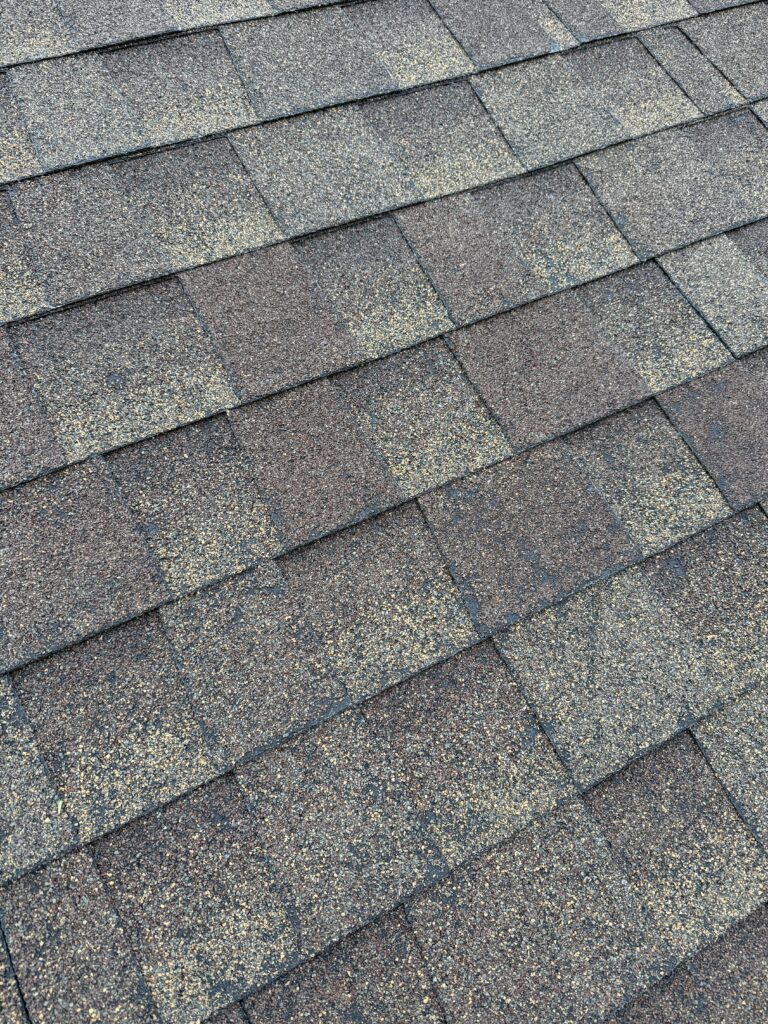
3-tab shingles are flat, single-layer, and lighter - they were the standard for decades. Architectural (laminate) shingles are thicker, two-layer, and have a dimensional look. Architectural shingles handle Wisconsin's freeze-thaw cycles and wind better, and most manufacturers now rate them for higher wind speeds.
Get My Free Estimate →- Why Shingle Choice Actually Matters Here
- 3-Tab Shingles: The Old Standard
- Architectural (Laminate) Shingles: The Smart Middle Ground
- Designer / Premium Shingles: The Top Tier
- A Word on GAF and Why It Matters
- The Failure Modes Nobody Talks About
- Matching the Shingle to Your Situation
- What to Ask Your Contractor
- Ready to Talk Through Your Options?
- FAQs
If you're standing in your driveway squinting up at your roof trying to decide whether to repair or replace - and you have no idea what type of shingles are even up there - you're not alone. Most homeowners in Madison, Janesville, Monroe, and the surrounding area have never had to think about this stuff until something goes wrong.
Here's a plain-English breakdown of the three main asphalt shingle types, what each one actually does in Wisconsin's climate, and where each one makes sense. No fluff, no upsell pressure - just what you need to make a smart decision.
Why Shingle Choice Actually Matters Here
South-central Wisconsin is genuinely hard on roofs. Dane, Rock, and Green counties deal with:
- Freeze-thaw cycles - temperatures swing above and below freezing dozens of times each winter, forcing water into tiny cracks and expanding them
- Ice dams - snow melts from the inside out and refreezes at the eaves, backing water under shingles
- Heavy snow loads - a wet March snowfall can put hundreds of pounds of stress on your roof deck
- Hail - we sit in a corridor that gets meaningful hail events most summers
The shingle you pick affects how your roof handles every one of those things. Let's go through each type honestly.
3-Tab Shingles: The Old Standard
3-tab shingles are what most homes built before the late 1990s have. They're a single layer of asphalt with three cutouts (tabs) along the bottom edge that give the appearance of three separate shingles.
What they cost
They're the cheapest option - usually the lowest price per square of any asphalt product. That's their main appeal.
Where they fall short in Wisconsin
The problem is that 3-tab shingles are thin and light. They're rated for lower wind speeds (typically 60-70 mph) and they have almost no dimensional thickness to absorb impact. In a hail event, they dent and crack more easily than thicker products.
They're also more vulnerable to ice dam damage. Water that backs up under the shingle edge has less material to get through before it's into your underlayment and decking.
The honest take: 3-tab shingles aren't inherently bad, but they're largely being phased out. Most manufacturers have narrowed their 3-tab lines. If you're replacing a roof in Dane County today, putting 3-tab back on is usually a false economy - you're saving a little upfront and accepting a shorter lifespan and higher vulnerability.
Architectural (Laminate) Shingles: The Smart Middle Ground
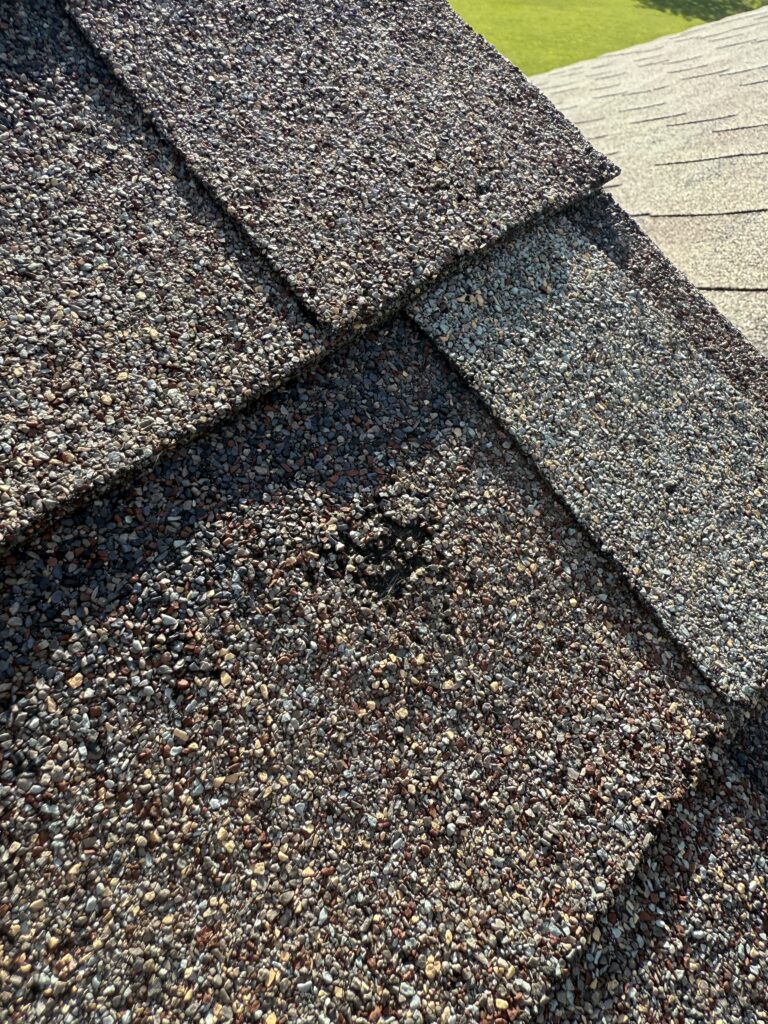
Architectural shingles - also called dimensional or laminate shingles - are the workhorse of the modern roofing industry, and for good reason. They're made by laminating two layers of asphalt together, which gives them a thicker profile and a textured, wood-shake-like appearance.
What makes them better for Wisconsin
- Wind resistance: Most architectural shingles are rated for 110-130 mph winds. Some premium lines go higher.
- Impact resistance: The extra thickness absorbs hail hits better. Many architectural lines are available in Class 4 impact-resistant versions (more on that below).
- Ice dam performance: More material between the water and your deck. Combined with proper ice-and-water shield underlayment at the eaves, architectural shingles give you a much better defense.
- Warranty: Typically 30 years on the low end, often lifetime limited on better products.
The Class 4 upgrade conversation
If you're replacing your roof and you're in an area that gets regular hail - and most of south-central Wisconsin qualifies - it's worth asking your contractor about Class 4 impact-resistant shingles. These are tested by dropping a 2-inch steel ball from 20 feet and grading the result.
More importantly: call your homeowner's insurance agent before you finalize your shingle choice. Some Wisconsin insurers offer a meaningful premium discount for Class 4 shingles. That discount can pay for a significant chunk of the upgrade cost over a few years.
What to watch for with architectural shingles
Not all architectural shingles are equal. Some budget lines are barely thicker than a heavy 3-tab. Ask your contractor for the product data sheet and look at the weight per square - heavier generally means more asphalt and better durability.
Also: proper attic ventilation is non-negotiable with laminate shingles. Heat buildup from poor ventilation will cook the adhesive strips and shorten the life of any shingle dramatically. A good contractor checks your ventilation before they nail down a single shingle.
A Word on GAF and Why It Matters
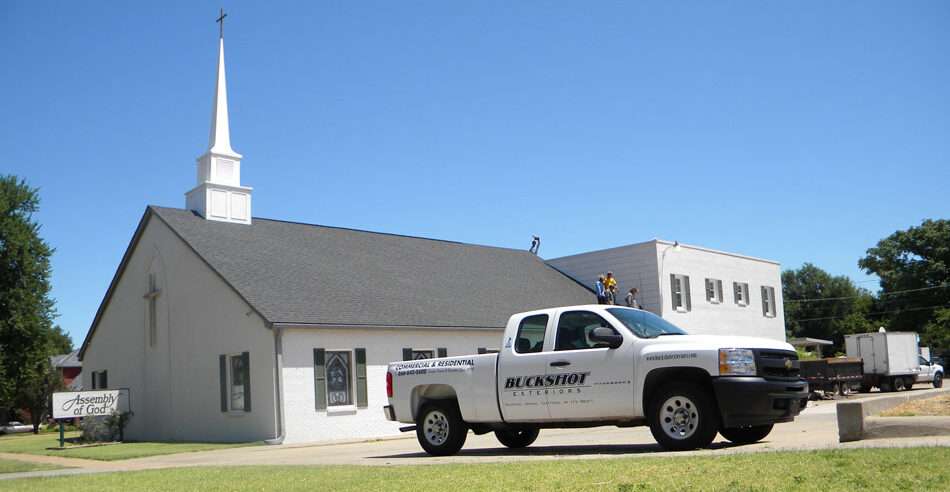
Buckshot Exteriors is a GAF Master Elite contractor - a designation GAF gives to a small percentage of roofing contractors nationwide. It matters for one practical reason: Master Elite contractors can offer GAF's best warranty coverage, including the Golden Pledge, which covers both materials and workmanship.
Most roofing warranties only cover the shingle itself. If the installation fails - improper nailing, bad flashing, wrong underlayment - a standard manufacturer's warranty won't help you. A workmanship warranty from a credentialed installer is what actually protects you.
This isn't a sales pitch. It's just something to ask any contractor you're considering: What warranty covers the installation, not just the materials?
Want a straight answer on your roof?
We'll inspect it, document everything, and tell you honestly what you're looking at, even if the answer is patch it for now. No pressure.
The Failure Modes Nobody Talks About
Here's what we see on roofs that failed before they should have - regardless of shingle type:
Improper nailing. Shingles nailed too high (above the nail line) or with too few nails blow off in wind events. This is one of the most common shortcuts we see on storm-restoration jobs.
Missing or wrong underlayment. Ice-and-water shield is required by Wisconsin code at the eaves and valleys. Some contractors skip it or use felt paper where shield is required. You won't know until you have a problem.
No starter strip. Starter shingles seal the bottom edge of the first course. Without them, wind gets under the edge and lifts shingles. Skipping starter strips is a classic fast-install shortcut.
Inadequate ventilation. We mentioned it above. Worth repeating - this is the single biggest silent killer of asphalt shingles in Wisconsin.
If you're not sure what's on your roof right now or whether it's holding up the way it should, we're happy to take a look. A free inspection costs you nothing and takes the guesswork out of it. Reach out here or give us a call.
Matching the Shingle to Your Situation
Here's a simple framework:
| Situation | Recommended shingle type |
|---|---|
| Tight budget, temporary fix | 3-tab (with caveats) |
| Most Wisconsin homes, best value | Mid-grade architectural |
| Hail-prone area, want insurance discount | Class 4 architectural |
| Long-term home, curb appeal matters | Designer / premium |
| Historic or high-end neighborhood | Designer or specialty |
What to Ask Your Contractor
Before you sign anything, ask these questions:
- What's the shingle weight per square?
- Is this product available in a Class 4 impact-resistant version?
- What underlayment are you using at the eaves and valleys?
- What does the workmanship warranty cover and for how long?
- Will you check my attic ventilation before the install?
A contractor who can't answer those questions clearly isn't someone you want on your roof.
Ready to Talk Through Your Options?
Our team has been doing residential roofing in Dane, Rock, and Green counties since 1979. We've seen every failure mode, every shingle type, and every insurance situation you can imagine. We also work directly with storm damage claims - if hail or wind is part of your story, we'll meet your adjuster on-site and make sure nothing gets missed.
There's no pressure and no obligation. A free inspection gives you real information so you can make the right call - whether that's repairing what you have, upgrading to a better shingle, or waiting another season. Contact Buckshot Exteriors today and let's take a look.
Get a straight answer on your Madison roof
Wisconsin storm season and insurance non-renewal letters do not wait. Get a free, no-obligation inspection and an honest assessment of exactly what your roof needs, even if the answer is to wait.