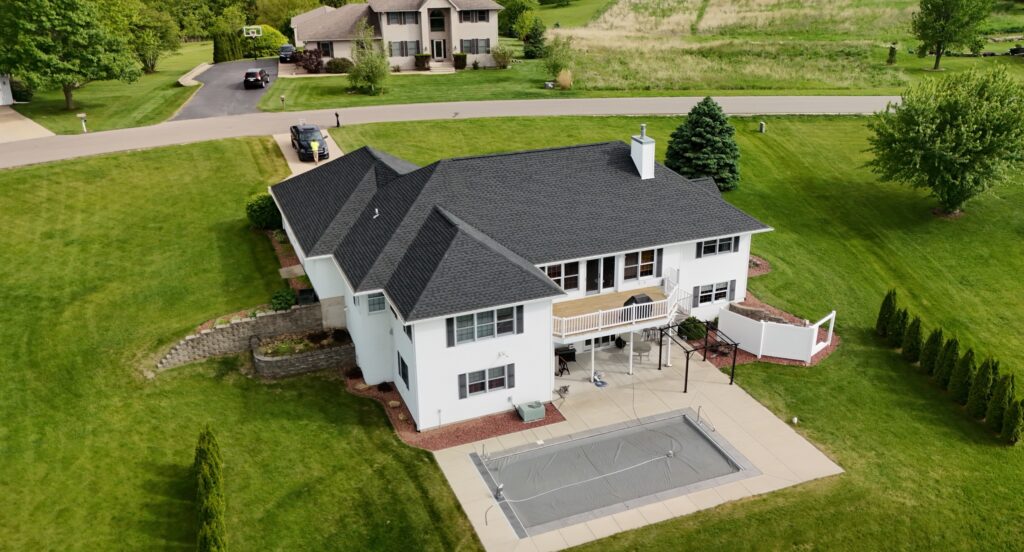
Most Beaver Dam homes land somewhere between roughly $9,000 and $18,000 for a full architectural shingle roof replacement, including tear-off, disposal, ice-and-water shield at the eaves and valleys, synthetic underlayment, new flashing, drip edge and ridge ventilation. Steep pitches, two existing layers, rotted decking, dormers, skylights and premium or metal materials push it higher. The written estimate after a free inspection is the only number that means anything.
Get My Free Estimate →- Start With a Free Roof Inspection (Here Is What Happens)
- How Long Should Your Roof Actually Last Here?
- Repair or Replace? Straight Guidance for Beaver Dam Roofs
- Two Dodge County Jobs, and What They Cost
- Storm Damage in Dodge County: Hail, Wind and Your Claim
- Scheduling, Weather and What Replacement Day Looks Like
- How to Choose a Beaver Dam Roofing Contractor
- Ice Dams, Gutters and Siding
- Towns and Neighborhoods We Serve
- Get Your Free Beaver Dam Roof Inspection
- FAQs
If you are looking for a roofing company in Beaver Dam, WI, start with a free inspection and photos before anyone talks about money. That is how we do it at Buckshot Exteriors, and it costs you nothing either way.
Beaver Dam is hard on roofs. Dodge County shows up regularly in National Weather Service Milwaukee/Sullivan severe weather reports for hail and thunderstorm wind, the same corridor that works over Dane and Columbia counties. Add lake wind exposure, freeze-thaw, and housing stock that is on its second or third roof, and you get a lot of tired shingles in one town.
Below is what a homeowner here actually needs: how long a roof should really last in this climate, repair versus replacement, real cost ranges, how storm claims and deductibles work in Wisconsin, lead times, and how to check out a contractor before you sign anything.
Start With a Free Roof Inspection (Here Is What Happens)
A real inspection takes 45-60 minutes and ends with photos in your hand. No sales pitch required.
What we look at on a Beaver Dam home:
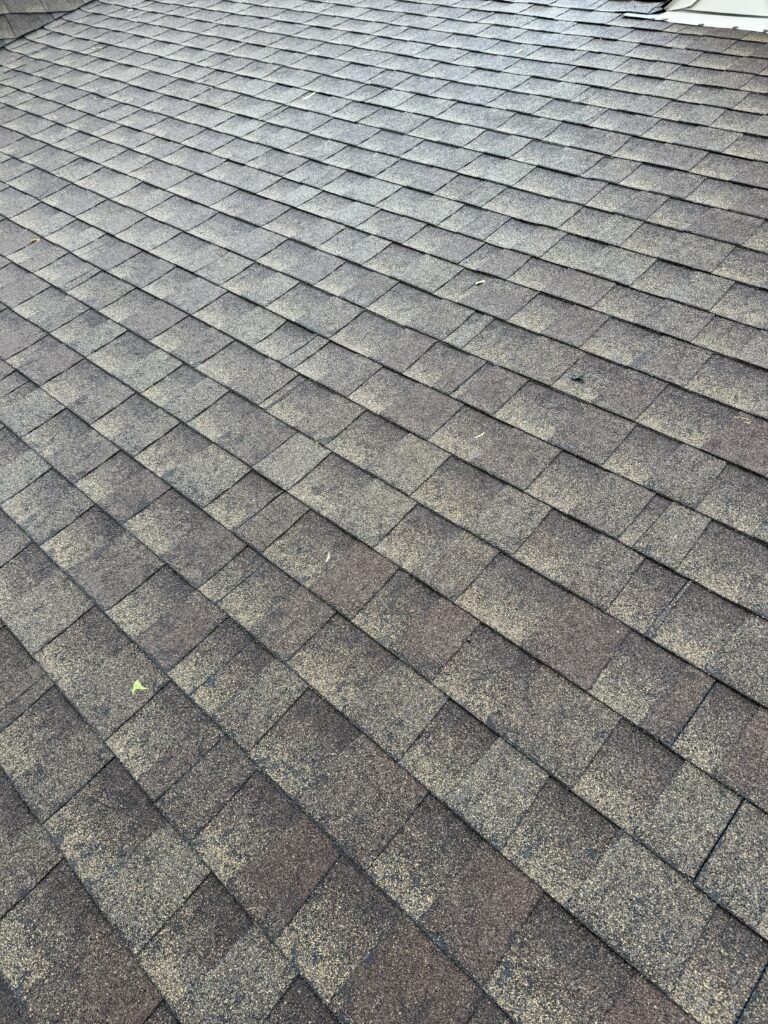
- Shingles: granule loss, brittleness, cracking, hail bruises (soft spots where the fiberglass mat is fractured), creased or lifted tabs from wind.
- Flashing: chimney, sidewall, step flashing, valleys. Most leaks start here, not in the middle of the field.
- Penetrations: rubber plumbing boots split around year 12-15 in our freeze-thaw cycle. A $12 part causes a lot of ceiling stains.
- Decking: soft or spongy spots underfoot, plus the attic side for staining and daylight.
- Ventilation: intake at the soffits, exhaust at the ridge. Unbalanced ventilation is behind most ice dams and premature aging in Wisconsin.
- Gutters, fascia and siding: hail hits everything, not just the roof.
You get the photos whether you hire us or not. If the roof has ten good years left, we say so and go home.
How Long Should Your Roof Actually Last Here?
In south-central Wisconsin, architectural (laminated) shingles labeled "30-year" or "lifetime limited" realistically deliver about 20-25 years. Older 3-tab shingles ran closer to 15-20.
That gap between the label and reality is not a scam, it is climate. Freeze-thaw cycling, ice loading at the eaves, summer hail, and hot attic air all age asphalt faster than the lab does. Roofs that reach the top of that range almost always have two things in common: clear soffit intake with continuous ridge exhaust, and an attic that is air sealed so warm indoor air is not cooking the deck from below.
So if your Beaver Dam roof is 18-25 years old, it is not automatically failed, but it is at the back end of its bell curve. That is the age where a repair starts throwing good money after bad. Class-4 impact-resistant shingles do not necessarily last longer, they survive hail better (and some carriers give a premium credit, worth asking your agent in a hail county). Metal is a 40-50 year decision.
Repair or Replace? Straight Guidance for Beaver Dam Roofs
Repair when the damage is localized and the shingles are still healthy. Replace when the shingles themselves are done.
When repair is the right call
- Wind lifted or creased shingles on one slope or one corner
- A single leak traced to flashing, a valley or a pipe boot
- The roof is under about 15 years old and the field still flexes without cracking
- Ridge cap damage only
Straightforward roof repair in this area usually runs roughly $450-$1,500. Rebuilding flashing around a masonry chimney runs higher.
When replacement is the better spend
- Granule loss across multiple slopes (bald-looking roof, black grit in the gutters)
- Shingles crack when flexed, so every repair breaks three more around it
- Two or more separate leaks, or the same leak coming back
- The roof is 18-25 years old, which describes a lot of Beaver Dam right now
- There are already two layers up there
On that last point, here is the number people search for: Wisconsin's Uniform Dwelling Code follows the residential reroofing rules, and the limit is two roof coverings. If your house already has two, a third layer is not legal, and the next roof is a complete tear-off down to the deck. That is the code framework (IRC R908.3 as adopted under Wis. Admin. Code chs. SPS 320-325); the City of Beaver Dam administers permits and inspections locally, so have your contractor confirm current requirements in writing.
Rule of thumb: if a repair quote is more than 25-30% of a replacement quote, put the money into the replacement.
Real replacement cost ranges here
A full asphalt shingle roof replacement with architectural shingles on a typical Beaver Dam single-family home generally lands between about $9,000 and $18,000, including tear-off, disposal, ice-and-water shield at eaves and valleys, synthetic underlayment, new flashing, drip edge and ridge ventilation.
What moves the number:
- Pitch and height. A steep 10/12 on a tall in-town Victorian costs more to work than a 5/12 ranch.
- Layers. Two layers roughly doubles disposal weight and tear-off labor.
- Decking. Rotted sheathing is replaced at roughly $75-$120 per sheet installed. We photograph every bad sheet before we cover it.
- Complexity. Dormers, valleys, skylights, low-slope porch tie-ins.
- Material. Class-4 impact-resistant shingles and metal cost more up front.
Nobody can honestly quote your roof from a satellite photo. Ranges are for planning.
Two Dodge County Jobs, and What They Cost
Details changed for privacy, but these are the patterns we see most here.
1970s ranch out toward Fox Lake Road. The homeowner wanted a layover to save money, but there were already two layers, so it was a tear-off. Down to the deck we found eight sheets of delaminated plywood, most of it in a north-facing valley and around an old bath vent that had been leaking quietly for years, plus soft fascia. Roof was estimated around $13,400. Decking and fascia added about $900, and it was not a surprise, because the decking allowance was written into the contract up front.
1920s home a few blocks off downtown. Ice dams every February and a brown ring on a back bedroom ceiling. The shingles were not the problem. Blown-in insulation had buried the soffits, the soffit vents had been painted shut decades ago, and a gable fan was fighting the ridge vent. We re-roofed with ice-and-water shield running well up from the eaves, opened intake with baffles at every rafter bay, ran continuous ridge vent, and air-sealed the attic hatch and can lights. Under $2,000 of the total was ventilation and air sealing, and that was the part that actually stopped the ice.
Want your own roof looked at before you decide anything? Call for a free, no-pressure inspection. We are out in Beaver Dam most weeks.
Storm Damage in Dodge County: Hail, Wind and Your Claim
Storm claims are won on documentation, not on how old your roof looks. Get it inspected within weeks of a hail or wind event, and look up your storm date in the NWS or Storm Prediction Center storm reports so you can give your carrier a real date.
What an adjuster is actually looking for
Adjusters do not pay for a worn-out roof. An old roof that "looks bad" is a maintenance issue, not a covered loss, and that is the biggest misconception we correct in driveways here.
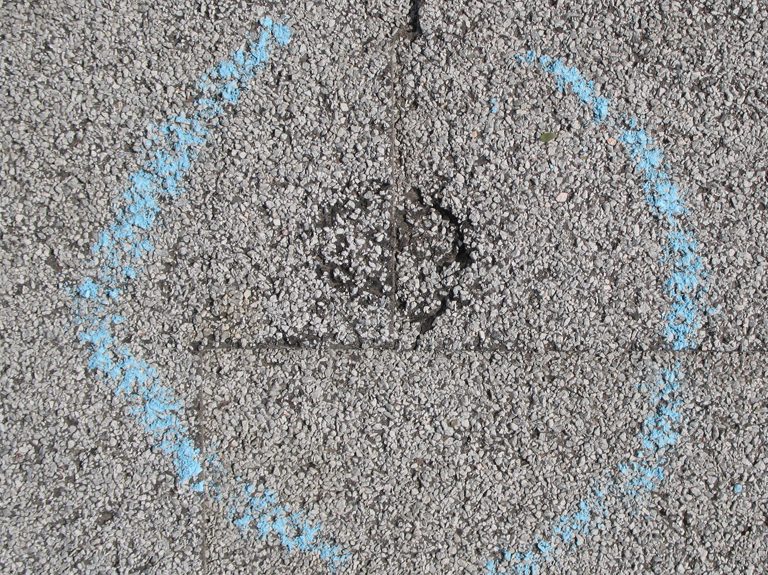
They pay for functional damage: hail bruises that fracture the mat, granule loss exposing asphalt, creased shingles from wind uplift, torn ridge caps, and collateral hits on soft metals. That last one matters. Dents in gutters, downspouts, dryer and furnace vents, AC condenser fins and window wraps prove damaging hail fell on your property. They mark a test square (often 10x10 feet per slope) and count hits.
Being present for that changes outcomes, which is why we meet your adjuster on-site. To be clear about the boundary: our job is to document damage, photograph it, and put an accurate scope and price in writing. We are not public adjusters and we do not negotiate or settle the claim for you. You (or a licensed representative you choose) deal with the carrier on numbers. We give you the evidence to do it with.
ACV, RCV and your deductible math
- RCV (replacement cost value): the full cost to replace today.
- ACV (actual cash value): RCV minus depreciation, usually the first check.
Do not assume which one you have. Pull your declarations page and look for how roof coverage is settled, and whether there is a separate percentage wind/hail deductible. Percentage deductibles have become common and they surprise people.
Say dwelling coverage is $325,000 with a 1% wind/hail deductible, so $3,250 out of pocket.
- Storm scope is a $16,000 full replacement. You pay $3,250 for a $16,000 roof. File it.
- Storm scope is a $900 repair. Pay cash, no claim.
- Storm scope is $4,500. You net $1,250 and put a claim on your record. Usually not worth it.
Any contractor offering to "eat" or "waive" your deductible is asking you to participate in insurance fraud. Hard no.
Timing, and what happens if you are denied
Policies require prompt notice of loss. Wisconsin law softens that: under Wis. Stat. § 631.81, late notice generally does not bar a claim unless the insurer is prejudiced. That is a safety net, not a plan. Evidence degrades and carriers push back hard on old damage.
If a claim is denied or short-paid, work the documentation first: request a reinspection with your contractor present, submit a documented supplement (photos, code items, missed slopes), escalate inside the carrier, review your policy's appraisal clause, and if needed file a complaint with the Wisconsin Office of the Commissioner of Insurance. Most disputes we see get resolved with better documentation. For large, complex or genuinely contested losses, a licensed public adjuster or an attorney is a legitimate option, and that is your call to make, not ours. Our storm damage restoration crew handles the reinspection and supplement documentation as part of the job.
One slope only, and discontinued shingle colors
Insurers sometimes pay only the damaged slope, which leaves you matching new shingles to 20-year-old sun-faded ones. Sometimes that works on a rear slope. Often the exact color is discontinued, which is a legitimate argument for broader scope. We get the discontinuation documented in writing from the supplier and put the matching problem in the supplement instead of hoping the adjuster notices.
Scheduling, Weather and What Replacement Day Looks Like
In a normal season, expect roughly 2-4 weeks from inspection to install once the contract, materials and permit are set. After a widespread Dodge County hail event, 6-10 weeks is realistic, and emergency tarping jumps the line under our 24-hour storm response.
Most Beaver Dam roofs are one to two working days, three or more for large or cut-up homes.
- Rain mid-job: we only tear off what we can dry in the same day. If weather moves in, the open deck gets underlayment and ice-and-water shield installed, seams tarped and mechanically fastened, and valleys and penetrations sealed. Your roof does not sit as bare plywood overnight.
- Dumpster or dump trailer on the driveway where we agree beforehand. Move cars the night before.
- Tarps and plywood over landscaping, decks and window wells, plus a cover over the AC condenser.
- Noise starts around 7 a.m. and it is loud. Anxious pets and nap schedules do better elsewhere for a day.
- Magnet sweep of yard, driveway and terrace at the end of each day and again at final walkthrough.
- We pull the permit and the city inspects. Do not let a contractor push the permit onto you as the homeowner.
Winter installs
Shingles can go on in winter with adjustments. Below roughly 40 degrees asphalt will not self-seal immediately, so critical areas get hand-sealed per the manufacturer's cold-weather instructions and the roof finishes bonding when temperatures rise. Decking has to be clear of snow and ice. If you take damage in January, a tarp plus a locked-in spring date is often the right call.
Want a straight answer on your roof?
We'll inspect it, document everything, and tell you honestly what you're looking at, even if the answer is patch it for now. No pressure.
How to Choose a Beaver Dam Roofing Contractor
Verify first, then compare scopes, then compare price.
Who is actually on your roof, and who carries the comp
Ask this out loud: are the installers employees or subcontractors, whose workers compensation policy covers them, and will a company employee be on site each day?
Our answer: installation is done by our own crews and by installers we have worked with for years, coverage runs through our company policies, and a Buckshot project manager runs the job rather than a commission salesman who disappears after the signature. Verify it the right way. Look the company up in the Wisconsin DSPS license lookup (a Dwelling Contractor Certification for the business, plus a Dwelling Contractor Qualifier certification held by an individual, is what allows a permit on a one- or two-family home), then have their agent send you a certificate of insurance directly showing general liability and workers compensation with your name as certificate holder. A photo of a policy card is not the same thing. If a crew is uninsured and someone gets hurt, that can land on your homeowners policy.
Warranties, in specifics, including ours
Two separate warranties exist and people mix them up. Manufacturer coverage protects the shingle. Workmanship coverage protects the install, which is where nearly all real problems come from.
Industry workmanship terms run anywhere from 1 to 10 years. Ours is printed in the contract you sign, in years, and we will tell you the exact number on the phone before you schedule anything. Because we are GAF Master Elite certified, we can also offer GAF's enhanced system warranties where GAF itself backs the workmanship: 10 years under the Silver Pledge and 25 years under the Golden Pledge, on qualifying systems. Ask us to print the actual certificate and terms for the exact system you are buying instead of trusting a logo.
What voids workmanship coverage, ours or anyone's: another trade cutting into the roof (satellite dishes, new vents, holiday light fasteners), pressure washing, unauthorized foot traffic damage, blocking the ventilation we installed with new insulation, non-payment, and a new storm event (that is an insurance claim, not a warranty claim). And ask about transfer at resale. GAF's system warranties transfer once within a set window under GAF's terms, and we handle transfer requests on our own workmanship coverage in writing when you sell.
Payments, deposits and financing
Nobody should want a large chunk of your money before materials show up. A reasonable structure is a modest deposit or material draw at scheduling with the balance on completion. On insurance work, payments track the carrier: ACV check first, your deductible, then recoverable depreciation released after completion and invoicing.
Financing on exterior projects goes through third-party lenders, and the shape matters. Unsecured home improvement loans have a fixed rate and term and do not put a lien on your house. Promotional "no interest if paid in full" offers can be great, but if the balance is not cleared by the end of the promo period, deferred interest can be charged back to day one, so know that date. Secured options (home equity through your own bank or credit union) usually carry lower rates and are tied to your home. We will lay out what is available in writing, with the monthly payment and total cost spelled out, and there is no obligation. Plenty of insurance customers only need to finance the deductible.
Storm chasers, and where our shop is
After every hail event in Dodge County, out-of-town crews flood the neighborhoods. Some are fine. Many are gone by fall.
Red flags: no verifiable physical address or DSPS certification, a one-page "authorization" instead of a contract with scope and price, pressure to sign today, deductible-waiving offers, and no straight answer on who handles a leak in year six.
Being straight with you: we are not headquartered in Beaver Dam. Buckshot Exteriors is family owned and operated since 1979, with our Wisconsin shop in the Madison area, roughly 45 minutes from Beaver Dam Lake, plus a location in Centerville, Iowa. Our address, phone and license information are on our contact page. Four-plus decades in one region is the warranty you can actually collect on.
Ice Dams, Gutters and Siding
Ice dams are an insulation and ventilation failure that shows up as a roof problem. What fixes them: balanced soffit intake and ridge exhaust (not just more vents), air sealing attic bypasses, insulation brought up to depth, ice-and-water shield at eaves and valleys at re-roof time, and gutters pitched and hung to survive ice load. Code calls for an ice barrier at eaves in areas with a history of ice damming, and the Beaver Dam inspection process governs the details on your house.
Hail does not stop at the roofline. If your gutters are dented or your north-side siding is cracked, that belongs in the same inspection and, if a storm caused it, the same claim. One scope, one crew, one warranty.
Towns and Neighborhoods We Serve
We do roof repair and roof replacement in Beaver Dam and across Dodge County: lakeside homes and cottages around Beaver Dam Lake, the older in-town blocks near downtown and Swan Park, postwar ranches south toward Highway 33, and the newer subdivisions on the north and west ends. We also work Horicon, Juneau, Mayville, Fox Lake, Randolph, Hustisford, Reeseville, Waupun, Columbus and Watertown.

Get Your Free Beaver Dam Roof Inspection
You do not have to decide anything today. You just need to know what shape your roof is in.
Here is what happens when you call: we set a time, one of our people (not a subcontracted commission closer) comes to your Beaver Dam home, inspects the roof, attic, gutters and siding, and shows you photos of exactly what we found. If it is fine, we tell you it is fine. If it needs a repair, we quote the repair, not a replacement. If you have storm damage worth claiming, we walk you through it, meet your adjuster on-site with documentation, and show you the deductible math before you file anything.
The inspection is free, the estimate is free, and nobody will lean on you to sign. Call us or contact us here to get on the schedule.
Since 1979, one lesson keeps repeating in Wisconsin: the small leak is always cheaper than the rotted decking it turns into.
Get a straight answer on your Madison roof
Wisconsin storm season and insurance non-renewal letters do not wait. Get a free, no-obligation inspection and an honest assessment of exactly what your roof needs, even if the answer is to wait.