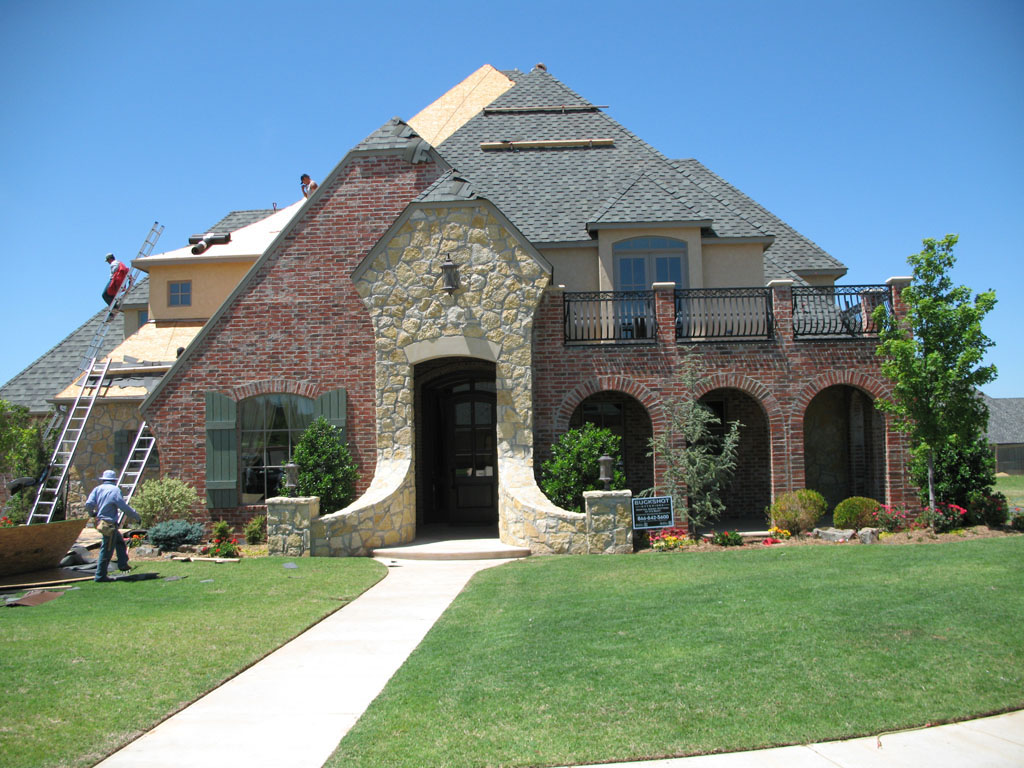
Most Iowa homeowners pay somewhere between $8,500 and $20,000 for a full asphalt shingle replacement on a single-family home. Smaller homes with simple rooflines land at the lower end. Larger homes, steep pitches, multiple layers to tear off, or premium materials push the number higher. Get a few written estimates so you have real numbers for your specific roof.
Get My Free Estimate →- What You'll Realistically Pay for a Roof Replacement in Iowa
- The Factors That Actually Move the Price
- How Long Will Your New Roof Actually Last?
- What to Expect During Installation: The Honest Version
- Iowa Storm Damage and Insurance: What You Need to Know
- Warranties: What You're Actually Getting
- Financing Your Iowa Roof Replacement
- Best Time of Year to Schedule in Iowa
- What a Trustworthy Iowa Roofing Estimate Looks Like
- Why Cheaper Bids Often Cost More in the End
- Getting Your Free Iowa Roof Replacement Estimate
- FAQs
If you're staring at a leak stain on your ceiling, or your neighbor just got their roof done and you're wondering what you'd pay, here's the honest answer: most Iowa homeowners spend somewhere between $8,500 and $20,000 for a full asphalt shingle roof replacement in 2026. That range is wide on purpose. Your actual number depends on several real factors, and anyone who quotes you a firm price without seeing your roof is guessing.
Buckshot Exteriors has been helping Iowa homeowners through roof replacements and storm claims since 1979, with a home base in Centerville. We've quoted hundreds of jobs across southern and central Iowa, and the ranges in this article reflect what we actually see in this market right now, not national averages pulled from a spreadsheet.
This article walks through every factor that moves the cost, what the insurance process actually looks like, how long your new roof should last, what to expect during installation, and how to protect yourself from the shortcuts that come back to haunt you.
What You'll Realistically Pay for a Roof Replacement in Iowa
The most common project we see is a 1,500-2,200 square foot ranch or two-story home getting a full tear-off and replacement with architectural shingles. Based on jobs we've quoted in this region, that work typically runs $10,000-$14,500 installed.
Smaller homes, simpler rooflines, and one existing layer of shingles keep costs down. Larger homes, steep pitches, multiple valleys, skylights, and premium materials push costs up. Metal roofing costs significantly more than asphalt upfront, but it also lasts significantly longer.
Here's a rough breakdown by project type, based on what we're seeing in the Iowa market in 2026:
- Basic asphalt shingle replacement (small home, simple roof): $8,500-$10,000
- Mid-range architectural shingles (average Iowa home): $10,000-$14,500
- Premium shingles, complex roof, or large home: $14,000-$20,000+
- Metal roofing: $18,000-$35,000+ depending on profile and size
These are honest estimates, not guarantees. Material prices, labor costs, and disposal fees shift. The only way to know your actual number is to have a contractor look at the real roof.
We serve homeowners across southern and central Iowa, including Appanoose, Monroe, Wayne, Davis, and Wapello counties, as well as projects in northern Missouri and across the Illinois border. When we quote a job in this region, we know what local labor and materials actually cost right now.
Roof replacement cost by home size (Madison, 2026)
| Home | Roof size | Typical total |
|---|---|---|
| Small ranch / bungalow | 14-18 squares | $9,000-$13,000 |
| Average two-story | 18-26 squares | $12,000-$18,000 |
| Large or complex (steep) | 26+ squares | $17,000-$25,000+ |
Cost by roofing material (average Madison home, installed)
| Material | Lifespan | Typical total |
|---|---|---|
| Architectural asphalt (standard) | 25-30 yrs | $12,000-$18,000 |
| Impact-resistant (Class 4) | 30+ yrs | $15,000-$22,000 |
| Standing-seam metal | 40-50 yrs | $25,000-$45,000 |
Common add-on costs
| Item | Typical cost |
|---|---|
| Extra tear-off layer | $500-$1,500 |
| Decking replacement | $50-$80 per sheet |
| New flashing & pipe boots | $300-$700 |
| Seamless gutters | $1,000-$2,500 |
Typical Madison-area 2026 ranges. Your exact price depends on an on-site inspection. A new asphalt shingle roof recoups about 61% of its cost at resale on average (2024 Remodeling Cost vs. Value Report).
Quick roof replacement cost estimator
Get a ballpark in 20 seconds. For an exact figure, book a free on-site inspection.
The Factors That Actually Move the Price
Roof Size and Complexity
Roofing is priced by the square (100 square feet). A bigger roof costs more, but complexity matters just as much as size. A 2,000 square foot home with a simple gable roof is far cheaper to replace than a 1,800 square foot home with multiple dormers, valleys, and a steep pitch. Every penetration, valley, and transition point takes more time and more flashing material.
Shingle Grade and Material
3-tab shingles are the entry-level option. They're thinner, carry shorter warranties, and don't hold up as well to Iowa's hail seasons. Most contractors have moved away from recommending them.
Architectural (dimensional) shingles are the current standard. They're thicker, look better, and typically carry 30-year manufacturer warranties. This is what most Iowa homes get replaced with today.
Class 4 impact-resistant shingles are worth a serious look if you're in a hail-prone area. Iowa sits squarely in a region that sees frequent severe hail, and Class 4 shingles are specifically tested to resist impact damage. They cost more upfront, but many insurance companies offer a premium discount for them. Learn more about impact-resistant and fortified roofing options if you've had repeated hail claims.
Metal roofing is the premium long-term option. Standing seam steel or aluminum can last 40-70 years with minimal maintenance. The upfront cost is higher, but the math over a lifetime often works in its favor.
Tear-Off Layers
Iowa municipalities generally follow the International Residential Code, which limits asphalt shingle roofs to two layers, but local amendments vary by jurisdiction. Your contractor should confirm the local rule when pulling the permit. If your home already has two layers, a complete tear-off is required before anything new goes on.
Tear-off typically adds $1,000-$2,500 to the project depending on roof size and how many layers are coming off. Skipping a required tear-off is one of the most common shortcuts low-bid contractors take. It can also be a code violation and voids most manufacturer warranties. Always ask what the contractor plans to do with the existing shingles.
Decking Condition
Once the old shingles come off, the contractor will inspect the plywood or OSB decking underneath. Soft spots, rot, or water damage need to be replaced before the new roof goes on. Most contractors price decking repair separately, usually by the sheet. Budget a few hundred dollars as a contingency. If a contractor tells you the decking will be fine without looking at it, that's a red flag.
Pitch and Accessibility
A low-slope roof is easier and safer to work on. Steep roofs require additional safety equipment, slow down the crew, and increase labor cost. If your home is on a tight lot or has landscaping that limits access, that can add cost too.
Flashing, Underlayment, and Ice and Water Shield
These are the components that don't get photographed on the finished product but matter enormously to how long your roof lasts. Synthetic underlayment over the full deck is now standard practice. Ice and water shield along eaves and in valleys is especially important in Iowa, where freeze-thaw cycles create real risk for ice damming. If a low bid skips these or uses minimal materials, you'll find out the hard way in five years.
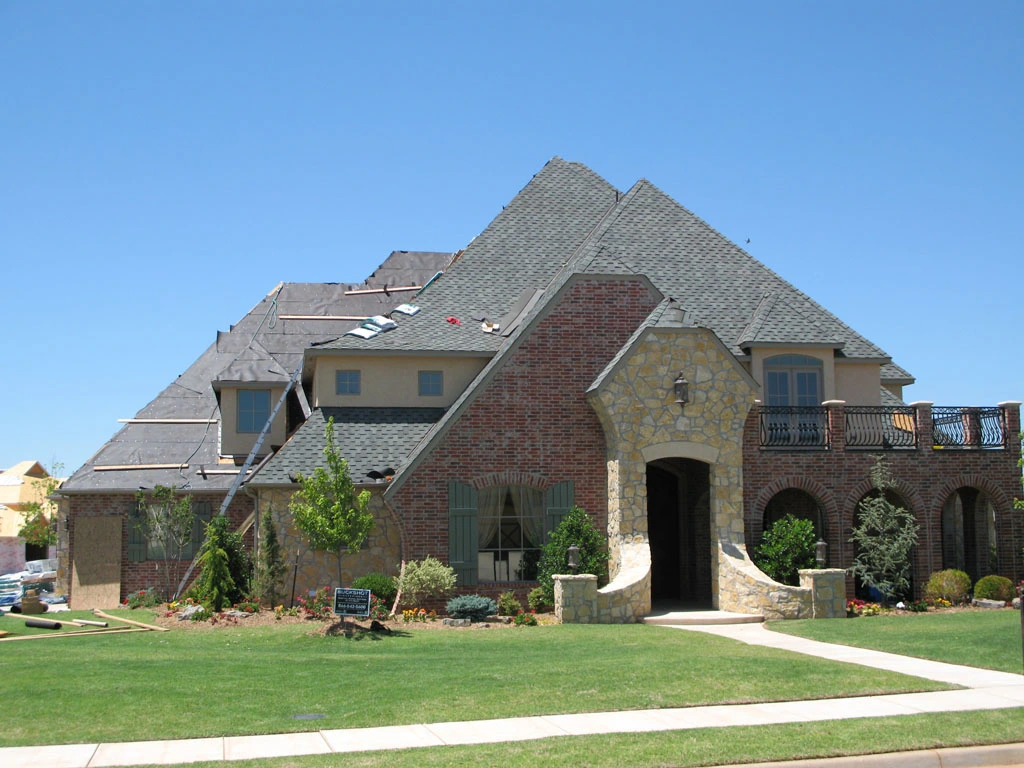
How Long Will Your New Roof Actually Last?
This is one of the most common questions homeowners ask, and it rarely gets a straight answer. Here's what you can realistically expect by material:
3-tab asphalt shingles typically last 15-20 years in Iowa's climate. The hail exposure and temperature swings here are hard on thinner shingles.
Architectural (dimensional) shingles are rated for 30 years by most manufacturers, and a well-installed roof with proper ventilation and underlayment can get close to that in Iowa conditions. Expect 25-30 years if the installation is done right.
Class 4 impact-resistant shingles carry similar 30-year ratings but hold up better through hail events, which means fewer mid-life repairs and a better chance of reaching that full lifespan.
Metal roofing is in a different category entirely. A standing seam steel or aluminum roof installed correctly can last 40-70 years. It's not unusual for a metal roof to outlast the original homeowner's tenure in the house.
One thing that shortens roof life regardless of material: poor attic ventilation. If heat and moisture can't escape the attic, shingles age faster from the underside. A good contractor will check your ventilation as part of the inspection and flag any issues before they install.
What to Expect During Installation: The Honest Version
A lot of homeowners worry about what the actual install day looks like. Here's the real picture.
Noise. It's significant. Tear-off involves prying, scraping, and dropping old shingles. Nail guns run constantly during installation. Plan for a full day of construction-level noise. If you work from home, consider relocating for the day or scheduling calls accordingly.
Your landscaping and gutters. A good crew will lay tarps along the drip edge to catch falling debris and protect plants and shrubs below the roofline. Ask about this before the job starts. Gutters can take some abuse during tear-off if the crew isn't careful, so confirm that gutter protection is part of the process.
Pets. The noise and activity stress most animals. Keep dogs and cats inside a quiet room away from exterior walls, or arrange for them to be somewhere else for the day. Crews moving around the perimeter can also create escape opportunities if pets are in a yard.
Vehicles. Move cars out of the driveway and away from the house. Nails and debris do fall, and a car parked under the roofline is a risk. Most crews will also need dumpster access in or near the driveway.
Access to your home. You don't need to be home during the install, but make sure the crew knows how to reach you if they find decking damage or another issue that requires a decision. A quick phone call mid-morning is better than a surprise line item at the end.
The actual installation on a typical Iowa home wraps up in one to two days. Most homeowners are surprised by how fast it goes once the crew gets moving.
Iowa Storm Damage and Insurance: What You Need to Know
Iowa gets hit by hail regularly, and a single severe storm can cause enough granule loss and dent damage to warrant a full replacement.
ACV vs. RCV policies. Some Iowa insurers have moved toward ACV (actual cash value) policies, especially on older roofs. ACV deducts for depreciation, meaning a 15-year-old roof might only pay out a fraction of replacement cost. RCV (replacement cost value) policies pay the full replacement cost minus your deductible. Check your declarations page before you file.
Your deductible matters a lot. Many Iowa policies now carry separate wind and hail deductibles, often 1-2% of your home's insured value. On a $250,000 home, that's a $2,500-$5,000 deductible coming out of your pocket regardless of the claim amount. We never waive, absorb, or work around your deductible. That practice is considered insurance fraud in Iowa, and any contractor offering to do it is a contractor you should walk away from.
Document everything before the adjuster arrives. Photos from the ground are a start, but a contractor who will get on the roof and document damage points, granule loss, dented ridge caps, and damaged flashing gives you a much stronger claim. We meet with insurance adjusters on-site to make sure nothing gets missed.
What if the claim is denied or underpaid? It happens. Ask for a written explanation of the denial and review it against your policy language. Request a re-inspection with your contractor present to document anything the adjuster missed. You can also hire a licensed public adjuster to advocate on your behalf, or consult an attorney who handles property insurance disputes. Don't simply accept a denial without at least asking for a second look.
If you've had a recent storm and aren't sure whether your roof was damaged, a professional storm damage inspection is the right first step. There's no charge for the inspection, and it tells you where you actually stand before you decide whether to file.
Warranties: What You're Actually Getting
Manufacturer warranties cover defects in the shingle or material itself. Architectural shingles typically carry 30-year warranties, and some premium lines offer lifetime coverage. But manufacturer warranties usually require certified installation to remain valid. If an uncertified crew installs the shingles, the warranty may be void from day one.
Workmanship warranties cover installation errors, things like improper nailing, missed flashing, or underlayment that wasn't lapped correctly. These come from the contractor, not the manufacturer, and they vary widely. Some contractors offer one year. Established local companies often offer five to ten years or more. Ask for the workmanship warranty in writing and read what it actually covers before you sign.
A roof that leaks two years after installation because of a flashing error should be the contractor's problem to fix. Make sure you know whose problem it will be before the crew shows up.
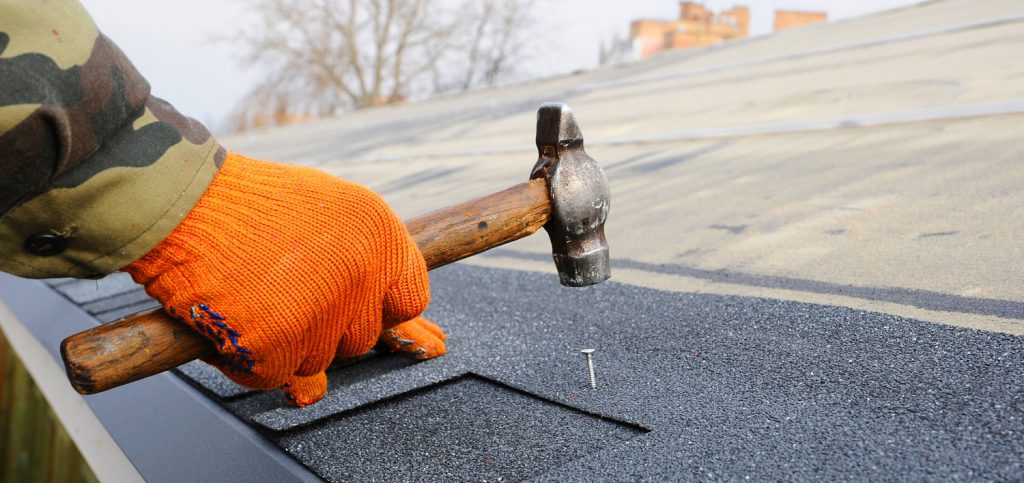
Want a straight answer on your roof?
We'll inspect it, document everything, and tell you honestly what you're looking at, even if the answer is patch it for now. No pressure.
Financing Your Iowa Roof Replacement
Not every roof replacement goes through insurance. If you're paying out of pocket, or if you have a large deductible to cover, financing can make the project manageable without draining savings.
Buckshot Exteriors offers financing options through third-party lenders for qualified buyers. When you request your estimate, ask specifically about current terms so you know what's available before you need to decide. If your project is partially covered by insurance, financing can also bridge the gap between the insurance payout and the full replacement cost, especially on ACV policies where depreciation reduces the check.
Best Time of Year to Schedule in Iowa
Late spring and early summer, roughly May through July, are Iowa's peak hail months. That's also when contractor backlogs are longest. If your roof was just hit in a June storm, you may be waiting several weeks for an opening.
Fall is often the best window if you have flexibility. September and October typically offer good weather, shorter wait times, and no rush to beat the next storm. Shingles seal properly in moderate temperatures, and crews aren't stretched thin across a dozen storm claims at once.
Winter installs are possible but not ideal. Shingles need ambient warmth to seal correctly, and cold snaps can complicate installation. If you have an active leak heading into winter, get it addressed immediately. If you're planning ahead, fall scheduling is usually the smart move.
What a Trustworthy Iowa Roofing Estimate Looks Like
A written estimate should spell out:
- Total square footage being replaced
- Shingle brand, product line, and color
- Number of layers being torn off
- Underlayment and ice-and-water shield specs
- Flashing replacement (valleys, pipe boots, step flashing)
- Decking repair allowance or per-sheet pricing
- Disposal and haul-away
- Permit fees
- Manufacturer warranty terms and what's required to keep them valid
- Workmanship warranty length and what it covers
If an estimate is just a single line item with a total number, ask for the breakdown. You need to know what you're buying.
- A price dramatically lower than every other bid (corners are getting cut somewhere)
- Pressure to sign on the spot, or a "today only" discount
- A request to sign over your insurance claim (Assignment of Benefits)
- An offer to "waive your deductible" (that is insurance fraud, and it puts you at risk)
- No written, itemized estimate, or no proof of insurance
- A large upfront payment (more than 30%) before any work begins
Why Cheaper Bids Often Cost More in the End
After a major Iowa hail storm, out-of-state storm chasers flood the market. They offer low prices, collect deposits, do rushed work, and are gone before the first winter. Manufacturer warranties require certified installation to be valid. A roof installed by an uncertified crew with cut-rate materials may look fine in October and leak by March.
Ask any contractor you're considering: How long have you been operating in Iowa? Are you licensed and insured in this state? Do you pull permits? Can you provide local references from the past year?
A contractor who's been doing residential roofing in Iowa for decades isn't going anywhere. That matters when you need warranty work or have a question two years down the road. See what our customers say about working with us and judge for yourself.
Getting Your Free Iowa Roof Replacement Estimate
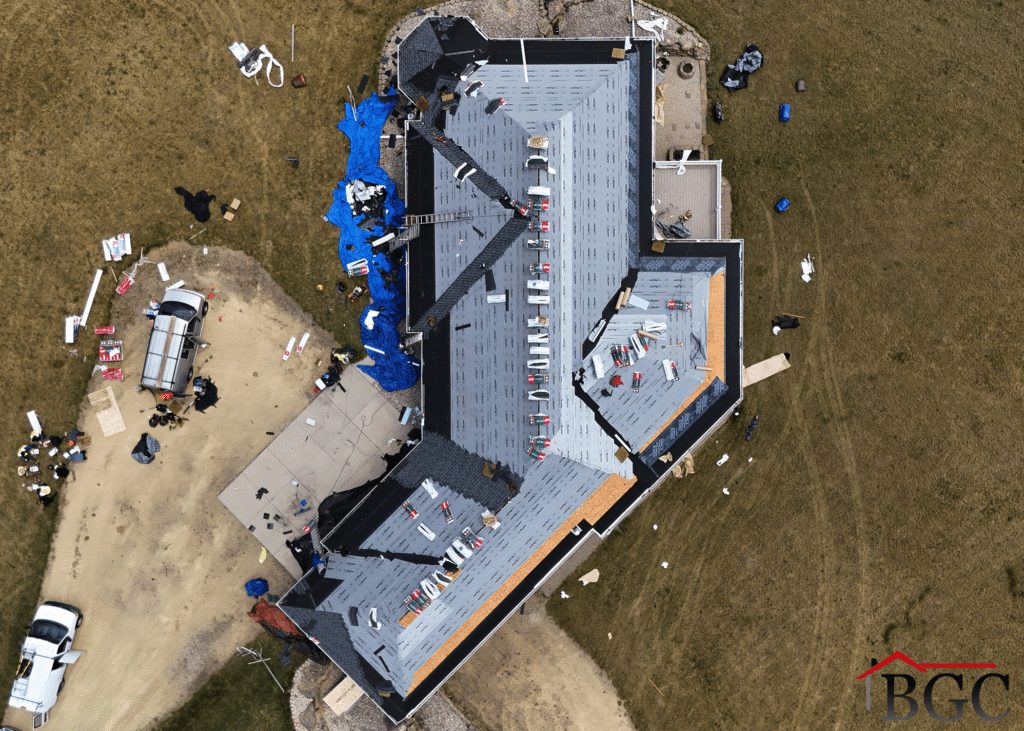
You don't need to figure this out alone. Buckshot Exteriors has been helping Iowa homeowners through roof replacements and storm claims since 1979, with a home base in Centerville and crews serving southern and central Iowa.
We'll come out, inspect your roof, give you a clear written estimate with every line item spelled out, and walk you through your options, whether that's a repair, a full replacement, or an insurance claim. We meet adjusters on-site, explain your warranty options, and can talk through financing if you need it.
No pressure, no obligation. Just honest answers from a contractor who's been doing this long enough to know every shortcut to avoid and every detail that matters.
Contact us here to schedule your free inspection. We'll get on the roof, document what's there, and give you a real number, not a ballpark from a website.
Get a straight answer on your Madison roof
Wisconsin storm season and insurance non-renewal letters do not wait. Get a free, no-obligation inspection and an honest assessment of exactly what your roof needs, even if the answer is to wait.