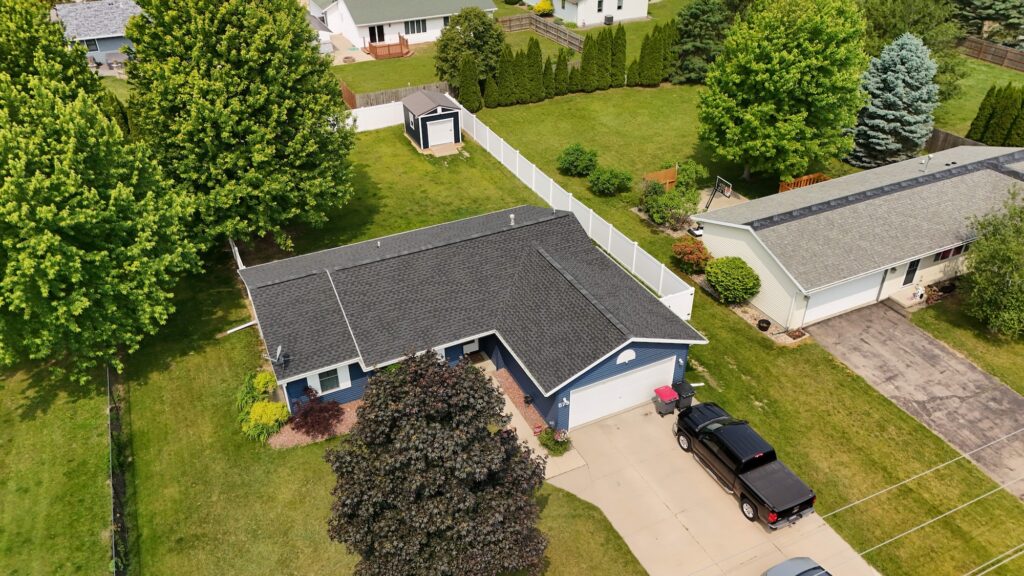
At least once a year - ideally in late spring after the freeze-thaw season ends, or in early fall before winter hits. After any significant hail or wind storm, get eyes on it right away. Wisconsin weather is hard on roofs, and small problems found early are almost always cheaper to fix.
Get My Free Estimate →Your roof doesn't ask for much. It just sits up there, taking everything Wisconsin throws at it - March ice storms, June hail, August heat, and then another Wisconsin winter all over again.
The problem is that most homeowners don't think about their roof until water is dripping into the living room. By then, what could have been a $400 repair has turned into a $12,000 replacement - or worse, a mold problem inside the walls.
This checklist is built for homeowners in Dane, Rock, and Green counties. The weather here is specific. The failure modes are specific. And the advice below reflects 47 years of working on roofs in this exact part of the state.
When to Run Through This Checklist
Do this twice a year: once in late April or early May after the freeze-thaw season is done, and once in late September before the first hard freeze. Add a third pass after any significant hail or wind event - which, around Madison and Janesville, means at least a couple times most summers.
You don't need to get on the roof to do most of this. In fact, we'd rather you didn't. A pair of binoculars and a flashlight in the attic will get you most of the way there.
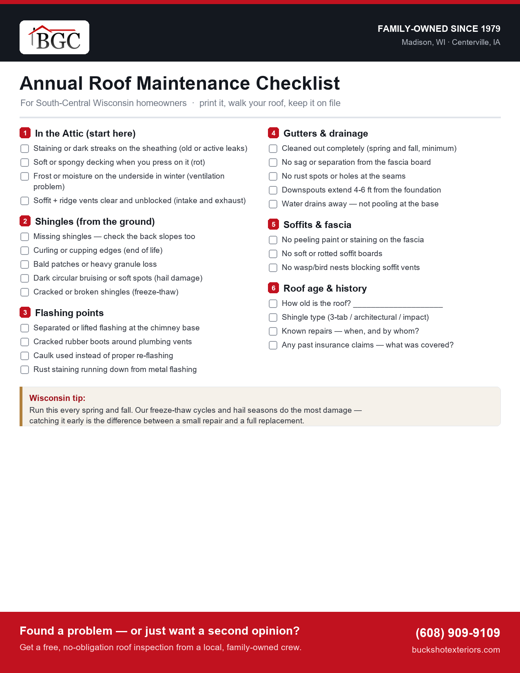
The Annual Roof Maintenance Checklist
A free, printable 1-page checklist built for South-Central Wisconsin roofs - walk your roof, catch problems early, keep it on file.
↓ Download the Free Checklist (PDF)No email required · Printable PDF · Family-owned since 1979The Annual Roof Maintenance Checklist
1. Start in the Attic
This is the step most homeowners skip entirely. Don't.
Go up on a sunny day and kill the lights. Look for pinpricks of daylight coming through the decking - that's a gap or crack that water will find before you do. Then check for:
- Staining or dark streaks on the sheathing (old or active leaks)
- Soft or spongy decking when you press on it (rot)
- Frost or moisture on the underside of the roof deck in winter (ventilation problem)
- Proper soffit and ridge ventilation - both intake and exhaust vents should be clear and unblocked
Poor attic ventilation is one of the biggest silent killers of Wisconsin roofs. When heat builds up in the attic, it bakes the shingles from the inside out and cuts years off their life. It also creates the conditions for ice dams in winter.
2. Inspect Shingles from the Ground
Grab binoculars and walk the perimeter. You're looking for:
- Missing shingles - obvious, but easy to miss on a back slope
- Curling or cupping edges - shingles that curl up at the edges or cup in the middle are at end of life
- Bald patches or heavy granule loss - granules protect the asphalt from UV; when they're gone, the clock is ticking
- Dark circular bruising or soft spots - classic hail damage, often subtle from the ground
- Cracked or broken shingles - common after our freeze-thaw cycles
Check your gutters and downspout splash blocks too. A heavy layer of granules in the gutter after a rain means your shingles are degrading. That's not an emergency, but it's a clear signal the roof is aging.
3. Check All Flashing Points
Flashing is the metal that seals the joints where your roof meets something else - chimneys, skylights, pipe boots, dormers, wall transitions. It's also where most leaks actually start.
Look for:
- Separated or lifted flashing around the chimney base
- Cracked rubber boots around plumbing vents (these dry out and crack, especially after UV exposure)
- Gaps that have been caulked over instead of properly re-flashed - a common shortcut that fails within a few years
- Rust staining running down from metal flashing points
If you have a chimney, look at the mortar between the bricks too. Spalling or cracked mortar lets water in, and it often runs down inside the wall rather than showing up as an obvious ceiling stain.
4. Inspect Your Gutters and Drainage
Gutters are part of your roof system. When they fail, water backs up under your shingles or pours down your foundation walls.
- Clean them out completely - spring and fall, minimum
- Check for sag or separation from the fascia board
- Look for rust spots or holes at the seams
- Make sure downspouts extend at least 4-6 feet from the foundation
- Check that water is actually draining away from the house, not pooling at the base
In Wisconsin, clogged gutters in late fall are one of the leading causes of ice dams. Water sits, freezes, and backs up under the first few courses of shingles. That's how you get water in your walls in January.
5. Look at Soffits and Fascia
Walk around the house and look up at the overhangs.
- Peeling paint or staining on the fascia often means water is getting behind the gutters
- Soft or rotted soffit boards mean moisture has been sitting there for a while
- Wasp or bird nests in soffit vents block ventilation - clear them out
These repairs are usually inexpensive when caught early. Left alone, they invite rot into the structural framing.
6. Note Your Roof's Age and History
This one's simple but important. Write it down somewhere you'll find it:
- How old is the roof? (Check your closing documents or ask a contractor)
- What type of shingles? (3-tab, architectural, impact-resistant)
- Any known repairs? When, and by whom?
- Any insurance claims? What was covered?
Most architectural shingles in south-central Wisconsin last 20-25 years under normal conditions. If yours is getting close, start budgeting - even if it looks okay from the ground. A roof inspection at year 18 or 19 can tell you what you're working with before you're forced into an emergency decision.
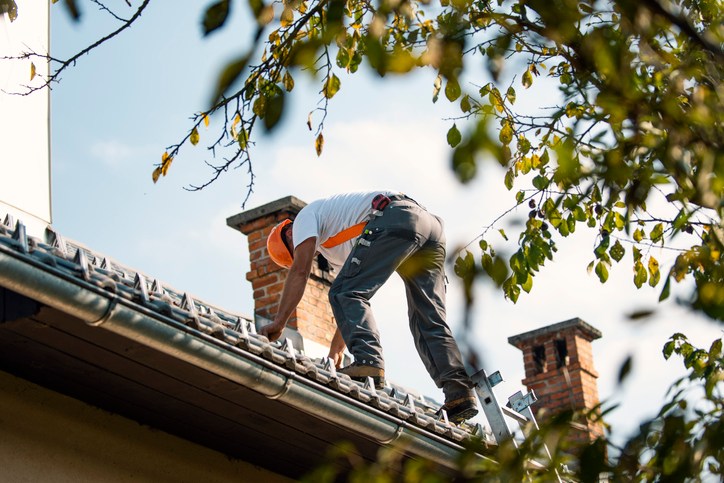
After the Checklist: What to Do With What You Found
If everything looks solid - good. File your notes, set a reminder for fall, and move on.
If you spotted something that concerns you - a suspicious dark spot, lifted flashing, granules in the gutter - don't wait. Small roof problems have a way of turning into big ones between one season and the next. A free inspection from a residential roofing contractor costs you nothing and gives you a clear picture of where things stand.
Want our free Wisconsin Roof Storm-Damage Insurance Claim Checklist? It walks you through exactly what to document, what to say to your adjuster, and how to make sure you're not leaving covered damage on the table. Reach out through our contact page and we'll get it to you - no strings attached.
What Bad Contractors Don't Check (And We Do)
Here's something worth knowing. A lot of "free inspections" are really just a sales pitch - the contractor goes up, tells you the roof is shot, and hands you a replacement quote.
That's not how we work. We've been doing this since 1979, and our reputation in Madison, Janesville, Monroe, and the surrounding communities is built on giving people honest assessments. Sometimes that means telling someone their roof has five good years left and they should save their money.
When we inspect, we're checking decking condition, ventilation adequacy, flashing integrity, and shingle wear patterns - not just whether it looks rough from the curb. If there's storm damage, we document everything and meet your insurance adjuster on-site so nothing gets missed or underpaid.
You can read what our customers say about that experience on our reviews page.
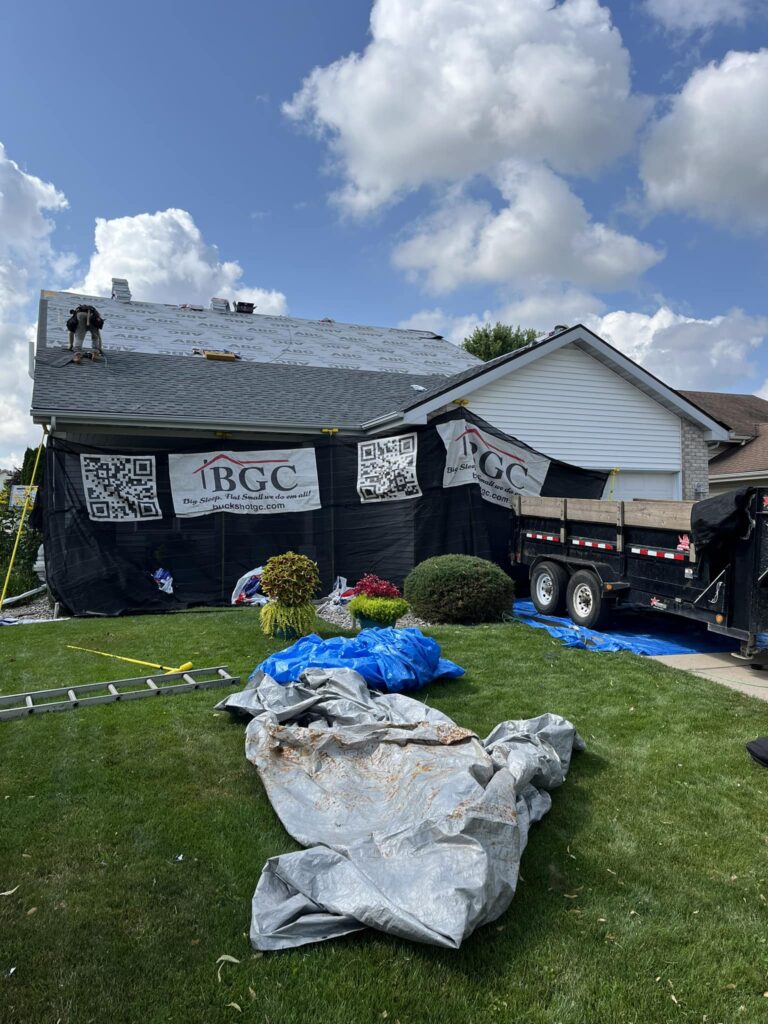
Want a straight answer on your roof?
We'll inspect it, document everything, and tell you honestly what you're looking at, even if the answer is patch it for now. No pressure.
A Note on Storm Damage Specifically
If you've had a significant hail or wind event in the last year or two, run through this checklist with storm damage in mind. Hail damage on asphalt shingles doesn't always look dramatic. It shows up as small dark bruises or areas where the granules have been knocked off in a circular pattern. It's easy to miss, and insurance adjusters don't always catch it either - especially if they're working fast.
The damage matters because it shortens the remaining life of the shingle. Even if the roof isn't leaking today, compromised shingles will fail sooner. That's a covered loss, and you have the right to document it properly.

Get a Professional Set of Eyes on Your Roof - For Free
This checklist will help you stay ahead of problems and know what questions to ask. But there's no substitute for a contractor who's been on thousands of Wisconsin roofs and knows what the warning signs actually look like up close.
Buckshot Exteriors offers free roof inspections for homeowners throughout Dane, Rock, and Green counties. We'll give you a straight answer about what we find - good news or bad - and a clear path forward if anything needs attention. Contact us to schedule your inspection or to request your free Wisconsin Roof Storm-Damage Insurance Claim Checklist. No pressure, no obligation, just honest information from people who've been doing this work in your community for over four decades.
Get a straight answer on your Madison roof
Wisconsin storm season and insurance non-renewal letters do not wait. Get a free, no-obligation inspection and an honest assessment of exactly what your roof needs, even if the answer is to wait.