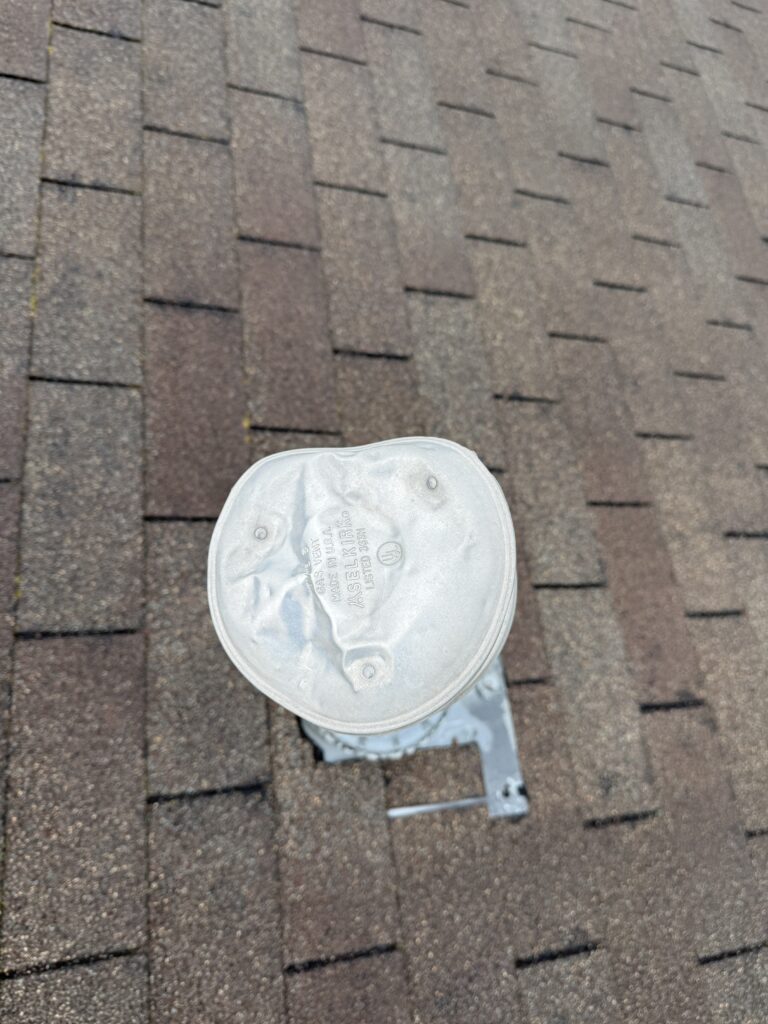
For most homes with a long, continuous ridge, yes. A ridge vent exhausts warm, moist air evenly along the whole peak, which keeps the roof deck at a more uniform temperature and helps limit ice dams and winter condensation. Box vents are the better choice on hip roofs and roofs with short or broken ridges, where there is too little peak for a ridge vent to work.
Get My Free Estimate →- What is a ridge vent, and what is a box vent?
- Ridge vent vs box vent: side by side
- How much venting do you need?
- The mistake that ruins both systems: no intake
- Never mix ridge vents and box vents on the same attic
- Snow, wind-driven rain and Wisconsin winters
- Will bats, wasps or birds get in?
- Summer: hot upstairs rooms
- What about powered attic fans and turbines?
- What a correct installation looks like
- What you can check yourself
- Ventilation and your shingle warranty
- Cost: what to compare
- Will insurance pay?
- The bottom line
- FAQs
Short answer: on most Wisconsin homes with a long, unbroken ridge, a continuous ridge vent is the better exhaust vent. It lets warm, moist air out evenly along the whole peak instead of at a few isolated spots, and even airflow is what a cold, snowy winter calls for.
Box vents are not a bad product. They are the right choice on hip roofs, on roofs with short or broken ridges, and anywhere a ridge vent cannot get enough length to work.
Whichever you choose, the vent is only half the system. Without enough intake at the soffits, neither one works.
What is a ridge vent, and what is a box vent?
Both are exhaust vents. They let hot, humid air escape near the top of the attic so cooler outside air can be drawn in low, through vents in the soffits (the underside of the roof overhang).
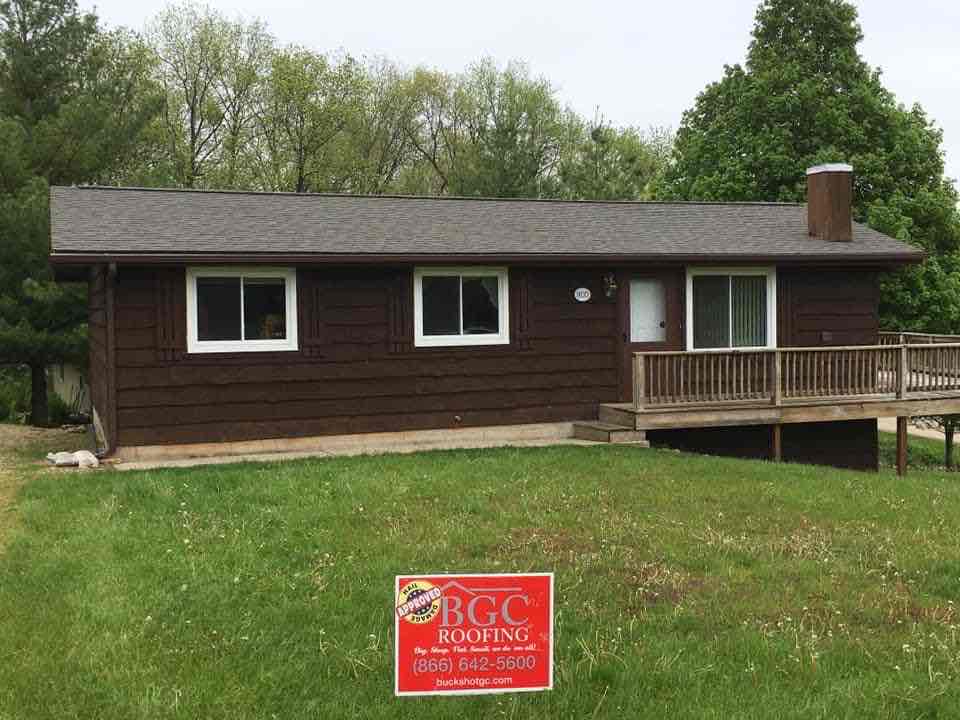
A ridge vent is a continuous vent along the peak of the roof. The roofer cuts a slot in the roof deck on both sides of the ridge, covers it with a vent strip, and caps it with ridge shingles, so from the street it is nearly invisible.
A box vent, also called a turtle vent, static vent or louver vent, is a low hood set over a hole cut near the top of a roof slope. Each one vents only the area around it, so a roof usually needs several, spaced across the upper part of the roof.
Ridge vent vs box vent: side by side
| Continuous ridge vent | Box (turtle) vents | |
|---|---|---|
| How it exhausts | Evenly along the whole peak | Spot exhaust, weaker airflow between boxes |
| Best on | Long, mostly unbroken ridge lines | Hip roofs, short or broken ridges, heavy dormers |
| Ice dams | Helps keep the deck evenly cold | Can leave warmer pockets between vents |
| Roof openings | One slot, hidden under the ridge cap | Several separate cut and flashed holes |
| Looks | Nearly invisible | Visible from the street |
| Blowing snow and rain | Needs a baffled vent with an internal filter; old unbaffled vents can let snow in | Hooded design sheds snow and rain well |
| Cost | Usually a little more | Usually a little less |
Ridge vent pros and cons
Pros
- Even exhaust along the full ridge, with no dead zones
- No separate holes in the field of the roof, and nearly invisible
- No moving parts
- Pairs naturally with continuous soffit intake as a balanced system
Cons
- Needs enough continuous ridge length; hip and pyramid roofs may not have it
- Most products list a minimum roof pitch in their installation instructions
- Cheap unbaffled versions can let wind-driven snow and rain in
- Usually costs a little more than box vents
- Depends on workmanship: the deck slot has to be cut correctly
Box vent pros and cons
Pros
- Works on roofs with little or no usable ridge
- Simple and inexpensive, and easy to replace one at a time
- The hood sheds rain and snow well
- Useful on additions, detached garages and roof sections a ridge vent cannot reach
Cons
- Each vent covers only its own area, so count and placement matter
- More holes in the roof, and each one is a flashing detail that can leak
- Visible from the street
- Plastic hoods can crack in hail or under falling ice
How much venting do you need?
The common rule in building codes is 1 square foot of net free vent area for every 150 square feet of attic floor. Many codes reduce that to 1 square foot per 300 when the venting is balanced, with part of it high on the roof as exhaust and the rest low at the eaves as intake. Wisconsin uses its own dwelling code, so ask your contractor or local building inspector which ratio applies to your house.
"Net free area" (NFA) is the open airflow area left after screens, louvers and filters are subtracted. It is printed on the vent's packaging or data sheet, and it is always smaller than the hole in the roof.
Worked example, 1,400 sq ft attic at the balanced 1/300 ratio:
- 1,400 ÷ 300 = about 4.7 sq ft of total NFA, or about 672 square inches
- Split evenly: about 336 sq in of exhaust and 336 sq in of intake
- Many ridge vents are rated around 18 sq in of NFA per linear foot, so 336 ÷ 18 = about 19 feet of ridge vent
- Box vents rated around 50 to 60 sq in each would take about 6 box vents
- Perforated soffit ratings vary widely, so size the intake from the figure printed on the product you use
Ratings differ from product to product, so the number on your vent's label is the one that counts. Ask your contractor to show the calculation on paper.
Two rules fall out of that math. Exhaust and intake should be about equal, with intake equal or slightly larger, never the reverse. And adding exhaust beyond the calculated amount does not add ventilation.
The mistake that ruins both systems: no intake
If the soffits are blocked, painted shut, covered with solid panels or were never vented, the exhaust vents cannot draw outside air in low. They pull air from the next easiest place, which is often your living space: through gaps around bath fans, recessed lights, the attic hatch and the tops of interior walls. That means heated air leaving all winter and indoor humidity landing in a cold attic.
The result is frost on the underside of the roof deck in mid-winter, rusty nail tips, matted insulation, and ceiling stains when it all melts.
Common causes of blocked intake:
- Blown-in insulation pushed out over the top of the wall, burying the soffit vents
- No baffles (insulation chutes) at the eaves to keep an air channel open
- Solid soffit panels with no perforations
- Bath fans venting into the attic instead of outside
Fix intake first. Then choose ridge vent or box vents. Our guide to attic ventilation in Wisconsin explains the whole system.
Never mix ridge vents and box vents on the same attic
If a ridge vent and box vents share one attic space, the box vents short-circuit the system. Air takes the shortest path, so the ridge vent pulls outside air in through the box vents a few feet below it instead of from the soffits. The top of the attic gets airflow and the lower attic, including the eaves where ice dams start, does not.
Gable vents cause the same problem. A gable louver sits well above the soffits, so a ridge vent can draw air straight through it and skip the lower attic. When a continuous ridge vent goes in, the old box vents should come out, the holes should be patched with new decking, and gable vents are usually closed off from the inside. The exception is two separate attic spaces, such as the main attic and a space over an attached garage, which each need their own plan.
If you are planning a roof replacement, that is the easiest time to get this right.
Snow, wind-driven rain and Wisconsin winters
Blowing snow and driven rain. A quality ridge vent has an external baffle that deflects wind up and over the slot, plus an internal weather filter behind it. Older unbaffled roll vents are more likely to let snow and rain in. When a ridge vent leaks, the usual causes are an old unbaffled product, a cap nail in the wrong place or missing end plugs, not the idea of a ridge vent itself.
Snow on the peak. Snow sitting on the ridge temporarily reduces airflow through a ridge vent. That is normal. Box vents sit a little lower and are less affected, although deep snow covers them too.
Ice dams. Ice dams form when heat leaking into the attic melts snow higher on the roof and the water refreezes at the cold eave. Balanced exhaust and intake help keep the roof deck evenly cold, but air sealing and insulation matter even more. Our guide to ice dams in Wisconsin covers causes and prevention.
Ice barrier at the eaves. Ice-and-water membrane along the eaves works alongside good venting; it does not replace it. Cold-climate codes commonly require it from the roof edge to a point inside the exterior wall, and your building inspector can confirm the requirement for your house.
Whistling. Ridge vents are usually quiet. A whistle normally points to a gap under the cap shingles, a slot cut to the wrong width, or a large open gable vent creating a pressure difference. It is a workmanship issue worth fixing.
Will bats, wasps or birds get in?
A correctly installed ridge vent should not let them in. The vent has internal mesh or a weather filter behind the slot, and both ends of the run get end plugs.
Pests usually get in somewhere else: missing or broken end plugs, brittle old roll vent, unscreened gable louvers, rotted soffit panels and lifted box vent flanges. If bats are already in the attic, have a wildlife professional exclude them before the roof work. Bat exclusion is timed to avoid the summer months when young bats cannot yet fly.
Summer: hot upstairs rooms
A poorly vented attic in July can get much hotter than the air outside, and that heat radiates down into the rooms below. Balanced exhaust and intake keep the attic closer to the outdoor temperature.
Venting does not replace insulation and air sealing. If the attic has thin, settled insulation and a leaky hatch, no vent will fix the upstairs bedroom. Seal the ceiling, insulate to depth, and vent the roof.
Want a straight answer on your roof?
We'll inspect it, document everything, and tell you honestly what you're looking at, even if the answer is patch it for now. No pressure.
What about powered attic fans and turbines?
Powered fans sound like an upgrade, but in a cold climate they often work against you:
- They can pull conditioned air out of the house through ceiling gaps
- In winter they can draw moist indoor air up into the attic
- With too little intake, some can backdraft gas appliances such as a water heater or furnace
- Motors and thermostats eventually fail, often without anyone noticing
We compare the options in turbine vents vs power attic fans vs ridge vents. For most homes, passive exhaust plus real soffit intake does the job with nothing to wire and nothing to break.
What a correct installation looks like
The slot. The deck is cut back on each side of the ridge to the width the vent manufacturer specifies. Too narrow and the vent cannot breathe; too wide and the cut runs into framing and leaves sheathing edges unsupported. A ridge vent installed without cutting the deck does nothing.
A baffled vent. External baffle plus internal weather filter.
Correct fasteners. Ridge cap nails go through the vent in the marked nailing zone and are long enough to reach the deck.
End plugs and terminations. Both ends are plugged so wind cannot drive snow or water in sideways.
Box vents placed high. Box vents go near the ridge, evenly spaced, and are flashed into the shingles. When switching to a ridge vent, the old ones come out and the holes are decked over.
Intake checked from inside. Soffits open and baffles in place before anyone calls the job balanced.
What you can check yourself
From the ground: are the soffit panels perforated or solid? Solid soffit usually means little or no intake.
- From the ground: what exhaust do you have? Ridge vent, box vents, gable louvers or a mix? A mix on one attic is worth asking about.
- In the attic on a cold morning, with a flashlight: frost or wet spots on the deck and nail tips, rusty nails, dark or matted insulation at the eaves, and whether you can see daylight at the eaves.
- In the attic: find the bath fan duct. If it ends in the attic instead of outside, that alone can cause frost.
- Step only on joists or trusses, never on the drywall between them. If the attic is cramped or shows signs of animals, stay out and have it inspected.
Cutting a ridge slot is not a DIY job. Blade depth, framing, cap shingle matching and one bad cut can all mean a leak.
Ventilation and your shingle warranty
Shingle manufacturers generally require attic ventilation that meets their guidelines as a condition of the material warranty, and inadequate ventilation is a common exclusion when a premature-failure claim is denied. Curled, blistered or brittle shingles over a hot, poorly vented deck make for a hard claim to win. Fix ventilation during a re-roof and ask your contractor to document it. Our GAF Master Elite page explains how certified installation affects warranty coverage.
Cost: what to compare
Ridge vent usually costs a little more than box vents, but on a full re-roof the difference is small next to the whole job, so let airflow choose the system rather than price. The bigger items are the fixes that often come with it: opening up or replacing soffit intake, installing eave baffles, air sealing the attic floor, and venting bath fans outside. Ask for each one as a separate line on a written estimate, and be cautious of anyone who prices ventilation work without looking in the attic.
Will insurance pay?
Usually not for the ventilation itself. Ice dam damage, attic condensation and rotted decking caused by poor venting are typically treated as maintenance, not sudden storm loss. Some policies cover sudden interior water damage from an ice dam (the ceiling, not the cause), so read your policy and ask your agent.
Hail and wind damage are different. On storm damage work we meet your adjuster on site to document it. A ventilation problem should never be dressed up as a storm claim.
The bottom line
Long, mostly unbroken ridge: a continuous baffled ridge vent, with soffit intake confirmed and sized. Hip roof, heavy dormers or a short peak: correctly sized and placed box vents. Never both on the same attic. Skip the powered fan. Run the numbers before anyone cuts a hole.
Buckshot Exteriors is family-owned and has worked on roofs and exteriors since 1979, with offices in Madison, WI and Centerville, IA. A free on-site inspection includes a look in the attic at intake, exhaust, frost and decking, and a plain answer on whether you have a ventilation problem. Learn more about attic ventilation and our residential roofing work, call (608) 909-9109, or get in touch here. Storm just came through? Our 24-hour storm line is the same number.
Get a straight answer on your Madison roof
Wisconsin storm season and insurance non-renewal letters do not wait. Get a free, no-obligation inspection and an honest assessment of exactly what your roof needs, even if the answer is to wait.