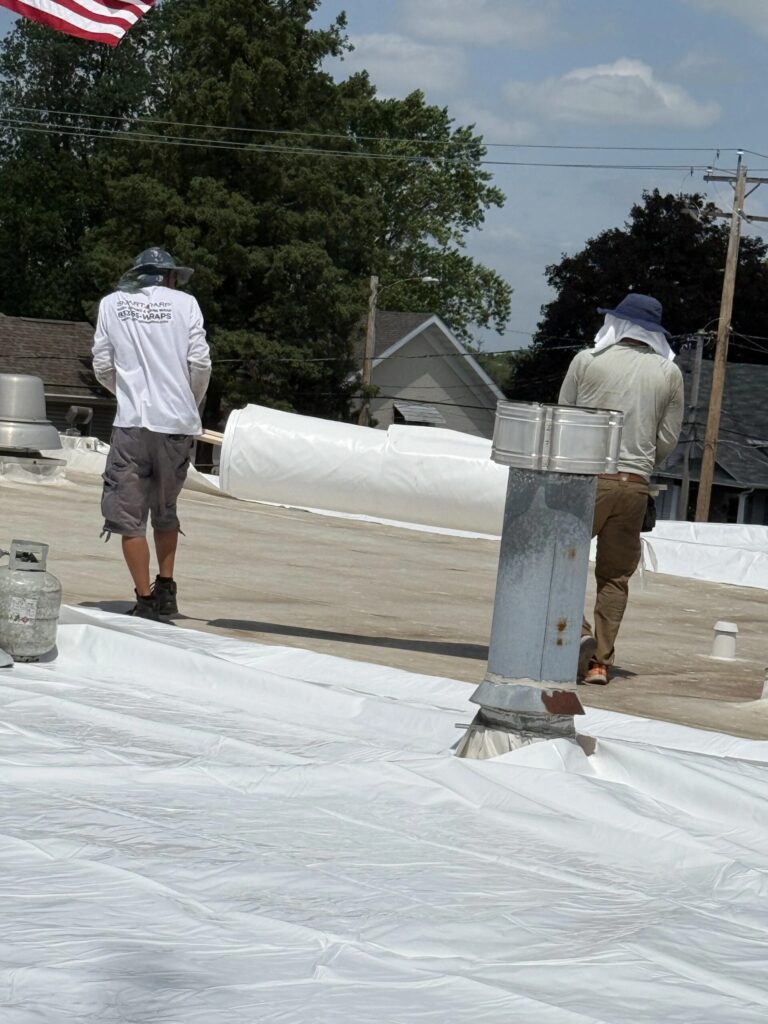
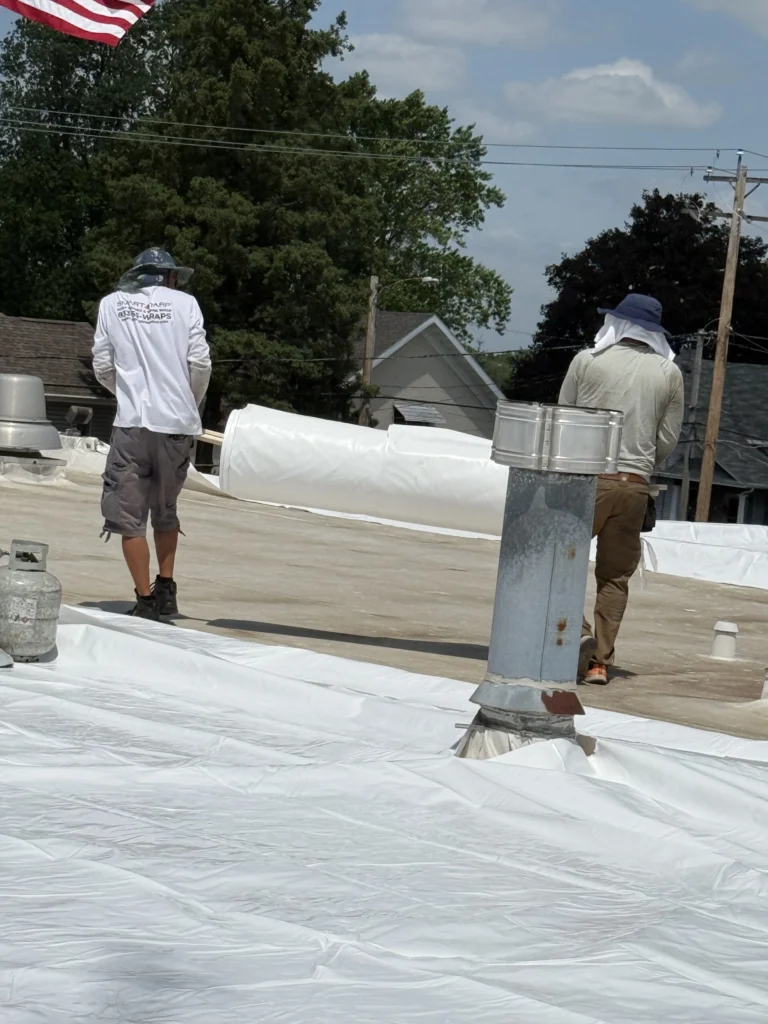
It depends heavily on the system, square footage, and current deck condition. TPO and EPDM membrane roofs typically run $6-$10 per square foot installed for the membrane work alone, not counting tear-off or deck repairs if those are needed. Modified bitumen tends to land in a similar range; standing-seam metal runs higher. A proper on-site assessment is the only way to get an accurate number for your building.
Get My Free Estimate →- The Commercial Roofing Systems Used in Madison
- What Buildings We Work On
- Repair, Re-Cover, or Full Replacement?
- Fixing Ponding Water: The Leading Cause of Flat Roof Failure
- What a Commercial Roof Inspection Covers
- What to Expect During the Job: Disruption, Timeline, and Weather Risk
- Budgeting, Payment Terms, and Protecting Yourself Financially
- Who Pays for the Roof: Landlord vs. Tenant
- Storm Damage and Commercial Insurance Claims
- Permitting and Code for Commercial Roofing in Madison
- Maintenance Programs: Protecting Your Investment Long-Term
- Why a Local Contractor Matters Here
- Our Commercial Service Area
- Get a Free Commercial Roof Assessment
- FAQs
If you manage or own a commercial building in Madison, your roof is probably your single biggest maintenance liability. One slow leak above a drop ceiling can ruin inventory, trigger mold, and push out tenants before you even know there is a problem. This guide walks you through every major decision you will face, from picking the right roofing system to navigating permits, insurance claims, and what a job actually looks like while your business stays open.
Buckshot Exteriors has been handling commercial roofing in Madison and across Dane County since 1979. Our crew is local, our project managers are local, and our reputation depends on the buildings in this community holding up.
The Commercial Roofing Systems Used in Madison
Most commercial buildings in this area have flat or low-slope roofs. That means a membrane system, not asphalt shingles. Here is what you will actually encounter.
TPO (Thermoplastic Polyolefin)
TPO is the most common membrane installed on new commercial construction in Wisconsin right now. It is white or light gray, which reflects solar heat, and the seams are heat-welded so they are genuinely watertight when done correctly. A quality 60-mil or 80-mil TPO membrane, installed by an experienced crew and maintained properly, can last 20-30 years.
The catch: seam quality is everything. A crew that rushes weld temperature or spacing will leave you with seam failures within five years. Always ask to see a contractor's past commercial work before signing anything.
Installed cost for TPO typically runs $6-$10 per square foot for the membrane system itself. That figure does not include tear-off or deck repairs if those are needed.
Warranty: Most major TPO manufacturers offer a 10-20 year material warranty. If the installer is certified by the manufacturer, you may qualify for an NDL (No Dollar Limit) warranty, which covers both material and labor costs on a covered failure. That is meaningfully different from a standard prorated warranty, and worth asking about specifically.
Energy note: TPO's white surface qualifies as a cool roof under most definitions, which can reduce cooling loads on your HVAC. Wisconsin's Focus on Energy program has offered rebates for qualifying cool-roof and insulation upgrades on commercial buildings. Incentive availability changes year to year, so check with Focus on Energy directly or ask us when we do your assessment, but it is worth factoring into your cost analysis.
EPDM (Ethylene Propylene Diene Monomer)
EPDM is the black rubber membrane you have probably seen on older warehouses and retail strips around Madison. It has been around for decades, performs well in our freeze-thaw climate, and is relatively easy to repair. Seams are bonded with adhesive or tape rather than heat-welded, which means seam quality depends heavily on surface prep and installer care.
EPDM is a solid, cost-effective choice for re-covers and budget-conscious replacements on low-traffic roofs. Installed costs run similarly to TPO, roughly $6-$10 per square foot for the membrane work. Manufacturer warranties are comparable, with NDL options available through certified installers.
Modified Bitumen
Modified bitumen is a multi-layer asphalt-based system, often torch-applied or self-adhered. It handles foot traffic better than single-ply membranes and is common on multifamily buildings and older office complexes. Lifespan runs roughly 15-20 years with proper maintenance. Torch-applied systems produce fumes during installation, which is worth knowing if your building has occupied tenant spaces directly below the work area.
Installed costs for modified bitumen are in a similar range to single-ply membranes, though multi-layer applications can push toward the higher end.
Standing-Seam Metal
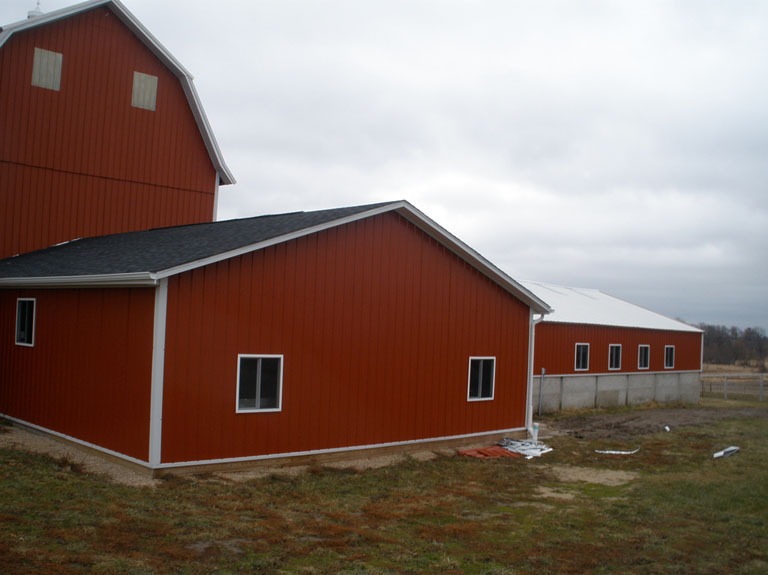
For buildings with enough slope, standing-seam metal is hard to beat for longevity. We install it on retail additions, agricultural-style commercial buildings, and anywhere a client wants a genuinely long-term solution. With proper maintenance, you are looking at 40 years or more of service life. The upfront cost is higher than membrane systems, but the lifecycle math often favors metal on buildings you plan to own long-term. You can see examples of our commercial metal work on our metal roofing page.
What Buildings We Work On
We work on the full range of commercial and income-producing properties across Madison and Dane County.
- Retail strip centers and standalone storefronts along corridors like Verona Road, Stoughton Road, and East Washington Avenue
- Warehouses and light industrial in areas like the Beltline industrial corridor and out toward Windsor and DeForest
- Multifamily buildings including apartment complexes, duplexes, and small condo associations
- Office buildings from small professional suites to mid-size complexes
- Churches and nonprofits (we understand budget constraints and work with boards and committees)
Repair, Re-Cover, or Full Replacement?
This is the question every building owner deserves an honest answer to before signing anything.
Repair makes sense when damage is isolated, the membrane is in generally good condition, and the underlying insulation is dry. A well-executed repair on a quality membrane can add years of service life at a fraction of replacement cost.
Re-cover means installing a new membrane directly over the existing one. This saves tear-off labor and disposal costs and is a legitimate option when the existing membrane is relatively flat, the insulation is dry (we verify with a core test or infrared scan), and the layer count allows it. Building codes, including the International Building Code that Wisconsin follows with state amendments, generally limit the total number of roof layers allowed on a commercial building. Local amendments and specific conditions can affect what is permitted on your building, so we verify the layer count and applicable requirements before recommending a re-cover. If you are already at the maximum, a full tear-off is required before any new system goes on.
One more thing on re-covers: installing over an existing system typically voids the manufacturer warranty on the new membrane. Some manufacturers will still issue a warranty on a re-cover if specific conditions are met, but it is not automatic. We will be upfront about what warranty coverage you can realistically expect before you make that call.
Full replacement is the right call when insulation is wet and compressed, when the deck has rot or structural damage, or when you are already at the maximum layer count. Skipping a needed tear-off is one of the most common shortcuts we see from contractors trying to win on price. It traps moisture, voids warranties, and accelerates deck failure.
Fixing Ponding Water: The Leading Cause of Flat Roof Failure
Ponding water, meaning water that sits on the roof surface for more than 48 hours after rain, is the single biggest accelerant of membrane failure on flat roofs in Wisconsin. It stresses seams, promotes algae growth, and adds dead load that can compromise the deck over time.
The fix depends on the cause. Sometimes it is as simple as clearing a blocked interior drain or scupper. In other cases the roof deck has settled or was never properly sloped, and the solution involves tapered insulation installed during replacement to create positive drainage toward the drains. We assess drainage as part of every commercial inspection and include remediation options in our written findings. A new membrane installed over a drainage problem is a membrane that will fail early.
What a Commercial Roof Inspection Covers
A proper commercial inspection is not a contractor walking around and eyeballing the surface. Here is what a thorough assessment includes.
- Membrane condition: checking for punctures, blistering, shrinkage, open seams, and lap failures
- Flashing and penetrations: pipes, HVAC curbs, drains, and parapet walls are the most common leak sources
- Drainage assessment: identifying ponding areas, blocked drains, and slope deficiencies
- Deck integrity: soft spots, delamination, or rot in the substrate
- Interior inspection: water stains, mold, insulation compression, and ceiling damage
- Photographic documentation: critical for insurance claims and for your own records
We provide written findings so you have something concrete to act on.
What to Expect During the Job: Disruption, Timeline, and Weather Risk
This is a real concern for business owners, and it is worth addressing directly.
Most commercial membrane replacements on a mid-size building (10,000-30,000 square feet) take one to two weeks from tear-off to final inspection. Smaller repairs or re-covers can often be completed in a day or two. We sequence the work to minimize the area of open roof at any given time, which reduces weather exposure to your interior.
Your business can typically remain open during the work. We coordinate access points, dumpster placement, and crew staging with you before the job starts. If you have tenants in the building, we will talk through the schedule with you so you can give them a heads-up on noise and any torch work.
What happens if it rains during the job? We monitor forecasts closely and plan tear-off sequences around weather windows. When open-roof conditions are unavoidable, we use temporary tarping and protection to cover exposed areas. We will walk you through our specific weather contingency plan before work begins, including what our contract says about responsibility for interior protection during the project. Read that section carefully, and ask questions if anything is unclear. A contractor who brushes off the weather-risk conversation is one to be cautious about.
Torch-applied modified bitumen does produce fumes. If you have occupied space directly below the work area, we will discuss timing and ventilation with you in advance. TPO and self-adhered systems are much lower-impact in that regard.
Budgeting, Payment Terms, and Protecting Yourself Financially
A large commercial roof replacement is a significant capital expense. A few things worth knowing before you sign a contract.
Payment schedules and deposits: A reasonable commercial roofing contract typically involves a deposit at signing (often 10-30% depending on material lead times), a progress payment at a defined milestone, and a final payment upon completion and your sign-off. Be cautious of any contractor asking for a large upfront payment before materials are ordered or work begins. Get the payment schedule in writing before work starts.
Lien waivers: Ask for conditional lien waivers from the contractor and any major subcontractors or material suppliers at each payment milestone. A lien waiver documents that the party has been paid and waives their right to file a mechanic's lien against your property for that amount. Without them, you could theoretically pay the general contractor in full and still face a lien from an unpaid supplier. This is standard practice on commercial jobs, and a professional contractor will not blink at the request.
Phasing: If the building has distinct sections or multiple roof areas, it is sometimes possible to phase the work, replacing the most critical sections first and scheduling the rest in a future budget cycle. We can help you prioritize based on condition and leak risk.
Energy incentives: Wisconsin's Focus on Energy program has offered commercial rebates for qualifying insulation upgrades and cool-roof installations. These incentives change, so verify current availability, but they are worth asking about when you are budgeting a full replacement. Even a modest rebate can offset a meaningful portion of the insulation upgrade cost.
Who Pays for the Roof: Landlord vs. Tenant
If your building has tenants, this question comes up. The short answer is: it depends entirely on your lease.
In a gross lease, the landlord typically handles all building maintenance including the roof. In a triple-net (NNN) lease, the tenant is responsible for taxes, insurance, and maintenance, which often includes the roof. Some NNN leases carve out structural components (like the roof deck or major capital replacements) and leave those with the landlord while the tenant handles routine maintenance. The language varies widely.
If you are a landlord dealing with a roof issue, review your lease before assuming who is responsible. If you are a tenant, do the same before calling a contractor on your own dime. Either way, we are happy to provide a written condition report that both parties can reference when working through the question.
Want a straight answer on your roof?
We'll inspect it, document everything, and tell you honestly what you're looking at, even if the answer is patch it for now. No pressure.
Storm Damage and Commercial Insurance Claims
Hail and wind hit commercial roofs just as hard as residential ones, and Dane County gets significant storm activity every spring and summer. The difference with commercial claims is the dollar amounts are larger and adjusters scrutinize documentation more carefully.
We meet your insurance adjuster on-site for commercial claims. An adjuster working alone will sometimes miss damage to membrane seams, HVAC curb flashings, or rooftop equipment. We identify and document every item of damage as your contractor, which helps ensure nothing is overlooked before a settlement offer is made. To be clear, we are not acting as a public adjuster and we do not negotiate your claim on your behalf. That is a licensed function. Our role is to make sure the physical damage is fully documented so your adjuster has complete information to work from. You can read more about our process on our storm damage restoration page.
One thing to understand about commercial policies: many are written on an ACV (Actual Cash Value) basis rather than RCV (Replacement Cost Value). ACV means depreciation is deducted from your payout. Check which type of policy you have before a storm hits, not after.
Thinking about a commercial roof assessment? We offer free on-site evaluations for Madison-area business owners and property managers. No pressure, no obligation. Just an honest look at what your roof needs. Reach out here or give us a call to schedule.
Permitting and Code for Commercial Roofing in Madison
The City of Madison requires permits for commercial roof replacements and for repairs that exceed a certain scope. Dane County municipalities like Sun Prairie, Cottage Grove, and DeForest have their own permit requirements as well.
We pull all permits as part of the project. This protects you legally, ensures the work is inspected, and keeps your certificate of occupancy clean. Any contractor who suggests skipping permits on a commercial job is a contractor you should walk away from.
Wisconsin follows the IBC with state amendments, which governs insulation R-values, deck attachment requirements, and the number of allowable roof layers. We build every project to meet those requirements, and we verify local amendments for each municipality we work in.
Maintenance Programs: Protecting Your Investment Long-Term
A 20-30 year membrane lifespan assumes the roof gets looked at periodically. Most membrane failures we see on roofs that should have had years of life left come down to deferred maintenance: a small seam separation that was never caught, a drain that got blocked over winter, a flashing that pulled away from a parapet.
We offer ongoing maintenance programs for commercial clients. Typically that means a semi-annual inspection (spring and fall), a written condition report, and minor repairs handled before they become major ones. For property managers overseeing multiple buildings, a maintenance agreement also gives you documentation of roof condition over time, which is useful for budgeting and for insurance purposes.
Why a Local Contractor Matters Here
National roofing companies operate on volume. They send crews to whatever market has storm activity, and when the work slows down, those crews move on. You are left with a warranty backed by a company that has no local presence.
Buckshot Exteriors has been in Madison since 1979. When a question comes up two years after a job, we are still answering the phone. Our crew is local, our project managers are local, and our business depends on doing right by the buildings in this community.
We are also a full-service exterior contractor. If your building needs siding, gutters, or windows alongside the roof work, we handle all of it under one contract and one point of contact.
Our Commercial Service Area
We serve Madison and the surrounding Dane County communities, including DeForest, Windsor, Cottage Grove, Sun Prairie, Stoughton, Middleton, Verona, and McFarland. If your property is in south-central Wisconsin, give us a call.
Get a Free Commercial Roof Assessment
Whether you have a specific leak to chase down, storm damage to document, or you just want to know what condition your roof is actually in, we are happy to come out and take a look. Contact Buckshot Exteriors to schedule your free commercial roof inspection. Family-owned and locally rooted since 1979, serving Madison and Dane County, and we will give you a straight answer about what your building actually needs.
Get a straight answer on your Madison roof
Wisconsin storm season and insurance non-renewal letters do not wait. Get a free, no-obligation inspection and an honest assessment of exactly what your roof needs, even if the answer is to wait.