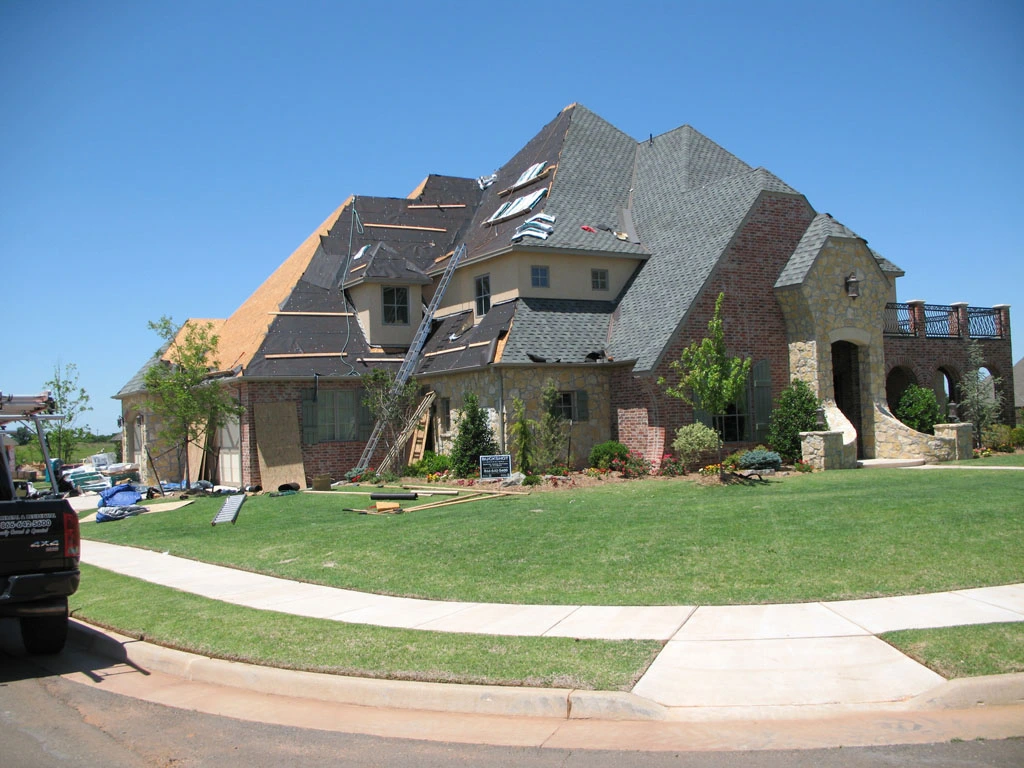
As a working rule, hail around 1 inch (quarter size) and larger commonly bruises asphalt shingles. Around 3/4 inch (penny size) can damage older, brittle or sun-baked shingles and will dent soft metals like vents, flashing and gutters. Pea-size hail almost never hurts a sound roof. Those are guidelines, not laws of physics: wind speed, impact angle, shingle age and shingle type all move the line. A 20-year-old three-tab roof can fracture from hail that a 5-year-old architectural shingle shrugs off.
Get My Free Estimate →- Was the hail big enough to matter?
- How to confirm hail hit your specific address, and when
- What hail damage actually looks like on a Sun Prairie home
- Cosmetic vs functional damage, and why it decides your claim
- When to call your adjuster, and what to do first
- What to verify, and what to refuse to sign
- June claim vs late-September claim: the seasonal reality
- If your roof is already 18-25 years old
- Will filing a hail claim raise my rates or get me dropped?
- Can you just repair the damaged slope instead of the whole roof?
- What you'll owe beyond your deductible
- What to do this week
- FAQs
If hail just hit your street, here's the short answer: call your insurance company promptly, usually within days of noticing damage, and check your declarations page for your policy's reporting window before you sit on it. Get eyes on the roof first, so you know whether you actually have a claim worth filing.
That's the whole decision in two sentences. Now here's how to tell what you're looking at.
Hail season in south-central Wisconsin runs roughly April through August, with the most damaging cells usually landing in May, June and July. Sun Prairie sits in the same storm-track corridor as greater Madison: cells build to the west and southwest over open farmland and drop hail on Dane County neighborhoods in narrow bands.
That's why one side of Sun Prairie can get pea-size hail and nothing else while a subdivision two miles away has cracked siding and roofs that need full replacement. "Did it hail in Sun Prairie" is not the same question as "did it hail at my house." If you want a set of eyes on your own roof, our Sun Prairie service area page is where to start.
Was the hail big enough to matter?
Usually the honest cutoff is about 1 inch. Hail around 1 inch (quarter size) and up commonly bruises asphalt shingles. Around 3/4 inch (penny size) can damage aged, brittle shingles and will dent soft metals like gutters, vents and flashing. Pea-size hail almost never hurts a sound roof.
But treat those as guidelines, not rules. Three things move the line:
- Wind speed. A 3/4 inch stone driven sideways at 60 mph hits harder than a 1 inch stone falling straight down.
- Shingle age. Asphalt gets brittle as it loses oils and granules. A 20-year-old three-tab roof can fracture from hail a newer architectural shingle shrugs off.
- Impact angle and slope orientation. Hail rarely falls perfectly vertical, which is why one slope gets hammered and another looks untouched.
So "it was only dime-size" isn't proof you're fine, and golf-ball hail isn't automatic approval either. What matters is what's actually on the shingles.
How to confirm hail hit your specific address, and when
Close that gap before you file, because your claim gets much easier when you can name a date.
- National Weather Service storm reports for Dane County log hail reports by date, size and rough location, and they're free to search.
- Hail-swath maps from private weather services show approximate storm footprints and let you look up an address.
- Ask your carrier directly. Tell them your address and ask what verified storm dates they have on file for your area. They subscribe to the same weather-verification data the adjuster will use.
- Low tech works too. Doorbell camera clips, a neighbor who remembers the night, or the date you found the yard covered in leaf shred.
Write the date down. Then take your photos.
What hail damage actually looks like on a Sun Prairie home
Hail damage shows up in a predictable order. The soft stuff tells you first, the roof tells you the truth.
Start where you can see without a ladder:
- Gutters and downspouts. Round dents in the front face of aluminum gutters, dings on the flat sides of downspouts. Check the side that faced the storm, usually west or northwest.
- Soft metals. Roof vents, turtle vents, plumbing boots, valley and chimney flashing, ridge cap metal. Hail leaves clean round dimples. Also check your AC condenser fins. Dented fins are one of the first things an adjuster looks at, though gravel and lawn equipment can ding them too, so the pattern matters more than one dent.
- Siding. Vinyl cracks in a spiderweb or a clean split, most often on the west or north elevation. Steel and aluminum show round dents. Impact marks the size of a golf ball or bigger usually mean the roof took a beating.
- Window wrap, screens and garage doors. Punched aluminum wrap and torn screens are strong evidence. Garage doors dent easily.
- Granules in gutters and at downspout outlets. Worth noting, but this is the weakest indicator on the list. Older shingles shed granules normally. A pile of black sand only means something alongside real impact marks.
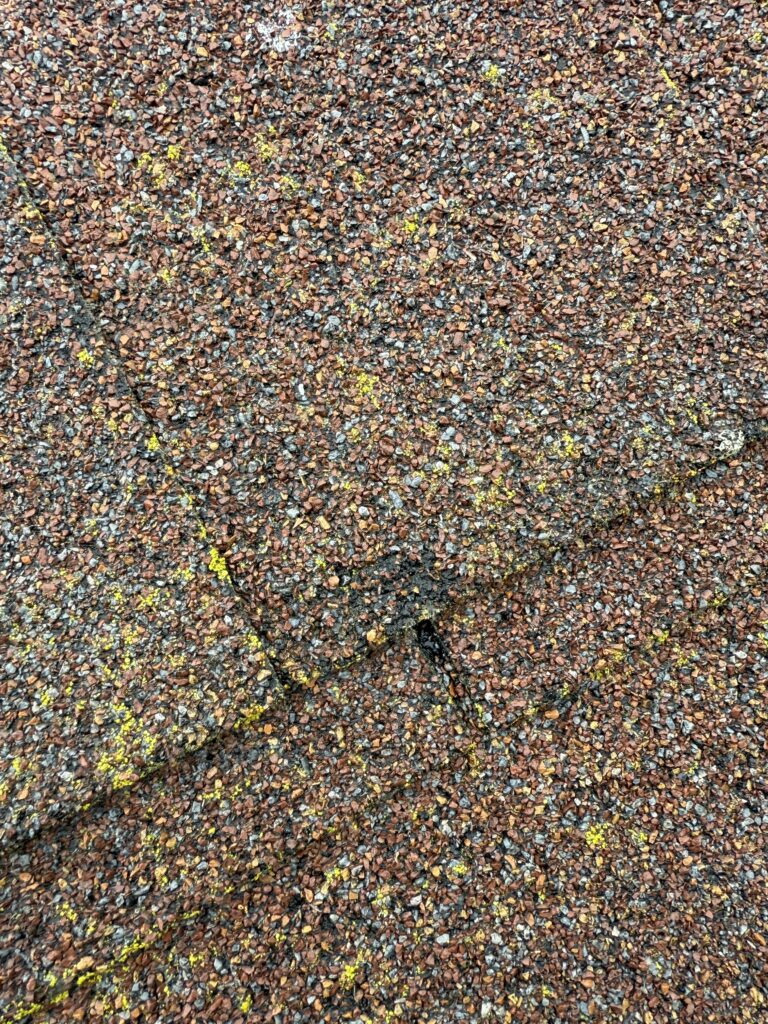
Up on the roof, what we look for on asphalt shingles is a bruise: a soft spot where the fiberglass mat under the shingle has fractured. Press it and it gives like a bruised apple. You'll also see granules knocked off in round patterns, cracked laminate shingles, and in bad cases exposed mat, the gray backing showing through where asphalt and granules are gone. Exposed mat means that shingle is no longer waterproof.
Three things that fool homeowners: blistering (small popped bubbles from heat, not impact), scuff marks from foot traffic, and ordinary granule loss on an old roof. To compare your shingles against real pictures before anyone comes out, our guide on how to spot hail damage on your roof, with photos walks through each of these side by side.
How many hits does it take?
Carriers generally want a minimum number of documented impacts inside a test square (typically a 10 x 10 foot, 100 square foot area) on each slope before they'll call that slope damaged. The threshold varies by carrier and adjuster, so be skeptical of anyone quoting you an exact number as gospel.
What you can control is documentation. A good inspector chalks every hit inside the square, does it slope by slope including the back and the garage, and photographs all of it.
Not sure which category you're in? That's exactly what a free look is for. Call (608) 909-9109 and we'll tell you straight whether you have a claim or a roof that just got scared.
Cosmetic vs functional damage, and why it decides your claim
Functional damage shortens the service life of the material: punctures, fractured shingle mat, exposed mat, split shingles, holes in a metal panel or plumbing boot, cracked vinyl siding that now lets water behind it. That's what a covered hail loss is built around.
Cosmetic damage looks bad but the material still does its job. Dents in a gutter face. Dimples in a metal panel that hasn't lost its coating. Dings in a garage door.
Why it matters: many carriers now attach a cosmetic damage exclusion to roofs and metal. If your only damage is dents, you may be looking at an unpaid claim. Cracked shingles and an active leak are a completely different conversation.
And if water is already getting in, act now. A small leak in June turns into rotted roof decking and stained ceilings by October, and by January it becomes an ice dam problem. Carriers pay for storm damage, not for damage you let sit.
When to call your adjuster, and what to do first
Call your carrier promptly after you notice damage, not months later. Every policy has language about reporting a loss within a reasonable or specified period, and that language sits on your declarations page or in the policy booklet. Read your own, because windows vary and some carriers are strict.
Here's the order we'd suggest, and we'd give the same advice if you never hired us:
- Get an honest inspection. Know whether you have functional damage before you file.
- Document it. Dated photos of gutters, siding, soft metals, AC fins and any interior staining. Note the storm date. If you have an active leak, most policies obligate you to take reasonable steps to prevent further damage, so emergency tarping is not optional cosmetics, it is protecting the claim. Keep every receipt. What you should NOT do is let anyone start permanent repairs before the scope is approved, since that can complicate what the carrier will pay for later.
- Open the claim. Get the claim number and the adjuster's name and direct contact.
- Have your contractor on the roof with the adjuster. This is the step that changes outcomes.
We meet your adjuster on-site and walk the roof with them, because a homeowner standing in the driveway cannot see whether the back slope got counted. That's the core of what a real hail damage inspection and repair scope covers.
What we typically find up there
Two patterns repeat constantly in Dane County neighborhoods.
The first: in newer subdivisions, the street-facing slope comes up clean and the rear slope is loaded with bruises, because the cell tracked in from the west or northwest and drove hail in at an angle. The homeowner looks from the driveway, sees nothing, and assumes they're fine.
The second: an initial scope comes back covering the rear slope and the gutters only. We go back up with chalk, mark test squares on the remaining slopes, and photograph what got missed, often bruising on ridge cap, a punched plumbing boot and dimpled window wrap. That goes in as a supplement with photos attached. Sometimes the scope widens. Sometimes it doesn't. What we can control is that nothing goes undocumented.
If the adjuster says no damage
Ask for a re-inspection, in writing, through your carrier. Adjusters handle enormous volume after a widespread hail event and damage gets missed, most often on rear slopes. Have your contractor present to point out chalked hits and exposed mat.
If the disagreement is deeper than a missed slope, most policies include an appraisal provision: when you and the carrier disagree on the amount of loss (not on whether it's covered), either party can demand appraisal, each side names an appraiser, and the two select an umpire. Look for that word in your policy. If you think the claim itself was mishandled, the Wisconsin Office of the Commissioner of Insurance takes consumer complaints. And if you're weighing outside help, there's a real difference between what a public adjuster and a contractor can do for you, which we laid out in public adjuster vs roofing contractor: who helps you first.
What to verify, and what to refuse to sign
You choose your contractor. Preferred vendor lists and "we'll send someone out" offers are conveniences, not requirements, and your claim is not conditioned on using them.
After a big cell, out-of-state crews show up in Sun Prairie with clipboards and door hangers. Some are fine. Many will be three states away when your roof leaks in March.
Credentials to check before any hail damage roof repair in Sun Prairie, WI begins
- The Wisconsin DSPS Dwelling Contractor Qualifier credential, plus the business Dwelling Contractor Certification. This is what stands behind permitted work on one and two family homes here.
- A certificate of general liability insurance and proof of workers' compensation, ideally emailed to you by their insurance agent, not printed off their truck.
- A local street address in Sun Prairie or greater Madison you could actually drive to.
- Manufacturer certification as a bonus, not a substitute. GAF Master Elite status, for example, requires the contractor to stay licensed, insured and in good standing.
- Real local reviews with names of towns you recognize.
Then, the paperwork rule: do not sign anything that assigns your claim or commits you to a contractor before a written scope exists. That means no assignment of benefits, no open-ended contingency agreement with blank dollar figures, and no handing over or endorsing the insurance check before you have a scope and a contract price in writing. Anyone offering to eat your deductible is proposing insurance fraud, and it's your claim on the line.
June claim vs late-September claim: the seasonal reality
They behave differently, and it's worth knowing before you delay.
Asphalt shingles seal themselves. The adhesive strip softens in the sun and bonds each course down. Once daytime temperatures settle into the 40s and below, that doesn't happen reliably on its own, so a correct cold-weather install means hand-sealing courses with roofing cement, keeping bundles warm and handling shingles carefully, because cold shingles crack when bent.
It can absolutely be done right in Wisconsin in November, and we do it. What you don't want is a rushed crew racing the first snow, or an approved claim with an active leak sitting until April. If your claim approves in October, ask specifically whether the crew hand-seals. Then ask about shingle color availability, which delays more Wisconsin jobs than weather does.
Want a straight answer on your roof?
We'll inspect it, document everything, and tell you honestly what you're looking at, even if the answer is patch it for now. No pressure.
If your roof is already 18-25 years old
Age alone is not a denial reason, but age absolutely affects what you get paid.
- RCV (replacement cost value): the carrier pays full replacement cost, holding back depreciation until the work is finished and documented, then releasing it.
- ACV (actual cash value): the carrier pays the depreciated value only. On a 22-year-old three-tab roof, that can be a small fraction of replacement cost.
- Roof surface payment schedule endorsement: a middle ground some carriers attach, paying a set percentage of replacement cost based on roof age. Older roof, smaller percentage.
Find the loss settlement section of your declarations page before the adjuster arrives, so the number doesn't blindside you. Also worth knowing: under Wis. Stat. § 631.36, a Wisconsin insurer that decides not to renew your policy has to mail or deliver written notice at least 60 days before expiration, stating the reason, so if a claim changes your standing you'll have real time to shop before coverage actually lapses.
Where age genuinely hurts is credibility. A worn roof with thin granule coverage gives an adjuster an easy "deterioration" call, which is exactly why chalked, counted impacts inside test squares matter more on an older roof, not less.
Will filing a hail claim raise my rates or get me dropped?
This is the question that keeps a lot of homeowners from filing at all, and it deserves a straight answer instead of a dodge.
Hail is a weather event, a catastrophe (CAT) loss, not something you did wrong, and most carriers treat it differently in their underwriting than an at-fault liability claim. That said, "most carriers" is not "every carrier," and Wisconsin does not cap how insurers price weather-loss history into renewal premiums the way some states regulate other factors. A single hail claim on an otherwise clean policy rarely triggers non-renewal on its own. A pattern of multiple claims in a short window is a different conversation, and can affect both premium and renewal eligibility depending on the carrier.
The honest move is to ask your own agent, before you file, how your specific carrier treats a first weather claim. That is a five-minute call, and it beats guessing. What we can tell you from watching this play out locally: homeowners who sit on real functional hail damage because they are worried about their premium tend to pay for it twice, once in a bigger repair bill later and once in the coverage gap if a small leak turns into decking damage in the meantime.
Can you just repair the damaged slope instead of the whole roof?
Sometimes, and it is a fair question to ask before assuming a full replacement is coming.
If hail damage is genuinely confined to one slope, a slope-only repair or partial replacement can be a legitimate, carrier-approved scope, and some carriers will pay exactly that. What pushes a claim toward a full replacement more often than the damage itself is shingle matching: if your shingle color or line has been discontinued or the manufacturer can't guarantee a match, patching one slope can leave a visibly different roof, and some state insurance rules and carrier practices account for that mismatch by paying for the whole roof rather than an obviously patched one. Roof age and remaining life also factor in, since a carrier weighing a partial repair against full replacement is looking at how much roof-life the partial repair actually buys back. This is exactly why the slope-by-slope documentation described above matters: it gives you and the adjuster real information to make that call on, instead of a contractor simply asserting "it all has to come off."
What you'll owe beyond your deductible
Your deductible comes out of the total either way, and many Wisconsin policies now carry a percentage-of-dwelling wind/hail deductible instead of a flat dollar amount. A 1% deductible on a $400,000 home is $4,000. Check that line.
Beyond the deductible, common out-of-pocket items:
- Code-required items. Ice-and-water shield, drip edge, ventilation. Usually paid if you carry ordinance or law coverage. Can land on you if you don't.
- Decking. Rotted or delaminated decking discovered at tear-off is often covered when storm-related, but long-deteriorated or undersized decking frequently isn't. Reputable contractors price it per sheet and show you the boards.
- Upgrades you choose. Class 4 impact-resistant shingles, standing-seam metal, a color change. The carrier owes like-for-like and the difference is yours. Some carriers do offer a premium credit for impact-resistant roofing, so ask your agent whether yours does and how much before you decide.
If the deductible is a hardship, say so early. Financing exists for the homeowner-responsible portion. What we won't do is pretend the deductible disappears.
What to do this week
Walk the property. Dents in gutters, AC fins, west and north siding, ceiling stains upstairs. Pull the storm date off a weather report. Then read three lines on your declarations page: the wind/hail deductible, the roof loss settlement language, and the reporting window.
Then get someone on the roof who does this for a living. Our on-site inspection is free, there's no pressure, and if your roof is fine we'll tell you so and leave. If it isn't, we'll show you the photos, tell you whether it's cosmetic or functional, and walk you through a Sun Prairie roof insurance claim from filing to final inspection. Buckshot has been family-owned and working on Wisconsin exteriors since 1979, and because we handle roofing, siding, gutters and windows, nothing gets left off the scope.
Call (608) 909-9109, see how we work as a hail and storm damage contractor, or send us your photos here if you'd rather start that way.
Hail doesn't get better sitting there. Find out what you've got while the storm date is still fresh.
Get a straight answer on your Madison roof
Wisconsin storm season and insurance non-renewal letters do not wait. Get a free, no-obligation inspection and an honest assessment of exactly what your roof needs, even if the answer is to wait.