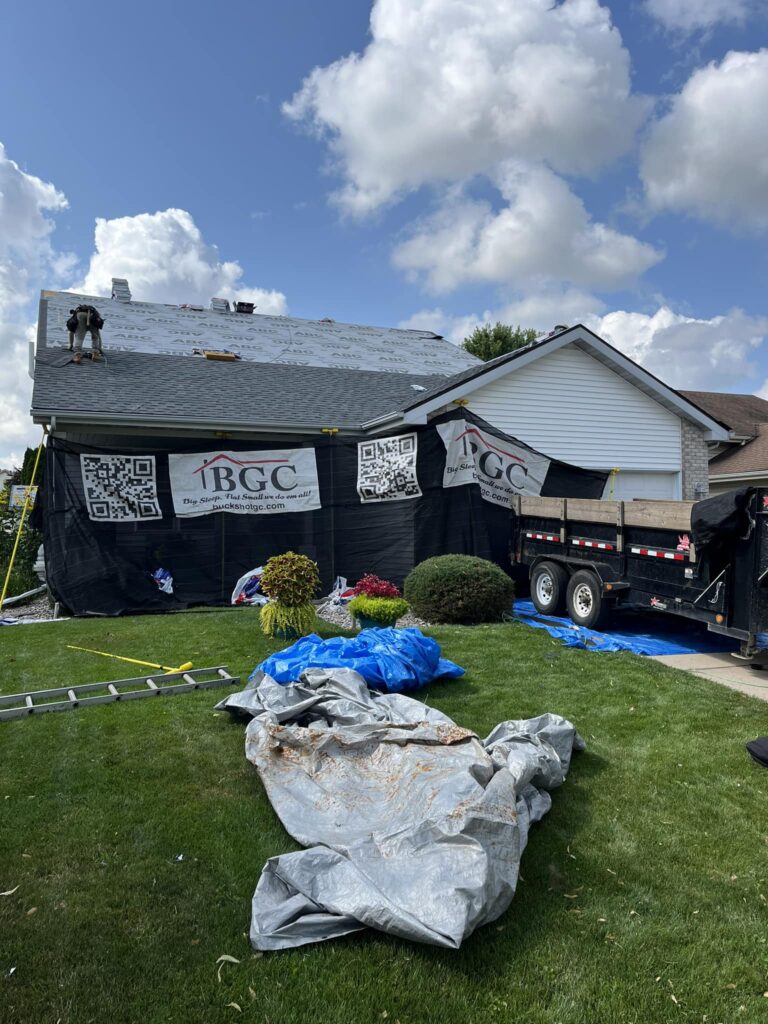
You do not need to be home, and the crew does not need to come inside your house. Roofers work off the outside of the building and typically plug compressors into an exterior outlet, which the contractor should clear with you first. It does help if someone is reachable by phone for the decking conversation mid-job, and it is worth being there in person for the final walkthrough.
Get My Free Estimate →- Before the crew arrives: material delivery, container, permit
- Who is actually on your roof, and are they insured?
- Morning setup: what time they start, what gets protected
- Tear-off: the loudest part of the day
- Solar panels, satellite dishes, and roof-mounted equipment
- The decking conversation, and how change orders should work
- The roof replacement process in order: dry-in through ridge vent
- Cleanup, the nail sweep, and damage to your property
- A realistic timeline, and what makes it longer
- Should you replace gutters at the same time?
- Payment, warranties, lien waivers, and the final walkthrough
- When you are ready, the next step is free
- FAQs
From the production side of Buckshot General Contracting (Buckshot Exteriors), family-owned since 1979, re-roofing homes across Dane, Rock, and Green counties.
Here is the short version. On a typical single-family home in south-central Wisconsin, a crew arrives around 7 a.m., protects your landscaping, tears the old roof off to bare wood, inspects and repairs the decking, dries the roof in the same day, then installs ice-and-water shield, underlayment, new flashing, shingles, and ridge vent. Most homes are done in one to two days. It is loud, your attic will get dusty, and by dinnertime on the last day your yard should look like nothing happened.
If you have not signed yet, one honest number so you are not guessing: a full tear-off and asphalt shingle roof replacement on a typical home around here generally lands in the $11,000-$22,000 range, roughly $450-$800 per square installed (a square is 100 square feet). Steep pitch, two or three existing layers, decking replacement, and cut-up rooflines push it toward the top. Material pricing moves, so treat that as a ballpark, never a quote.
And if you have signed, you are not thinking about price anymore. You are wondering whether you can take a work call, where the dog should go, whether the pounding is going to crack your ceiling, and what that first crash at 7:15 a.m. is going to do to your nerves.
Let's walk it in order.
Before the crew arrives: material delivery, container, permit
Two things usually show up before any roofer does: your materials and your debris container.
Material delivery. Shingles come in by boom truck, often the day before or early that morning. A typical single-family roof here is 20-35 squares, and one square of architectural shingles weighs roughly 230-250 pounds. That is 2-4 tons of material. Bundles get set on the roof in stacks spread across the ridge and slopes so weight is distributed, or staged in the driveway when the pitch is too steep to load safely. Underlayment, ice-and-water shield, drip edge, vents, and nails get staged in the drive or along the house.
Dumpster or dump trailer. Placement matters more than people expect. You want it as close to the tear-off side as possible so debris travels the shortest distance, with plywood under the wheels and tongue so an asphalt driveway does not dent or stain. On a short shared drive or a tight street in an older Madison or Janesville neighborhood, a dump trailer usually beats a roll-off.
Permit posted. In most municipalities around here a re-roof needs a permit, pulled by the contractor and posted where an inspector can see it without knocking. We broke down the local detail in our guide to roof permits in Madison, WI.
Neighbors, HOA, and where everybody parks
Give your neighbors a heads up the day before. It costs you nothing and it buys a lot of goodwill when a tear-off starts at 7 a.m. Let the immediate neighbors know if a truck may briefly block the street or if a container is going near a shared drive.
Check your HOA or subdivision covenants too. Many newer subdivisions around Verona, Sun Prairie, and Oregon require architectural approval for a shingle color change, and some restrict how long a container can sit in the driveway. Approval can take a couple of weeks, so ask early.
The night before, move cars out of the driveway and off the street in front of the house, take down wind chimes and hanging planters, and pull fragile things off top-floor walls. That last one is not us being dramatic.
Roof replacement cost by home size (Madison, 2026)
| Home | Roof size | Typical total |
|---|---|---|
| Small ranch / bungalow | 14-18 squares | $9,000-$13,000 |
| Average two-story | 18-26 squares | $12,000-$18,000 |
| Large or complex (steep) | 26+ squares | $17,000-$25,000+ |
Cost by roofing material (average Madison home, installed)
| Material | Lifespan | Typical total |
|---|---|---|
| Architectural asphalt (standard) | 25-30 yrs | $12,000-$18,000 |
| Impact-resistant (Class 4) | 30+ yrs | $15,000-$22,000 |
| Standing-seam metal | 40-50 yrs | $25,000-$45,000 |
Common add-on costs
| Item | Typical cost |
|---|---|
| Extra tear-off layer | $500-$1,500 |
| Decking replacement | $50-$80 per sheet |
| New flashing & pipe boots | $300-$700 |
| Seamless gutters | $1,000-$2,500 |
Typical Madison-area 2026 ranges. Your exact price depends on an on-site inspection. A new asphalt shingle roof recoups about 61% of its cost at resale on average (2024 Remodeling Cost vs. Value Report).
Quick roof replacement cost estimator
Get a ballpark in 20 seconds. For an exact figure, book a free on-site inspection.
Who is actually on your roof, and are they insured?
Ask this before tear-off day, not during it. Some companies run in-house employee crews, some use established subcontract crews, and good work gets done both ways. What matters is documentation.
Before the job starts you should have, or be able to request:
- A current certificate of general liability insurance for the company
- Proof of workers' compensation coverage for whoever is physically on the roof
- The contractor's Wisconsin dwelling contractor credentials
- A named project manager and a direct phone number, not just an office line
Why workers' comp matters to you: if an uninsured worker is injured on your property, you can end up tangled in it. Whether anything falls to your homeowners policy depends on your liability and medical-payments terms and on whether that worker could be deemed a casual employee of yours. It is not automatic, and it is not nothing, which is exactly why you verify comp coverage instead of guessing. We carry general liability and workers' compensation and will provide certificates on request. Ask the same of anyone else you are considering.
One more piece of the same question, and it is the financial one: subcontractors and suppliers have lien rights in Wisconsin. More on lien waivers in the payment section below.
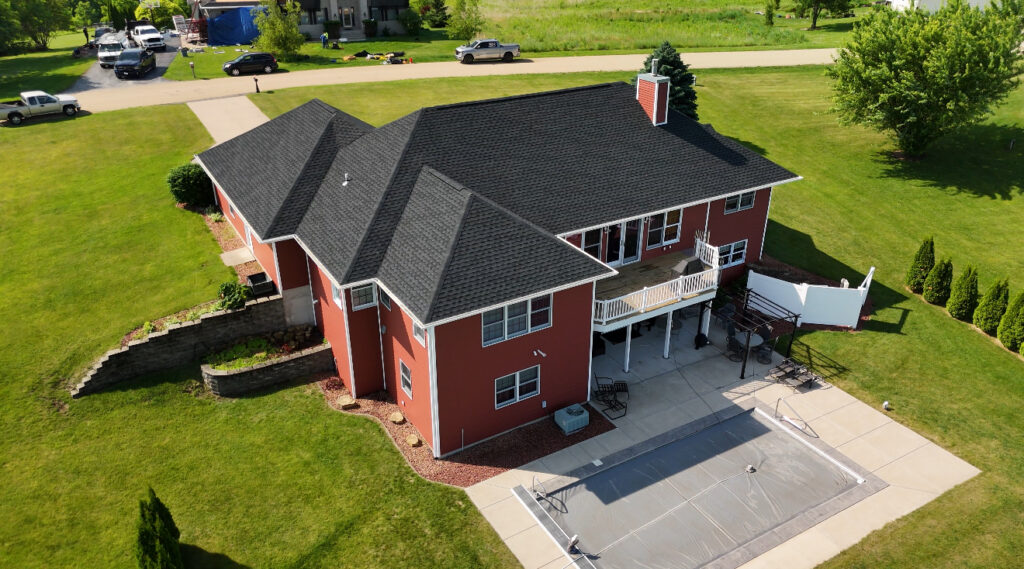
Morning setup: what time they start, what gets protected
Crews here generally start between 7:00 and 7:30 a.m., which falls inside the construction hours most local noise ordinances allow, and wrap between 5 and 7 p.m. depending on daylight and heat. If you need a later start, say so at scheduling.
Setup happens before a single shingle comes off, and it is what separates a careful crew from a fast one. Tarps go down along every slope being torn off, weighted and staked so wind does not lift them. Plywood gets leaned against siding and set over shrubs and garden beds. The AC condenser gets covered so granules and grit do not pack the coils. Decks, patios, hot tubs, and pergolas get tarped and boarded, and window wells and egress windows get covered. A good project manager also photographs your existing gutters, siding, and driveway before work starts, so there is no argument later about what was already there. Then ladders get set and roof jacks staged for the steeper slopes.
Move grills, patio furniture, small pots, and kids' toys yourself the night before. Crews will relocate what they can, but out of the way is always safer.
Do the roofers need to come inside?
No. We do not need to come inside your house, use your bathroom, or use your kitchen. Crews plug air compressors into an exterior outlet, which your project manager should confirm with you ahead of time, and on longer jobs a portable restroom gets placed on site. If nobody is home, that changes nothing about the work.
Tear-off: the loudest part of the day
Tear-off is typically the first two to three hours, roughly 8 to 11 a.m. on a normal single-family home, and it is the noisiest, messiest, most alarming stretch of the whole project.
Crews pry shingles and nails off in sheets with flat shovels and tear-off bars and slide them to the tarps or down a chute into the container. You will hear scraping, pounding, and bundles being dragged. The vibration carries through the framing into your ceilings and walls, which is why picture frames go crooked.
Your attic will get dusty. That is not a mistake. When decades-old shingles and nails come off, dust and grit that settled between sheathing joints shakes loose and drifts into the insulation. Cover or move anything you store up there, and keep whole-house fans and bath fans off during tear-off.
Keep windows shut for the whole job. It keeps dust out, cuts the noise, and keeps granules off your sills.
Pets and small kids do better somewhere else. Dogs especially do not enjoy footsteps directly overhead. If they have to stay, keep them in the room farthest from the work and tell the crew which door not to open.
Can you work from home through it?
Yes, with one caveat: tear-off morning is the unworkable window. Shovels and nail guns directly overhead sit in roughly the 80-90 decibel range at times, about like a mower or leaf blower running in the room above you. Laptop and ceiling-mounted mics pick up the hammering through the drywall no matter how good your noise suppression is.
So plan the day like this. Push calls and meetings to the afternoon, when the crew is on underlayment and shingles and the noise drops to a steady, less percussive rhythm. If you cannot move a morning meeting, work off-site that morning, or set up in the basement on the far side of the house. Email and heads-down work are fine through all of it.
Will tear-off crack drywall or plaster?
Usually not, but be told the truth: it can. Hairline cracks along drywall seams show up occasionally, and older lath-and-plaster ceilings in pre-war homes are the most likely candidate. On top-floor ceilings, nails and nail-fastened drywall can loosen and give you a nail pop or two.
Two things to do. Photograph your top-floor ceilings and walls before the job, and take pictures and mirrors down. Then, if something appears, tell your project manager the same day and before final payment, not three months later. Ask any contractor you are talking to how they handle cosmetic interior damage, and get the answer before you sign. Real damage to your property, interior or exterior, is what a contractor's general liability coverage exists for.
Is a layover ever an acceptable way to save money?
Almost never, and here is why. Code does allow a recover in narrow cases, but the IRC provisions Wisconsin's Uniform Dwelling Code follows require removal when the existing roof already has two or more layers, or when it is water-soaked, curled, or deteriorated. Most roofs old enough to need work fail that test.
Beyond code, a layover buries the one thing that matters most: you never see the decking. You cannot properly install an ice barrier at the eaves, the new shingles telegraph every ridge and curl underneath, the assembly runs hotter and ages faster, and manufacturers limit coverage on recovers. When it fails, you pay for a double tear-off.
The classic example in this market is a 1960s ranch outside Janesville or Evansville carrying a 1990s layover over the original shingles. Tear-off weight doubles, disposal cost doubles, and plank decking at the valley has often been quietly soaking for years under all of it. The money "saved" thirty years ago gets paid back with interest.
Where the old shingles go
One layer torn off a 25-square roof is usually 3-4 tons of debris. Two layers can top seven. It leaves in the container and goes to a licensed transfer station or landfill, and where a regional recycler takes asphalt shingles they get ground for road base and paving mix.
Solar panels, satellite dishes, and roof-mounted equipment
Tell your contractor about anything mounted to your roof at the estimate, because it affects both schedule and price. Solar panels have to be removed and re-set by a qualified solar installer, which is a separate trade, a separate line item, and usually two extra visits that add days to the calendar. Satellite dishes and antennas come off during tear-off and can be re-mounted, though the provider often has to re-aim a dish, and any new penetration has to be flashed properly or it becomes a leak. Rusted 20-year-old power vents and attic fans should be replaced, not reinstalled on a new roof.
The decking conversation, and how change orders should work
Once the old roofing is off, the crew inspects bare decking, and this is the one moment in the day you may get a phone call.
We look for soft spots, delamination, water staining around chimneys and valleys, nail pops, and sheathing too thin or spongy to hold a nail. In older homes around Dane, Rock, and Green counties you also find 1x6 plank decking with gaps too wide for shingle nails, which sometimes needs an overlay of new sheathing.
Nobody can price decking accurately before tear-off, because nobody can see through shingles. What an honest contractor does is put the per-sheet price in the contract up front, photograph the bad wood, show you the count, and get a signed change order before replacing anything. A verbal "we found a bunch of rot" with no photos and no signature is how homeowners get surprised on the final invoice.
A few bad sheets is common. A whole rotted slope usually means a leak has been running for years, which is exactly why a small ceiling stain should never sit another season.
Not sure whether your roof is at the repair stage or the replacement stage? A free on-site inspection settles it in about 30 minutes, no cost and no pressure. Call (608) 909-9109.
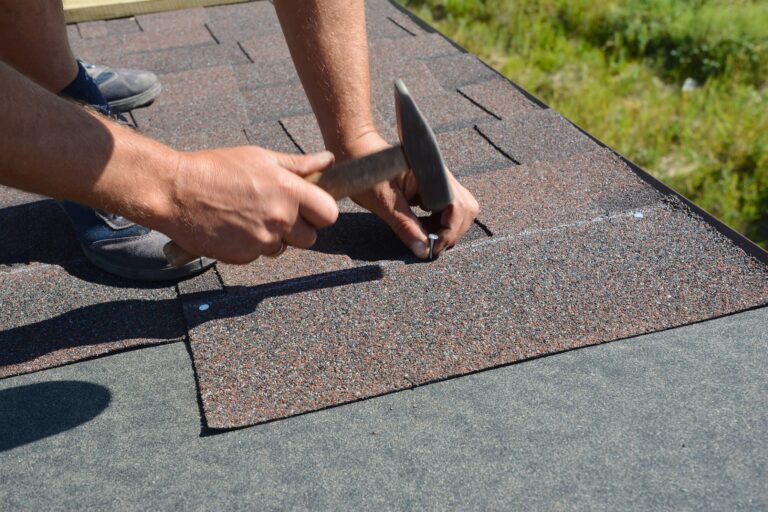
The roof replacement process in order: dry-in through ridge vent
Every square foot that gets opened up gets dried in the same day. No exceptions. That is the rule that protects your house.
- Ice-and-water shield at eaves and in all valleys. This self-adhering membrane seals around nail penetrations. It is not a nice-to-have here: Wisconsin's Uniform Dwelling Code follows the IRC ice-barrier provision, which requires an ice barrier at eaves in areas with a history of ice forming along the edge, running from the lowest edge of the roof to at least 24 inches inside the interior face of the exterior wall. That describes every county in this state. Chimneys, skylights, and low-slope tie-ins get it too.
- Drip edge at eaves and rakes so water sheds into the gutter instead of behind it.
- Synthetic underlayment across the remaining field, overlapped and fastened to spec.
- New flashing at walls, chimneys, skylights, and pipe penetrations. Reusing rusted pipe boots or caulking over tired chimney flashing is the most common corner cut in this trade, and it is where a brand-new roof leaks two winters later.
- Starter course, then architectural shingles run up the slopes with the correct nail count and pattern. Architectural (laminated) shingles are the standard here for good reason: better wind rating and far better hail performance than old three-tab.
- Ridge vent and intake balance. A roof breathes or it bakes. Ridge vent cut into the peak plus adequate soffit intake keeps your attic cold in winter, which is your other defense against ice dams.
On a one-day job, shingles usually run from late morning to late afternoon. For full system detail, our residential roofing page covers shingle grades, ventilation, and warranties, and the asphalt shingle roof replacement page walks through scope, options, and exactly what a full tear-off includes.
Want a straight answer on your roof?
We'll inspect it, document everything, and tell you honestly what you're looking at, even if the answer is patch it for now. No pressure.
Cleanup, the nail sweep, and damage to your property
Cleanup happens at the end of every working day, not just the end of the project. A normal end of day means debris picked out of the lawn and beds, tarps folded or reset, the container tidy, ladders secured or removed, and a magnetic sweep over the driveway, sidewalks, and grass along the drip line. Before the crew leaves for good, gutters get cleared of granules and nails.
Honest truth: no sweep catches 100 percent of the nails. They hide in mulch and thatch. Check the drive and walkways for a couple of weeks, especially before mowing. Find strays, call us, and we bring the magnet back.
If something does get damaged, a dented gutter, a cracked siding panel, a bent AC fin, report it to your project manager the same day and before final payment. Those before-photos from setup morning are what make that conversation simple. Legitimate property damage is what general liability coverage is for. Nobody should be asking you to file on your own homeowners policy for damage a roofing crew caused.
A realistic timeline, and what makes it longer
Most single-family homes here are torn off and fully re-roofed in one to two days. A small ranch is often one long day, 7 a.m. to early evening. A larger two-story with dormers usually runs two.
What stretches it: steep pitch (anything 8/12 and up means roof jacks, harnesses, and slower movement), multiple existing layers, complex rooflines with valleys, hips, dormers, skylights, and chimney flashings, decking replacement, and solar removal and reset, which adds days rather than hours.
Then there is weather, the big one. Wisconsin hands us pop-up thunderstorms all summer and wind in spring and fall. No good crew tears off into an incoming storm. Dates move, and a contractor who reschedules for weather is protecting your house, not disrespecting your calendar. For the longer breakdown, see our guide on how long a roof replacement takes.
Winter roofs and the best time of year to schedule
A roof can absolutely be replaced in a Wisconsin winter, and after a December wind event or a leak you cannot live with, it should be. Cold just changes the method. Below about 40 degrees asphalt gets brittle, self-seal strips will not activate until spring sun hits them (so ridge and rake edges get hand-sealed with roofing cement), bundles have to be kept warm, and ice-and-water shield needs a clean, dry deck to bond.
Easiest window: late spring through early fall. Best availability: the shoulder seasons, early spring and late fall, before and after the rush. And after a major hail event in Dane or Rock County, calendars fill fast, so getting inspected early matters more than waiting for perfect weather.
If your replacement came out of hail or wind, the insurance side runs on its own clock. We meet the adjuster on-site so nothing gets missed, and that process is laid out on our storm damage restoration page.
Should you replace gutters at the same time?
Often yes, and the reason is technical: drip edge, ice-and-water shield, and gutter apron all tie together at the eave, so doing both at once builds that transition as one system instead of two.
Replace them with the roof if your gutters are 15-plus years old, sagging, pulling from the fascia, held by old spikes, or packed with granules from a failing roof. Undersized gutters are common on older homes here, and 6-inch K-style with adequate downspouts handles an ice-dam thaw and a July downpour far better than 5-inch. If yours are newer and tight, crews detach what they must, clean them, and reset them. Just decide before tear-off day, because pulling and reinstalling twice costs more than doing it once.
Payment, warranties, lien waivers, and the final walkthrough
How payment normally works. Expect a deposit or material payment, sometimes a progress payment at delivery or start, and the balance due at completion. Signed change orders (decking, extra vents, gutters) get added to the final invoice with photos and counts attached.
On an insurance claim it usually runs in two checks. Your insurer first pays actual cash value: the approved scope minus depreciation minus your deductible. After completion and final invoicing, they release the withheld depreciation, the RCV portion. If your mortgage is escrowed, the first check often needs your lender's endorsement, which takes time, so start that early. Your deductible is your out-of-pocket, always. A contractor offering to eat it is proposing insurance fraud and putting your claim at risk.
Get a lien waiver. Wisconsin's construction lien law (Wis. Stat. ch. 779) requires most contractors to give residential owners a written lien-law notice, generally in the contract or within 10 days of starting work, and a subcontractor or supplier who serves the required preliminary notice can file a lien against your home if the general contractor does not pay them, even after you have paid in full. So with the final invoice, ask for a signed lien waiver from your contractor, and on a larger job from the material supplier and any subcontract crew too. Reputable companies hand these over without blinking.
Know both warranties before you pay. You are getting two, and they cover different things:
- Manufacturer material warranty. Architectural shingles commonly carry a "limited lifetime" warranty for the original owner, with a shorter non-prorated period (often the first decade or so) and prorated coverage after that. It covers defects in the shingle, not installation.
- Enhanced system warranty. Only a factory-certified installer can register these, and eligibility is triggered by two things: the certification itself and installing the manufacturer's full system (starter, underlayment, ice barrier, hip and ridge, ventilation). That is what our GAF Master Elite certification is for, and it is what extends coverage to workmanship on the manufacturer's dime.
- Contractor workmanship warranty. Covers installation errors, leaks from flashing or nailing, that sort of thing. Terms in this market range from about a year to ten years, so do not accept "we stand behind our work." Get the number, the exclusions, and the claim process in writing. Ours is spelled out in your contract documents, and we will walk you through it before you sign.
- Transferability. Many manufacturer warranties allow one transfer to the next homeowner inside a limited window after installation, after which coverage reverts to the original owner's terms or goes prorated. Workmanship coverage may or may not transfer. If you might sell in the next few years, ask both questions now and keep the paperwork with your closing documents.
Do the final walkthrough with a person, not over text, and before final payment. Check:
- Ridge and hip lines straight from the ground, courses even, no lifted tabs
- Flashing at every wall, chimney, skylight, and pipe replaced and tight, not caulked over
- Ridge vent continuous and capped correctly at the ends
- Drip edge visible at eaves and rakes, gutters clear and hanging straight
- Siding, screens, windows, AC unit, deck, driveway, and top-floor ceilings undamaged
- No debris in beds, downspouts, or under the deck, and the container gone
- Magnetic sweep done over drive and walks
- Permit closed out or inspection scheduled
- Warranty paperwork and lien waiver in hand
- Final invoice matching the contract and every signed change order
Ask for the progress photos of the ice-and-water shield, valleys, and flashing before shingles went on. That is the part of your roof you will never see again, and any contractor doing careful work is glad to show it.
If something is not right, you get a written punch list with the item, who owns it, and a date. Small items are usually a short return visit, not a new project. Hold the punch list and the final payment together until it is closed. That is normal, and no reputable contractor will be offended by it.
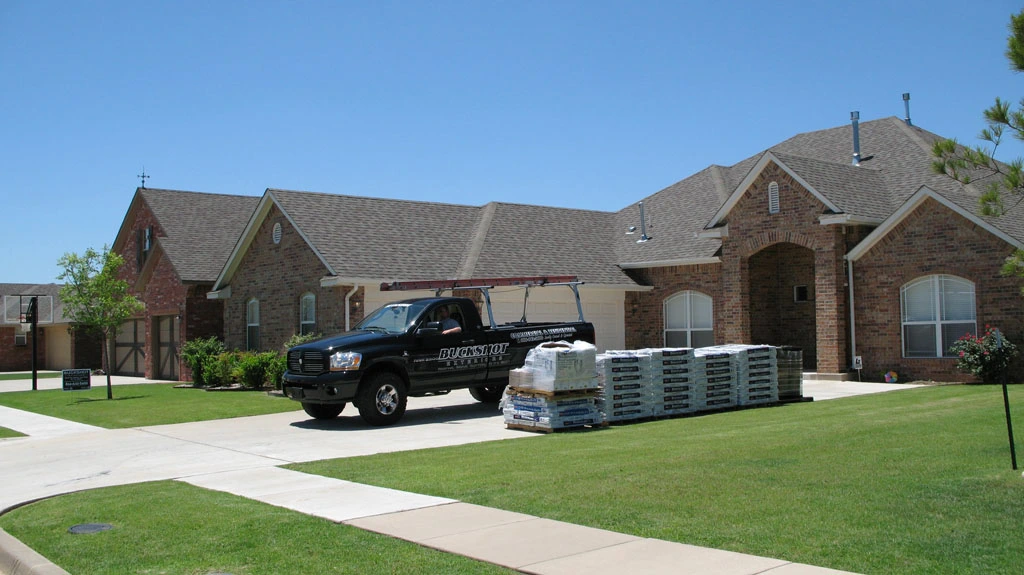
When you are ready, the next step is free
Still deciding, or already signed with somebody and want a second opinion on the scope before tear-off day? We will come out and look at no cost. No pressure, no high-pitch sales visit, no charge whether you hire us or not. You get a straight read on what your roof actually needs and what it realistically runs in this market right now.
Buckshot is family-owned and operated, founded in 1979 and still run by the family, handling roofing, siding, gutters, windows, and storm restoration across south-central Wisconsin. We answer storm calls around the clock for emergency tarping and temporary repairs, and we will meet your insurance adjuster on-site so hail and wind damage gets documented properly the first time. Ask us for our insurance certificates and credentials, and ask the same of anyone else on your list.
Call (608) 909-9109 or request your free inspection. We will tell you what we see, show you the photos, and let you decide.
- A price dramatically lower than every other bid (corners are getting cut somewhere)
- Pressure to sign on the spot, or a "today only" discount
- A request to sign over your insurance claim (Assignment of Benefits)
- An offer to "waive your deductible" (that is insurance fraud, and it puts you at risk)
- No written, itemized estimate, or no proof of insurance
- A large upfront payment (more than 30%) before any work begins
Get a straight answer on your Madison roof
Wisconsin storm season and insurance non-renewal letters do not wait. Get a free, no-obligation inspection and an honest assessment of exactly what your roof needs, even if the answer is to wait.