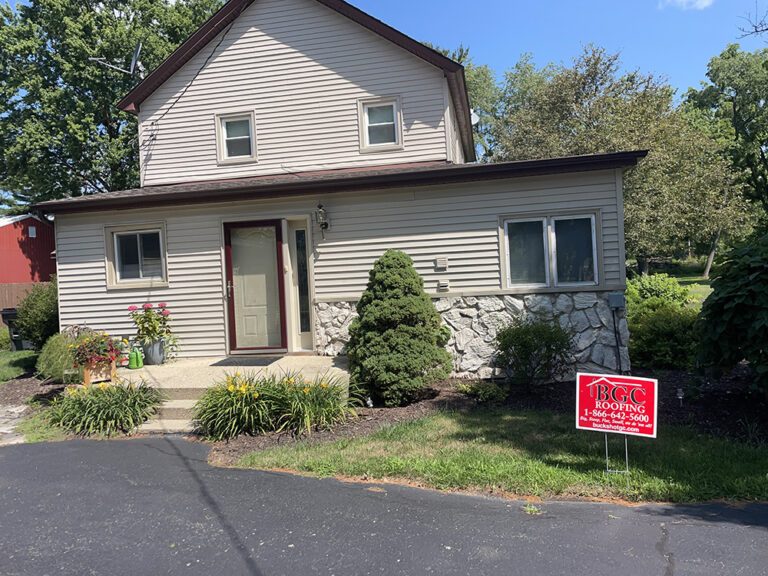
Steel is the most durable mainstream choice here, followed by fibre cement. Both outlast vinyl in hail and both hold up better through freeze and thaw. Cedar can last a very long time, but only with a genuine maintenance cycle behind it. Any of them fails early if the installation neglects flashing, house wrap and clearance at grade.
Get My Free Estimate →Dubuque's housing stock and its weather push the siding decision in a specific direction. Steel and insulated vinyl dominate for good reasons here, cedar survives on the historic homes that justify the upkeep, and fibre cement sits between them on cost and durability.
This guide compares the materials on the terms that matter in the Mississippi river valley, then covers the fascia and soffit work that usually comes with them.
Why Dubuque is hard on siding
Three local conditions shorten siding life here more than in flatter parts of Iowa.
Freeze and thaw cycling is severe, and the river valley holds moisture. Water that gets behind a panel expands as it freezes, which loosens fasteners and opens seams.
Wind exposure is uneven. Homes on the bluffs and ridgelines take gusts that houses down in the valley never feel, and wind drives rain sideways into laps and corners.
The housing stock skews old. Dubuque has a large inventory of pre-1940 homes, many with original wood siding, layered over at some point with aluminium or vinyl. What is underneath those layers decides half the job.
Steel siding
Steel is the most durable mainstream option and the one most worth pricing in this market.
It does not crack in cold the way vinyl can, it holds colour well under modern coatings, and it resists hail far better than vinyl or aluminium. On an exposed bluff lot, that difference is the whole argument.
The tradeoffs are real. Steel costs more than vinyl per square foot installed, it can dent under a direct hit from a ladder or a stone, and repairs require matching a profile rather than swapping a panel from stock.
Steel also demands a competent installer. Panels must be hung to allow thermal movement, and cut edges need proper treatment, or you get oil-canning and eventually rust at the cuts. See our steel and aluminium siding work.
Insulated vinyl
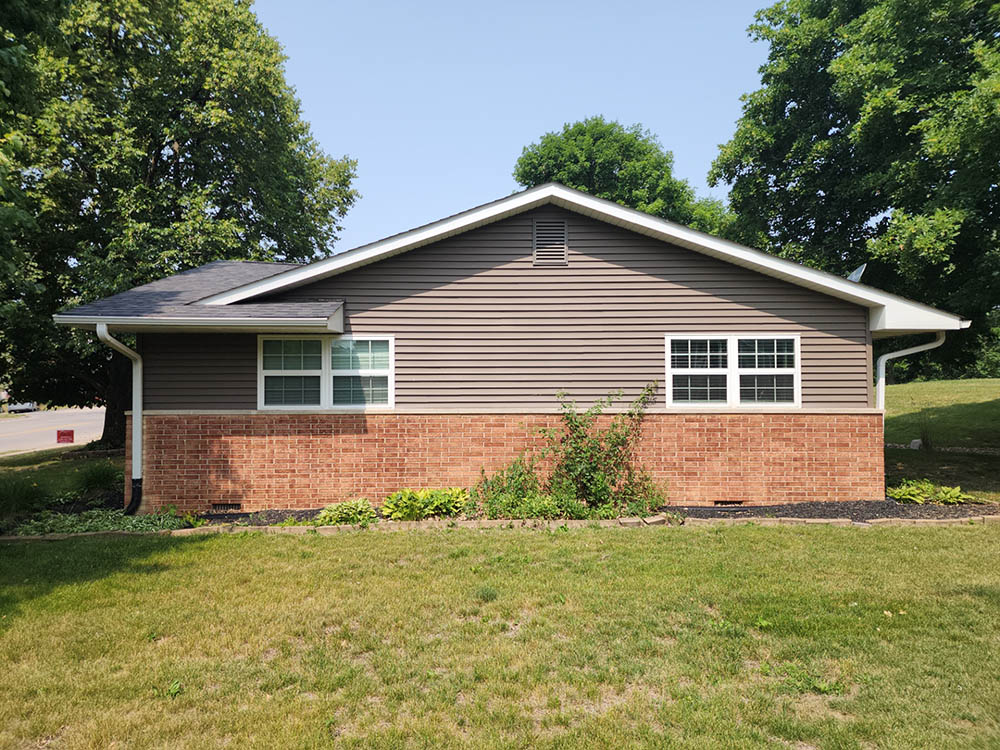
Insulated vinyl is vinyl siding with rigid foam backing bonded to the panel, and it solves two problems at once on an older Dubuque house.
The foam raises the wall's thermal performance, which matters on homes with little or no wall insulation. It also stiffens the panel, so the siding lies flatter and reads less like plastic from the street.
It costs more than standard vinyl and less than steel or fibre cement. It will not match steel for hail resistance, and very cold temperatures still make vinyl brittle enough to crack under impact.
For a 1920s house with balloon framing and no wall cavity insulation, this is often the most sensible money on the whole exterior. Details on insulated siding.
Cedar and wood
Cedar belongs on the homes it was built for, and Dubuque has a lot of them.
On a historic property, particularly in a district with design review, cedar or another wood product may be the only appropriate choice, and the result is genuinely better than any imitation of it.
Be honest about the maintenance. Cedar needs staining or painting on a cycle, typically every five to eight years depending on exposure, and a neglected wood wall fails faster than any synthetic. Budget the repainting when you budget the installation.
Modern engineered wood sits nearby, giving a wood look with better dimensional stability, at a price between vinyl and fibre cement. More on cedar and wood siding.
Fibre cement
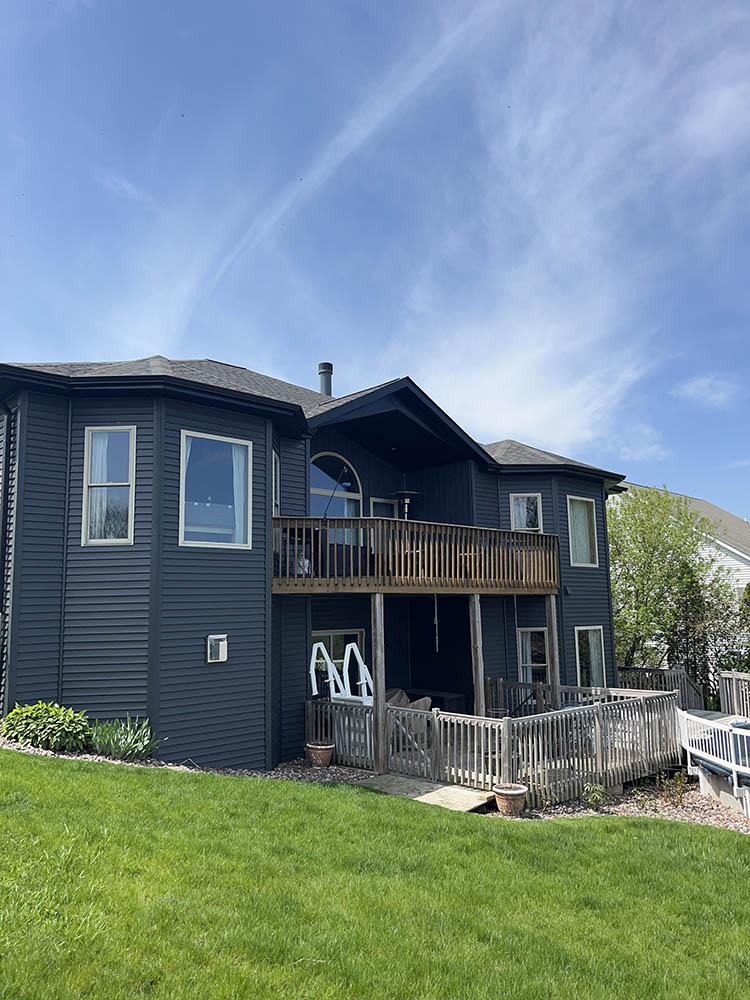
Fibre cement is the durable painted option. It holds paint for a long time, does not burn, does not interest insects, and carries the crisp shadow lines of real lap siding.
It is heavy, which makes installation slower and more expensive, and it is brittle until it is on the wall. Cutting it produces silica dust that has to be controlled properly, which is one marker of a professional crew.
In this climate the critical detail is the bottom edge and any cut end, which must be sealed and held clear of grade and roof surfaces, or the board wicks water. Details on fibre cement siding.
Want a straight answer on your roof?
We'll inspect it, document everything, and tell you honestly what you're looking at, even if the answer is patch it for now. No pressure.
Fascia and soffit are part of the job
Fascia and soffit are the most commonly neglected part of a Dubuque exterior, and the most commonly rotted.
Fascia is the board the gutter hangs from. Soffit is the underside of the overhang. Together they close the roof edge and, when vented correctly, feed air into the attic.
Rot here has three usual causes. A gutter that overflowed for years, ice damming that pushed water back under the roof edge, or a soffit that was covered over without fixing the wood behind it.
Covering rotted fascia with aluminium hides the problem and guarantees a bigger repair later. Insist that the wood is inspected and replaced where it is soft before any capping goes on.
Get this right and the attic ventilation improves, which reduces ice damming on the roof above. See soffit and fascia work, and call (608) 909-9109 if you have noticed a sagging gutter line or paint peeling under the overhang.
What siding costs in Dubuque
Installed pricing in this market generally lands in these ranges per square foot, covering material, labour, trim and disposal.
Standard vinyl is the cheapest at roughly $4 to $8. Insulated vinyl runs about $7 to $12. Steel commonly sits around $9 to $15. Fibre cement is usually $8 to $14, and cedar is the widest range of all because the grade of wood swings the number.
On a typical Dubuque two storey, that puts most full re-sides somewhere between $12,000 and $30,000 depending on material and complexity.
Four things move a quote more than the material choice. How many layers come off. Whether the sheathing underneath is sound. How much trim, fascia and soffit is included. And access, because bluff lots and steep drives slow everything down.
Nobody can price your house from a satellite image. We measure, we open a small area where we suspect layered siding, and we put the number in writing.
Repair or replace
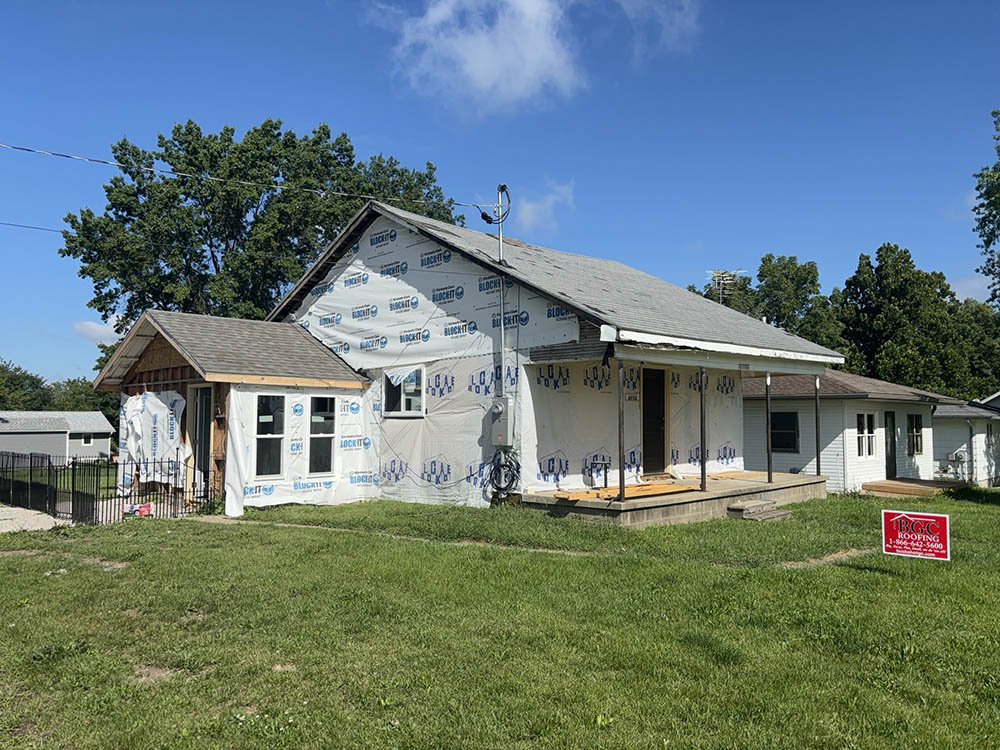
Replacing a few damaged panels is reasonable when the siding is otherwise sound, under roughly 15 years old, and you can still match the profile and colour.
Matching is the constraint people underestimate. Colour lines get discontinued, and sun-faded siding never matches a new panel exactly, so a repair on a prominent wall can look worse than the damage.
Full replacement makes more sense once you see moisture staining on the sheathing, soft spots you can press with a thumb, repeated wind loss of panels, or paint failing faster each cycle on wood.
If hail or a windstorm caused the damage, document it and speak to your carrier before you repair, because storm damage to siding is frequently claimable alongside a roof claim. Our Dubuque roofing guide covers how that documentation works.
Get a straight answer on your Madison roof
Wisconsin storm season and insurance non-renewal letters do not wait. Get a free, no-obligation inspection and an honest assessment of exactly what your roof needs, even if the answer is to wait.