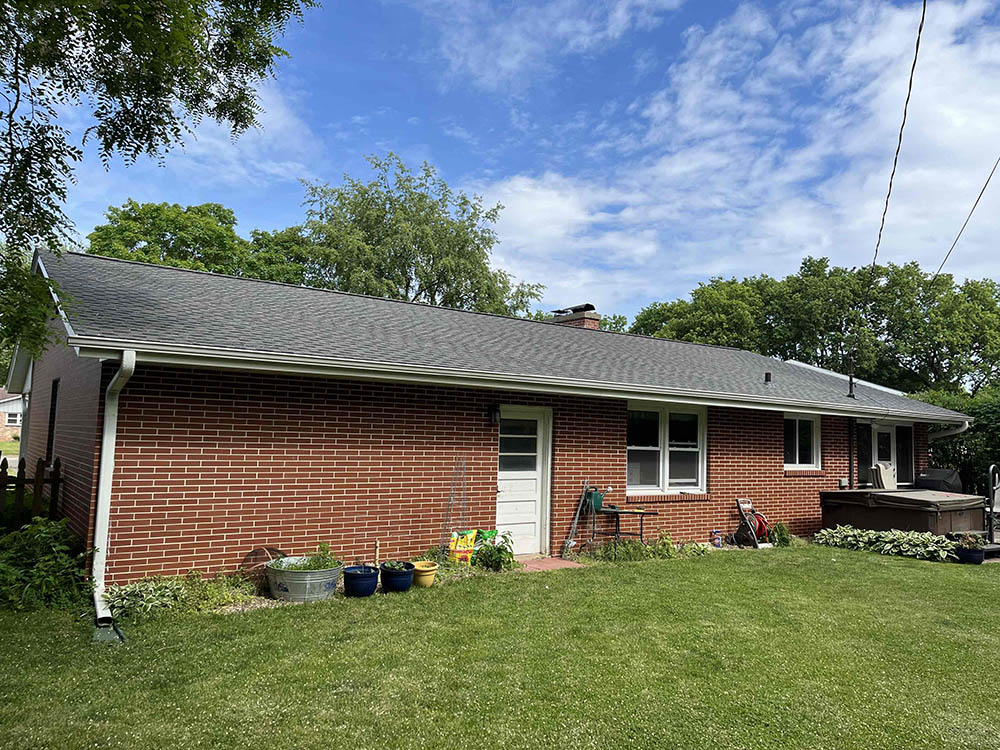
Yes - most of the damage that leads to leaks shows visible warning signs from the ground. Missing shingles, sagging ridgelines, granule loss, and damaged flashing are all things a careful eye can catch with binoculars from your yard or driveway.
Get My Free Estimate →- Why Ground-Level Inspections Matter (Especially in South-Central Wisconsin)
- What You'll Need
- What to Look For: A Section-by-Section Guide
- After a Hail or Windstorm: What Changes
- Inside Your Home: The Ground-Level Inspection Continues Indoors
- When to Stop Looking and Start Calling
- How Often Should You Do This?
- A Few Things Bad Contractors Don't Want You to Know
- Ready for a Professional Set of Eyes?
- FAQs
Your roof is one of the most expensive parts of your home, and it's also one of the easiest to ignore - because you can't see it from your couch.
Most homeowners only think about their roof when water is dripping into the kitchen. By that point, what started as a $400 flashing repair has turned into a $4,000 interior damage claim. The good news: a lot of that is preventable. And you don't have to climb a ladder to catch problems early.
Here's how to do a real, useful ground-level roof inspection - the kind that actually tells you something.
Why Ground-Level Inspections Matter (Especially in South-Central Wisconsin)
Dane, Rock, and Green counties get a brutal combination of weather every year. Freeze-thaw cycles crack and lift shingles all winter. Spring hailstorms pound them from March through June. Summer heat bakes the granules loose. Then you do it all over again.
A roof that looked fine two years ago can be quietly failing right now. You won't know unless you look.
Walking the perimeter of your house twice a year - with a pair of binoculars and a few minutes of focused attention - can catch problems while they're still small. That's the whole goal.
What You'll Need
Keep it simple. You don't need special equipment.
- Binoculars (8x or 10x work great - borrow a pair if you don't own them)
- Your phone for photos
- A notepad or voice memo app to record what you see and where
- Good lighting - overcast days are actually ideal; harsh sun creates glare and shadows that hide damage
Walk all four sides of your house. Look at the roof from different angles and distances. The far edge of your driveway or across the street can give you a better view of the full slope than standing right at the foundation.
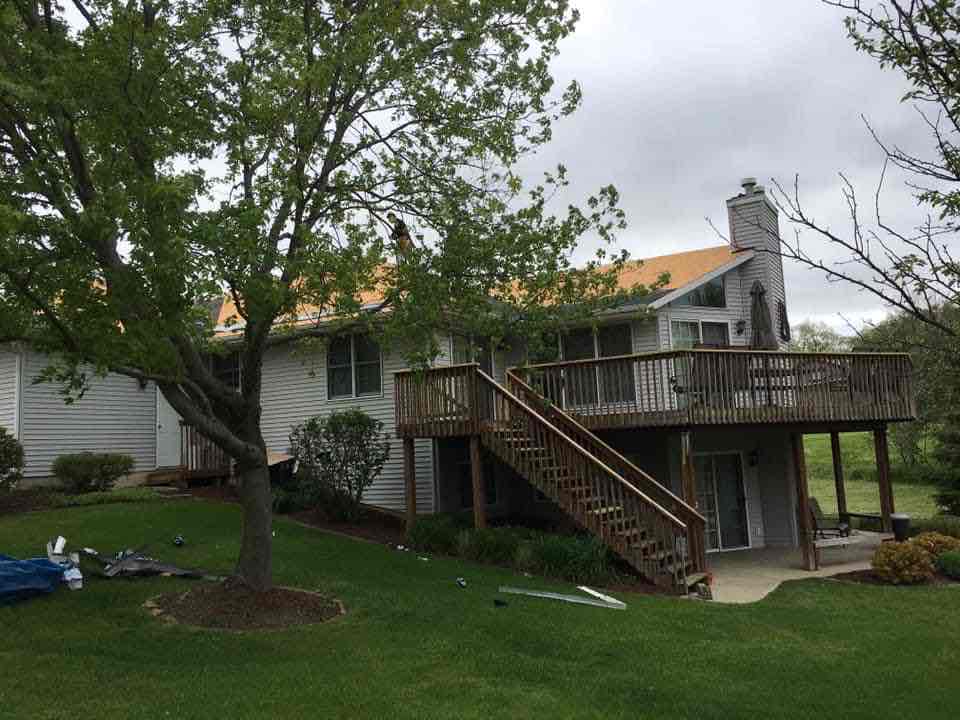
What to Look For: A Section-by-Section Guide
Shingles First
This is where most damage shows up. You're looking for:
- Missing shingles - gaps where you can see the darker underlayment or decking beneath
- Curling or cupping edges - shingles that are lifting at the corners or buckling in the middle
- Cracked or broken shingles - especially common after hail or wind
- Dark streaking or staining - can indicate algae growth, which shortens shingle life
- Bald spots - areas where the granule coating has worn away, leaving the asphalt exposed and vulnerable to UV
Granule loss is sneaky. You might not see it on the shingles themselves, but check your gutters and the ground around your downspouts. If you're scooping out what looks like coarse black sand, your shingles are telling you something.
The Ridgeline
Look across the top of your roof. It should be a straight, clean line from end to end.
Any sagging, dipping, or waviness in the ridge is a red flag. It can mean the decking beneath is rotting, the ridge beam has shifted, or there's been long-term moisture damage working from the inside out. This is not a wait-and-see situation.
Also check the ridge cap shingles specifically - they take the worst of the wind and often lift or crack before the field shingles do.
Flashing Around Chimneys, Skylights, and Vents
Flashing is the thin metal trim that seals the joints where your roof meets a vertical surface - chimney, skylight frame, dormers, plumbing vents. It's also the number one place roofs leak.
From the ground, you're looking for:
- Flashing that appears lifted, bent, or separated from the surface it's sealing
- Rust staining running down from a chimney or skylight
- Missing caulk or visible gaps at the edges
- Pipe boots (the rubber collars around plumbing vents) that look cracked or collapsed - these fail after 10-15 years and are a very common source of leaks
Binoculars really earn their keep here. A cracked pipe boot is hard to spot at 40 feet without them.
Gutters and Fascia
Your gutters are attached to the fascia board along the roofline, and both tell you a lot about roof health.
Look for:
- Gutters pulling away from the fascia - usually means the fascia is rotting from moisture behind it
- Visible rust or holes in the gutters
- Granules collecting in gutters or washing out from downspouts
- Sagging sections that aren't draining properly
While you're at it, look up at the soffit (the underside of the overhang). Dark staining, peeling paint, or soft-looking wood there often means water is getting in somewhere above and running down.
Valleys
Roof valleys - where two slopes meet - channel a huge volume of water. They're a high-stress area that tends to wear faster than flat sections.
From the ground, look for shingles that appear worn, cracked, or missing along the valley lines. Any dark streaking running down a valley can indicate the metal liner underneath is failing.
After a Hail or Windstorm: What Changes
If you've just had a significant storm - anything that left dents in your car, cracked branches, or had quarter-size hail - do your ground inspection within a day or two.
After hail specifically, look for:
- Shingles with a "bruised" or matte appearance in random spots (hail knocks the granules off in circular impact patterns)
- Damaged or dented gutters and downspouts - if the aluminum is dented, the shingles almost certainly took hits too
- Cracked or broken shingles along the edges
Hail damage isn't always dramatic-looking from the ground. But it matters - because insurance claims for hail damage are time-sensitive in Wisconsin. Most policies require you to file within one year of the storm date. If you wait until the leak shows up, you may have missed the window.
If you suspect storm damage, a professional inspection is the right next step. At Buckshot Exteriors, we handle storm damage claims regularly and will meet your insurance adjuster on-site to make sure nothing gets missed or underdocumented.
Inside Your Home: The Ground-Level Inspection Continues Indoors
Don't stop at the exterior. Walk through your attic with a flashlight - or at minimum, check your ceilings and upper walls throughout the house.
You're looking for:
- Water stains on ceilings, especially near exterior walls or below roof valleys
- Peeling paint or bubbling drywall on upper-floor ceilings
- A musty smell in the attic - can indicate moisture that hasn't shown up as a visible leak yet
- Daylight visible through the roof deck in the attic (yes, this happens - and it's urgent)
A lot of homeowners are surprised to find attic problems that have been quietly developing for a year or more. Catching it early is the whole point of this exercise.
Want a straight answer on your roof?
We'll inspect it, document everything, and tell you honestly what you're looking at, even if the answer is patch it for now. No pressure.
When to Stop Looking and Start Calling
A ground inspection is genuinely useful. But it has limits.
If you see anything that concerns you - missing shingles, a sagging ridge, flashing that looks off, stains on your ceiling - don't try to get on the roof yourself. Residential roofs are steep, and a fall from even one story is serious. Beyond the safety risk, walking on aging shingles without knowing what you're doing can cause additional damage.
This is where a professional inspection earns its keep. A good roofing contractor can get up there safely, document exactly what's happening, and give you an honest assessment of what needs attention now versus what can wait.
Our residential roofing team does free inspections throughout Dane, Rock, and Green counties - no pressure, no obligation. We'll tell you what we find, show you photos from up top, and give you a straight answer about what your roof actually needs.
How Often Should You Do This?
Twice a year is the right rhythm for Wisconsin homeowners:
- Spring - after the last freeze, when winter damage has fully revealed itself
- Fall - before the first snow, so you know what condition your roof is heading into winter with
Add a post-storm check any time you have significant hail or wind. That's it. Three checks a year, maybe 20 minutes each, can save you thousands.
A Few Things Bad Contractors Don't Want You to Know
If someone knocks on your door after a storm and offers to "check your roof for free" - and then immediately tells you it needs full replacement - get a second opinion. Storm chasers are a real problem in south-central Wisconsin, especially after major hail events.
A reputable contractor will show you photos, explain what they found, tell you what's covered by insurance versus what isn't, and not pressure you to sign anything on the spot.
You can read what real Dane County homeowners say about working with us on our customer reviews page - that's the kind of transparency you should expect from any contractor you hire.

Ready for a Professional Set of Eyes?
If your ground inspection turned up something concerning - or if it's just been a few years since anyone actually looked at your roof - we're happy to come out.
Buckshot Exteriors has been serving Madison and the surrounding communities since 1979. We know Wisconsin roofs, Wisconsin weather, and what to look for after 47 years of doing this work. Our inspections are free, thorough, and come with no strings attached.
Contact us today to schedule your free roof inspection. We'll bring the ladder, the experience, and an honest answer - whatever that turns out to be.
Get a straight answer on your Madison roof
Wisconsin storm season and insurance non-renewal letters do not wait. Get a free, no-obligation inspection and an honest assessment of exactly what your roof needs, even if the answer is to wait.