Usually yes - the water damage inside your home is typically covered under your standard policy. The ice dam itself is rarely covered as a separate event, and some policies exclude damage they consider the result of neglect or poor maintenance. Document everything before any cleanup, and call a contractor to inspect before your adjuster arrives.
Get My Free Estimate →- What Actually Causes an Ice Dam
- What Ice Dams Actually Damage
- What to Do If You Have an Ice Dam Right Now
- Ice Dams and Your Homeowners Insurance - What You Need to Know
- Watch Out for Storm Chasers After a Bad Winter
- Long-Term Prevention: Fix the Attic, Not Just the Roof
- When to Call a Professional
- Get a Free Roof Inspection Before Spring
- FAQs
That row of icicles hanging off your eaves might look like a postcard. It's not.
Those icicles are a warning sign. Behind them, water is almost certainly pooling under your shingles, working its way into your roof deck, and potentially soaking your insulation and ceiling right now - while you're reading this.
Ice dams are one of the most misunderstood and underreported sources of home damage in Wisconsin. Homeowners either ignore them until the ceiling stains show up, or they panic and call the wrong person. This article is here to help you understand what's actually happening, what it means for your insurance claim, and what to do first.
What Actually Causes an Ice Dam
A lot of people blame ice dams on Wisconsin winters. Cold weather is part of it, but it's not the real cause.
Ice dams form because of a temperature difference on your roof. Here's the sequence:
- Heat escapes from your living space up through the attic floor (usually because of poor insulation or air leaks).
- That heat warms your roof deck near the peak.
- Snow on the upper roof melts and runs downward.
- When it hits the cold eaves - which sit over unheated space - it refreezes.
- The ice builds up into a dam. Water backs up behind it, with nowhere to go but under your shingles.
The insulation and ventilation in your attic are the real story here. If your attic is cold and your roof deck stays uniformly cold, snow just sits there until it melts in spring. No dam. No problem.
That's why two identical houses on the same Madison street can have completely different ice dam problems. The one with the ice dam usually has a warm attic - from poor insulation, blocked soffit vents, bathroom fans venting into the attic instead of outside, or recessed lights leaking heat straight up.
What Ice Dams Actually Damage
This is where it gets serious, and where homeowners often underestimate the scope.
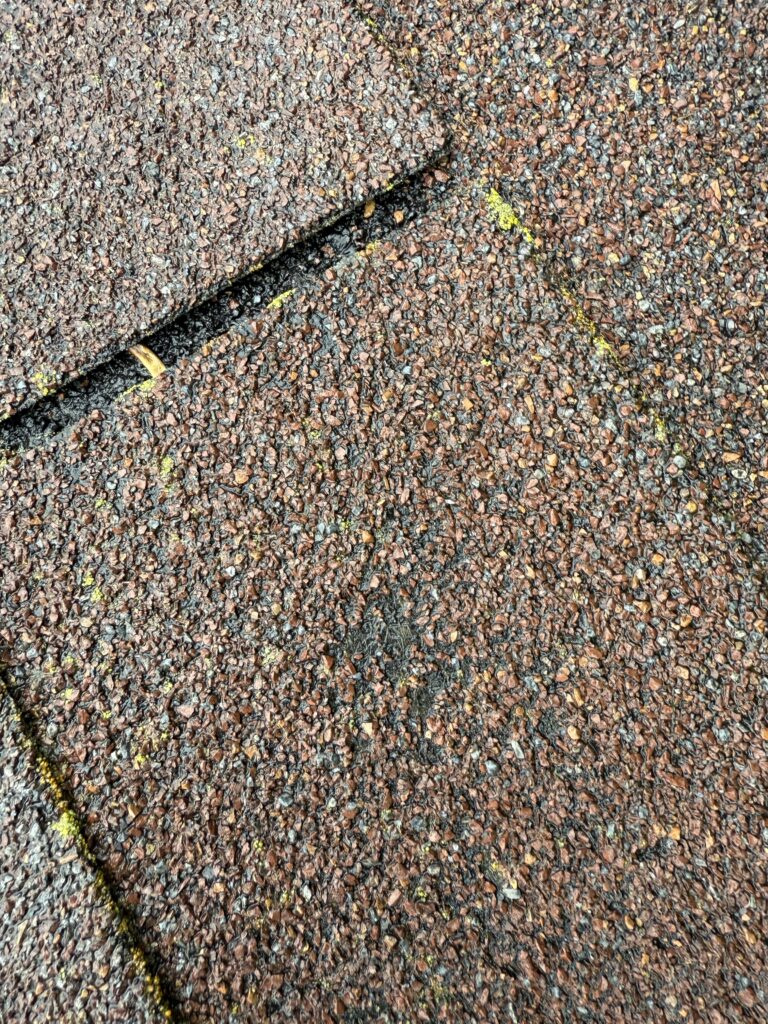
Shingles and underlayment. Water sitting behind a dam gets under shingles, lifts the tabs, and soaks the felt or synthetic underlayment beneath. Over time, that sheathing rots.
Gutters. The weight of ice dams regularly tears gutters right off the fascia. We see this every winter across south-central Wisconsin - Janesville, Fitchburg, Sun Prairie, Stoughton. A gutter that looks fine from the ground may be pulled away from the fascia board or cracked at the seams.
Interior ceilings and walls. Once water gets past the roof deck, it travels. It soaks insulation, runs down interior walls, and shows up as stains or bubbling paint on your ceiling - sometimes weeks after the dam formed.
Mold. This is the one people really don't want to hear. Wet insulation and wet drywall in a cold attic is a perfect environment for mold. By the time you can smell it or see it, it's already been growing for a while.
What to Do If You Have an Ice Dam Right Now
Step one: don't grab a hatchet. Chopping at ice on your roof is one of the fastest ways to void a shingle warranty and create new leak points. Same goes for pressure washers.
A roof rake - the long-handled tool you can find at any hardware store - is your safest DIY option. Pull snow back from the lower three to four feet of your roof. Less snow means less melt, which slows the dam's growth.
For an existing dam, calcium chloride (not rock salt) packed into a tube sock and laid perpendicular across the dam can melt a drainage channel. It won't remove the dam, but it gives the backed-up water a path off the roof.
Step two: document everything. Take photos of the ice dam, the icicles, any visible roof damage, and every interior stain or wet spot. Date-stamped photos are your best friend in an insurance claim.
Step three: call a contractor before you call your insurer. More on that below.
Ice Dams and Your Homeowners Insurance - What You Need to Know
Wisconsin homeowners insurance policies generally cover the resulting damage from an ice dam - the water intrusion, the ruined drywall, sometimes the roof repair - but they typically don't cover the ice dam itself as a standalone event.
Here's the catch: insurers can and do deny claims if they determine the damage resulted from a maintenance issue. If an adjuster walks through your attic and finds it has R-11 insulation when Wisconsin code calls for R-49, they may argue the ice dam was preventable. That's a legitimate argument, and it can reduce or eliminate your payout.
This is why getting a contractor on-site before or during the adjuster's visit matters so much.
A contractor who knows what adjusters look for can document the full scope of damage - including things that aren't obvious, like lifted shingles, saturated sheathing, or damaged underlayment that won't show up on a quick visual inspection from the ground. They can also speak to what's storm-related versus what's pre-existing wear.
At Buckshot Exteriors, we meet your insurance adjuster on-site. We've done this for decades across south-central Wisconsin. We know what's in a standard Wisconsin policy, we know what adjusters look for, and we know how to make sure legitimate damage gets properly documented. If you're dealing with ice dam damage right now, reach out for a free inspection before you file or before your adjuster's appointment.
Watch Out for Storm Chasers After a Bad Winter
Every time Wisconsin gets hit hard - whether it's a January ice event or a spring hailstorm - out-of-town contractors flood the area. They knock on doors, promise fast insurance settlements, and sometimes ask you to sign an Assignment of Benefits (AOB) agreement before you've even had a chance to read it.
An AOB signs your insurance rights over to them. Once you do that, you lose control of your own claim.
Legitimate contractors don't need that. They'll walk you through the process, give you time to make a decision, and have a local address you can actually verify. Check real reviews from real Wisconsin homeowners before you hire anyone.
If you're not sure whether the damage you're seeing is ice dam related, storm related, or just age - a thorough inspection from a contractor who's been doing this since 1979 is the right first call.
Want a straight answer on your roof?
We'll inspect it, document everything, and tell you honestly what you're looking at, even if the answer is patch it for now. No pressure.
Long-Term Prevention: Fix the Attic, Not Just the Roof
Once you've dealt with the immediate damage, the real fix is in your attic.
Insulation. Wisconsin's climate zone calls for R-49 to R-60 attic insulation. Most older homes in Dane County and the surrounding area fall well short of that. Blown-in cellulose or fiberglass over existing batts is usually the most cost-effective upgrade.
Air sealing. Insulation alone doesn't stop air leaks. Recessed lights, top plates, attic hatches, and plumbing chases all need to be air-sealed before you add insulation on top. Otherwise warm air bypasses the insulation entirely.
Ventilation. Your attic needs balanced intake (soffits) and exhaust (ridge or gable vents) to flush out heat and moisture. Blocked soffit vents are one of the most common problems we find on older Wisconsin homes.
Ice and water shield. If your roof is due for replacement, make sure the new installation includes ice and water shield underlayment along the eaves - typically the first three feet, or more on low-slope sections. Wisconsin's building code requires it, but not every contractor installs it correctly. Our residential roofing work always includes proper underlayment installation for Wisconsin conditions.

When to Call a Professional
Call a contractor - not just a handyman - if:
- You see water stains on your ceiling or walls
- Your gutters pulled away from the fascia
- You notice lifted, cracked, or missing shingles after a freeze-thaw cycle
- You're planning to file an insurance claim for any winter-related damage
- You want a professional eye before spring to catch anything that developed over winter
Storm damage - including ice dam damage - is exactly what we handle at Buckshot Exteriors. We've been serving south-central Wisconsin families since 1979, and we're not going anywhere. Our storm damage inspection process is built around making sure you get the full scope of what happened to your home documented properly, so you're not left covering damage that should have been on your insurer's tab.
Get a Free Roof Inspection Before Spring
Winter damage has a way of hiding until the weather warms up - and then showing up as a major leak right when you least expect it.
If you've had ice dams this winter, don't wait for the ceiling stain to tell you there's a problem. Call Buckshot Exteriors for a free inspection. We'll get on your roof, check the attic, document what we find, and give you a straight answer about what needs attention and what can wait. No pressure, no storm-chaser tactics - just honest work from a family that's been doing this in Wisconsin for over 47 years.
Schedule your free inspection today. If you're dealing with active damage or a pending insurance claim, call us now - we offer 24-hour emergency storm response and we'll meet your adjuster on-site.
Get a straight answer on your Madison roof
Wisconsin storm season and insurance non-renewal letters do not wait. Get a free, no-obligation inspection and an honest assessment of exactly what your roof needs, even if the answer is to wait.