For enhanced or system warranties, yes. Only a contractor holding the manufacturer's certification can register that coverage, and manufacturers give a limited window after the job is finished to do it. Do not accept a promise on a proposal. Ask for the issued warranty certificate with a warranty or registration number on it, in your name and your address, and save the PDF. If it never shows up within a couple of months of completion, call the contractor, then call the manufacturer's homeowner line and ask them to confirm a warranty exists for your address.
Get My Free Estimate →- The two warranties on every roof, side by side
- What neither warranty covers: storm damage
- Certified-installer tiers, and the registration step people miss
- What voids a roof warranty
- If the roofer stonewalls or the manufacturer denies the claim
- Transferring the warranty when you sell
- Repairs, patches and partial re-roofs
- How to file a roof warranty claim
- Wisconsin rules that make "get it in writing" enforceable
- Your warranty checklist before you sign
- Get straight answers before you commit
- FAQs
Here is the short version: every new roof comes with two completely separate warranties, and most homeowners think they have one.
The manufacturer warranty comes from the shingle maker and covers defects in the materials. The workmanship warranty comes from the contractor and covers mistakes in how those materials were installed.
Different companies issue them. They cover different failures, they last very different lengths of time, and neither one covers storm damage.
Once you understand that split, the fine print stops being confusing and starts being useful. Below is what each one pays for, what quietly voids it, the registration step people miss, and what to do if a claim gets denied.
The two warranties on every roof, side by side
Think of it like a new car. The manufacturer covers a bad transmission. The shop that mounted your tires covers mounting them wrong. Nobody covers a branch falling on the hood.
Manufacturer material warranty
- Issued by: the shingle manufacturer
- Covers: manufacturing defects in the shingles, and on system warranties, other approved components
- Typical length: long-dated or "lifetime" on defects, with full coverage for an initial period and prorated coverage after that
- Does not cover: installation mistakes, storm damage, normal wear, ventilation-related failure
Workmanship / labor warranty
- Issued by: the roofing contractor who did the work
- Covers: installation errors such as improper nailing, bad flashing details, poorly cut valleys, leaks at penetrations
- Typical length: far shorter than the material warranty, unless the contractor holds a manufacturer certification that extends it
- Does not cover: defective shingles, storm damage
What we find when we tear off a roof that failed way too early in Dane, Rock and Green counties is almost never a bad shingle.
It is nails driven high above the nail zone, so the course above never locked down. It is a chimney or sidewall "flashed" with a bead of caulk instead of step flashing. It is no starter strip at the eaves and rakes, so the first course had nothing sealing it and the wind peeled it. It is missing ice-and-water shield at the eaves on a low-pitch section, which in a Wisconsin February is how water backs up under shingles and stains a bedroom ceiling.
All four are workmanship, not defects. So the shorter of your two warranties is usually the one that matters most.
What "lifetime" and "prorated" really mean
"Lifetime" has a definition buried in the document. It generally means defect coverage for as long as the original owner owns the home, and it generally drops to prorated coverage after an initial full-coverage window (often around the first 10 years).
Prorated means the payout shrinks as the roof ages. In year 22 of a "lifetime" warranty, a defect claim might cover a small fraction of material cost, materials only, with none of the labor to tear off and reinstall.
That is not a scam. It is how these documents are written. You just need to know what year proration starts.
How long should a workmanship warranty be?
Typical industry ranges, so you can benchmark the number on your bid:
- 1-2 years: the low end, and common. Covers obvious early leaks and not much else.
- 5-10 years: what an established company with real overhead can reasonably stand behind.
- Up to 25 years: generally only through manufacturer-backed coverage offered by top-tier certified installers on qualifying systems.
If no workmanship term is written on the bid, there is no workmanship warranty. A handshake is not coverage.
Length also only means something if somebody will still answer the phone. A two-year labor warranty from an out-of-state storm-chasing crew is worth nothing. The same term from an established, licensed, bonded and insured contractor is worth a great deal.
Does it cover the ceiling, or just the roof?
Important gap most homeowners assume away: a workmanship warranty typically covers the labor to get to and correct the roof itself (tear-off, disposal, new material, reinstall), while manufacturer documents almost always exclude consequential damage, meaning your stained drywall, paint, insulation and belongings are not part of the claim. Interior water damage is usually an insurance question, or a liability question if negligence caused it.
What neither warranty covers: storm damage
This is the biggest misunderstanding we run into. Hail and wind damage is an insurance claim, not a warranty claim.
If a June hailstorm bruises the shingle mat and knocks granules loose, that is neither a material defect nor an installation error. Your homeowners policy handles it, subject to your deductible and whether you carry replacement cost value (RCV) or actual cash value (ACV) coverage.
RCV pays what it costs to replace the roof today. ACV pays depreciated value, which on a 17-year-old roof can be a painful number. Check your declarations page before a storm, not after. In hail-prone parts of Wisconsin, some carriers have also moved roofs from RCV to ACV, added a separate wind/hail deductible, or excluded cosmetic hail damage.
Some shingles carry limited wind-speed coverage, and it almost always hinges on correct installation: proper nail count, nails in the nail zone, starter strip at eaves and rakes. Another reason installation quality decides whether paper coverage becomes real coverage.
If you think a storm already got you, our storm damage restoration process includes meeting your insurance adjuster on site so hail and wind damage gets documented while it is still findable.
Certified-installer tiers, and the registration step people miss
Most major shingle manufacturers run contractor certification programs, and the top tiers unlock coverage an uncertified installer simply cannot offer.
The logic is simple. A manufacturer will only put its own name behind labor if it trusts the crew, so it vets contractors on licensing, insurance, tenure and customer feedback, then lets those companies sell enhanced warranties.
What those tiers typically add:
- Manufacturer-backed workmanship coverage instead of contractor-only coverage, in some cases up to 25 years
- Non-prorated material coverage for a longer stretch before proration begins
- Coverage on the full system (underlayment, starter, ridge cap, ventilation), not shingles alone
GAF publicly states that fewer than 2% of roofing contractors in the country carry its Master Elite certification, and that certification is what allows the upgraded GAF system warranties to be issued at all. We hold it, so those GAF-backed tiers are available on qualifying GAF systems we install. Which tier applies depends on the system you choose, and the exact term belongs in writing on your proposal, not in a blog post. See our GAF Master Elite page, and current coverage details on our roofing warranties page.
Get the certificate, not a promise
Enhanced and system warranties do not exist until the certified contractor registers the job with the manufacturer, and manufacturers only allow a limited window after completion to do it. This is the number one reason homeowners in Madison, Sun Prairie and Verona later discover they do not have the coverage they thought they paid for.
So: ask for the issued warranty certificate, with a warranty or registration number, in your name at your address. If it has not arrived within a couple of months of the final invoice, call the contractor, then call the manufacturer's homeowner line and have them confirm a warranty is on file for your address.
Upgraded tiers usually cost a little more, because manufacturers charge a registration fee and the higher tiers require the full approved component package. Ask directly: which warranty tier is in this price, and what does the next one up cost?
Not sure what warranty your current roof carries, or whether it is still valid? Call (608) 909-9109 for a free, no-pressure roof inspection. We tell you what we find and what your options are. Nothing is owed either way.
What voids a roof warranty
Warranties get voided by ordinary decisions far more often than by disasters.
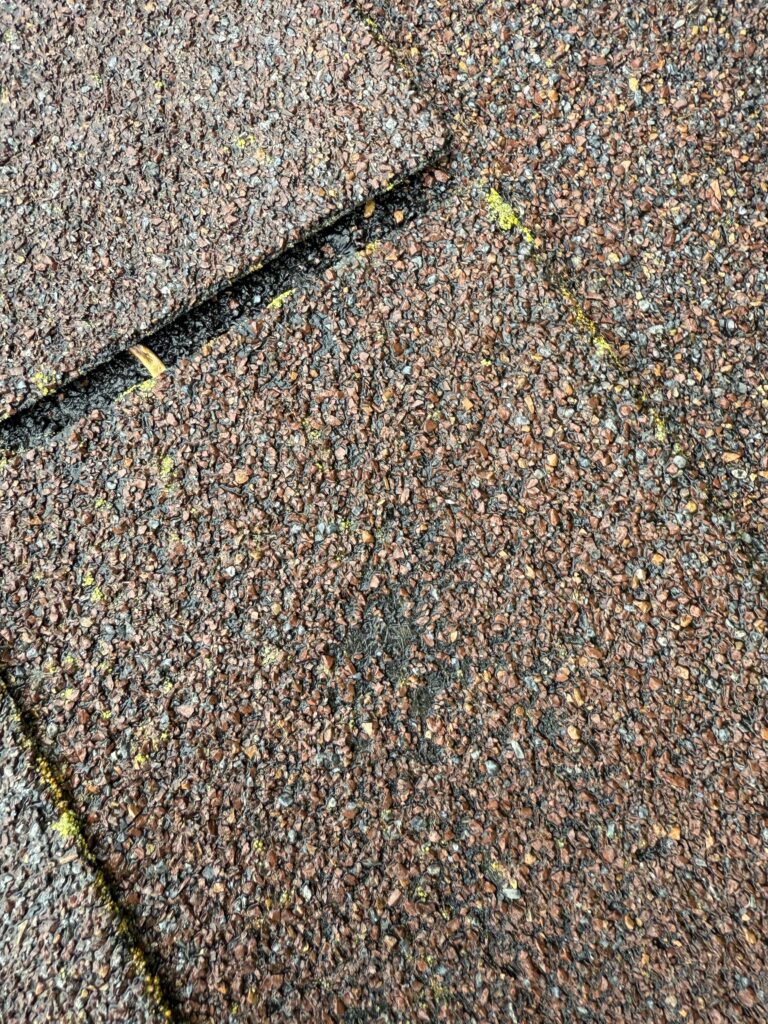
Unauthorized repairs by another contractor. If a handyman tars a valley or a second company reflashes a chimney, both the manufacturer and the original installer may be off the hook. On a roof still under warranty, call the original installer first.
Improper attic ventilation. Manufacturers require balanced intake at the soffits and exhaust at or near the ridge. Without it, trapped heat and moisture cook shingles from below: curling, blistering, early granule loss. Inspectors know that pattern on sight, and it is an excluded condition, not a defect. Our winters are worse than our summers here, because warm moist air hits cold sheathing, condenses, and rots decking from the inside.
Skipped manufacturer-required components. Starter strip at eaves and rakes. The specified underlayment. Ice-and-water shield where code and climate call for it. Approved ridge cap instead of cut-up three-tabs.
Layering over bad decking. Shingles nailed into soft or delaminated decking will not hold, and no warranty covers that.
Missing the reporting deadline. Most documents require written notice within a set period after you discover the problem, commonly 30 days, and exclude damage that worsened while you waited.
Lost paperwork. No proof of purchase, no documented installation date, usually no claim. Scan everything the week the job finishes.
Solar panels, satellite dishes and new penetrations
Every new hole through your deck is a spot where someone else's flashing decides whether you leak, and a leak at that penetration is typically excluded from both warranties. Before anything gets mounted, ask your roofer what mounting and flashing method the manufacturer approves, get the solar or antenna installer's own written leak warranty, have the work photographed, and keep it all with your roof file.
If the roofer stonewalls or the manufacturer denies the claim
Put your demand in writing with dated photos, the contract, and the completion date, and ask for any denial in writing with the reason stated. The stated reason is the thing you argue.
From there, in Wisconsin:
- File a complaint with DATCP. The Department of Agriculture, Trade and Consumer Protection's Bureau of Consumer Protection enforces the state's home improvement trade practices rules and takes homeowner complaints.
- Check for an arbitration clause. Manufacturer warranty documents, and some contractor contracts, contain mandatory arbitration and venue language that can limit where and how you pursue a dispute. Read that before you sign, not after.
- Small claims is real. Wisconsin small claims court currently handles most money claims up to $10,000, which covers many repair-level disputes without a lawyer.
And the structural point: a contractor-only labor warranty generally disappears with the contractor, because there is no fund behind it. Manufacturer-backed workmanship coverage survives, since the manufacturer is the obligated party. If a company was sold rather than closed, ask in writing whether the buyer assumed those obligations.
Transferring the warranty when you sell
Many manufacturer warranties are transferable one time only, within a window after the sale (often 60 days to a year, program dependent), sometimes with a form and a small fee. The transferred coverage is frequently reduced, so "lifetime" may convert to a fixed term for the new owner.
Nobody at the closing table submits this for you. Put it on the closing checklist and agree in writing whether the seller or buyer files it. A documented, transferable roof warranty is a real talking point in roof replacement resale value conversations with buyers in Madison, Janesville and Beloit.
Want a straight answer on your roof?
We'll inspect it, document everything, and tell you honestly what you're looking at, even if the answer is patch it for now. No pressure.
Repairs, patches and partial re-roofs
A repair almost always carries a short labor warranty, commonly 30 days to a year or two, sometimes limited to the area worked on, and it does not extend the original roof's coverage.
Patching a 15-year-old roof does not automatically void its material warranty, as long as the repair uses compatible, manufacturer-approved materials and is done competently. What gets claims denied later is roofing cement smeared across shingle faces, mismatched product lines, or repairs nobody can document.
Partial re-roofs generally cannot receive an enhanced system warranty, since those require the full approved system. If you are weighing one slope against a full asphalt shingle roof replacement, the warranty difference belongs in that math.
Algae streaking is its own, much shorter coverage, commonly 10 to 25 years depending on product line, and only if you bought shingles with the algae-resistant designation. It typically covers blue-green algae only, not moss or lichen. On shaded north slopes in our humidity, paying up for it is usually money well spent.
How to file a roof warranty claim
- Photograph everything, dated. Wide shots and close-ups, plus interior staining.
- Call the installing contractor, then follow up by email so there is a timestamp, and note the date you first noticed the problem.
- Pull your file: contract or invoice, completion date, warranty certificate and number, proof you are the covered owner.
- Find the product information: product line, color, lot or batch number if you have it.
- Let the installer determine which warranty applies. Installation issue means their labor warranty. Genuine defect means a manufacturer claim they typically help file.
- Expect an inspection or a sample request. Do not throw away failed material.
- Give it weeks, not days, and keep a log of names, dates and calls.
Wisconsin rules that make "get it in writing" enforceable
Warranty terms belong in the written contract. Wisconsin's home improvement trade practices rule, ATCP 110.05, generally requires home improvement contracts to be in writing and to state the work, materials and any warranty the seller promises, though the requirement attaches in specific circumstances (for example where payment is made before the work is complete) and there are thresholds and exemptions. Verify the subsection for your situation. Practically: a dated document naming the warranty, its length and its exclusions beats any verbal promise.
Wisconsin has no statewide roofing license. There is no roofing-specific state license to check. What exists is the DSPS Dwelling Contractor and Dwelling Contractor Qualifier certification tied to permitted work on one- and two-family dwellings, plus local permitting through your municipality. So verify state certification where it applies, carry proof of general liability and workers' compensation, and confirm a physical Wisconsin address you could drive to. That last one matters most in year seven.
One red flag worth naming: a contractor offering to "waive," "eat," or "cover" your insurance deductible. Your policy obligates you to pay that deductible, so building it into an inflated claim misrepresents the loss to your insurer, which is fraud exposure for both of you under Wisconsin's criminal fraud statutes (Wis. Stat. ch. 943). A company willing to start there is not a company whose warranty means much.
Your warranty checklist before you sign
- What triggers a claim? A leak? Visible granule loss? Blow-offs at a specific wind speed?
- Is it prorated, and starting what year?
- Labor, or materials only? Free shingles with no labor still costs you thousands.
- Who backs the workmanship coverage, the contractor or the manufacturer?
- Who registers it, by when, and will I get the certificate with a number?
- Is it transferable, once or more, within what window, and at what fee?
- How long do I have to report a problem after I notice it?
- What is explicitly excluded, including interior damage?
- Is there an arbitration clause, and what venue?
Then: who do I call, at what number, if something goes wrong in year six?
Get straight answers before you commit
Warranty paperwork is one of the few parts of a roofing project you can evaluate calmly, before anyone touches your house. Read it. Compare tiers, not just totals. A bid that is $2,000 cheaper because it skips starter strip and ventilation correction is not cheaper, it is a warranty you cannot use.
If you want a second set of eyes on your roof, your attic ventilation, or a warranty document you do not fully understand, call (608) 909-9109 for a free on-site inspection anywhere in south-central Wisconsin. We have been a family-owned exterior contractor here since 1979. We will walk your roof, show you photos of what we find, explain which warranty (if any) applies to your situation, and leave you with your options in plain language. No pressure, and no cost to find out where you stand.
If there is nothing wrong up there, we will tell you that too.
Get a straight answer on your Madison roof
Wisconsin storm season and insurance non-renewal letters do not wait. Get a free, no-obligation inspection and an honest assessment of exactly what your roof needs, even if the answer is to wait.