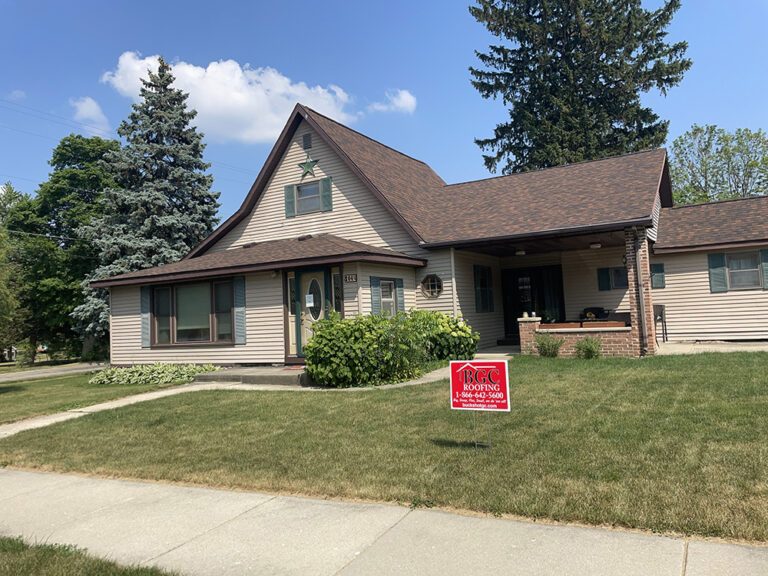
For a straightforward asphalt shingle roof replacement, either can do great work, and what matters most is who physically installs it. A general contractor becomes the clearly better choice when the job crosses trades: roof plus siding, gutters, fascia and soffit, interior water damage, attic insulation and ventilation work, or an insurance claim covering several parts of the house at once.
Get My Free Estimate →- The three types of companies bidding your roof
- When a general contractor is genuinely the right call
- When a roofing-only contractor is the better fit
- The subcontracting question nobody asks
- Licensing, insurance, and how to check a "since 1979" claim
- What a reroof actually costs here, and how each type prices it
- Warranties: get a year count, not adjectives
- Shingles, wind ratings and impact-resistant discounts
- Ice dams: the Wisconsin failure mode that starts in your attic
- Insurance work: ACV, RCV, supplements and low estimates
- Repair or replace: hail, wind, or just age
- Tear-off day: do you need to be home, and how decking gets approved
- Who do you call when it leaks in year two?
- Questions to ask before you sign
- The bottom line for south-central Wisconsin homeowners
- FAQs
Short answer: hire the company whose own crew will be standing on your roof, and whose scope covers everything the storm or the age of your house actually damaged. The words "general contractor" or "roofing contractor" on the truck tell you far less than most homeowners think.
That said, the difference is real in specific situations. Here is the honest breakdown, including the cases where a roofing-only company is genuinely the better call than a general contractor.
On this page: the three types of companies bidding your roof, when a GC is the right call, when a roofing specialist wins, the subcontracting question, licensing you can verify, real cost ranges, warranty terms, shingle choice, ice dams, insurance supplements, tear-off day, and the questions to ask before you sign.
The three types of companies bidding your roof
You will usually get quotes from three very different businesses, even though all three call themselves roofers.
1. The general contractor who self-performs roofing
A general contractor is licensed and organized to manage a whole building project across multiple trades. Some GCs only manage and subcontract everything out. Others, like us, self-perform roofing, siding and gutters with their own crews and bring in specialists only for things like electrical or interior finish work.
That second version is the useful one for homeowners. You get single-point responsibility across the whole exterior, and the roof is still installed by people who install roofs every week.
2. The roofing-only specialist
Roofing is all they do. Good ones are excellent at it: fast, tight details, deep experience in one product category. If your job is one trade and nothing else is going on with the house, a strong roofing-only contractor is a completely legitimate choice.
3. The out-of-town storm sales outfit
After a hail event in Dane, Rock or Green County, these show up within days. Door knockers, a sales rep who has never installed a shingle, and a crew hired off a labor broker the week of your job. They are gone before your shingles finish sealing, and their labor warranty goes with them.
The tell is simple. Ask where their office is, how long they have been at that address, and who will be on your roof. Vague answers are your answer.
When a general contractor is genuinely the right call
Pick a GC when the job crosses trades or could uncover something structural. Specifically:
- Roof plus siding, gutters, fascia or soffit. Hail almost never hits only shingles. It dents aluminum gutters, cracks vinyl siding, splits window wraps and bruises vent caps. One contract beats three.
- Interior water damage. Stained ceilings, wet insulation, swollen drywall. A roofing-only company patches the leak and hands you a drywall problem.
- Attic work that comes with the roof. Insulation soaked by a leak has to come out and go back in. Bath fans dumping moist air into the attic have to be ducted outside. Soffit and ridge ventilation usually needs correcting during tear-off, which is exactly when it is cheap to do.
- Insurance claims spanning multiple trades. Adjusters write these as one loss. Hire three companies and you own the job of reconciling three scopes against one estimate, plus every supplement.
- Rot or structural surprises found at tear-off. On a 1950s Cape on Madison's east side, our tear-off went through asphalt into original cedar shake and turned up roughly 40 sheets of soft, delaminated decking plus two rotted rafter tails. We re-sheathed, sistered the tails and kept the job on schedule. A roofing-only crew may have to stop and wait on a carpenter.
- Additions, dormers, porch rebuilds or anything touching framing. That is GC territory, full stop.
Our own answer here is not neutral, and we will say so plainly: we are Buckshot General Contracting, a family-owned general contractor that self-performs residential roofing in this area, and multi-trade storm damage restoration in Dane County is most of what we do.
When a roofing-only contractor is the better fit
We are not going to pretend a GC wins every time. Go with a roofing specialist when:
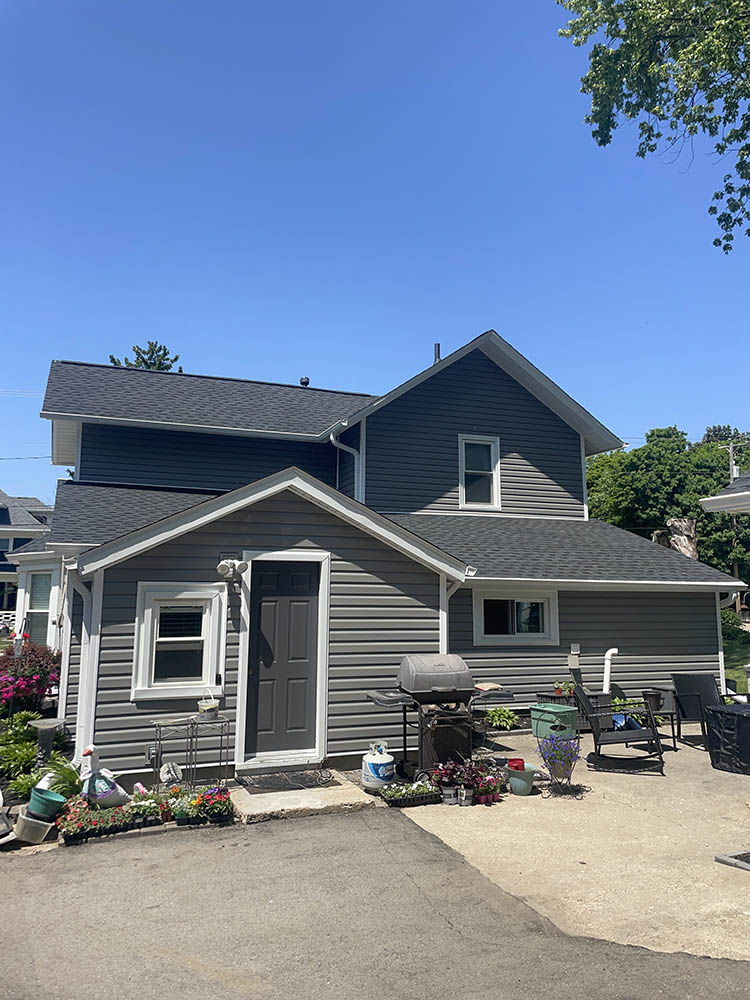
- It is one trade, one product, nothing else. A straight asphalt shingle roof replacement on a 1990s ranch with no interior damage and healthy gutters.
- You need a specialty system. Flat commercial TPO or EPDM, standing seam metal, slate or tile. A shop that lives in one system all year usually beats a generalist.
- It is a small repair. A pipe boot, a few blown shingles, flashing at a wall. You want the crew that can be there Thursday, not a project manager and a schedule.
- The roofing-only company simply has the better crew. Local reputation beats org charts. Every time.
The subcontracting question nobody asks
This is the question that actually predicts your outcome: who is physically on my roof, and do they work for the company I am paying?
Subcontracting is not automatically bad. Plenty of solid companies use the same trusted crews for years. What is bad is not knowing. Ask:
- Are the installers your employees or a subcontracted crew?
- Whose workers' compensation covers them if someone gets hurt here?
- Who is the foreman on my job, and will a supervisor be on site during tear-off?
- Does your labor warranty stay valid if that sub stops working for you?
If a salesperson cannot answer those in plain language, that is the whole review.
Licensing, insurance, and how to check a "since 1979" claim
Here is something most homeowners do not know. Wisconsin does not issue a standalone roofing license. There is no state roofing exam. Anyone with a ladder and a magnet can print business cards.
What does exist, and what you should verify:
- Dwelling Contractor Certification (the business credential tied to insurance and financial responsibility) plus a Dwelling Contractor Qualifier credential, which is what lets a company pull permits on one and two family homes. Ask for the credential number and look it up on the Wisconsin DSPS license lookup. It takes two minutes.
- General liability insurance. Ask for a certificate of insurance emailed directly from their agent, not a PDF off the sales rep's tablet.
- Workers' compensation. Wisconsin generally requires coverage once an employer has three or more employees, and sooner at certain payroll levels, so a small crew is not automatically covered. If an uninsured worker is hurt on your property, you can end up facing a claim or a lawsuit, and how much your homeowners policy responds varies by policy. Not a risk worth taking to save a few hundred dollars.
- Local permits. Most Dane County municipalities require a permit for a tear-off. A contractor who suggests skipping it is telling you how they handle inspections generally.
And apply the same standard to us. We have been family owned and operated since 1979, with a physical office in the Madison area and a second location in Centerville, Iowa, which is exactly why we can show you a decades-long paper trail: our DSPS credential numbers on request, a certificate of insurance from our agent, permit history with your municipality, and years of customer reviews on Google, Birdeye, Angi and HomeAdvisor written by people in your ZIP code. Ask for three recent jobs in your town and we will name streets: reroofs in Sun Prairie and Fitchburg, hail rebuilds in Stoughton and Janesville, siding and gutter work in Verona and Monroe. Photos of the same jobs are on our recent projects page.
Photo caption to look for on any contractor's site: a real tear-off in progress with decking exposed, not a stock aerial of a finished roof.
What a reroof actually costs here, and how each type prices it
Planning ranges for south-central Wisconsin, from our own recent work in Dane, Rock and Green counties. These are ballparks to budget with, not quotes.
- Architectural asphalt shingles, single-layer tear-off, walkable pitch: roughly $475-$700 per square (a square is 100 square feet of roof).
- Typical single-story ranch, 18-22 squares: roughly $9,000-$14,000.
- Two-story, steep (8/12 and up), cut-up roofs with multiple valleys, dormers or two layers to remove: commonly $15,000-$28,000.
- Decking replacement: roughly $85-$150 per 4x8 sheet installed, depending on thickness, pitch and disposal.
- Class 4 impact-resistant shingles: add roughly 10-20 percent to material cost.
- Standing seam metal roofing: commonly two to three times an asphalt reroof.
What moves your number: pitch and access, how many layers come off, decking condition, chimney and skylight flashing, ventilation corrections, and whether the eaves need extra ice barrier.
How the three types price it:
- Roofing-only: priced per square, lean overhead, often the tightest number on a simple single-trade reroof.
- General contractor: priced by scope with project management built in. Usually close to a specialist on a plain reroof, and often cheaper on bundled work, because one mobilization, one dumpster, one permit and one crew visit replaces three of each.
- Storm sales outfit: priced to your insurance estimate, whatever it says, with the rep's commission inside it.
On deposits: there is no good reason to hand over a large sum up front on a residential reroof. Materials come on supplier credit and the work is short. Expect little or nothing down and the balance at completion after you walk the job. Your contract should include Wisconsin's required written notice of lien rights (standard paperwork, not a red flag), and you should ask for lien waivers as you pay.
Not sure what your roof actually needs, or which type of contractor fits your situation? Call for a free, no-pressure inspection. We will tell you if it is a repair, and we will tell you if you do not need us at all.
Warranties: get a year count, not adjectives
There are two separate warranties on every shingle roof, and homeowners mix them up constantly.
The manufacturer warranty covers the shingles. Standard shingle coverage is prorated and does not cover installation mistakes, which cause most leaks.
The workmanship warranty covers the install: fastening, flashing, penetrations, valleys, ventilation details. Ask every bidder for a number of years in writing. In this market you will hear anything from one year to ten. A warranty described only as "we stand behind our work" is worth nothing. Ours is written into your contract with the term stated on the page, it covers leaks caused by our installation, and like every honest workmanship warranty it excludes new storm damage, ice dams driven by attic heat loss you decline to fix, foot traffic damage and homeowner alterations.
Because we hold GAF Master Elite status, we can also register GAF's enhanced system warranties, up to the Golden Pledge, which puts 25 years of workmanship coverage in GAF's name rather than only ours. That matters in year twelve, when the question is whether anyone is still around to answer the phone. Manufacturer certifications like this attach to the installing company, not to the trade label on the truck. A general contractor can hold Master Elite. A roofing-only company can hold it. A storm chaser working out of a rental truck cannot.
Shingles, wind ratings and impact-resistant discounts
Skip three-tab. On almost every Wisconsin house, laminated architectural shingles are the right call: thicker mat, better wind performance (commonly rated to 110-130 mph when installed with the manufacturer's nailing and starter requirements) and a much better look on a steep front slope. The price gap over builder-grade three-tab is smaller than most homeowners expect.
If you are in the hail belt, ask about UL 2218 Class 4 impact-resistant shingles. Class 4 means the shingle survived a steel-ball impact test without cracking the mat. Several carriers writing in Wisconsin offer a premium discount for Class 4, though it is not universal and the amount varies, so call your agent with the exact product name before you pay the upgrade. Class 4 also cuts down on the small bruising that turns into a claim every few years.

Want a straight answer on your roof?
We'll inspect it, document everything, and tell you honestly what you're looking at, even if the answer is patch it for now. No pressure.
Ice dams: the Wisconsin failure mode that starts in your attic
If you have had icicles at the eave and a brown stain on a bedroom ceiling in February, the roof is usually not the root cause. Ice dams are an attic problem that shows up on the roof.
Here is the sequence. Heat leaks out of the living space into the attic (recessed lights, top plates, an attic hatch, a bath fan blowing into the insulation). That heat warms the deck and melts snow. The meltwater runs down to the cold overhang, which has no heated space under it, refreezes, and builds a dam. Water then ponds behind the dam and works backward under the shingles, because shingles shed water, they do not hold it back.
Three fixes, in this order:
- Air seal and insulate the attic floor so the deck stays cold.
- Balance the ventilation: continuous soffit intake plus ridge exhaust, with baffles so blown insulation does not choke the intake at the eave.
- Ice-and-water shield at the eaves. Wisconsin's residential code requires an ice barrier running from the eave edge to at least 24 inches inside the exterior wall line, and on low-slope or chronic-dam eaves we go further up the roof. Valleys, chimneys and skylights get membrane too.
This is exactly where the general contractor question stops being academic. A roofing-only crew can install the membrane, but the insulation, air sealing and bath fan ducting that actually stop the dam are often outside their scope. Heat cable on the eave is a symptom manager, not a repair.
Insurance work: ACV, RCV, supplements and low estimates
On a storm claim the money moves in two pieces. Your carrier issues an actual cash value (ACV) check first, which is replacement cost minus depreciation, minus your deductible. When the job is finished and invoiced, the carrier releases the withheld depreciation (the RCV portion). You pay your deductible. That is the whole structure.
If the carrier's estimate comes in below the real cost of the job, that is normal on a first pass and it is fixed with a supplement, not with your checkbook. Common missed line items: code-required ice barrier, drip edge, starter course, ridge vent, steep and two-story charges, permit fees, and detach and reset of gutters or solar. We submit those with photographs and manufacturer installation requirements. Most gaps close.
If a supplement gets denied, you have options: request a reinspection with a different adjuster, ask for the line-item worksheet and challenge specific items, look at the appraisal clause in your policy, or reduce scope to what was approved. What we will not do is quietly downgrade your materials to hit the number, and we will not "eat your deductible." That offer is insurance fraud, it misstates the cost of the loss on paperwork you sign, and it can void your claim. Walk away from anyone who makes it.
Anything you would pay out of pocket, whether it is your deductible, a Class 4 upgrade or a metal accent roof, goes in writing before we start. No surprises at the final invoice.
One timing note without the scare tactics: policies require prompt notice of loss, and most homeowners policies contain a suit-limitation clause, often one to two years from the date of loss, that caps how long you have to take action. Pull your declarations page and read the conditions section, or ask your agent. Then decide at your own pace.
Repair or replace: hail, wind, or just age
Age, not storm: granules piling in the gutters, shingles curling at the corners, bald patches on the south and west slopes, shingles that crack when you lift them.
Hail: soft, fresh bruises you can feel with a thumb, granule loss in a random scattered pattern rather than in wear lines, a cracked mat under the bruise, and spatter marks on gutter tops, vent caps, AC coil fins and the grill lid. Hail leaves a story on the whole property.
Wind: creased shingles (a horizontal fold line where the shingle was bent back and dropped), missing tabs, lifted ridge caps.
Repair is honest when damage is isolated to one slope, shingles are still pliable, the roof is under roughly 12-15 years, and a color match exists. Replacement is the right answer when shingles break on removal, damage crosses multiple slopes, decking is soft underfoot, or the hail count per test square is high enough that the carrier calls the slope a total loss. Adjusters typically chalk 10x10 test squares and count bruises, so a claim lives or dies on what gets documented, slope by slope. That is why we meet your adjuster on the roof.
Tear-off day: do you need to be home, and how decking gets approved
You do not need to be home. You do need to be reachable by phone.
- Crew arrives early, usually 6:30-7:00 a.m. It is loud, and it stays loud.
- Move cars out of the driveway the night before so the dump trailer has room.
- Keep pets inside and away from doors. Hammering upsets dogs more than people expect.
- Expect vibration indoors. Take down anything precarious on walls or shelves.
- We tear off and dry in the same day, so your house is not left open overnight. If weather turns, exposed sections get tarped.
Decking change orders in writing. Your contract carries a per-sheet price before we start, so nobody is negotiating on a roof. If we find rot, the foreman photographs it, texts you the sheet count and the total at your contract price, and we wait for your written approval (a text reply is fine) before installing over it. No verbal "we found some bad wood" surprises on the final bill.
Property protection and cleanup, because this is the complaint we hear most about other companies: tarps and plywood over landscaping, shrubs, decks and window wells; the AC condenser covered and shielded so debris stays out of the coil fins; dumpster on plywood to protect the driveway apron; debris dropped on tarps, not lawn; and a magnet sweep of the driveway, walks and lawn perimeter more than once, including after the dumpster leaves. Then a final walk with you before we ask for the balance.
Timeline: most single-story ranches in Sun Prairie, Oregon, Janesville or Monroe are one to two days. Two-story, steep or multi-layer roofs run two to four days. After a widespread hail event, every reputable local crew books out, and the calendar becomes the real wait.
Who do you call when it leaks in year two?
This is where the two paths really separate.
Say you hired a roofing company and a separate gutter company. Two years later, water stains the soffit. The roofer says gutter overflow. The gutter company says flashing detail. Congratulations, you are now the general contractor, and you are unpaid.
A GC that self-performed both owns it. One call, one company, no finger pointing. That single point of responsibility is the strongest practical argument for hiring a general contractor on any multi-trade exterior job, and it is worth more than a small price difference on paper.
Questions to ask before you sign
Print this and use it on every bid.
- Who is physically installing my roof, employees or subs?
- Can your agent email me your liability and workers' comp certificates?
- What is your DSPS credential number so I can look you up?
- What manufacturer certifications does your company hold, and which system warranty can you register in my name?
- How many years is your workmanship warranty, in writing, and what does it exclude?
- Are you pulling the permit, and in whose name?
- What is the price per sheet if you find rotted decking, and how do I approve it?
- How many feet of ice-and-water shield at the eaves and valleys?
- Are you correcting soffit and ridge ventilation, and are you touching attic insulation?
- If insurance underpays, who handles the supplement, and what could I owe out of pocket?
- Do you handle gutters, siding, fascia and soffit, or will I need another contractor?
- How long have you been at your current address, and can I see three jobs in my town?
If two bids answer these the same way, hire the crew you would rather have on your house for three days.
The bottom line for south-central Wisconsin homeowners
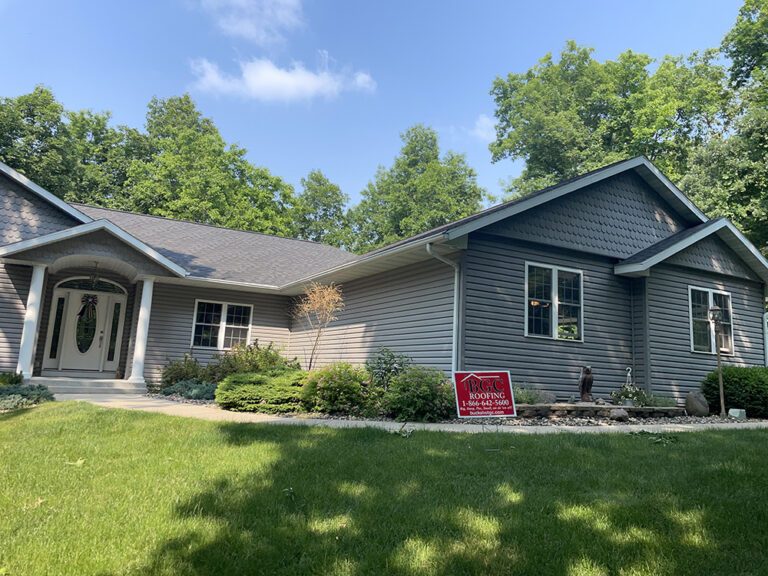
If your job is one trade and simple, a strong roofing-only contractor is a fine choice, and we will tell you so. If your job touches the roof plus anything else, especially after hail, a general contractor that self-performs its own roofing gives you one crew, one warranty and one person accountable when the next storm rolls through.
We have been that company in Madison and across Dane, Rock and Green counties since 1979: roofing, siding, gutters, windows, doors and storm restoration, with someone answering the phone for emergency tarping and a project manager who meets your adjuster on the roof instead of on the phone.
The inspection is free, and it costs you nothing to find out. No sales pitch, no pressure, no scare tactics. We climb up, photograph what we find, tell you honestly whether you have a repair, a claim, or a roof with five good years left, and leave you a written estimate you can hold against anyone else's. Give us a call or send a message and we will get someone out to you.
Get a straight answer on your Madison roof
Wisconsin storm season and insurance non-renewal letters do not wait. Get a free, no-obligation inspection and an honest assessment of exactly what your roof needs, even if the answer is to wait.