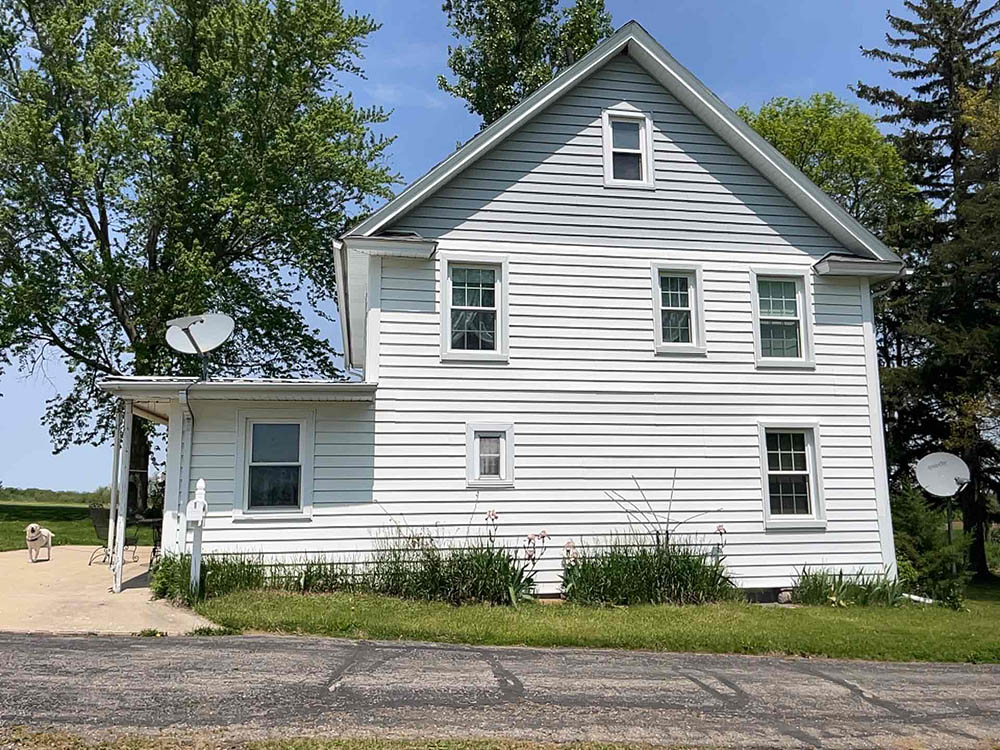
Almost never. Appraisers don't add up improvements like a receipt pile. A re-side normally shows up as a better overall condition rating, which changes which comparable sales your home gets bracketed against, and it can remove a repair callout that would have stalled a loan. Expect new siding to protect value and widen your buyer pool rather than hand you back every dollar you spent.
Get My Free Estimate →- How appraisers actually treat siding
- FHA and VA appraisals: where siding actually kills deals
- What buyers and their agents actually see
- Wisconsin's Real Estate Condition Report: what you have to disclose
- "Can't I just paint it or pressure-wash it?"
- A 20-minute pre-listing siding walkthrough
- Hail-damaged siding: is insurance realistic before you list?
- Spot repair, partial re-side, or the whole house? And what does it cost?
- Timing, permits, and hitting your listing date
- Get a free, no-pressure look before you list
- FAQs
Yes. Siding condition can affect both the appraised value of your home and the offers you get, and it does that through two separate channels most Wisconsin sellers blend together.
Channel one is the appraisal itself, where siding feeds the property's condition rating and, on FHA and VA loans, can trigger required repairs before the loan closes.
Channel two is buyer perception, which shows up as lower offers and inspection-contingency renegotiation even when the appraisal comes in fine.
There is also a third thing nobody warns sellers about: Wisconsin's disclosure law. Here's how all of it plays out on homes in Dane, Rock, and Green counties.
Written and reviewed by the estimating team at Buckshot Exteriors (Buckshot General Contracting), roofing and exterior contractors serving Madison, WI and Centerville, IA since 1979. We carry Wisconsin DSPS dwelling contractor credentials, liability insurance and workers' compensation, and we follow EPA Lead-Safe (RRP) practices on pre-1978 homes. On the roofing side we're GAF Master Elite. Costs and insurance terms move, so treat numbers here as ranges, not quotes.
How appraisers actually treat siding
Appraisers don't have a "siding" line item that adds or subtracts dollars. They assign a condition rating to the whole property, and siding is one of the biggest visual inputs to that rating.
On a standard conventional appraisal (the Uniform Residential Appraisal Report), the home gets rated C1 down to C6. C5 means obvious deferred maintenance with deteriorated components. C6 is the severe end: items affecting safety, soundness, or habitability. Most tired-but-livable Wisconsin homes live in the C3 to C5 range, and the C4 to C5 slide is the one that hurts. A C4 home gets bracketed against other C4 sales. Drop to C5 and you get compared against a cheaper set of comps.
Faded vinyl on the south wall is not going to cost you $15,000 on paper. Exposed sheathing, delaminating hardboard, missing panels, or three obviously different patch jobs on one elevation absolutely can move the rating.
Appraisers also write comments. A line like "exterior shows deferred maintenance, siding deteriorated on multiple elevations" is exactly what makes an underwriter slow down and hands a buyer's agent leverage.
New siding won't be credited dollar-for-dollar
You spend $18,000 on a re-side and expect the appraisal back $18,000 higher. It almost never works that way.
Appraisers value the home as a whole against what similar homes actually sold for. What a re-side does is protect your condition rating, keep a repair callout off the report, and make the house show well enough to draw a full-price offer in the first place. Real money, just not a line item.
The appraiser and the home inspector are two different gatekeepers
The appraiser works for the lender. Their job is value, plus minimum property requirements on FHA and VA loans. They're on-site briefly and their exterior review is visual.
The home inspector works for the buyer, stays longer, and writes the long report that fuels the second round of negotiation.
Neither one is pulling panels off your house. But both read symptoms well: soft spots, buckled courses, staining at the bottom edge, blown caulk joints, and water marks on interior drywall under windows. Hidden damage gets found because it left visible evidence.
FHA and VA appraisals: where siding actually kills deals
FHA and VA appraisals carry minimum property requirements, so the appraiser is confirming the home is safe, sound, and sanitary. Siding sits squarely in "sound," because it's the water-management layer for the whole wall assembly.
What routinely gets flagged in Wisconsin:
- Missing or broken panels leaving sheathing or house wrap exposed
- Rotted wood siding, trim, or corner boards, especially at grade and under windows
- Peeling, chipping, or flaking paint on any home built before 1978, which triggers lead-based paint requirements and must be corrected using lead-safe practices
- Open holes in the wall: old satellite mounts, abandoned vent penetrations, animal entry points
- Siding in ground contact or buried in mulch, which invites rot and carpenter ants
When the appraiser calls for repairs, the loan does not close until the work is done and documented. That can mean a re-inspection fee, a delay, an expired rate lock, or a buyer who walks.
And you can't pick who writes your offer. On entry-price homes around Madison, Janesville, Beloit, Stoughton, and Monroe, FHA and VA offers are common enough that you can't assume you'll avoid one.
The pattern we see most often is a 1990s hardboard ranch where the north or west elevation has taken years of splash-back and shade. The wall reads fine from the street and fails a close look under a window. That's the one that stalls a loan three weeks before closing.
Who pays for the repairs the appraiser demands?
Practically speaking, the seller usually does.
The buyer can't repair a house they don't own, and their lender won't fund until the callout is cleared. Some lenders will consider a repair escrow, but that's lender-specific and limited. So the realistic outcomes are: seller pays, seller gives a concession, the parties split it, or the deal dies.
Accepting a financed offer doesn't automatically put this on you in writing, which is why it blindsides people mid-contract. Ask your agent how lender-required repairs are handled before you sign.
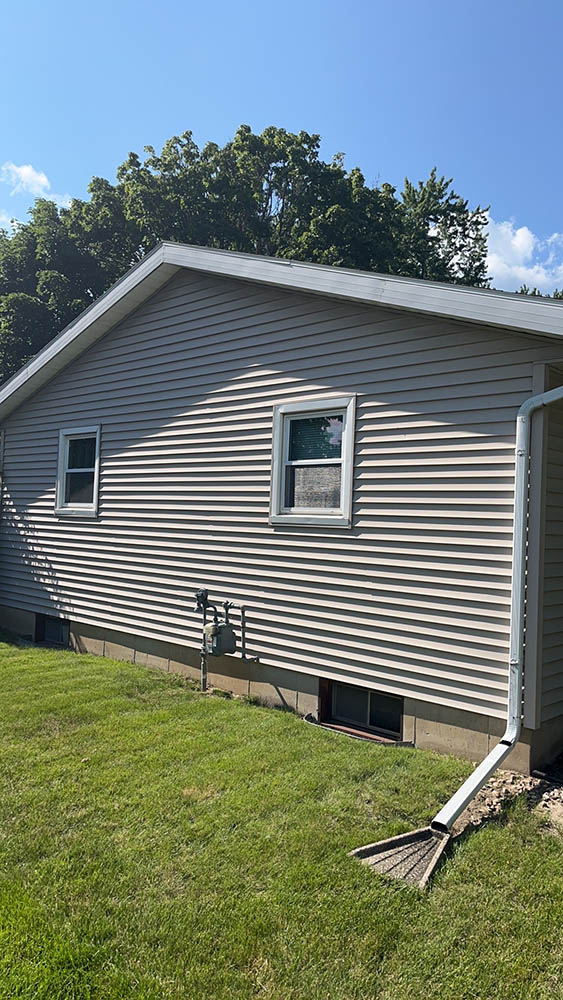
What buyers and their agents actually see
Buyers don't think in condition ratings. They think "what else is wrong with this house?"
Certain things read instantly as deferred maintenance:
- Peeling paint and gray, weathered wood
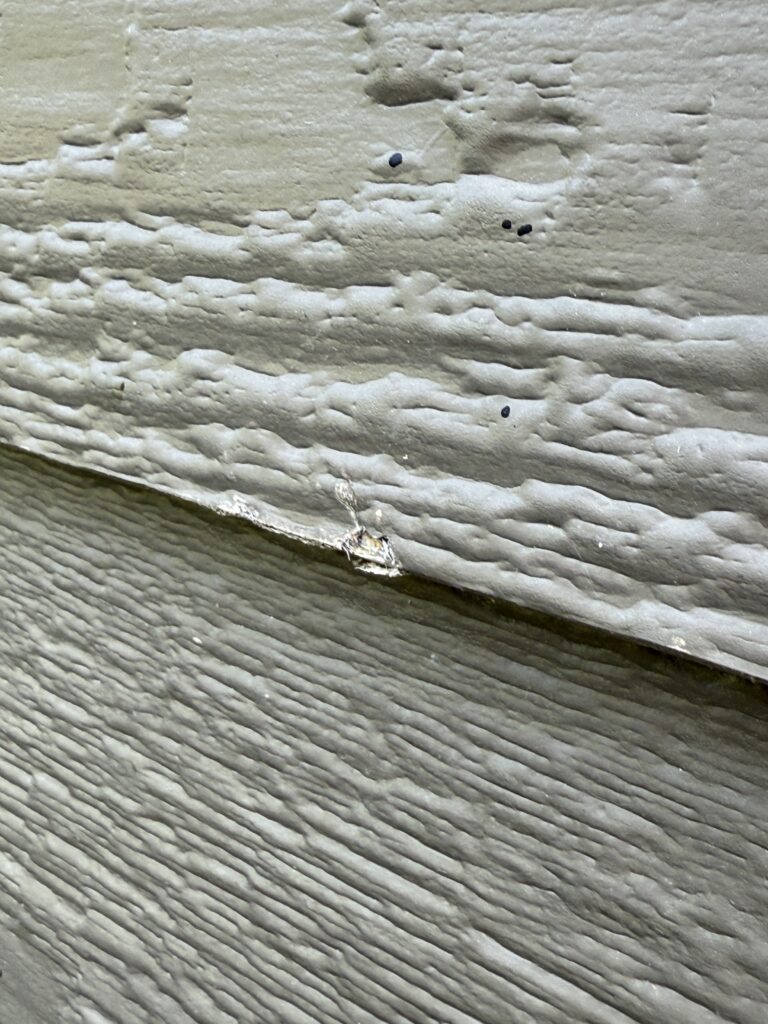
- Cracked, buckled, or hail-pocked vinyl
- A patch that's clearly newer or a different shade
- Caulk joints shrunk away from window and door trim
- Soft, spongy spots in the bottom course
Here's what it costs you. A buyer who sees failing siding does not assume a $4,000 problem. They assume a $25,000 problem plus hidden water damage, and their agent writes the offer for the worst case.
Typical arithmetic on a one-failing-elevation hardboard ranch: the honest scope (replace that wall, repair a few feet of sheathing, new trim and caulk) lands in the $4,000-$7,000 neighborhood. The inspector writes "siding deteriorated, possible concealed moisture damage, further evaluation recommended." The credit request comes back at $12,000-$15,000. Seller settles at $9,000 to save the deal.
Fix it yourself and you pay contractor pricing. Let the buyer price it and you pay fear pricing. Same dynamic we cover in our guide to roof inspections before a home sale in Madison.
Wisconsin's Real Estate Condition Report: what you have to disclose
This is the piece most sellers miss. Under Wis. Stat. ch. 709, most residential sellers must give the buyer a Real Estate Condition Report disclosing defects they're aware of. The form asks about structural components and about water or moisture intrusion, and it's signed under your name, not your agent's.
Two things follow from that.
First, you can't simply not mention the wet corner you've known about for three years. "Aware of" is the standard, and a disclosed defect can give a buyer a short statutory window to rescind, which is exactly why you want the item resolved before you're under contract instead of after.
Second, finishing the repair does not erase the history. You still report what you knew and note that it was corrected. The difference is that a permitted, documented repair with an invoice and a transferable warranty closes the subject, while a bare disclosure with no paperwork invites a discount. If you filed an insurance claim on the siding, expect to account for that too. If you're unsure how to answer an item, ask your agent or a real estate attorney. Nothing here is legal advice.
"Can't I just paint it or pressure-wash it?"
Sometimes, and when the substrate is sound that's the smart move. Chalky vinyl often cleans up beautifully with low-pressure soap and a soft brush. Solid, dry wood siding that just looks tired is a paint job, not a re-side.
Where it fails: paint over swollen, delaminating hardboard or soft trim holds for a season, then flakes, and the inspector presses on it regardless. And on pre-1978 homes, scraping and sanding painted surfaces triggers lead-safe work practices, so it isn't a casual DIY weekend.
One more caution. High-pressure washing on vinyl and lap siding can drive water behind the panels, which creates the exact problem you were trying to hide.
Not sure which camp you're in? Call (608) 909-9109 for a free look. We'll photograph what we find and tell you straight, including when the answer is "spend nothing."
A 20-minute pre-listing siding walkthrough
Do this before listing photos, not after you're under contract.
From the street, one elevation at a time. Does one wall look older or a different shade? South and west walls take the most UV here. Uneven fade is normal. Uneven texture is not.
Look for wavy or buckled lines. Rippled vinyl usually means it was nailed too tight or installed cold with no room to expand. Hardboard swelling at the seams is absorbing water.
Check the bottom 18 inches up close. Siding fails here first, from snow load, splash-back, and mulch piled against the wall.
Press gently on suspicious spots. Gently. Spongy means water is already behind the siding and likely into the sheathing.
Check every caulk joint. Window and door trim, corner boards, hose bibs, dryer vents, electrical penetrations. Failed caulk is one of the most common water entry points on Wisconsin homes.
Look up at gable ends and under the eaves. Homeowners never look up there. Appraisers and inspectors do.
Note hail damage. It concentrates on whichever elevation faced the storm, often the side you never walk past. Hail cracks in vinyl look like spider-web fractures or clean punch-throughs and show best when the sun is low.
If several of these ring true, our guide on signs your siding needs replacement separates cosmetic symptoms from wet-wall symptoms.
Want a straight answer on your roof?
We'll inspect it, document everything, and tell you honestly what you're looking at, even if the answer is patch it for now. No pressure.
Hail-damaged siding: is insurance realistic before you list?
Sometimes. Three things decide it.
The reporting window. Wisconsin policies generally require prompt notice and tie claims to a period following the date of loss, commonly around a year. Check your actual policy. A storm from three summers ago is usually past claiming.
The deductible math. One damaged elevation against a $2,500 deductible may not clear it. Wind and hail deductibles are sometimes a percentage of dwelling coverage rather than a flat dollar amount, which surprises people.
Matching limits. If your profile or color is discontinued, many policies pay to repair the damaged area, not to re-side for appearance.
An open, unrepaired claim also complicates a sale, because lenders and buyers want to know where the money went, and it's a disclosure item. Either finish the work or talk it through with your agent first. If a recent storm is involved, we document damage and meet the adjuster on-site as part of storm damage restoration in Dane County.
Spot repair, partial re-side, or the whole house? And what does it cost?
Spot repair works when the damage is one area, the product is still matchable, the sheathing is dry, and you're a year or more from selling.
Partial re-siding by elevation is the middle path people forget. If the west wall is failing and the other three are sound, re-side that wall and stop at a natural break: a corner board, a gable transition, a course line. Done with a coordinating scheme rather than a near-match, it reads as design. A near-match that's slightly off reads as a patch, which is worse than doing nothing.
A full re-side makes sense when the product is discontinued (very common on 1980s and 1990s hardboard and older vinyl), multiple elevations are failing, there's rot in the sheathing, or you need an FHA or VA appraisal to pass clean the first time.
Turning your square footage into a real number
Most homeowners only know their floor square footage, and siding is priced by wall area. Quick rule of thumb: measure the exterior perimeter in feet, multiply by about 9 feet per story, then add roughly 10% for gables.
Worked example. A 28 by 50 foot ranch has a 156-foot perimeter. 156 x 9 = 1,404, plus 10% for gables, call it about 1,550 square feet of wall.
Installed vinyl re-sides in south-central Wisconsin commonly run roughly $6-$12 per square foot of wall, with fiber cement and engineered wood generally landing around $12-$20+ per square foot. On that 1,550 square foot example, vinyl pencils out near $9,300-$18,600 and fiber cement meaningfully higher. Drivers are stories, trim and gable detail, how many openings need new flashing and wrap, and how much rotted sheathing turns up once the old siding is off. Any blog number is a window, never a quote.
On payback, siding replacement has consistently ranked among the stronger resale recoup categories in Remodeling magazine's annual Cost vs. Value report. Look up the current East North Central figures yourself rather than trusting a percentage from any blog, ours included.
Keep the warranty paperwork. Most manufacturer siding warranties transfer to the first buyer, often with a registration or transfer step and sometimes prorated. Hand the buyer a folder with the invoice, product and color info, permit, and warranty. "Siding replaced, transferable manufacturer warranty included" kills an objection before it's raised. You can compare materials, warranties, and what a correct installation includes on our siding services page.
Timing, permits, and hitting your listing date
Re-siding typically requires a building permit in Madison and in many surrounding municipalities, so build in lead time for the application and any inspections. If your home sits in one of Madison's local historic districts, add preservation design review, which can take additional weeks and may limit material choices. Ask before you order product.
On duration, a straightforward vinyl re-side on a ranch is commonly 3-6 working days. Larger two-stories and fiber cement often run one to three weeks. Rotted sheathing adds days, because it should be replaced, not covered.
Season matters here too. Vinyl gets brittle and cuts poorly in deep cold, and freeze-thaw cycles make caulk and flashing work harder to do well. If you're listing in spring, get the estimate and the permit conversation started in late winter, before storm season fills exterior calendars.
Fix before listing when the damage is visible from the street, when you have pre-1978 peeling paint, or when the wall is wet. Consider a credit only when the issue is genuinely cosmetic, hidden, or you truly have no runway. Understand the incentives: a completed repair with an invoice is a closed subject, while a credit is an open door. The buyer negotiates once on price, then again after the inspection, using your own admission as the starting number.
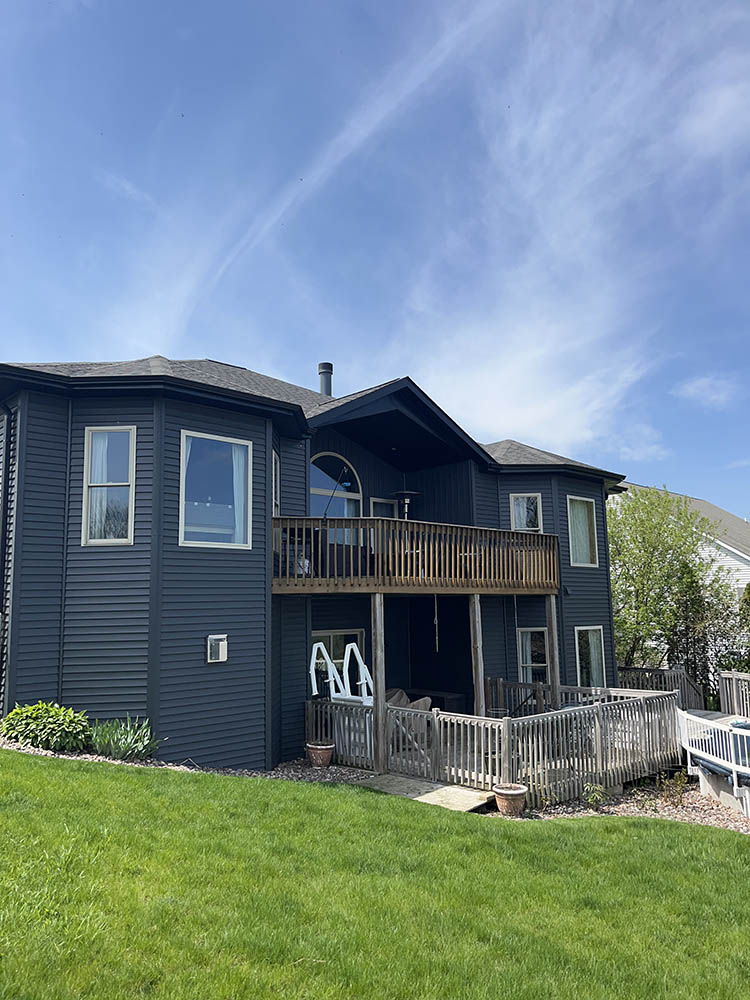
Get a free, no-pressure look before you list
You don't have to guess whether your siding is going to cost you money at the appraisal or three days before closing.
We've worked on exteriors in south-central Wisconsin since 1979, and we know what appraisers flag, what inspectors write up, and what buyers' agents use as leverage. We'll walk your home, check what actually fails first, photograph it, and tell you whether you're looking at a caulk-and-touch-up afternoon or a real repair. Give us your listing date and we'll tell you honestly whether it's reachable, permit time included.
The inspection is free and so is the written estimate. No obligation, no follow-up pressure, and if the right answer is "list it as-is and keep your money," we'll say so.
Call (608) 909-9109 or reach out here to set up a free pre-listing siding inspection. Twenty minutes now is a lot cheaper than a repair demand on the day your loan is supposed to fund.
Get a straight answer on your Madison roof
Wisconsin storm season and insurance non-renewal letters do not wait. Get a free, no-obligation inspection and an honest assessment of exactly what your roof needs, even if the answer is to wait.