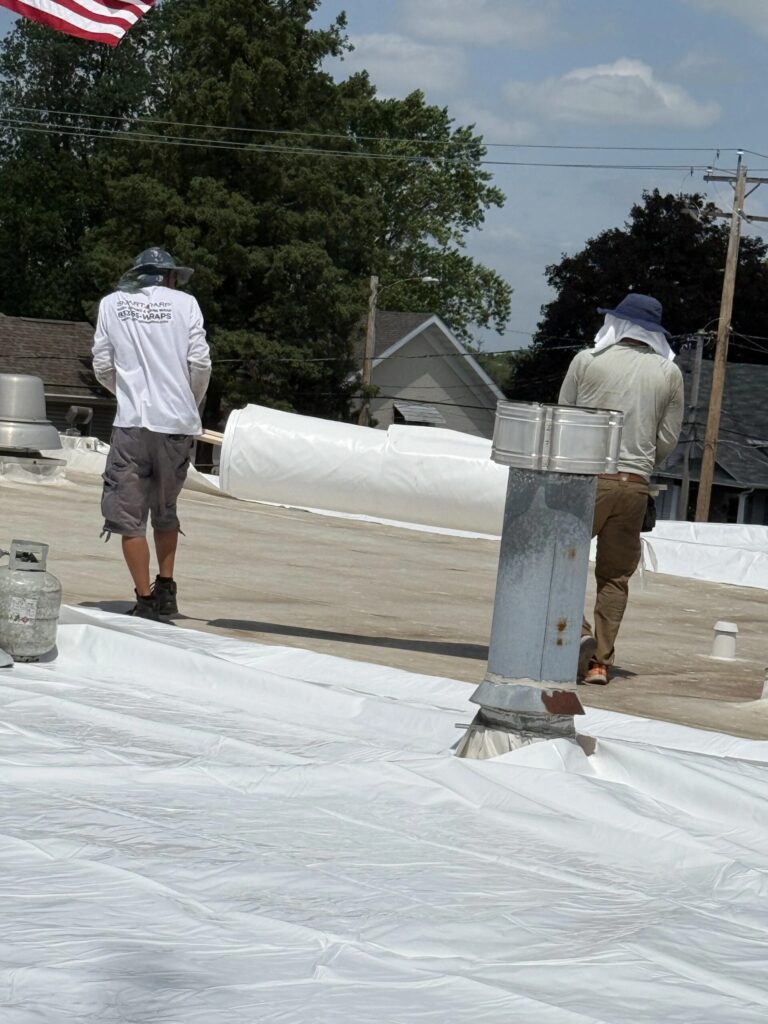
It depends on the repair scope, the condition of the surrounding membrane, and the roof system involved. A properly executed seam repair or flashing replacement on a membrane that is otherwise in good shape can hold for many years. A patch on a roof that is broadly degraded will not last as long. We stand behind our workmanship and will discuss the specific warranty terms for your repair when we scope the job. We will also be honest with you if we think the roof is past the point where repair is the right investment.
Get My Free Estimate →- The Most Common Commercial Roof Failures We See Around Madison
- Emergency Commercial Roof Repair Response
- Repair vs. Replacement: An Honest Take
- Workmanship Warranty, Licensing, and Insurance
- What Drives the Cost of Commercial Roof Repair
- Serving Madison and the Surrounding Dane County Communities
- Maintenance Programs: The Cheapest Repair Is the One You Prevent
- Get a Free Commercial Roof Assessment
- FAQs
A leaking commercial roof does not wait for a convenient time. It leaks during a client meeting, ruins inventory on a Tuesday afternoon, or shows up as a ceiling stain right before a health inspection. If your building is in Madison, Cottage Grove, DeForest, Windsor, or Sun Prairie, you need someone local who can get there fast and actually fix it right.
Buckshot Exteriors has been repairing and replacing commercial roofs across south-central Wisconsin since 1979. That is over 45 years of working on the building stock in this region, through Wisconsin winters, spring snowmelt, and summer hailstorms. This page covers what actually goes wrong on flat and low-slope roofs, how we handle emergencies, when repair makes more sense than replacement, and what drives the cost.
The Most Common Commercial Roof Failures We See Around Madison
Flat and low-slope roofs are workhorses, but they have specific weak points. Here is where things go wrong most often in this region.
Ponding Water
Standing water that sits more than 48 hours after rain is a problem. Most membrane manufacturers void their warranty if ponding is ongoing. Over time it softens adhesives, works into seams, and adds dead load to a deck that was not designed for it.
In Wisconsin, ponding gets worse in spring when snowmelt overwhelms drains that are still partially clogged with debris from fall. We see a lot of this in older buildings along Madison's commercial corridors and in the industrial parks out toward Sun Prairie and DeForest.
The fix depends on the cause. Sometimes it is a clogged drain or a simple pitch correction with tapered insulation. Sometimes the deck itself has deflected and you are looking at a more involved repair.
Failed Membrane Seams
Whether your roof is TPO (thermoplastic polyolefin), EPDM (ethylene propylene diene monomer, a rubber membrane), or modified bitumen, the seams are always the most vulnerable spot. Heat, UV exposure, and Wisconsin's freeze-thaw cycles work on those seams every single year.
A seam that is pulling apart lets water in slowly. By the time you see a ceiling stain inside, water has usually been sitting in the insulation for weeks. A proper repair involves cleaning, re-welding or re-adhering the seam, and checking the surrounding field membrane for soft spots. Slapping a strip of lap sealant over a failing seam without addressing the underlying adhesion failure is a shortcut that will not hold through a Wisconsin winter.
Flashing Failures
Flashing is the metal or membrane material that seals the edges, penetrations (pipes, HVAC curbs, drains), and transitions on your roof. It is the most hand-worked part of the job, and it is where shortcuts show up fastest.
Failed flashing around rooftop HVAC units is probably the single most common leak source we find on commercial buildings in the Madison area. The unit vibrates, the curb flashing fatigues, and water finds the gap. This is a repairable problem in most cases, and it is one we have fixed on buildings ranging from small retail suites to large multi-tenant commercial properties across Dane County.
Punctures and Membrane Damage
Flat roofs take foot traffic from HVAC technicians, satellite dish installers, and maintenance crews. TPO and EPDM can be punctured by dropped tools, sharp gravel, or even aggressive foot pressure on a hot day when the membrane is soft.
Small punctures are straightforward repairs. The challenge is finding them all, which brings us to one of the most misunderstood parts of commercial leak diagnosis.
How We Actually Locate the Leak Entry Point
Interior stains almost never line up directly with where water is getting in. Water enters the roof surface, travels horizontally under the membrane or through the insulation, and then drops through the deck somewhere downslope from the actual breach. Chasing the stain on the ceiling is a good way to patch the wrong spot.
Our process starts at the interior stain and works back up-slope, systematically checking seams, penetrations, flashings, and the field membrane in that zone. We look for soft spots underfoot, blisters, open laps, and cracked sealant. On larger roofs or ambiguous leaks, we use moisture probing to locate wet insulation beneath the surface without tearing up the whole roof. It takes more time than patching the obvious spot, but it is the only way to actually solve the problem rather than create a new one six months later.
Blistering and Delamination
Blisters form when moisture gets trapped between membrane layers or between the membrane and insulation. They look like bubbles and they are a warning sign. A blister that ruptures opens a direct path for water.
Delamination, where the membrane separates from the substrate, is more serious and often signals that the insulation underneath is already wet. Wet insulation loses its R-value, adds dead load to the deck, and will not dry out on its own. That is a situation where you need to know the full extent before committing to a repair scope.
Emergency Commercial Roof Repair Response
When a roof is actively leaking into your building, the first priority is stopping the damage, not writing a full repair scope.
We offer emergency response for commercial clients throughout Dane County and the surrounding area. Response time depends on weather conditions and crew availability, but for active leaks causing interior damage we work to get there as quickly as possible, often same-day or next-day, to apply a temporary cover, tarp, or emergency sealant that stops water intrusion while we assess the full picture.
A temporary fix is not a permanent solution, and we will be straight with you about that. It protects your building, your contents, and your liability while we put together a proper repair plan. For emergency calls outside normal business hours, be aware that after-hours mobilization does carry a premium, which we will communicate to you before any work begins so there are no surprises on the invoice.
If the damage was caused by a storm, document everything before any cleanup: photos of the interior damage, the roof surface, and any debris. That documentation matters for your insurance claim. Our team has experience meeting commercial insurance adjusters on-site to make sure wind and hail damage is fully accounted for. You can read more about how we handle storm damage restoration if that applies to your situation.
Repair vs. Replacement: An Honest Take
This is a question worth asking directly, because the wrong answer in either direction costs you money.
Repair is usually the right call when:
- The damage is localized (one section, one penetration, one seam run)
- The insulation under the damaged area is still dry
- The membrane is less than 15 years old and in otherwise decent shape
- You have a specific, identifiable cause (storm event, mechanical damage, one failed flashing)
Replacement starts making more sense when:
- More than 25-30% of the membrane area is compromised
- Core samples show widespread wet insulation
- The roof has been patched repeatedly and patches are failing
- The membrane is at or past its design life and showing widespread cracking or brittleness
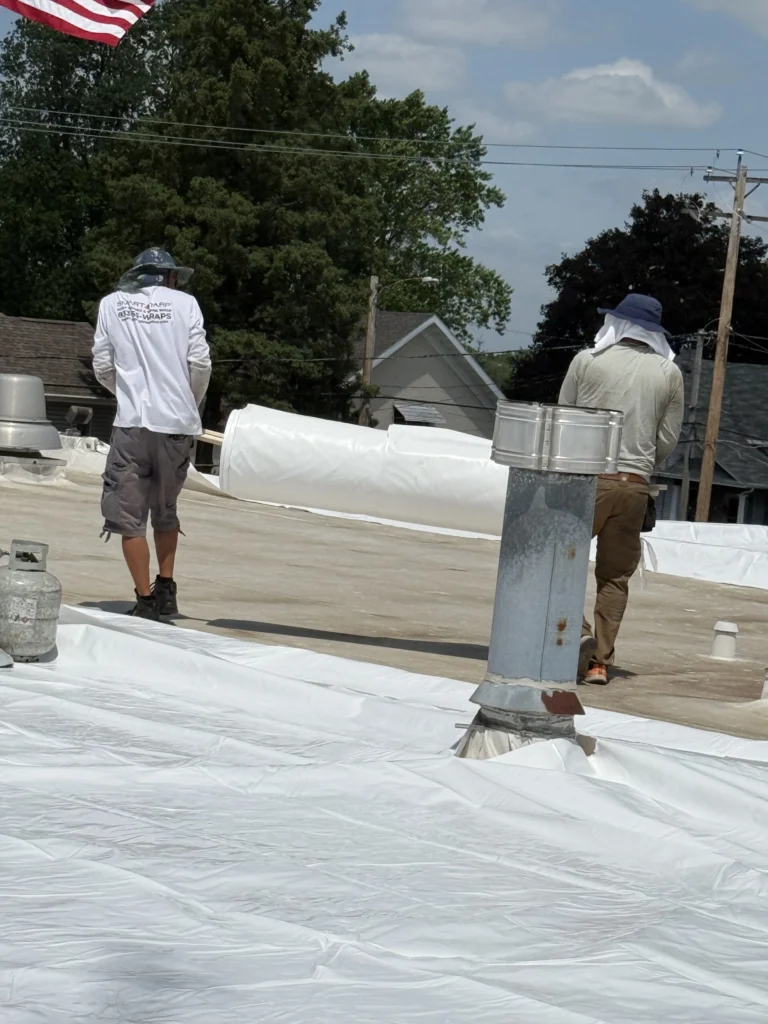
We will always give you an honest read. How long a repair will hold depends on the condition of the surrounding membrane, the roof system, and what caused the failure in the first place. We will not quote you a blanket number of years, because a repair on a solid 10-year-old TPO roof is a very different situation from a patch on a 22-year-old modified bitumen roof with soft spots across the field. What we can tell you is that we will scope the repair honestly and tell you if we think you are throwing money at a roof that needs to come off.
Our commercial roofing page covers full replacement options if you want to understand what that process looks like.
Workmanship Warranty, Licensing, and Insurance
These are questions you should ask every contractor you consider, and we are glad to answer them directly.
We carry general liability insurance and workers' compensation coverage. This matters because if a crew member is injured on your roof, workers' comp protects you from liability as the building owner. We provide certificates of insurance before any work begins, and we encourage you to require that from any contractor you hire for commercial work.
We stand behind our workmanship. Warranty terms vary by repair scope and roof system, and we will discuss the specifics with you when we put together your repair proposal. We also work with major commercial membrane systems including TPO, EPDM, and modified bitumen. If your roof is under an active manufacturer warranty from a previous installation, we will talk through that with you before touching anything, because some warranties require certified contractors for repairs to remain valid.
What Drives the Cost of Commercial Roof Repair
There is no single price for commercial roof repair, and anyone who quotes you a number without seeing the roof is guessing. Here are the real cost drivers.
Roof type. TPO heat-welded seam repairs require different equipment and skill than EPDM lap adhesive repairs or modified bitumen torch-down work. Labor and material costs vary by system.
Damage extent. A 10-square-foot membrane patch is a few hundred dollars. Reflashing an entire HVAC curb field or replacing a drain assembly is a different conversation.
Access and safety. Multi-story buildings or roofs with limited access points take more time to set up safely.
Deck condition. If we pull back membrane and find rotted or wet decking underneath, that has to be addressed before new membrane goes down. We will not hide that from you or skip it to keep the bid low.
Urgency. Emergency response outside normal hours carries a premium due to crew mobilization. We will tell you what that looks like before we start, not after.
We provide free on-site assessments for commercial properties throughout the Madison area, including Cottage Grove, Windsor, DeForest, and Sun Prairie. Get a real number from someone who has actually looked at your roof.
Want a straight answer on your roof?
We'll inspect it, document everything, and tell you honestly what you're looking at, even if the answer is patch it for now. No pressure.
Serving Madison and the Surrounding Dane County Communities
We work regularly across Dane County and the surrounding region: Madison, Cottage Grove, Windsor, DeForest, Sun Prairie, Middleton, Verona, Fitchburg, Stoughton, and beyond. If your commercial property is within a reasonable drive of Madison, we can get there.
Being local matters more than people realize. We know the building stock in this area, the weather patterns, and the local code requirements. We are not a national franchise dispatching a subcontractor you have never met. If you want to see examples of our work, take a look at our recent projects.
Maintenance Programs: The Cheapest Repair Is the One You Prevent
The cheapest commercial roof repair is the one you catch before it becomes a full failure. A basic annual inspection, drain cleaning, and seam check in spring and fall can extend a roof's life by years and catch small problems before they become expensive ones.
We offer maintenance programs for commercial clients who want a consistent eye on their roof rather than a reactive call every time something goes wrong. Ask us about it when you reach out.
Get a Free Commercial Roof Assessment
If your commercial roof is leaking, showing signs of ponding, or just overdue for a look, reach out to Buckshot Exteriors. We have been doing this work in south-central Wisconsin since 1979, and we will give you a straight answer about what your roof actually needs, including whether a repair is the right move or whether you are better off pricing a replacement.
No pressure, no commitment required for an assessment. Contact us today to schedule your free commercial roof inspection, or call us directly if you have an active leak that needs attention now. For emergencies, calling is always faster than a web form.
Get a straight answer on your Madison roof
Wisconsin storm season and insurance non-renewal letters do not wait. Get a free, no-obligation inspection and an honest assessment of exactly what your roof needs, even if the answer is to wait.