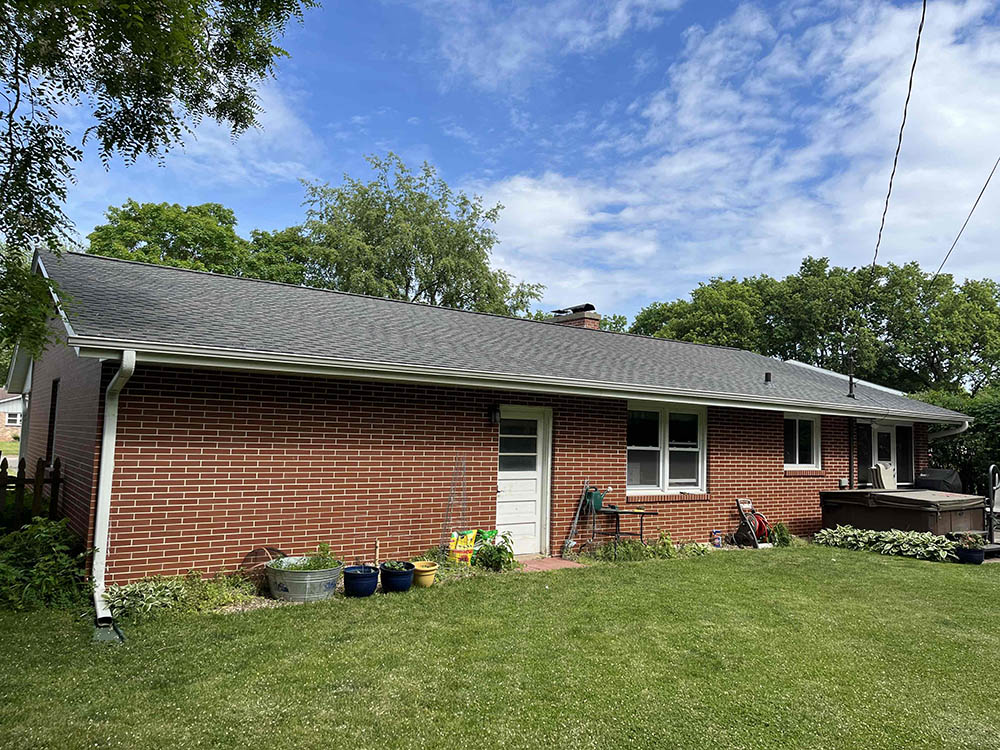
No. The streaks are a blue-green algae growing on the outside surface of the shingles. Dark growth on the underside of the roof deck in the attic is a separate moisture and ventilation problem that needs its own inspection.
Get My Free Estimate →- What black streaks on a roof actually are
- How to tell algae from moss, soot and granule loss
- Why some slopes streak and others stay clean
- Do black streaks damage your roof?
- How to clean black streaks off a roof safely
- What not to do
- How to slow the regrowth
- Algae-resistant shingles at your next replacement
- When black streaks are a reason to call a roofer
- Get a straight answer on your roof
- FAQs
Black streaks running down your shingles are almost always algae, and they rarely mean the roof is failing. The roofing industry treats them as discoloration rather than damage.
You have three sensible options. Leave the streaks alone, have them cleaned gently with a diluted bleach solution and a low-pressure rinse, or choose algae-resistant shingles the next time the roof is replaced.
What you should never do is pressure wash the roof. That is the step that actually harms shingles.
What black streaks on a roof actually are
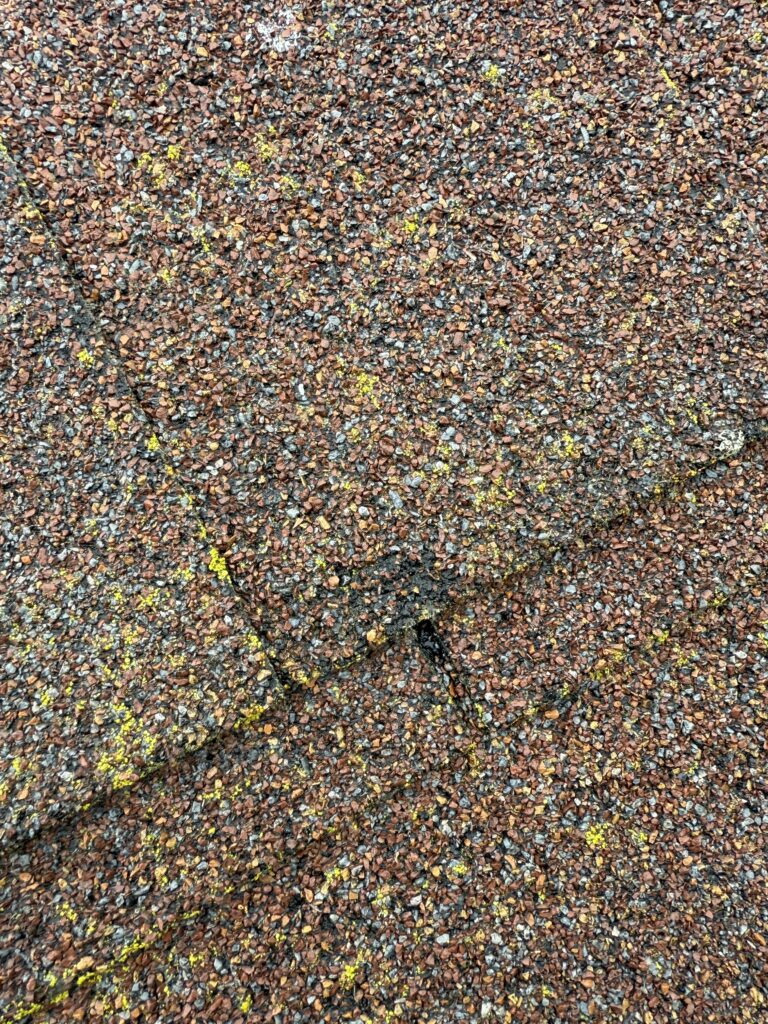
The streaks are a blue-green algae, a cyanobacterium, most often the species Gloeocapsa magma. The Asphalt Roofing Manufacturers Association calls it the most prevalent of several species behind roof discoloration.
The algae looks black rather than green because it grows a dark protective sheath against sunlight. That sheath is the color you see from the driveway.
According to the association, the algae travels through the air and grows especially well in warm, humid conditions. Humid Wisconsin summers give it plenty of both.
The streaks usually start high on a slope and fan down toward the gutter, because rain carries the growth along the water path. From the street, the pattern looks like dark curtains hanging from the ridge.
How to tell algae from moss, soot and granule loss
Identify what you are looking at before you treat anything. These four look alike from the ground, and each one needs a different response.
Algae
Algae is flat, with no thickness and nothing to grab. It stains the granule surface in streaks that follow the water flow, not in random patches.
Moss
Moss is a raised green growth with real height. It holds water against the shingle and can lift shingle edges as the clumps thicken, which makes it more urgent than staining.
If you see cushiony green growth instead of flat dark streaks, read our guide to safe moss removal from a shingle roof. The method is different, and scrubbing moss off does its own damage.
Soot and dirt
Soot and grime tend to sit as an even film or collect in spots near a chimney. They do not usually form long vertical streaks from the ridge down.
Granule loss
Granule loss shows as bare, dark patches where the shingle's asphalt layer is exposed. Look for sandy granules piling up in gutters or washing out of downspouts.
Bare spots plus granules in the gutter point to shingle wear, not algae. That calls for an inspection by someone who works in residential roofing, not a cleaning solution.
Why some slopes streak and others stay clean
Shade and moisture decide where streaks appear. Algae starts on the surfaces that stay damp longest, usually north- and east-facing slopes and roof planes under trees.
Overhanging branches block sun, drop debris and keep the shingle surface humid. A south slope in full sun dries quickly, which is why one side of a house can streak while the other stays clean.
One detail shows how the growth can be slowed. The strip of roof below copper or galvanized metal, such as some chimney flashing or vent pipes, often stays cleaner, because rain washes metal ions down the slope.
Streaking also shows more on light and medium shingles than on dark ones. That is one practical reason shingle color is worth thinking about before your next roof.
Do black streaks damage your roof?
Industry guidance treats roof algae as discoloration, and the association's warnings focus on how people clean it. Aggressive cleaning is the better-documented risk to an asphalt roof.
So the useful question is not whether the stain is hurting the shingles. It is whether the shingles under the stain still have good life left.
If the granule layer is intact and the roof is in good shape, the streaks are a cosmetic decision. If the roof is already near the end of its life, put the money toward a replacement rather than cleaning a roof you will soon tear off.
How to clean black streaks off a roof safely
Gentle chemistry and low pressure are the only safe approach. The accepted method is a bleach-and-water solution applied gently, left for about 15 to 20 minutes, then rinsed off with low-pressure water.
Mixes vary between shingle makers, and other chemicals should not be used without the manufacturer's approval. Follow the cleaning instructions published for your shingles rather than a recipe from a forum.
Do not brush, broom or scrub the shingles. The solution does the work, and scrubbing loosens the granules.
Protect yourself and everything below
Wet shingles are slippery, and the association encourages using professionals for this work. If you do it yourself, work from a secured ladder or the ground with a pump sprayer and wand, never alone and never on a wet roof.
Never mix bleach with ammonia or acidic cleaners such as vinegar, because the mixture releases toxic gas. Wear eye protection and chemical-resistant gloves.
Wet down and cover plants, shrubs and lawn before you start, then rinse them again when you finish. Rinse gutters, siding and painted trim in the runoff path as you go.
A cool, overcast day works best, because hot sun dries the solution before it can act. Expect the result to be temporary, since the spores are still in the air and the streaks can return.
If you hire a cleaner
Ask about the method before the price. A good roof cleaner can answer these questions directly.
- Is this a low-pressure wash, and what pressure is used for the rinse?
- What is in the solution, and does it follow my shingle maker's instructions?
- How are plants, gutters and siding protected?
- Do you carry general liability and workers' compensation insurance?
- Will anyone brush or scrub the shingles?
The last answer should be no. A cleaner who plans to pressure wash an asphalt roof is the wrong hire.
What not to do
Never pressure wash an asphalt shingle roof. The association says high-pressure washing is likely to damage asphalt roofing.
High pressure strips away the granules that shield the asphalt from sunlight. A pressure-washed roof can look clean for a season and then age faster, which trades a cosmetic problem for real wear.
Skip moss powders and home remedies on algae as well. Check your shingle warranty before any cleaning, so you know what the manufacturer expects.
Want a straight answer on your roof?
We'll inspect it, document everything, and tell you honestly what you're looking at, even if the answer is patch it for now. No pressure.
How to slow the regrowth
Metal, sunlight and drainage are the three tools that help. Zinc or copper strips installed near the ridge release metal ions every time it rains, and those ions wash down and slow regrowth on the slope below.
Strips work best on a roof that has just been cleaned. Ask a roofer how they will be fastened so the installation does not create new leak points, or add them during a reroof while the ridge is open.
Trimming branches back from the roof lets the shingles dry faster and cuts the debris that holds moisture. Clean gutters keep water from backing up under the lower shingle rows, which is why gutter care belongs in any roof maintenance routine.
Algae-resistant shingles at your next replacement
The lasting fix is a shingle made to resist algae, and you get that choice when the roof is replaced. Algae-resistant shingles use copper-containing granules that release copper slowly over time, which discourages the growth.
Ask for them when you compare asphalt shingles, and ask what the warranty says about algae. Coverage differs by product, so read that section before you sign.
If your roof is already in the back half of its life, weigh cleaning against a roof replacement before you spend money twice. One inspection usually settles which side of that line you are on.
When black streaks are a reason to call a roofer
Call a roofer when the streaks come with other signs, because the stain itself is not the warning. Get the roof inspected if you see any of these.
- Curling, cupping or lifted shingle edges
- Bare dark patches with granules in the gutters or downspouts
- Raised green moss instead of flat staining
- Ceiling stains or moisture in the attic
- Streaking on a roof that is already old
On an older roof, streaks are often just the first thing you notice from the ground. A closer look at the granules, flashing and decking tells you what the roof actually needs.
Get a straight answer on your roof
Buckshot Exteriors is family-owned, has served homeowners since 1979, and has offices in Madison, Wisconsin and Centerville, Iowa. Our on-site inspection is free, so you can find out whether you are looking at a stain or real wear before you spend anything.
Call (608) 909-9109 to schedule your free inspection, or send us a message and we will set a time. If you are still deciding, our moss guide above explains the other common roof growth.
Get a straight answer on your Madison roof
Wisconsin storm season and insurance non-renewal letters do not wait. Get a free, no-obligation inspection and an honest assessment of exactly what your roof needs, even if the answer is to wait.